
Simanaitis Says
On cars, old, new and future; science & technology; vintage airplanes, computer flight simulation of them; Sherlockiana; our English language; travel; and other stuff
CHINESE CARS IN THE U.S.?
WHAT A PROVOCATIVE—AND COMPLEX—IDEA. Here, in a lengthy collection, are tidbits gleaned from Automotive News, SAE International Automotive Engineering, and Jalopnik, together with my R&T sleuthing.

Paige Hodder writes in Automotive News, “Should Chinese Automakers Enter the U.S.? Industry Divided with Dealers Wary, Consumers Open to Low Prices,” September 11, 2026. He cites key takeaways (with an “AI-assisted summary, editor reviewed”): “About half of consumers surveyed said they would consider buying a Chinese vehicle, according to a Dave Cantin Group report. Sixty percent of U.S. dealer respondents said they are concerned about Chinese automakers entering the U.S. market. Nearly 30 percent of consumers said they would consider a Chinese vehicle priced at $45,000 or more, signaling openness beyond the budget segment.”
Average Transaction Prices. Hodder notes, “The average transaction price of a new vehicle in the U.S. in August was $50,089, up 1.9 percent from a year earlier, according to Kelley Blue Book. The average transaction price of a BYD vehicle in China was about $16,107 in October 2025.”
“And it’s just one example,” he relates. “Estimates show there are 200 battery-powered vehicles, including hybrids, available in China for less than $25,000, according to an April Reuters report citing data from information and trading platform DCar.”
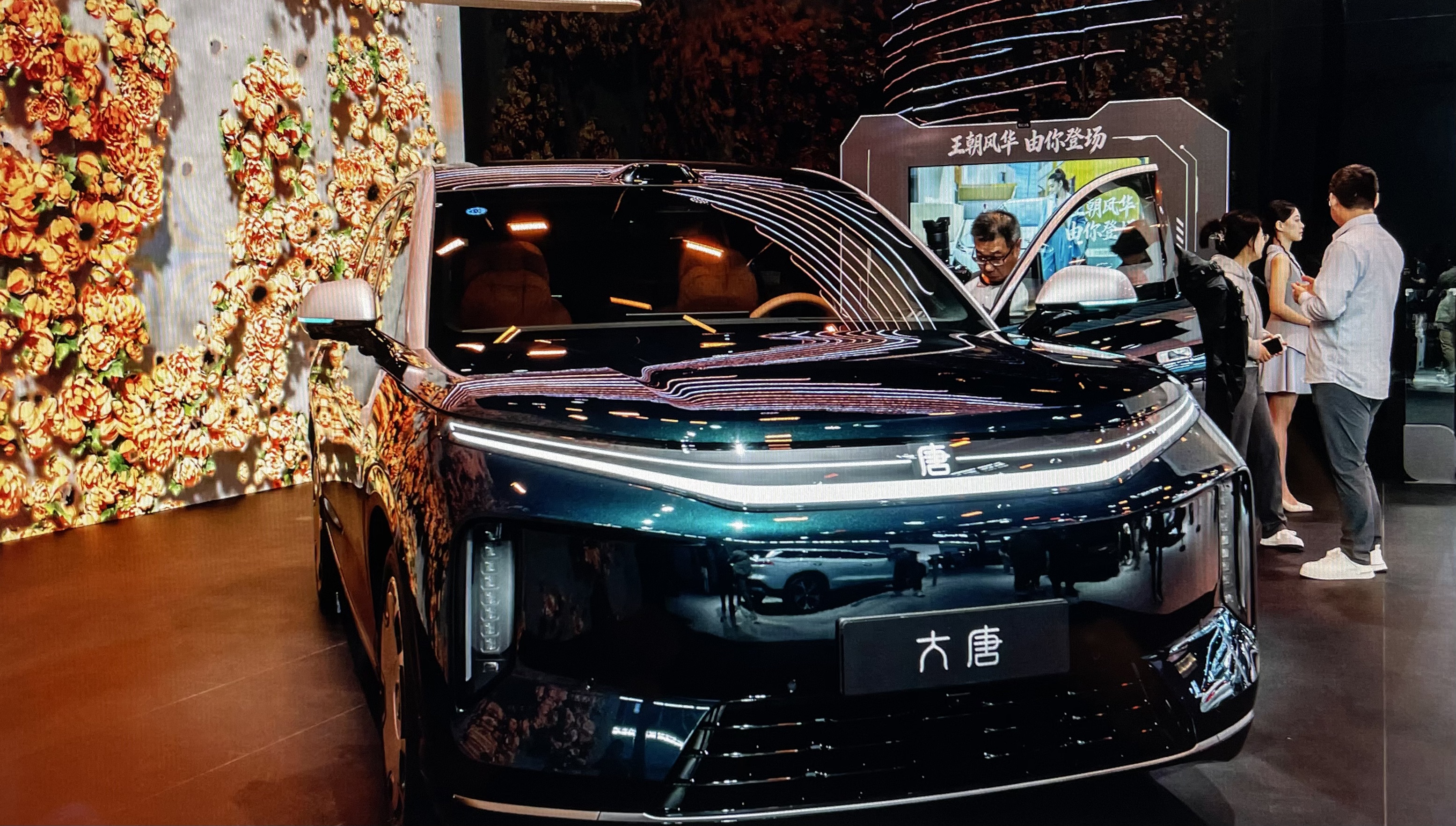
How Do They Do It? How Is It Countered? “The Chinese government,” Hodder notes, “owns direct stakes in several major Chinese automakers and supports them financially. The automakers keep costs low with large production volumes and government subsidies.”
“For now,” he continues, “Chinese vehicles are effectively blocked from the U.S. because of high import tariffs and Chinese software and hardware bans for vehicles starting in the 2027 and 2030 model years. U.S. lawmakers are considering legislation that could formally ban Chinese vehicles from entering the U.S.”

The “Big Brother’s Watching” Argument. Automotive News’ Molly Boigon advises “Reports, Calls for Action Show Concerns About Chinese Vehicle Surveillance Growing Louder,” September 8, 2026: “But the industry is turning up the pressure on Congress to do more,” she notes. “Legislators are considering companion bills in the House and Senate that would ban the import, manufacture, sale, resale and introduction into interstate commerce connected vehicles, software and hardware tied to China, Russia, Iran or North Korea.”
Gee, I wonder which country is the intended target.
Boigon quotes John Bozzella, CEO of the Alliance for Automotive Innovation: “China is capturing market share in Europe, Australia, Southeast Asia, Mexico and South America with vehicles capable of collecting, processing and transmitting sensitive vehicle and consumer data to the Chinese Communist Party.”

On the Other Hand, Er… Ear. Sam Abuelsamid, VP Market Research, Telemetry, writes “Is China Really Our Biggest Automotive Security Threat?,” SAE International Automotive Engineering, September 2026: “This argument,” he says, “is, frankly, farcical. If the Chinese government wants to gather data on Americans, they don’t need to sell us cars, they can just go to any number of data broker companies and get everything they want from the millions of connected vehicles already on American roads. If they wanted to spy, they could just have someone buy American-built vehicles and install data loggers to capture the data from the cameras that are already there.”
That is, Abuelsamid believes, this big-eared horse is long out of the stable.
“No,” Abuelsamid says, “this is all about protectionism for the American auto industry.”

So What’s Gonna Happen? Andy Kalmowitz predicts in the authoritative website Jalopnik that “Chinese Automakers Could Take Over 10% of the U.S. Market If Given a Chance,” September 25, 2026: “Currently a Biden Administration-era measure virtually bans China-made vehicles from being sold here, and legislation could make it even stricter, but what would really happen if Chinese vehicles were allowed to be sold here? Would it really be that bad?”
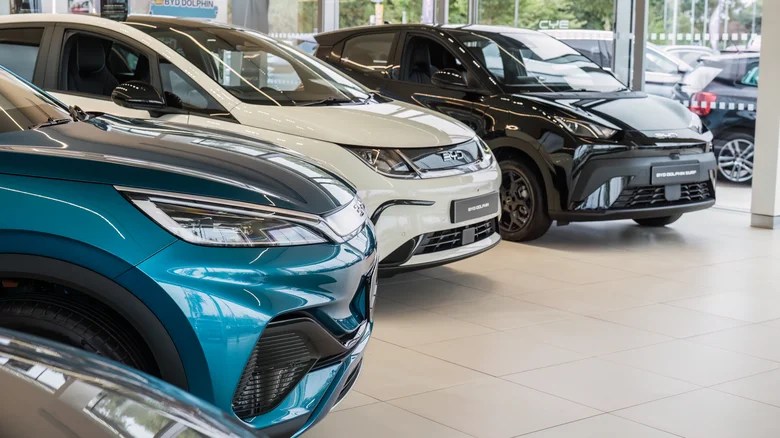
“Well,” Kalmowitz observes, “according to market research firm Mobility Global, if restrictions were eased and China-based automakers were allowed to do business Stateside, they’d be selling as many as 1.7 million vehicles per year by 2038, Bloomberg reports. That translates to about 11% of the world’s second-largest automotive market (right behind China itself).”
Take a Smell Test. “That’s a sizable chunk of sales,” Kalmowitz admits, “and a hell of a lot of money that could go out the window, so it’s sort of easy to see why stakeholders don’t want these companies coming over here. Sure, they can blame the idea of ‘national security’ and ‘privacy,’ but you’re reading this on your China-made phone, and I’m writing this on my China-made laptop, so that doesn’t really pass the smell test.”
Boosting New Car Sales. “In theory,” Kalmowitz continues, “demand for those models could boost new car sales in the U.S. by about 600,000 vehicles per year. That’s a good thing for the economy, even if they’re not home-grown products. After all, the U.S. vehicle market has remained relatively flat for the past few years, and since Chinese cars tend to be cheaper than their Western counterparts, they could offer a more affordable solution to buyers who are finding the fact that — according to Automotive News, the average new car cost $52,669—a bit unpalatable.”
Geez, Has This Ever Happened Before? Back in 1958, R&T wrote, “We believe this is a first complete report of any kind of a new car whose significance may not be fully realized for at least two years.” See “Toyota Toyopet De Luxe—A 65-Year Look Back,” SimanaitisSays, July 13, 2023.
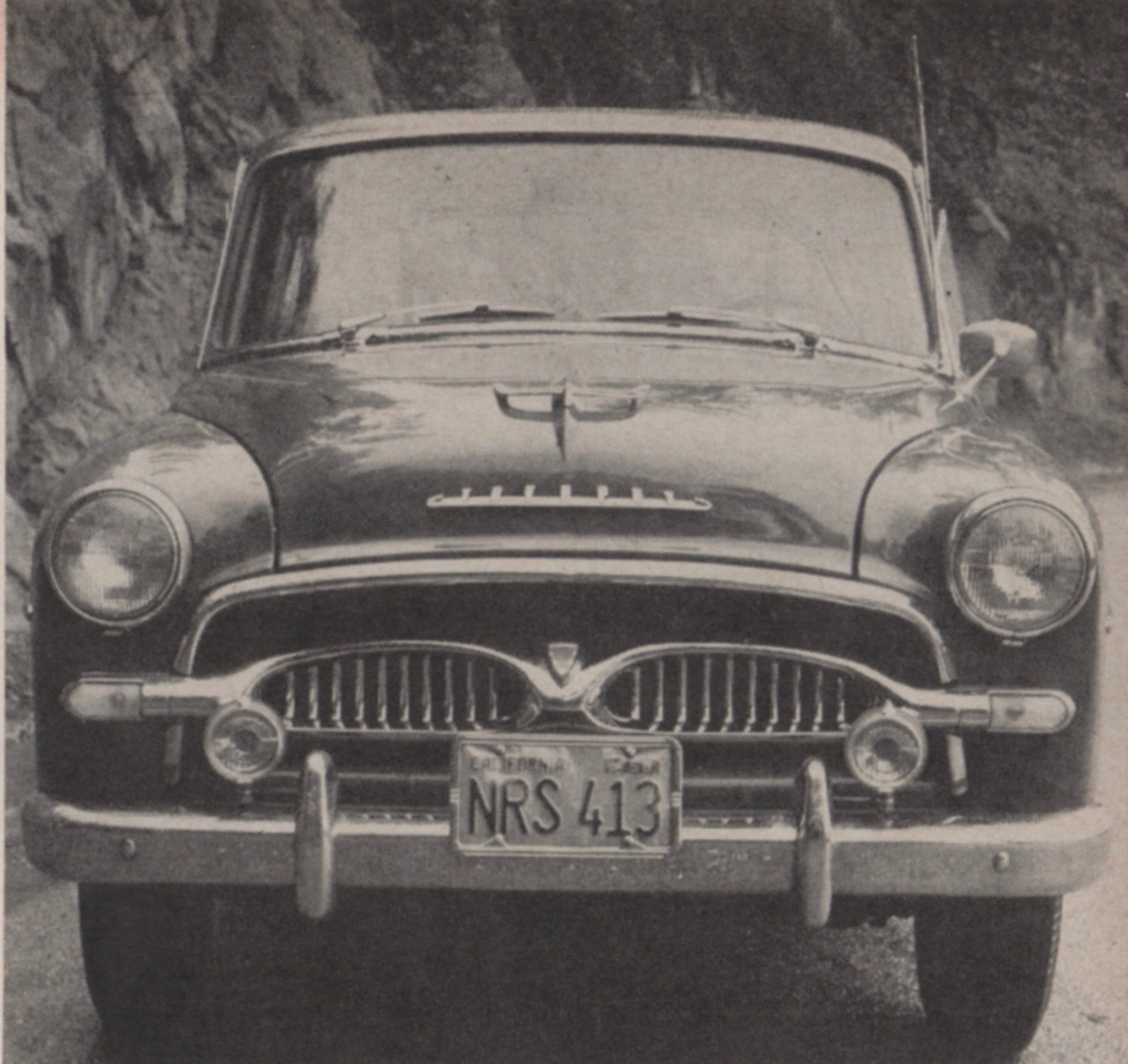
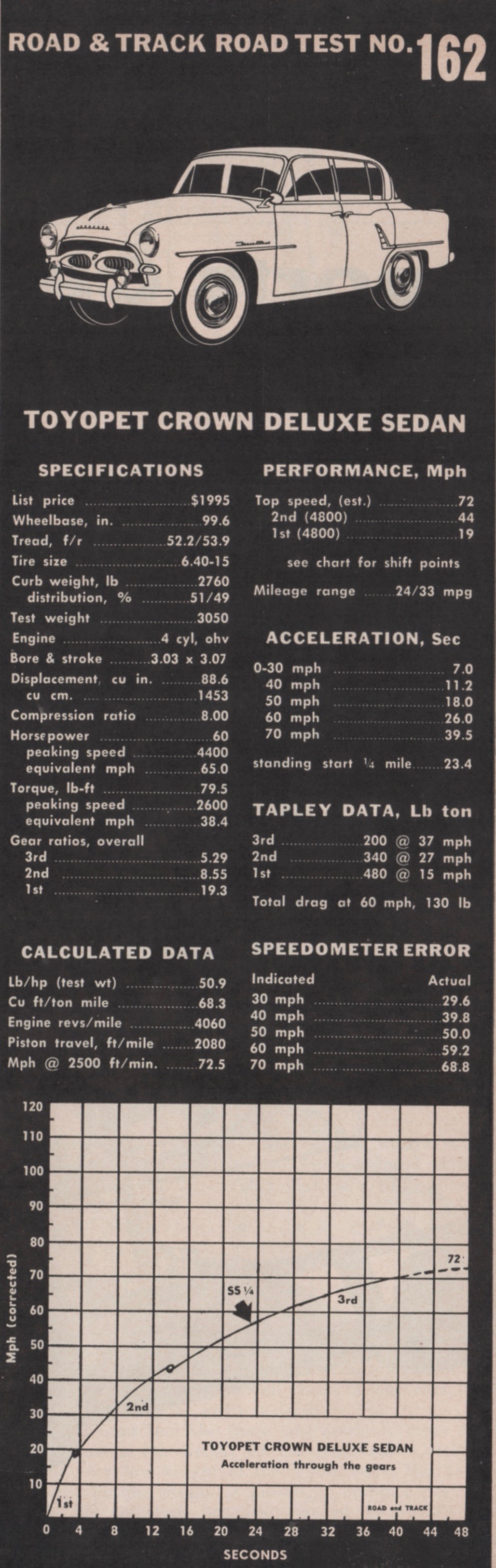
R&T summarized, “The Toyopet Crown De Luxe, at $2000, is a car which brings back memories of the good old days when cars were transportation—and not boudoirs with tail fins loaded with $1000 worth of extra cost items. The only serious fault we can find with the Toyopet is that its specifications are so ordinary, so average, that they have no advanced feature to advertise.”
R&T concluded back then, “American car-buying public, you ain’t seen nothin’ yet.” And, in retrospect, what with a goodly number of U.S. auto workers building Japanese cars today, it ain’t been all bad.
Japan has been an ally for years. This is one reason the word “complex” appears in the opening line. ds
© Dennis Simanaitis, SimanaitisSays.com, 2026


The lobbying power of U.S. car dealers is matched only by their avarice. The canny ones are no doubt quietly exploring buying a franchise for a Chinese brand. Back in the 1960s, smart dealers signed on with Toyota and Honda, and look at them now.
Chinese vehicles are effectively blocked from the U.S….
Well, sort of. GM has some models (especially Buick) that are imported as complete vehicles from China. And the current Bolt is labeled as 51% Chinese content – chiefly the LFP battery (from CATL) and most of the drivetrain mechanical and electronics. The Bolt is assembled in KC, though. But only for one model year, since the plant space is already pledged for re-shoring non-EV Buick and Equinox production.