
Simanaitis Says
On cars, old, new and future; science & technology; vintage airplanes, computer flight simulation of them; Sherlockiana; our English language; travel; and other stuff
THE PLANTS’ REVENGE PART 2
YESTERDAY WE BEGAN DISCUSSING THE VENUS FLYTRAP’S REVENGE on the animal world, as described by Science’s Jacques Dumais’ description of how this plant accomplishes its capture. Today in Part 2, the Abstract and Editor’s Summary of research by Ryu et al. offer more details. We also learn about other plants’ revenge.

Ryu et al.’s Research. Madeleine Seale offers an Editor’s summary of “Fast Cell Wall Softening Causes Venus Flytrap Closure,” by Jeogeun Ryu et al, Science, June 11, 2026: “Movement of water across cells has generally been invoked to explain how the trap releases elastic energy to buckle and close. However, Ryu et al. measured hydraulic properties of the tissue and found that water movement was too slow to explain the closure dynamics (see the Perspective by Dumais). Instead, they found that cell walls on the outer epidermis of the trap rapidly softened on a timescale consistent with trap closure, thus offering a better explanation for the mechanism underlying trap movement.”
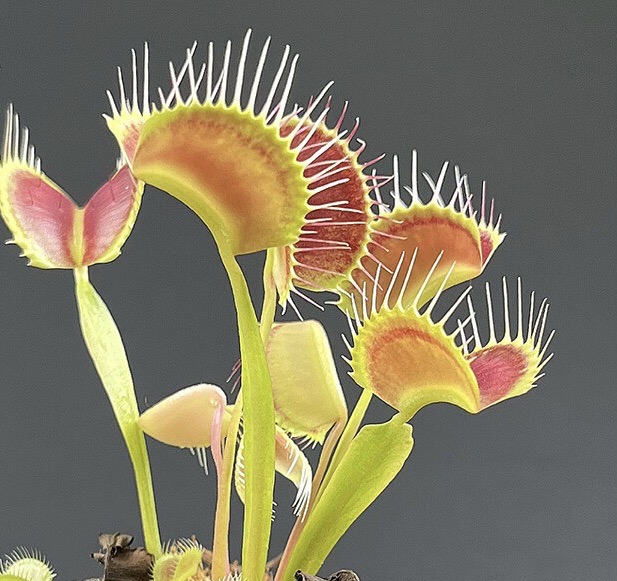
From Their Abstract. Ryu et al. first investigated the macroscopic dynamics of Venus flytrap closure using stereoscopy. A typical motion timescale was 0.21 +/- 0.08 sec. They then turned to “in situ and mechanical measurements to identify the motor driving this transition.”
The researchers note, “Closure occurs too quickly to be explained by water transport, revealing a distinct, nonhydraulic mechanism: a rapid (about one second) softening of the epidermal cell wall, releasing elastic energy stored in the trap.”
“This represents the fastest modulation of wall mechanics reported in plants,” the researchers report. “Our finding reveals a mode of plant motility based on dynamic tuning of material properties, suggesting principles for muscle-free, bioinspired actuation.”
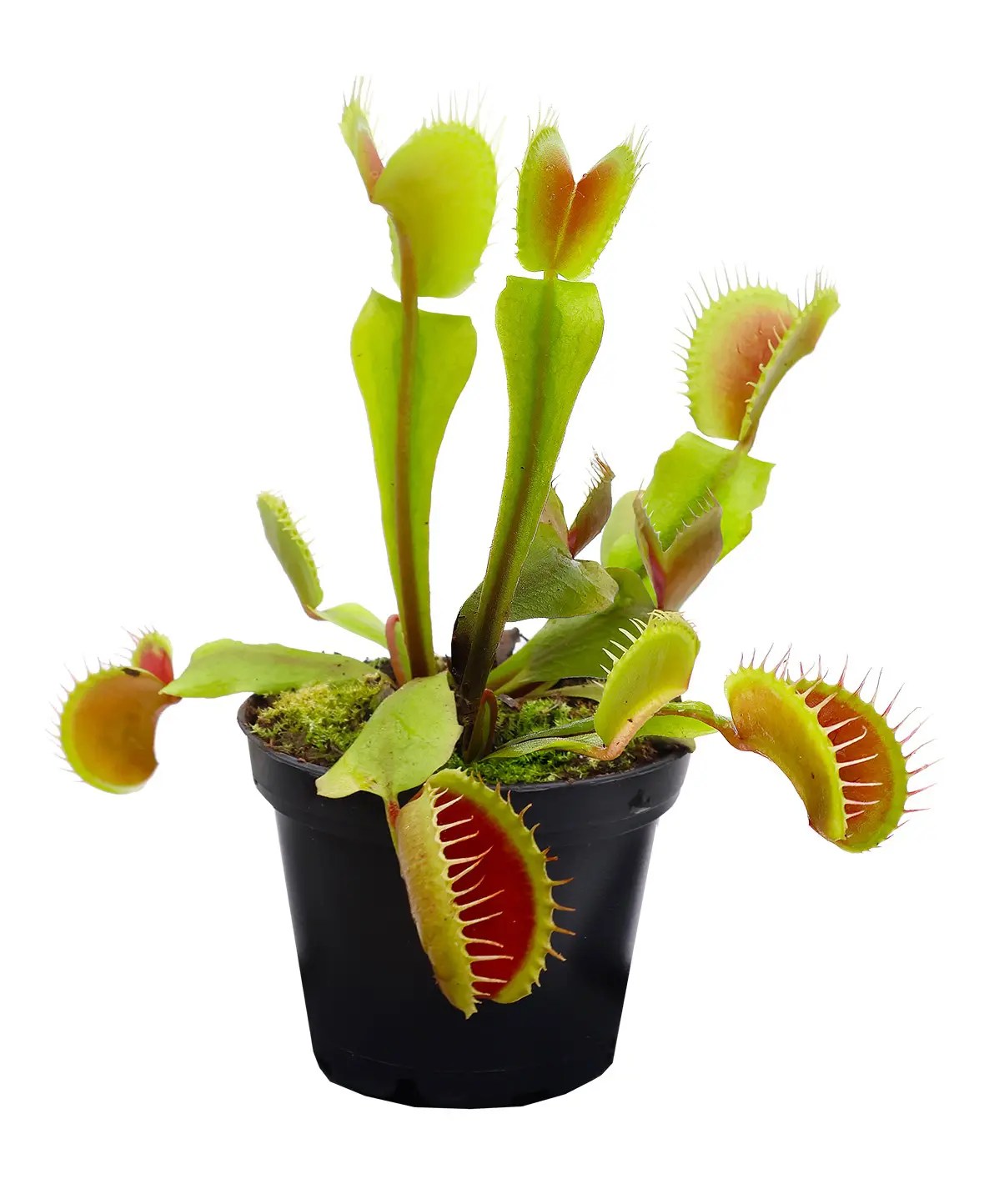
Other Trappers? Jacques Dumais describes, “Related insect-trapping plants offer an interesting first point of comparison. The sundews (genus Drosera) essentially ‘cheat’ their prey by immobilizing them with long sticky hairs known as tentacles. Thereafter, the tentacles bend over the prey within 60 s or more. These structures are sufficiently thin, and their movement sufficiently slow, for their mobility mechanism to be explained by growth.”
He continues, “The waterwheel plants (genus Aldrovanda), the closest relatives of the Venus flytrap, use a snap trap to capture small aquatic invertebrates. The trap has two lobes as the Venus flytrap does but is much smaller, with a hinge-like motor zone only three cells thick. The small thickness has allowed the trap to maximize its closing speed (0.02 to 0.05 s), right up to the physiological limit of growth for its size.”
“Yet,” Dumais notes, “the fastest plant-insect interactions are found among the various pollen catapults that have evolved in genera such as Catasetum and Stylidium. These catapults, although diverse in structure, share a common purpose—to spray visiting pollinators with pollen. Higher speed (as fast as 0.003 s) is achieved by relying on stored elastic energy; but for most catapult mechanisms, the movement is not repeatable. The plant has one shot to get what it needs from the interaction.”
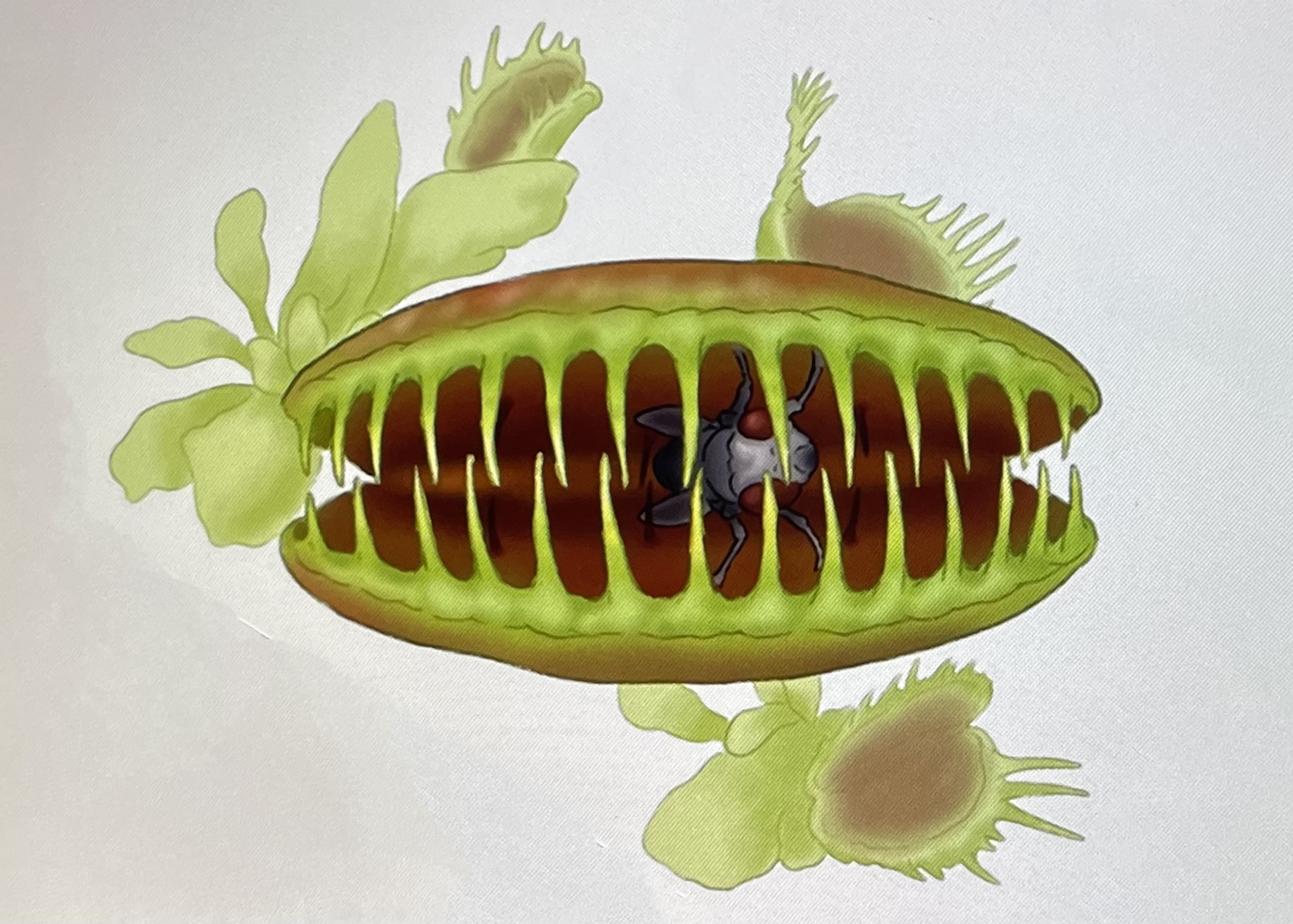
One way or the other, all of these trapper plants get their revenge. ds
© Dennis Simanaitis, SimanaitisSays.com, 2026

