
Simanaitis Says
On cars, old, new and future; science & technology; vintage airplanes, computer flight simulation of them; Sherlockiana; our English language; travel; and other stuff
INVENTIONS THAT TRANSFORMED THE WORLD PART 1
HISTORY EXTRA MAGAZINE POSITS “WHAT WAS THE GREATEST INVENTION IN HISTORY? 9 EXPERTS SHARE THEIR OPINIONS.” I love articles such as this, if for no other reason than to see whether I agree with the experts. Here, in Parts 1 and 2 today and tomorrow, are tidbits gleaned from the magazine’s April 2026 Vol. 27 No. 4 (you may remember its original moniker BBC History). Quotes identify the gleanings; my usual sleuthing is left unadorned.

I suspect the first one would be an easy choice. The second one is new to me, but I can see why it was chosen.
Writing. Adriane Lentz-Smith, associate professor of history at Duke University observes, “Were it not for the invention of writing, I would be offering this answer via megaphone. Writing is nowhere near as old as humanity’s 300,000-year history, but it is old: The first writing system emerged in Mesopotamia around 3200 B.C.”
See also “Mesopotamian Stew, Sorta,” SimanaitisSays, August 22, 2024.
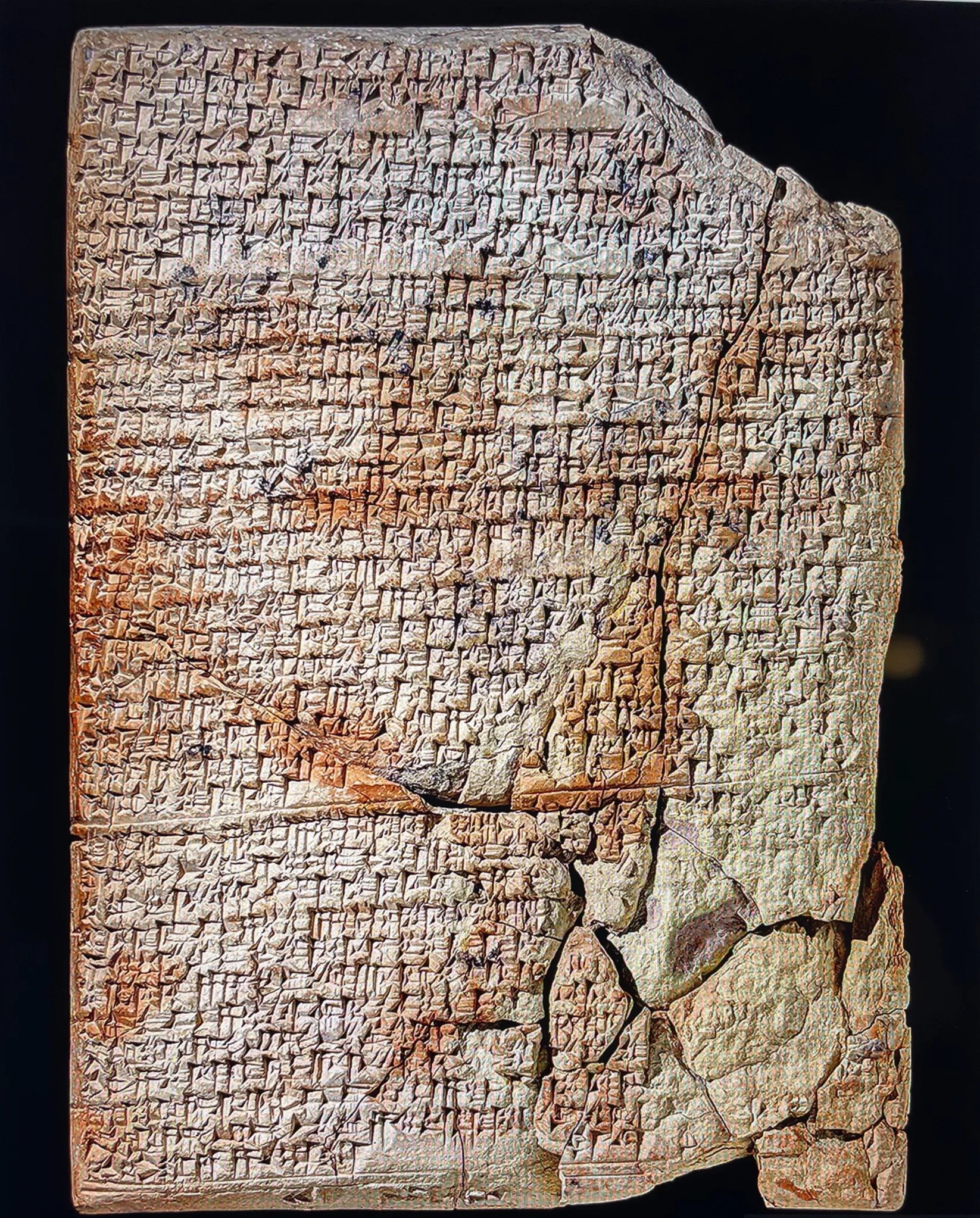
Indeed, I was ready to quibble whether oral storytelling would qualify as an invention. But Professor Lentz-Smith beats me to it: “Although writing did not supplant oral tradition,” she recounts, “it did dramatically extend the reach of communications, and allow groups to write down and diffuse their histories, ideas, lore and laws. The invention and refinement of writing changed the relationship between memory and record, as well as people’s sense of the reachable world.”
The Mouldboard Plough. This one is completely new to me. But not to Eleanor Barraclogh, historian, broadcaster, and author of Embers of the Hands.
“There can only be one choice,” Barraclough recounts, “and it’s the sexiest invention imaginable: the mouldboard plough. You’re probably getting hot under the collar already, but try to control yourself.”
I love her sense of humor.
“Simple scratch ploughs were fine for the light, gravelly soils of the Middle East and around the Mediterranean,” she observes. “But it was the mouldboard plough, first developed in China more than 2,000 years ago, that would revolutionise farming.”
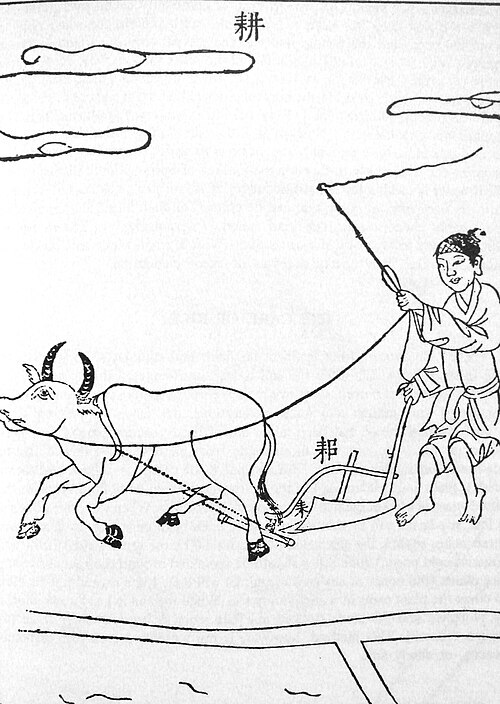
What’s more, Barraclough notes, “There are strong arguments for connecting the mouldboard plough to the population growth and urbanisation in northern Europe, especially between 900 and 1300 A.D. The advantage of the mouldboard plough was that it could cut long strips of soil and turn them over as it moved along the field. In the wet, heavy soils of northern Europe, this was hugely beneficial. The new ploughs improved drainage and buried weeds deep. This led to increased productivity and economic growth.”
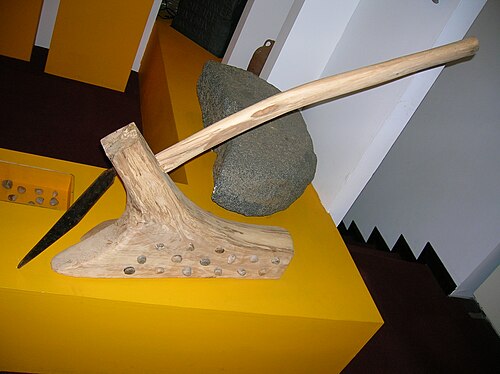
A reconstruction of a wooden mouldboard plough. Image by Rosser1954 Roger Griffith from Wikipedia.
“The mouldboard plough was also heavy,” Barraclough describes, “and needed a large team of animals—oxen, horses—to pull it. This eventually led to more community-based farming. This in time would lead to the manorial system, which might be summarised as one bigwig at the top, many smallwigs.”
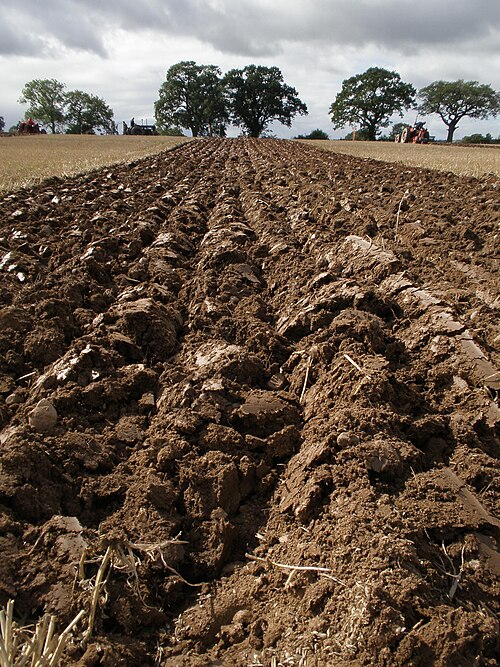
“Today,” Barraclough relates, “it’s still possible to see evidence of the mouldboard plough’s impact in fields that are no longer used for crops: the ghostly outline of lines and dips known as ‘ridge and furrow’. Being married to a fellow early medieval historian, our road trips are an absolute riot. We squeal, ‘RIDGEANDFURROW!’” whenever we clock that distinctive corrugated pattern, while our children groan in the back of the car.”
I’ll bet being a kid in the Barraclogh family would be a hoot.
Tomorrow in Part 2 we’ll continue by pouring concrete, keeping mines dry, and researching all of these innovations. ds
© Dennis Simanaitis, SimanaitisSays, 2026


Dennis, what about the invention of the wheel?
An excellent question. Wikipedia has an extensive entry, citing its iterative development (perhaps suggesting the difficulty of specifying a “first.”).
For example, a potter’s wheel is a wheel, but not transporational. — ds