
Simanaitis Says
On cars, old, new and future; science & technology; vintage airplanes, computer flight simulation of them; Sherlockiana; our English language; travel; and other stuff
ROMEO, WHO ART THOU? JULIET DITTO PART 2
THIS ALL STARTED WITH MY VIEWING the 1936 flick Romeo and Juliet on TMC. Today in Part 2 we finally get down to Act I Scene 5 at a Capulet ball as well as other R&J tidbits.

The Lovers Meet. Romeo sees Juliet across the room: “What lady is that, which doth enrich the hand of yonder knight?/ O, she doth teach the torches to burn bright!”
He continues, “It seems she hangs upon the cheek of night/ Like a rich jewel in an Ethiope’s ear./ Beauty to rich for use, for earth too dear!”
This kid is smitten, all in iambic pentameter. De dum de dum de dum de dum de dum.
The Ethiope Reference. By the way, Blacks were not unknown in Elizabethan England, as noted in Internet Shakespeare Editions: “Shakespeare’s first Black man, Aaron in Titus Andronicus, is close to the stereotype: murderous, sexually avid, and ruthless. Yet even he is less brutal than those around him.”
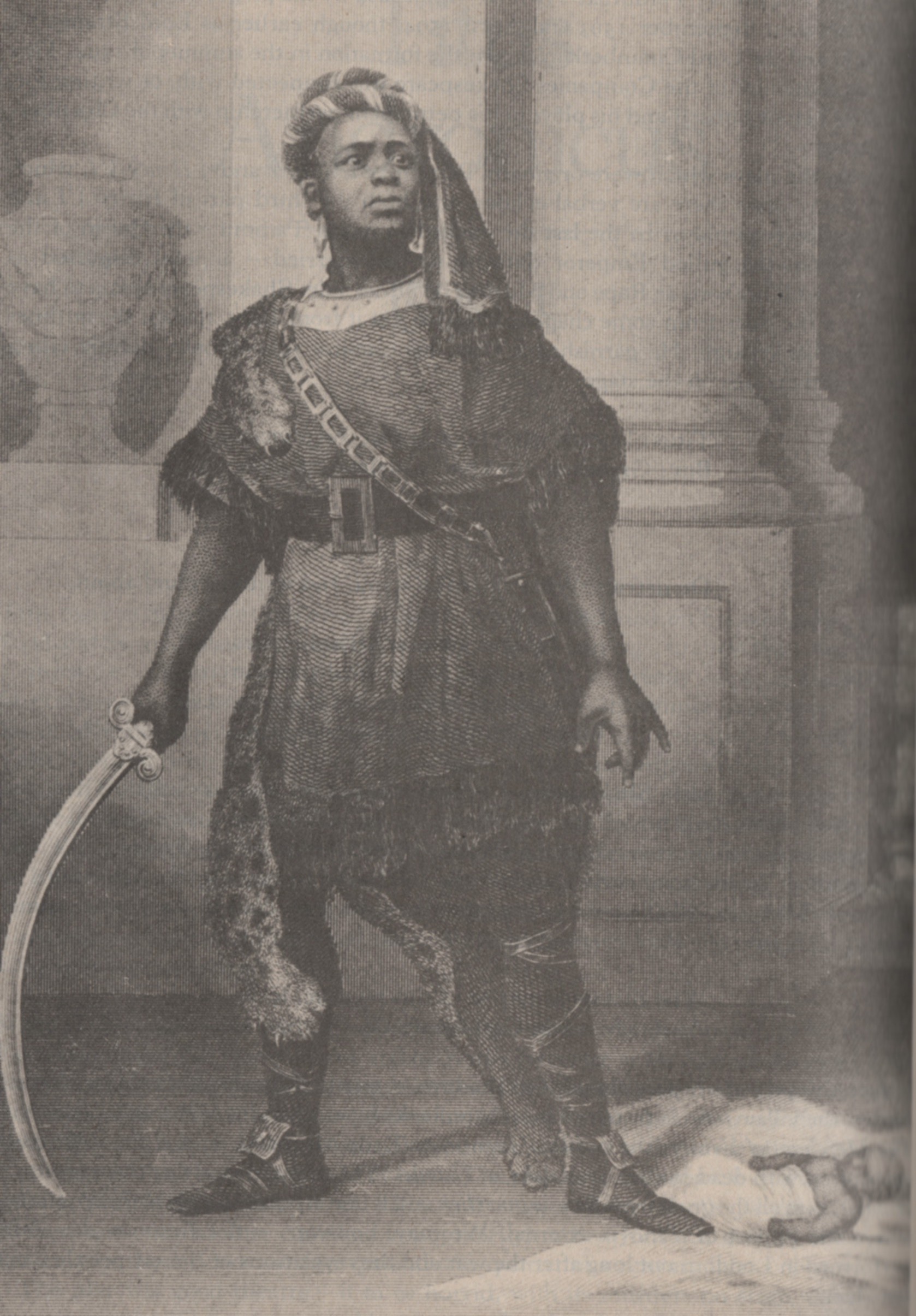
The Black American actor Ira Aldridge portrayed Aaron at the Britannia Theatre, 1852.
Also, a footnote at that website cites “Anthony Burgess, in his novel Nothing Like the Sun, speculates that the dark woman of Shakespeare’s Sonnets was literally a Black woman.”
By the way, there were Black secondary roles in Romeo and Juliet, and not just as servants typical of 1930s Hollywood.
Take that, D.E.I. deniers.
The 1936 Flick. Wikipedia recounts, “Romeo and Juliet is a 1936 American film adapted from the play by William Shakespeare, directed by George Cukor from a screenplay by Talbot Jennings. The film stars Leslie Howard as Romeo and Norma Shearer as Juliet, and the supporting cast features John Barrymore, Basil Rathbone, and Andy Devine.”
Yes, Jack Benny/Roy Rogers fans, that Andy Devine. He portrays Peter, a comic foil to Juliet’s nurse.
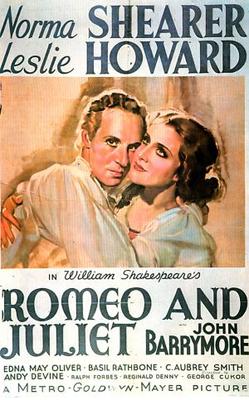
Middle-Age Lovers (the People, Not the Period). Norma Shearer has appeared previously here at SimanaitisSays. A claim to fame—nay, some say a reason for it—was her marriage to Irving Thalberg (Romeo and Juliet’s producer). Wrote David Thomson in his (occasionally acerbic) The New Biographical Dictionary of Film, 2002, “Equally, Thalberg’s promotion of her bypassed the fact—evident to anyone who cares to look at her films—that she was fluttery, chilly, and more nearly vacant than any other goddess. Lillian Hellman talks of Shearer’s ‘face unclouded by thought.’ (Even her fans have to decide whether or not she had a squint.)”
Well, yes, though I find her eyes endearing.
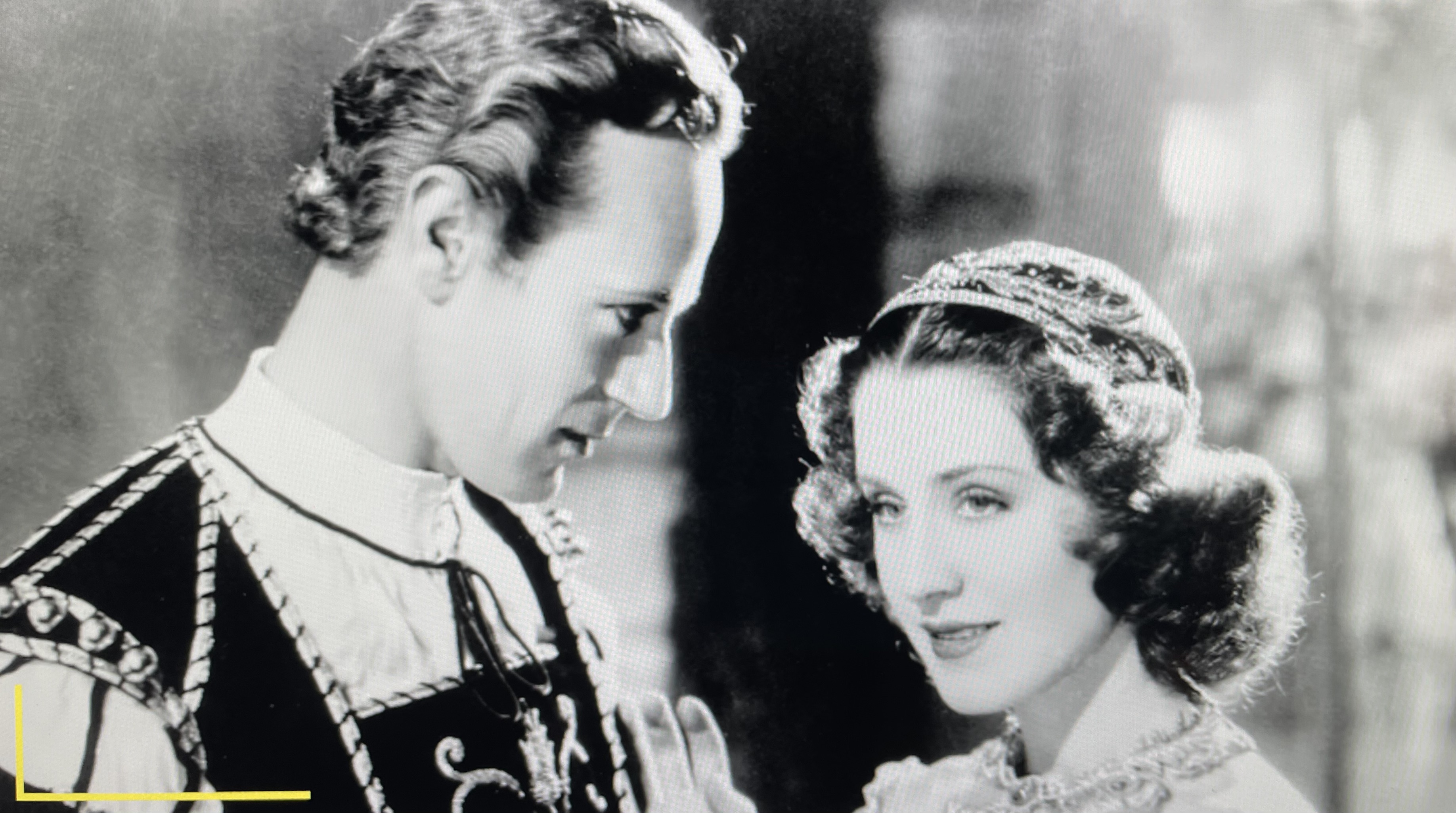
More to the point, Norma Shearer was 34 when the film debuted in 1936. Leslie Howard was 43.
Geez, Andy Devine was 30. None of them near their teens.
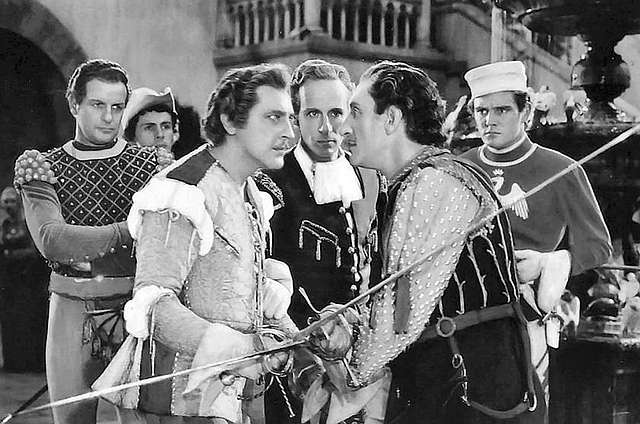
Basil and Orson. In the flick Basil Rathbone portrays Tybalt, Juliet’s short-tempered cousin. A few years earlier, 1933-1934, Rathbone was part of Katharine Cornell’s transcontinental repertory tour.

Image from Wikipedia.
On the tour Rathbone starred as Romeo in Romeo and Juliet, Robert Browning in The Barretts of Wimpole Street, and James Mavor Morell in Candida. A 19-year-old Orson Welles was part of this touring group in lesser roles; in the Shakespeare play he was Mercutio and doubled as the Chorus.
In her Orson Welles: A Biography, Barbara Leaming describes how the youthful Welles managed to jar the Cornell group’s professionalism with his late arrivals and outlandish behavior (costumed distractions at group meals and portraying The Great Swami fortune teller in free moments).
Other R&J Tidbits. Agnes De Mille choreographed the several Romeo and Juliet dance scenes. Academy Award nominations (though no Oscars) were made to Irving Thelberg (Best Picture), Norma Shearer (Best Actress), Basil Rathbone (Best Supporting Actor) and Cedric Gibbons, Fredric Hope, and Edwin B. Willis (Best Art Direction).
And, according to Frank S. Nugent in The New York Times Book of the Movies, Andy Devine performs as Peter the servant of Juliet’s nurse “like a true Elizabethan clown, with a frog’s voice and canary’s heart.” ds
© Dennis Simanaitis, SimanaitisSays.com, 2025
 Simanaitis Says