
Simanaitis Says
On cars, old, new and future; science & technology; vintage airplanes, computer flight simulation of them; Sherlockiana; our English language; travel; and other stuff
WONDERFUL, WONDERFUL COPENHAGEN PART 2
YESTERDAY IN PART 1 IVOR HIORT’S COPENHAGEN AND ENVIRONS displayed how aircraft, radiophony, and automobiles set the stage for this Danish capital’s earning its high livability ranking (2nd among the world’s cities) in 2023. Today in Part 2, the guidebook addresses pleasantries of Copenhagen circa 1925, together with more recent views.
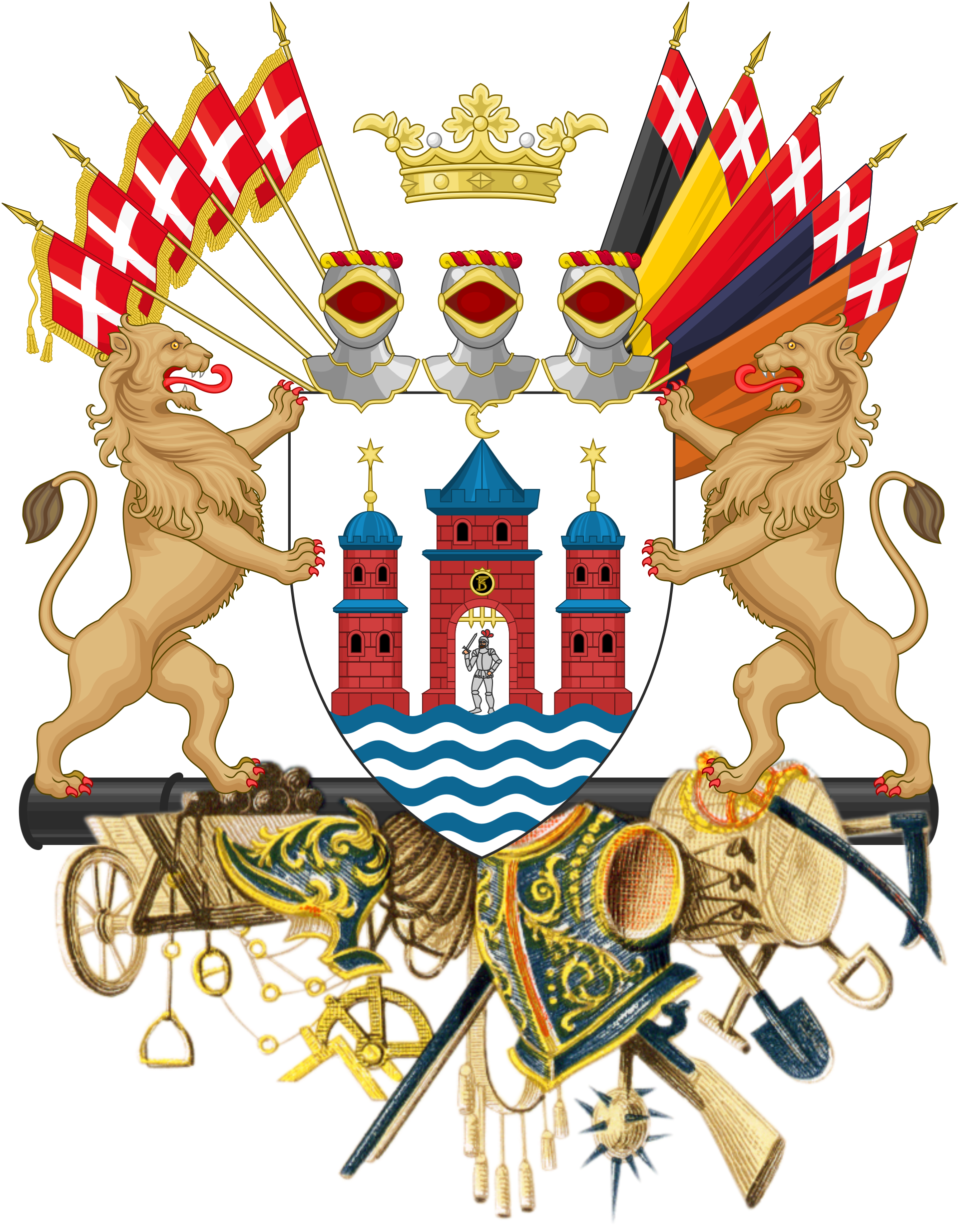
Copenhagen Since 1795. Wikipedia notes that two conflagrations influenced today’s Copenhagen architecture: “The Copenhagen Fire of 1728 was the largest in the history of Copenhagen…. No less than 47% of the medieval section of the city was completely lost. Along with the 1795 fire, it is the main reason that few traces of the old town can be found in the modern city.”
On the other hand, the map in Hiort’s Copenhagen and Environs, 1925, could still be used (in entertaining fashion) to get around modern Copenhagen.
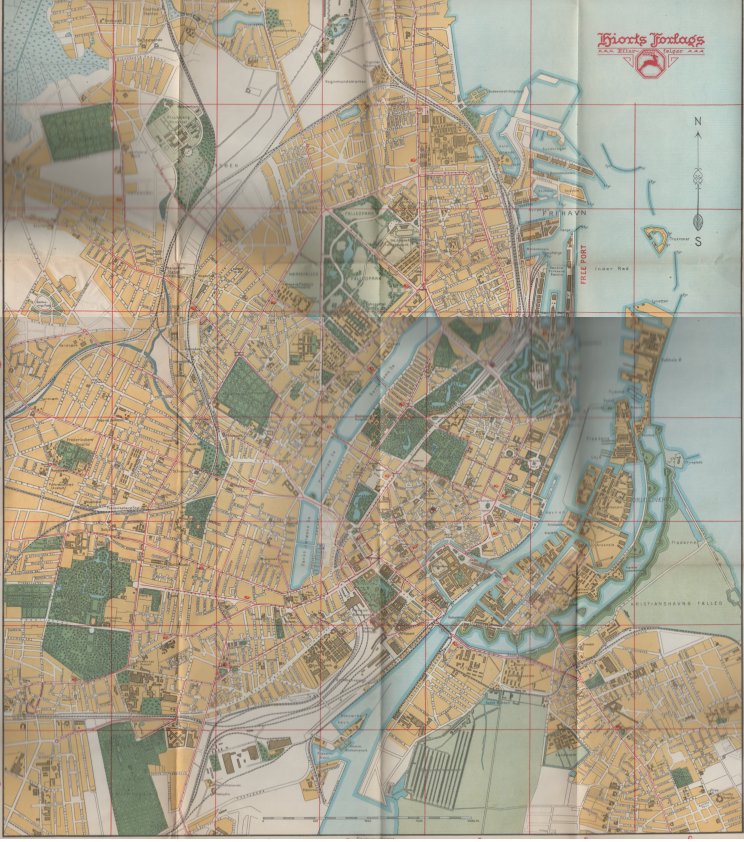
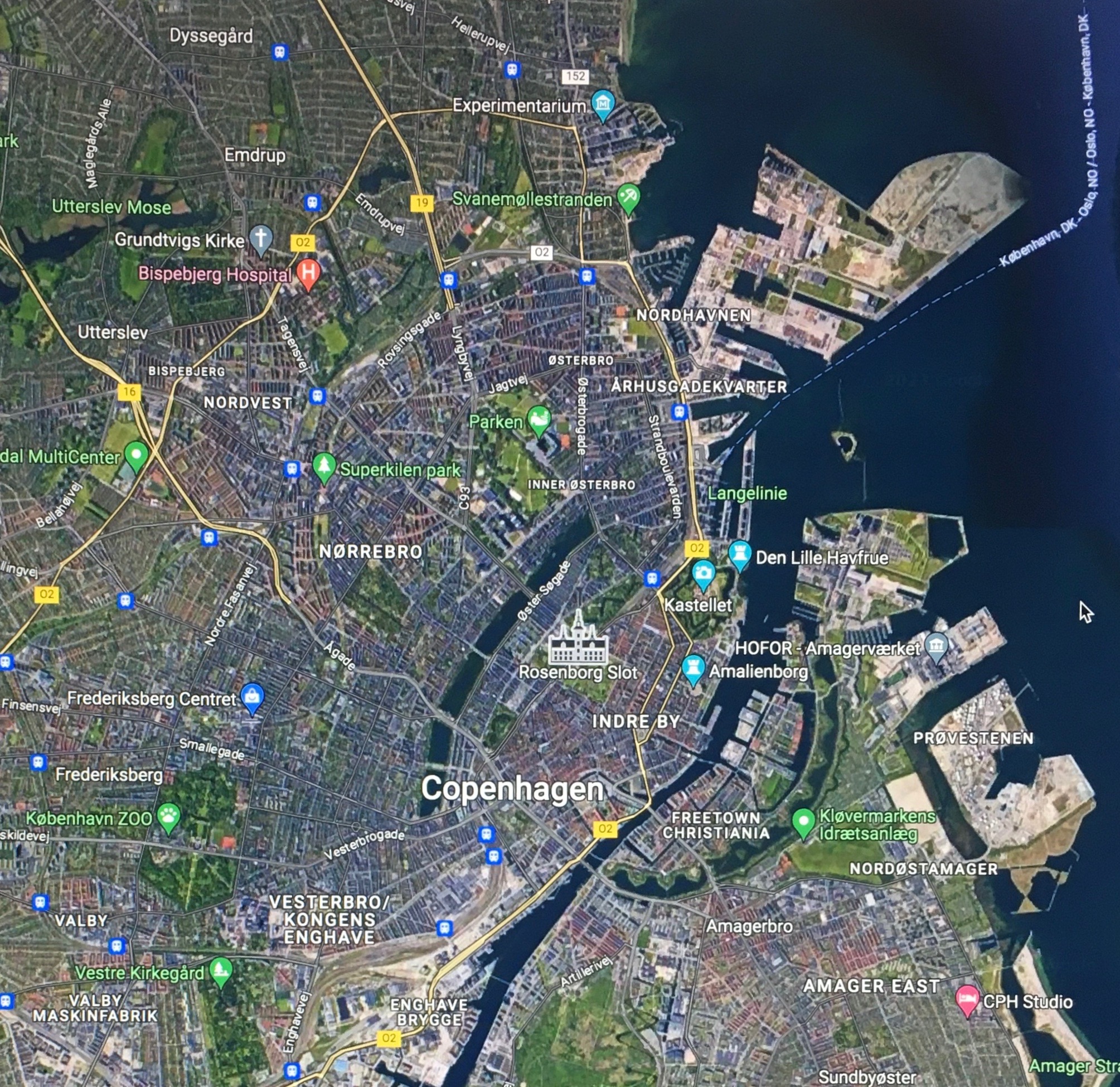
As noted before, things cited in old guidebooks, still extant, remain noteworthy today.
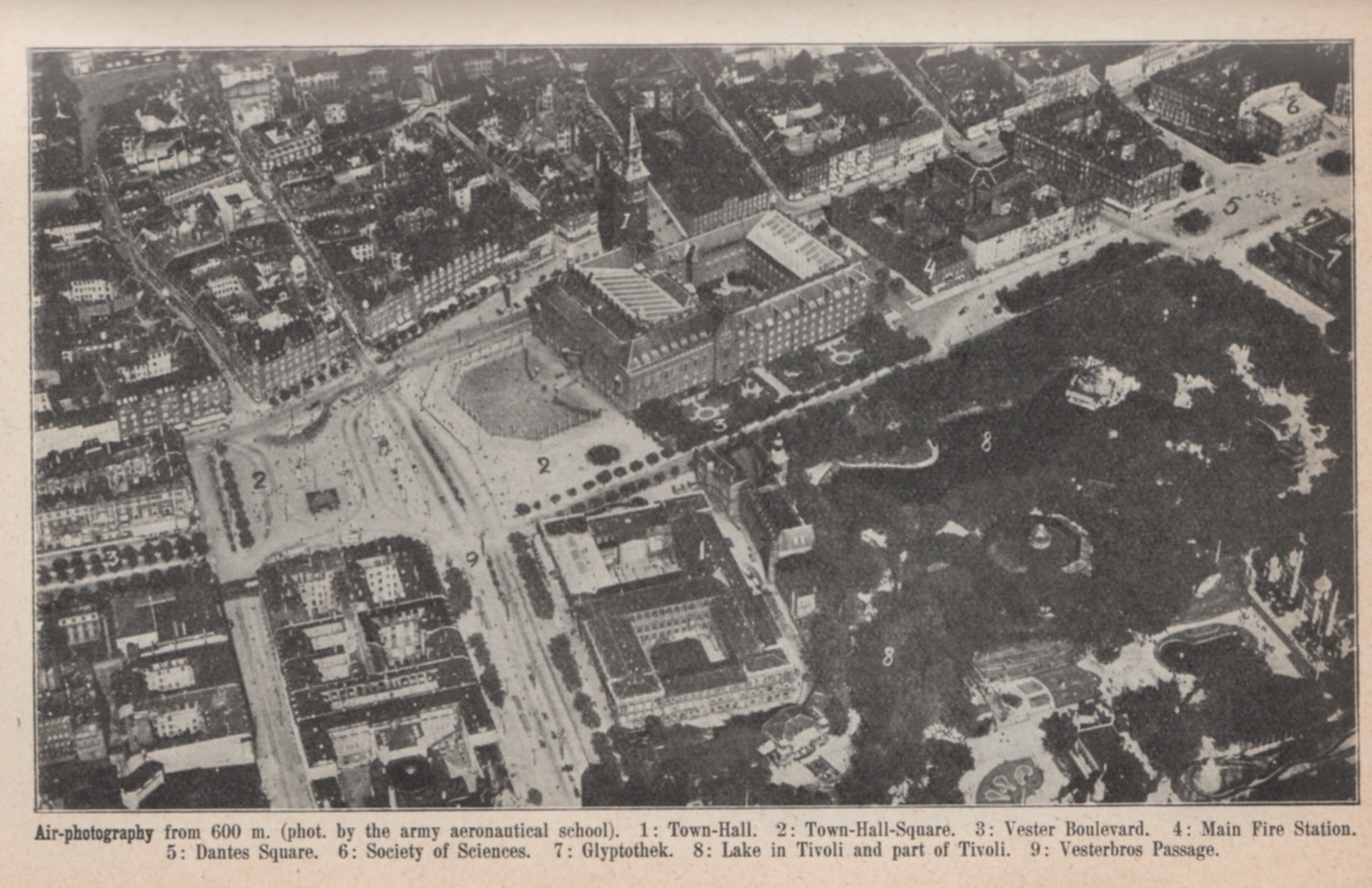
Start at Raadhuspladsen. Hiost described a stroll down Vesterbrogade, “throughout the year the very lively center… of places of amusements, theatres, varietés, music-halls, etc., grouped around this part of the city.”
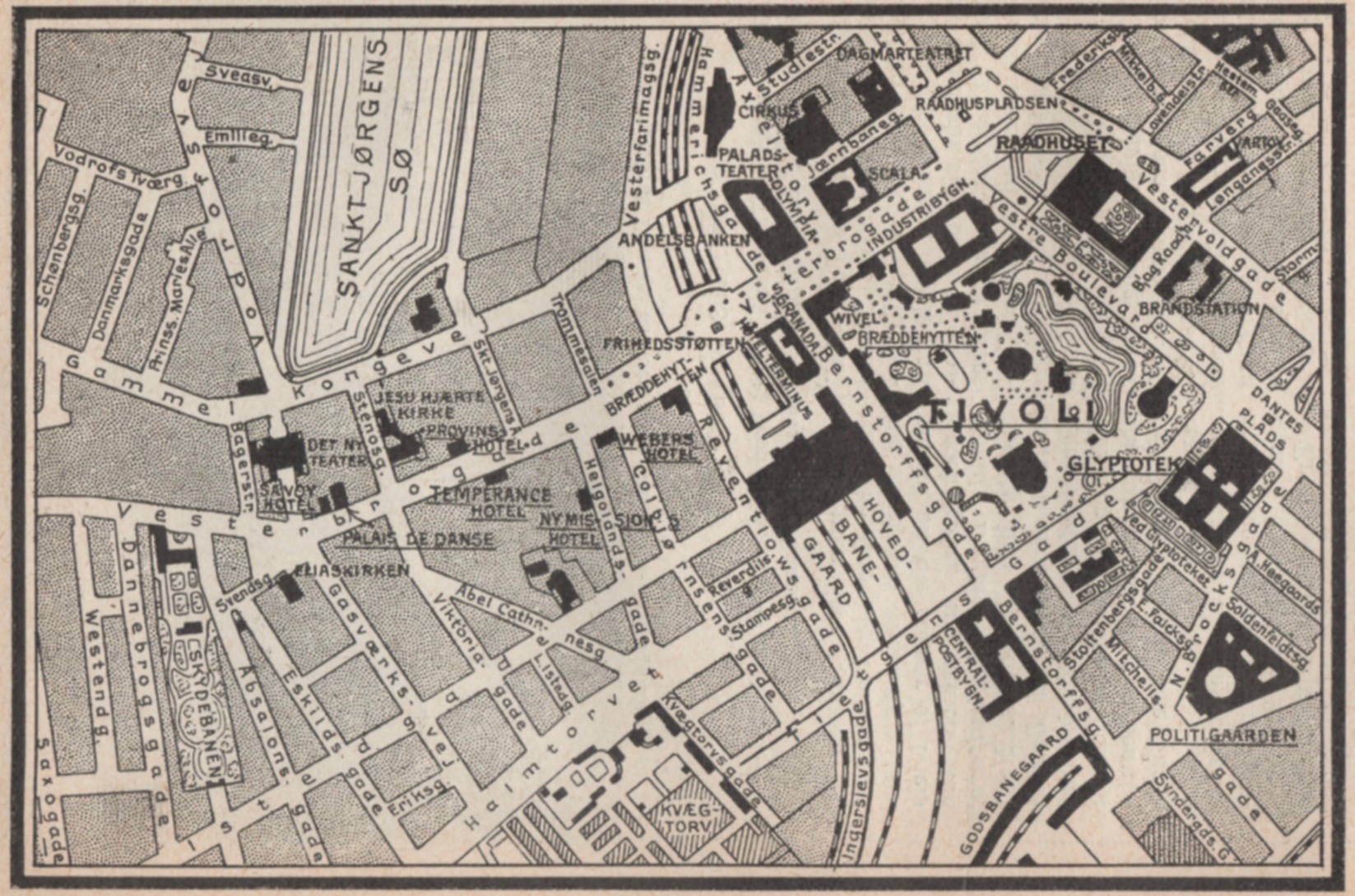
Night Delights. Hiort said, “Besides the very popular dancing-places there is really only one public place of this kind for the public of a more refined taste, the Palais de Danse on Vesterbrogade with the adjacent restaurant Pigalle. It is conducted in the same way and is frequented by the same public as establishments of this kind in the large cities abroad.”
Hmm…
But what of those other “very popular dancing-places”? “To get admission,” Hiort advised, “one must be a member, but a tourist with some acquaintance in Copenhagen will not have much difficulty in getting a card of membership.”
Extended hmm…
“Among the best known of these clubs,” Hiort recounted, “is the Lorry-Club… where the public is gay and informal and where everything still is kept strictly inside the limits of decency.”
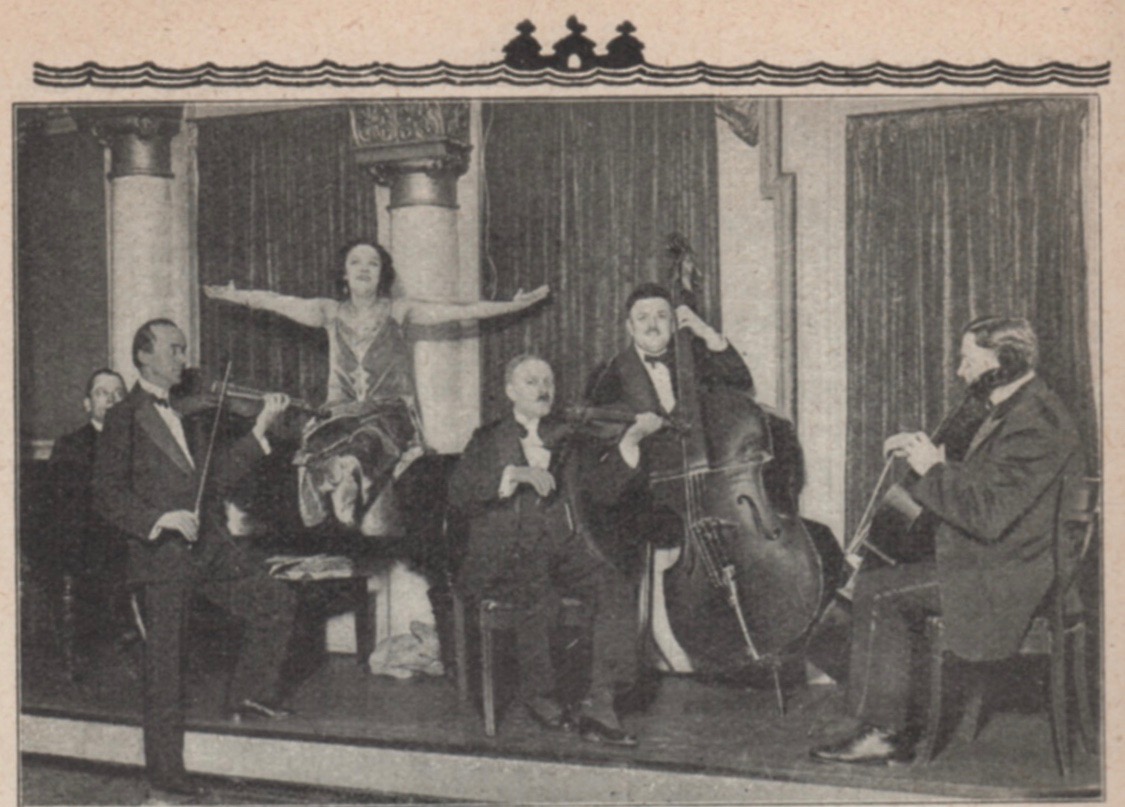
“The Lorry-Club,” Hiort said, “is a place where the Danish character shows itself at its best.”
Too Racy? Hiort observed, “Larger and more refined and very exclusive with regard to members is the well known and popular Adlon-Club on Nørregade, where the gay Copenhagen of the higher classes meet… The husband does not hesitate to take his wife to Adlons.”
Or Visit Tivoli. Wikipedia notes that Tivoli “opened on 15 August 1843 and is the third-oldest operating amusement park in the world, after Dyrehavsbakken in nearby Klampenborg, also in Denmark, and Wurstelprater in Vienna, Austria.”
Ha. No wonder the EIU put Vienna No. 1 in livability.
Hiort described, “The Establishment of amusement of Tivoli… is very much frequented on account of being a beautiful park around the lake, the last remainder of the moats of the old fortifications, because of its picturesque open-air restaurants and its multifarious amusements.”
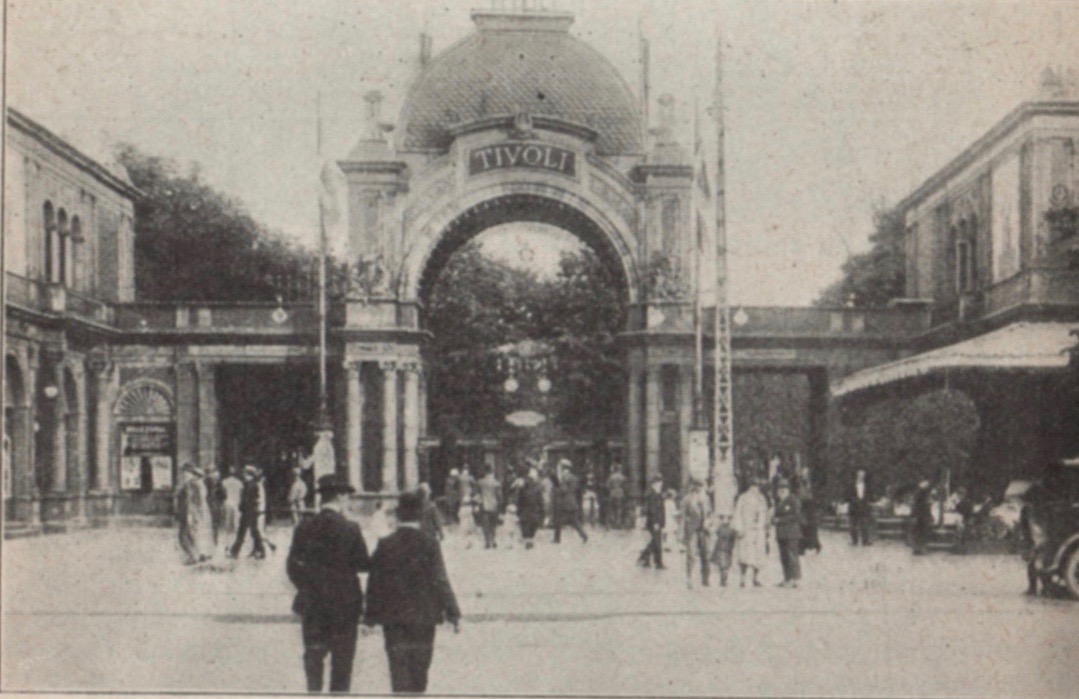
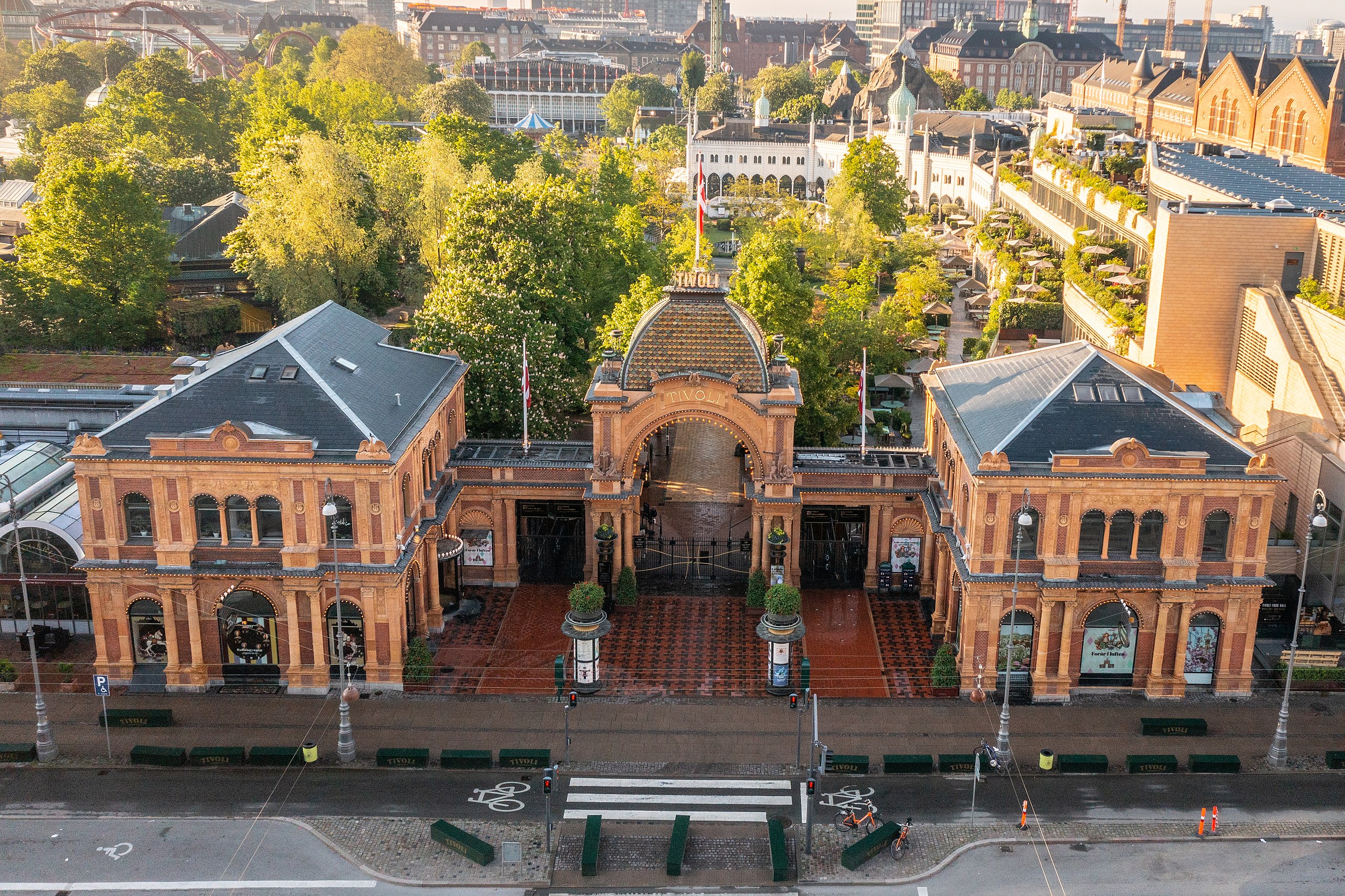
“Tivoli is a very democratic institution,” Hiort said, “where everybody from the King to the working man may meet and enjoy the beautiful light summer evenings, characteristic of the Northern countries. On festive nights the number of visitors may reach the 50-60,000 mark.”
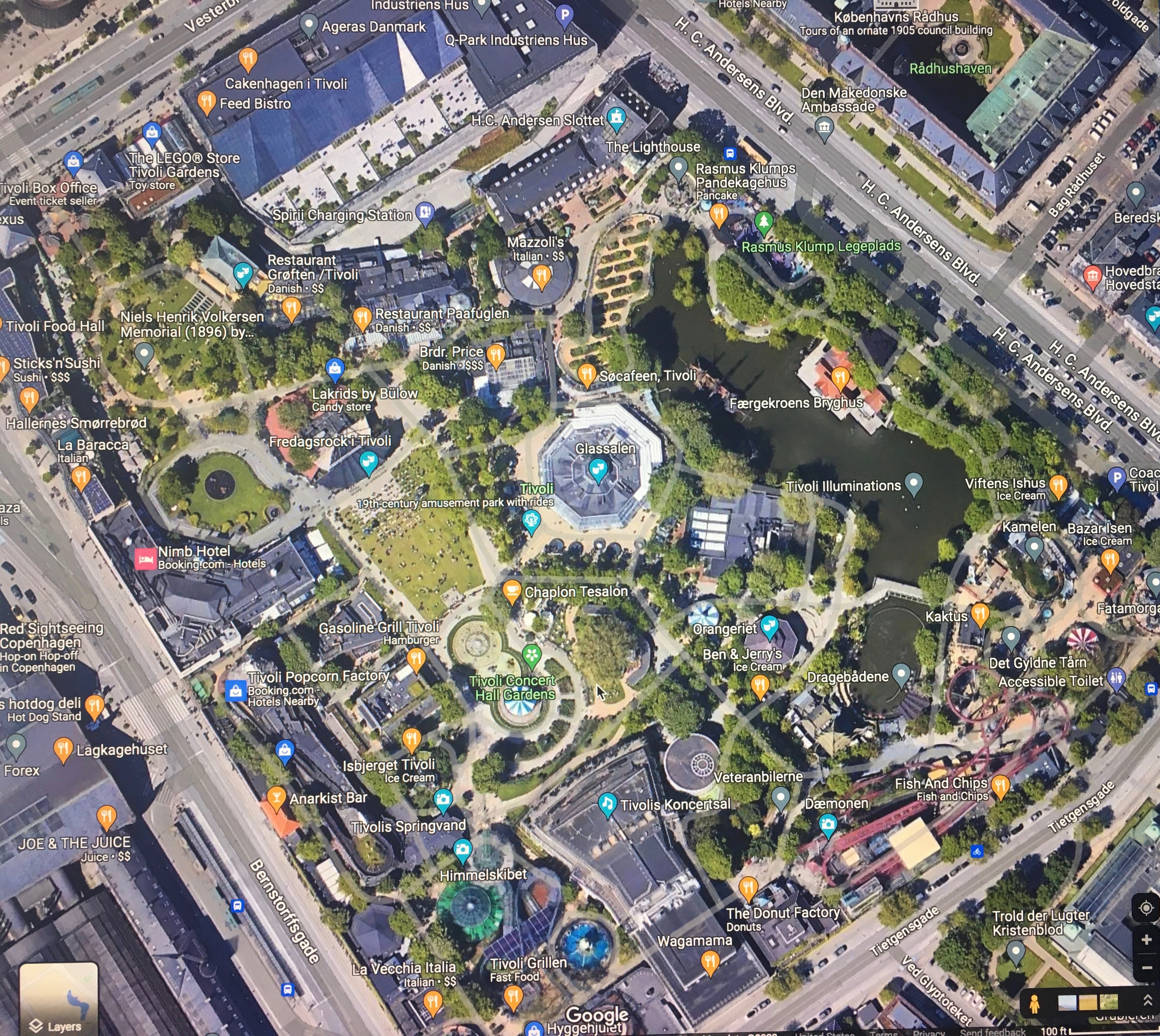
My Tivoli Evening. I didn’t have an attendance count, but certainly enjoyed my summer evening at Tivoli. I savored Danish snacks in one of the park’s restaurants and enjoyed the music from a nearby bandshell. I also savor the memory of two young ladies, off to one side of the bandshell, informally performing little balletic movements to the music.
Tivoli magic was working for both the young ladies—and for me. ds
© Dennis Simanaitis, SimanaitisSays.com, 2023
 Simanaitis Says
On my many trips to Copenhagen, I especially enjoyed boat touring in the evening, taking in the great variety of culture, entertainment and architecture while sipping wine and enjoying light nibbles.
Navigating via trams is IMHO the great ground transport, although I’d enjoy biking if such were available. I commented on a recent trip about the American obsession with bike lanes, to which my local guide reacted quizzically … saying they seemed to defeat the versatility and freedom of pedal travel … and were a waste of real estate.
I love the European ability to integrate mythology and fairy tales into their culture, something we Americans lack or deal with only clumsily or commercially. I keep coming back to the wistful and idyllic Little Mermaid, to me, a touchstone of tranquility and innocence.
I’ve been to Copenhagen 3 times, ironically 2 times in the last 6 weeks. Unfortunately, I’ve only stayed more than one night one time, and that was in 2002. I stayed in the Radisson which is just off the upper-left of your Google view of Tivoli.
I was there in the slow period between November and Christmas. I didn’t see any Danish tiny dancers, but they did build a ski slope on the Radhuspladsen and there was professional competition as well as general fun and play on the slope.
Did you see the “Little Mermaid” statue in the harbor?
The Little Mermaid was celebrated by quite a few people when I saw her. Still a sweetness.
To me, the Little Mermaid is an iconic presentation of the theme of longing … in her case for her lost tail and unfettered freedom of the seas. That’s a theme played out universally in literature and performances … usually a longing for a past youth and innocence or for what could be.
Blanche DuBois in Streetcar Named Desire; Madge in Picnic; Norma Desmond in Sunset Boulevard; Citizen Kane’s Rosebud … those are just a few of the endless list from our US culture.