
Simanaitis Says
On cars, old, new and future; science & technology; vintage airplanes, computer flight simulation of them; Sherlockiana; our English language; travel; and other stuff
LE TRAIN BLEU
THE ENGLISH, with a presence in the French Riviera since 1840, all but invented the idea of a Mediterranean resort. And the Companie Internationale des Wagons-Lits et des Grand Express Européens provided a means of traveling between fog-engulfed London and this sun-favored coast. One such means was Le Train Bleu, the Blue Train. Today, we’ll look at the Blue Train, its history and at two of its literary celebrations. Tomorrow, we’ll unravel the matter of Woolf Barnato and his Blue Train Bentley.
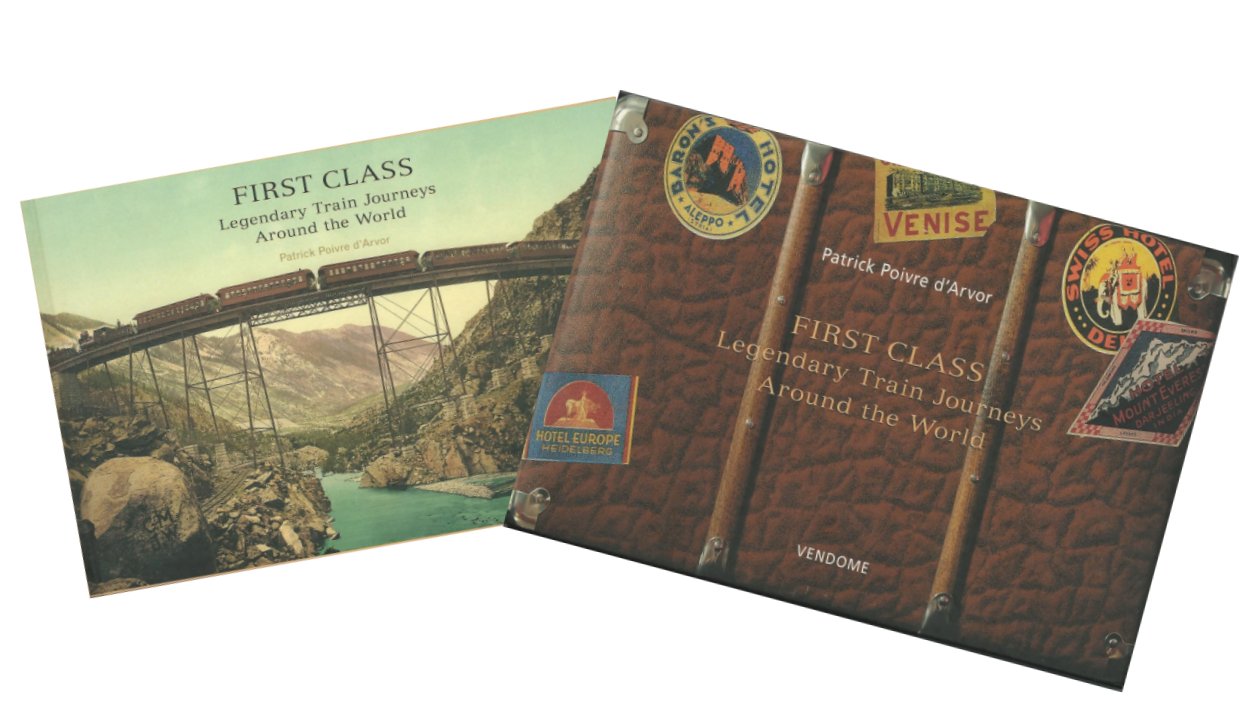
First Class: Legendary Train Journeys Around the World, by Patrick Poivre D’Arvor, The Vendome Press, 2007. Both www.abebooks.com and www.amazon.com list it and the other books cited here.
Patrick Poivre D’Arvor’s First Class: Legendary Train Journeys Around the World is a bibliophile’s delight, with artful descriptions of 11 famous trains, from the “Toy” Train of Darjelling to Railways of the Andes—and le Train Bleu. (The book also cites another completely different Blue Train that ran between Cape Town and Pretoria, eventually to Victoria Falls.)
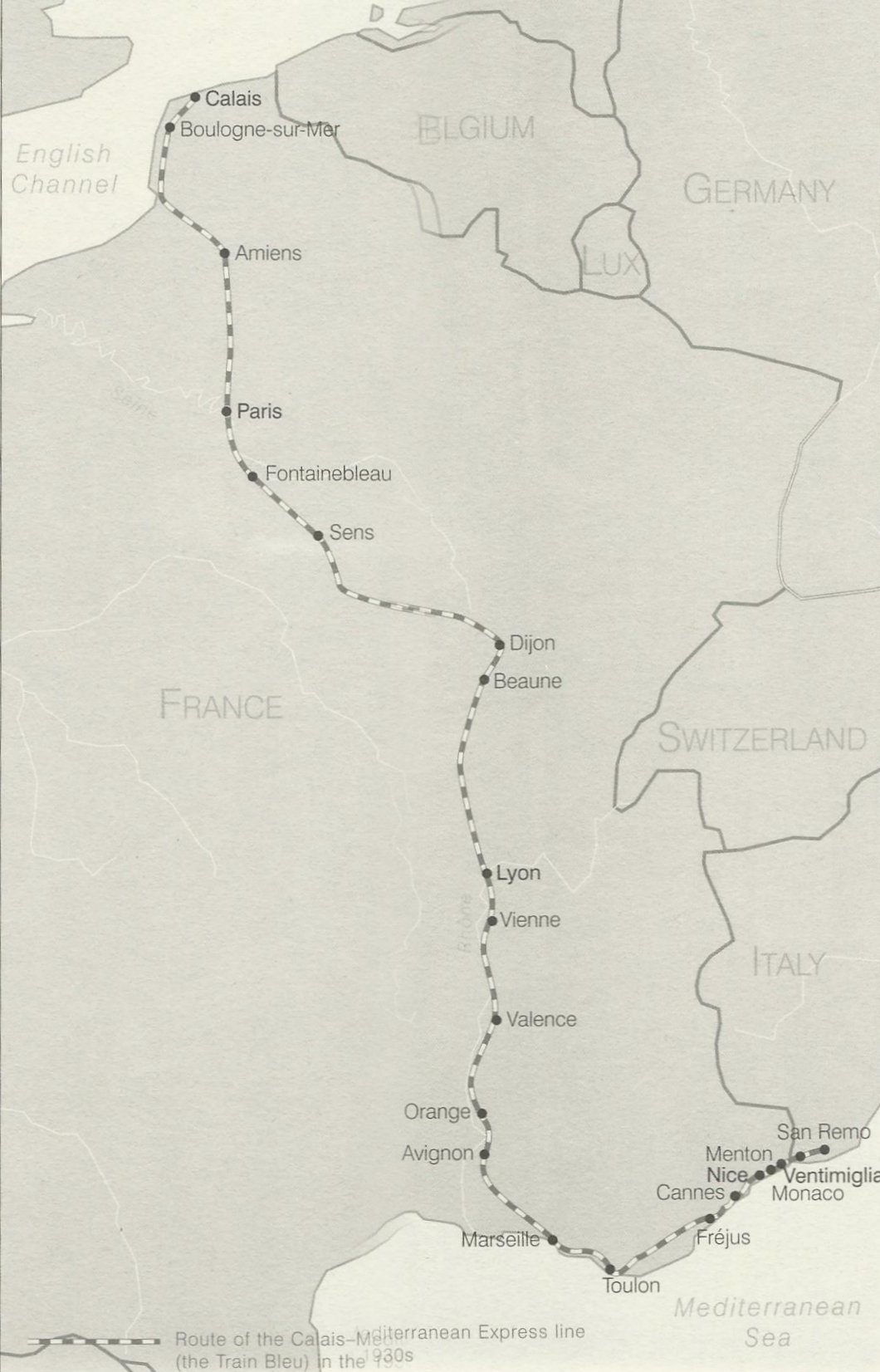
The French Blue Train route, Calais to San Remo. This and other images from First Class: Legendary Train Journeys Around the World.
In 1893, it became possible to board a train in London, cross the channel and travel directly to Italy via the Calais-Nice-Rome Express. Six years later, the itinerary split in two: the Calais-Rome Express and the Calais-Mediterranean Express.
In 1922, this latter train’s varnished teak carriages were replaced with those of steel—blue liveried with gold trim—and thus was born the Blue Train.
In 1929, what had been a November-to-May season on the Riviera became a year-round destination, the Blue Train offering daily service in both directions. English clientele departed London’s Victoria Station in time to catch the midday ferry to Calais. The Blue Train took them to Paris, where other passengers would board for a prompt 7:30 p.m. departure.
This gave the passengers time to settle into their compartments and dress for dinner. As the Blue Train sped south, passengers would enjoy dinners, the likes of Paté de Canard Périgourdine and Selle de Veau Orloff accompanied by Meursault Goutte d’Or 1923.
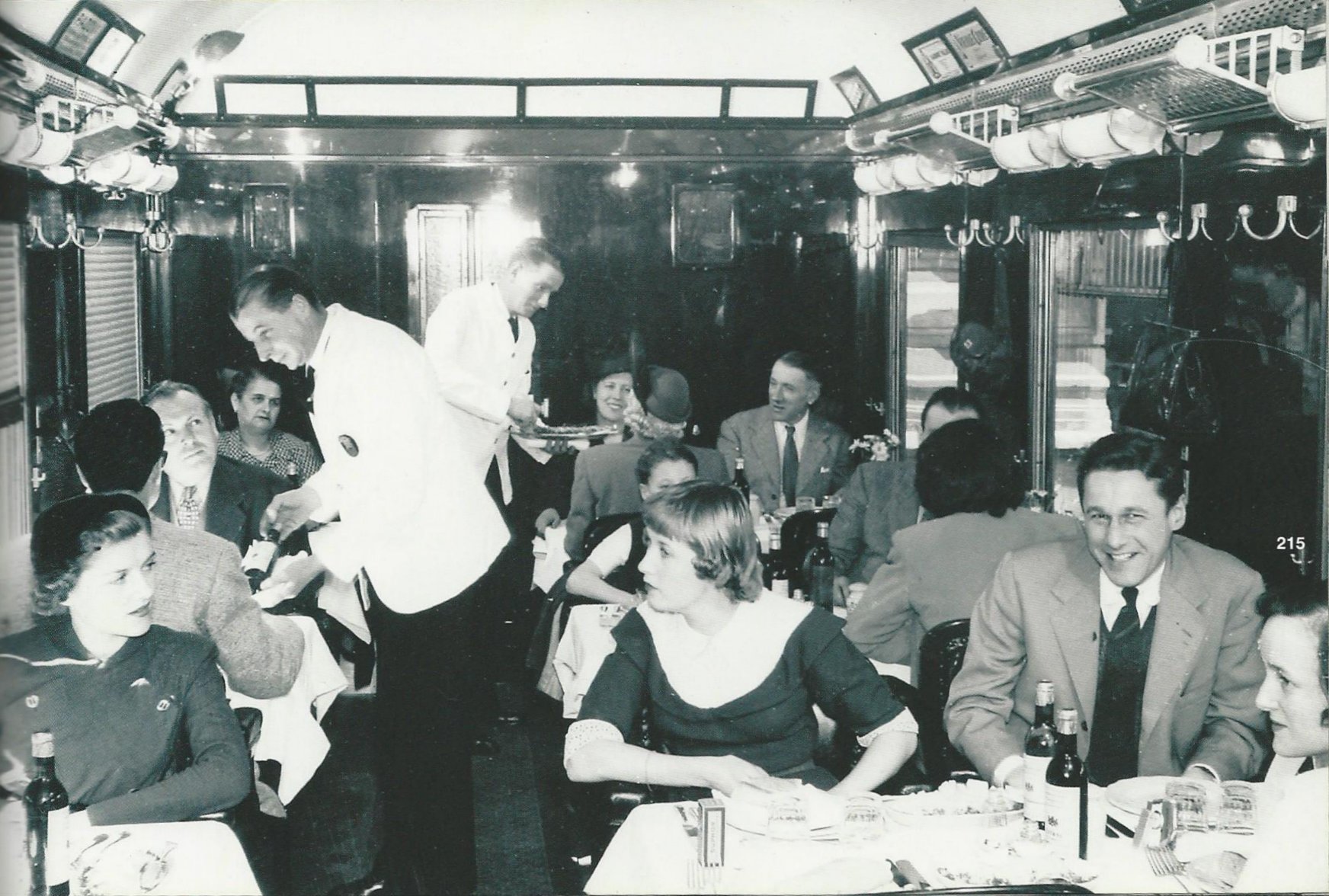
The Blue Train dining car served 42 passengers at each of two sittings.
A major innovation of the Blue Train was its offering single compartments designed for those traveling alone. In recognition of the social possibilities aboard, these single accommodations had doors to adjoining suites.
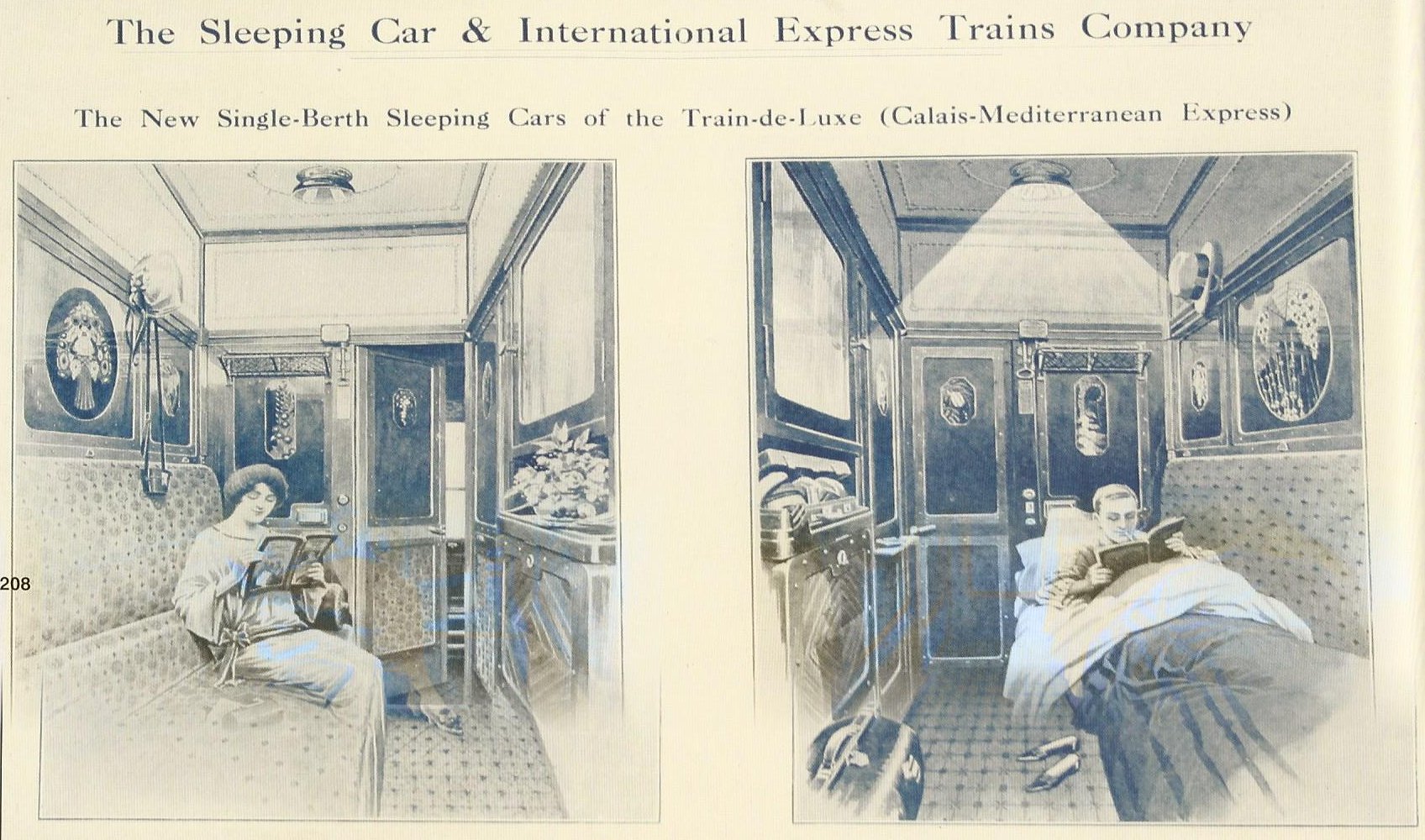
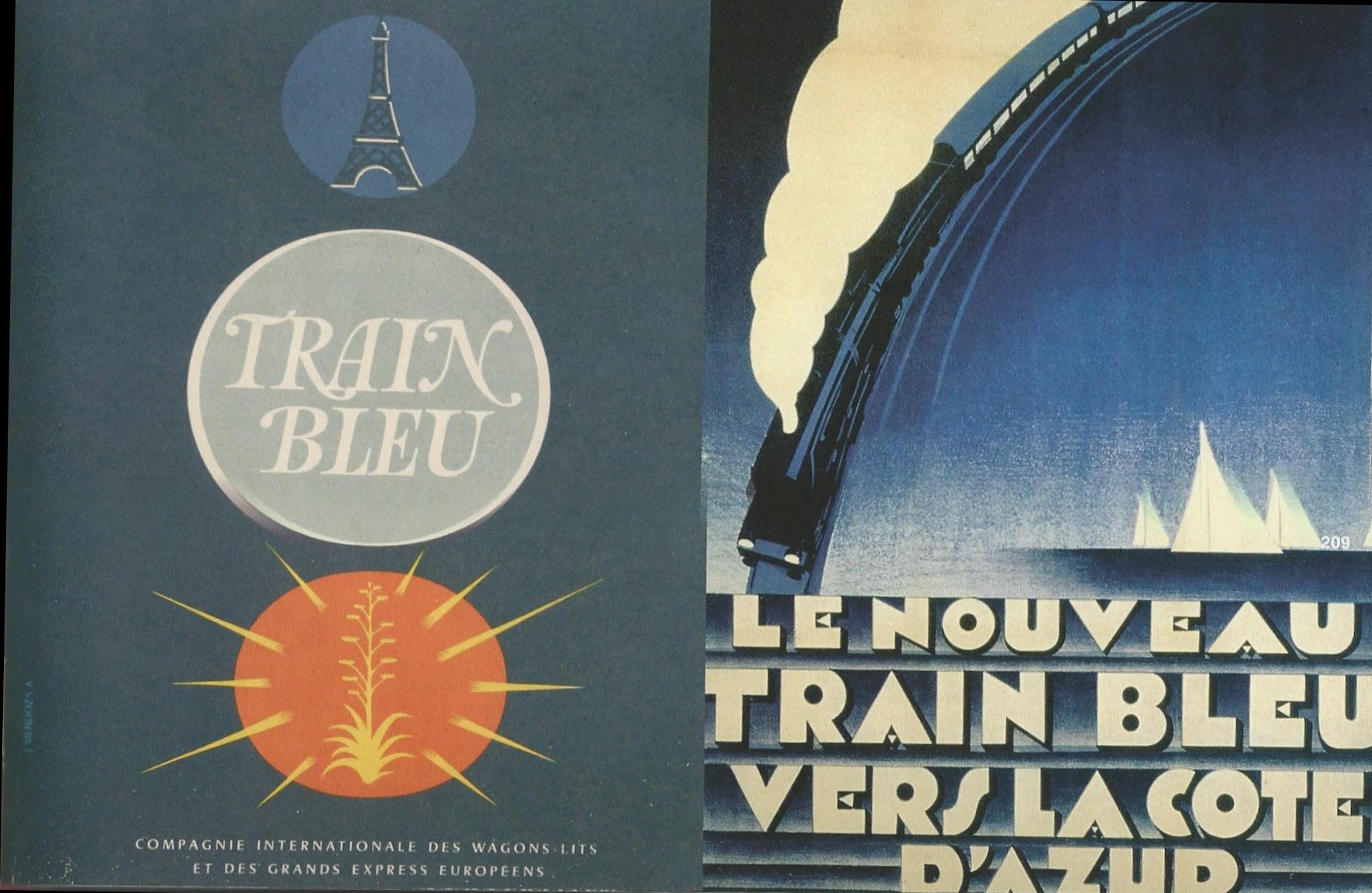
A Blue Train advertisement from the 1920s.
Daybreak came with the Marseille arrival. Passengers enjoyed breakfast as the Blue Train crossed the Toulon Viaduct on its way to Cannes. By 11:00 a.m., it arrived at Nice. Subsequent Riviera stops included Monaco (at the Grand Prix circuit’s “Station Hairpin”) and Menton, then across to Ventimiglia, Italy, and on to San Remo for a 12:30 p.m. arrival.
Alas, by mid-century, air and road options diminished Blue Train popularity. Developed in the 1980s, France’s high-speed TGV (Train á Grande Vitesse) put paid to the idea of luxurious and leisurely travel.
However, the concept lives on in the elegant photos in First Class: Legendary Train Journeys Around the World.
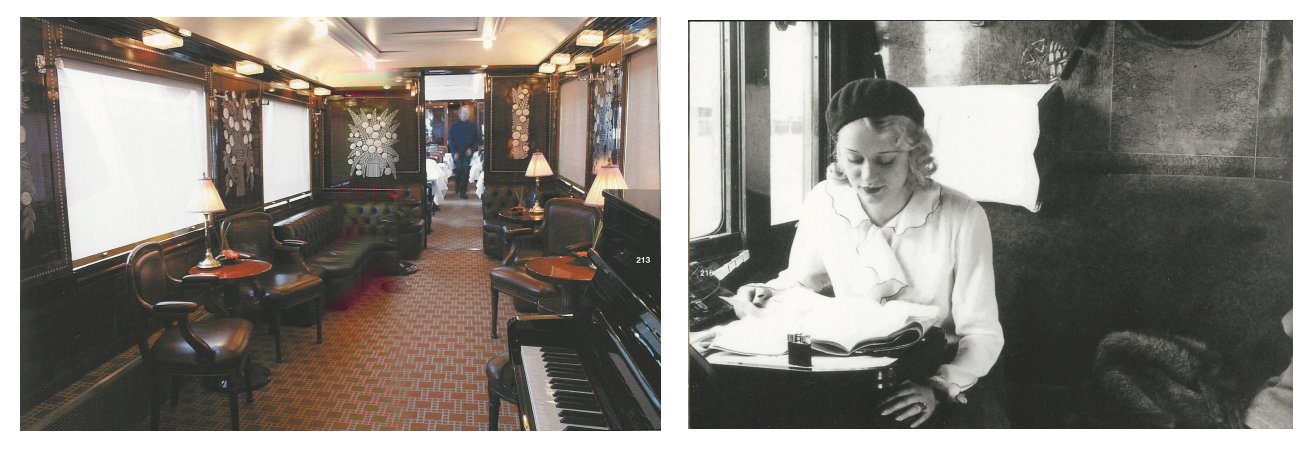
The Blue Train attracted novelists as well. Agatha Christie set her Belgian detective Hercule Poirot to solving The Mystery of the Blue Train in 1928, predating her considerably more popular Murder on the Orient Express, 1934.
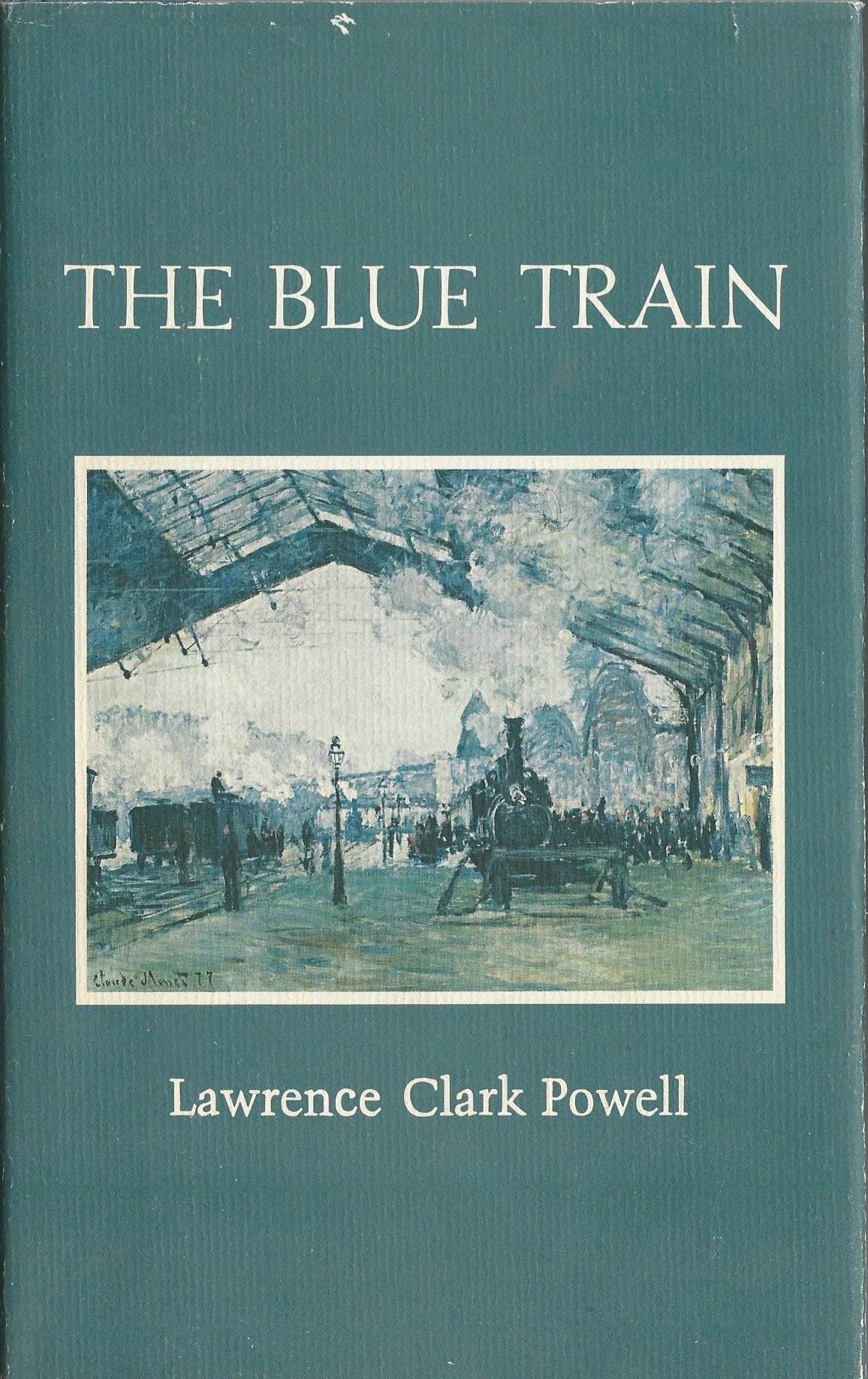
The Blue Train, by Lawrence Clark Powell, Capra Press, 1977.
Lawrence Clark Powell (1906-2001) was a highly respected author, literary critic and, for a long time, dean of the School of Library Service at U.C.L.A. He originally composed The Blue Train in 1941, rewrote it in 1966 and, finally, in 1975, gave the book a final revision before publication.
Its cover blurb describes The Blue Train as Powell’s “tender, youthful celebration of life and love, overdue and welcome in an age surfeited with brutal, pornographic sex.”
This carries even more truth today than it did when written back in 1977. ds
© Dennis Simanaitis, SimanaitisSays.com, 2013


Hi Dennis.
If you are ever in Paris, check out this restaurant for lunch!
http://www.le-train-bleu.com
David Raney
Sent from iPad by Raney Associates