
Simanaitis Says
On cars, old, new and future; science & technology; vintage airplanes, computer flight simulation of them; Sherlockiana; our English language; travel; and other stuff
L.C. CRESSWELL’S AUTOMOTIVE ART—AND A QUIZ FOR YOU
LAURENCE POMEROY’S THE GRAND PRIX CAR cites no less than Leonardo Da Vinci. It would be typical of Pom to offer this quote in Tuscan dialect, but indeed he favors us with a translation: “How small,” said Da Vinci, “is the power of words to convey notions of visible things, and on the contrary how well fitted for this task is the craft of the limner.”
A limner, by the way, is a painter, especially of portraits or miniatures. And both Da Vinci and Pom’s principal illustrator L.C. Cresswell were limners extraordinaires. Here are examples of Cresswell’s works gleaned from Pom’s Vol. 1. It’s an extended piece for easy viewing should you take part in the Quiz.
1911 Fiat. Pom described, “The Fiat which won the 1911 Grand Prix de France was a catalogue model privately entered. It was a genuine racing car, designed in 1909, but raced in America during 1910 in the Savannah Grand Prix….”
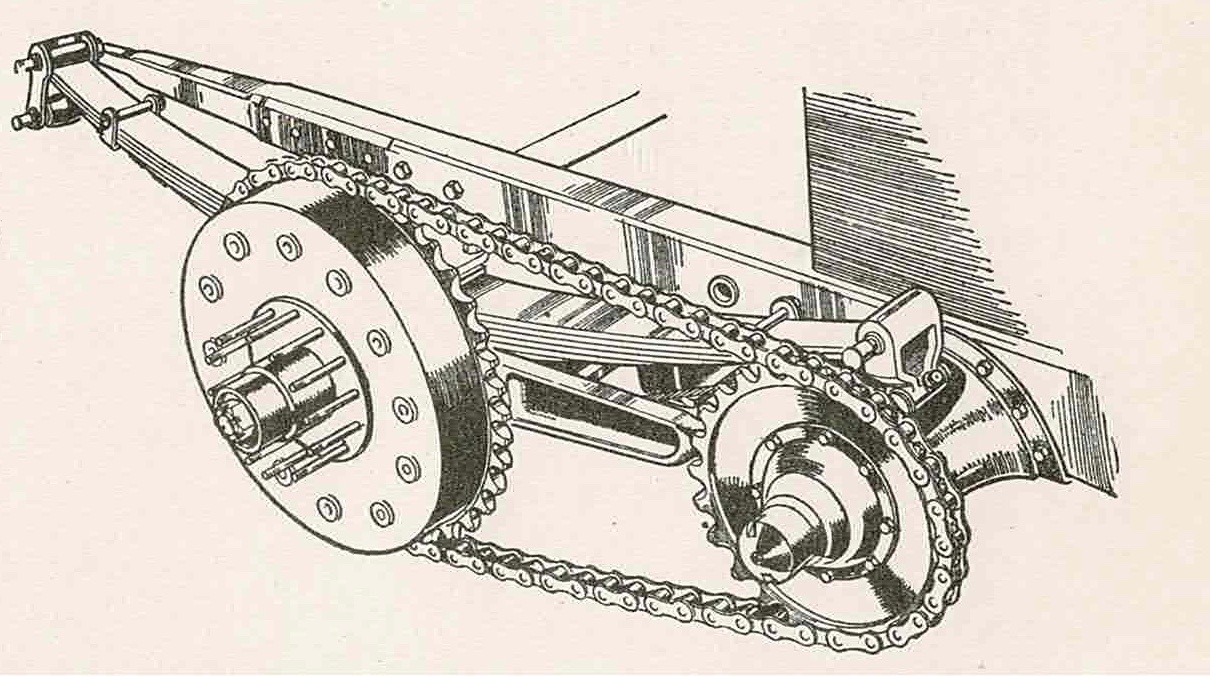
Fiat chain drive.
“The chassis design,” Pom noted, “was completely in accord with the normal practice of the day, but Fiat were one of the last constructors to abandon chain drive…. With chain drive unsprung weight is reduced to a minimum, the springs are relieved from driving torque and transverse torque is contained within the frame so that there is no tendency for one back wheel to lift off the road when accelerating.”
Fiat Engine Details. Pom detailed, “The engine formed the principal feature of interest in this car for it anticipated many features incorporated in later cars. The drawings show the cylinder block was formed from two iron castings, the heads being cast integral and carrying four vertical valves per bore each held (as shown in a detail sketch) in a detachable cage.”
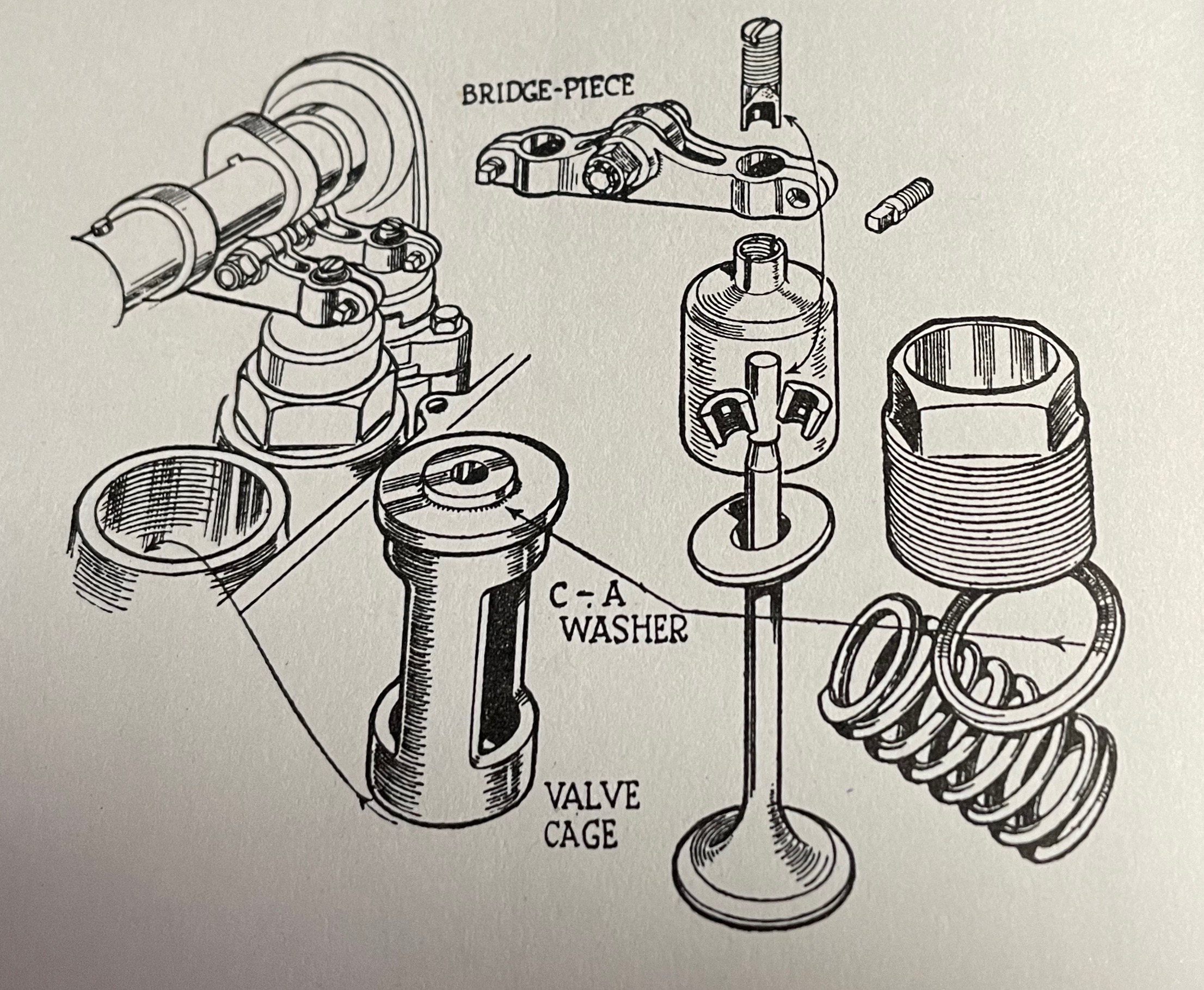
Fiat valve gear.
1927 Delage. “This car,” recounted Pom, “was designed by Lory to a formula limiting capacity to 1 1/2 litres and requiring the driver only as crew. Despite the engine size, 177 b.h.p. was obtained by combining supercharging, eight small cylinders and an engine speed of 8,000 r.p.m., although to ensure reliability a five-speed gearbox with an overdrive permitted the maximum speed of 127 m.p.h. to be reached at 6,500 r.p.m.”
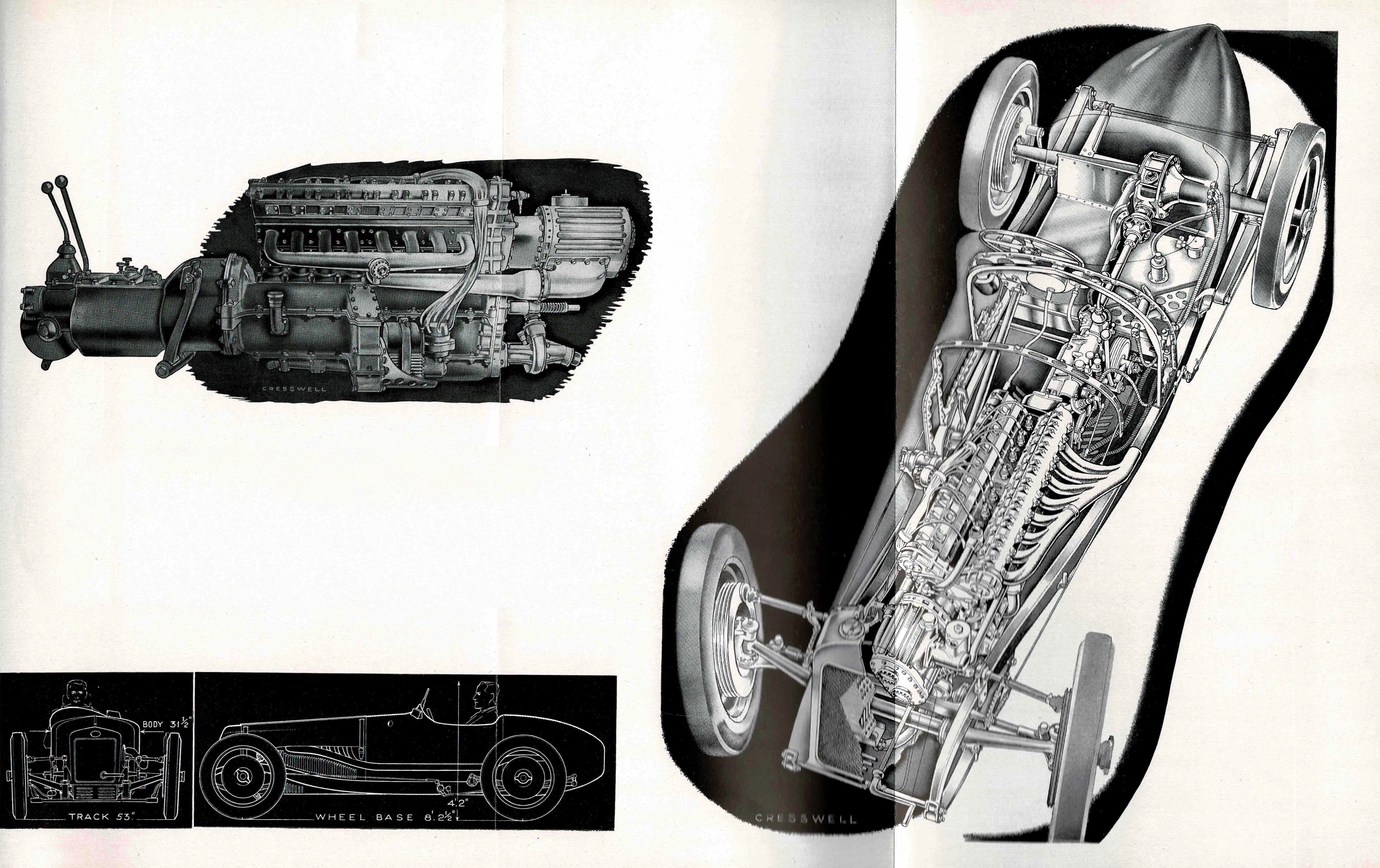
1927 Delage.
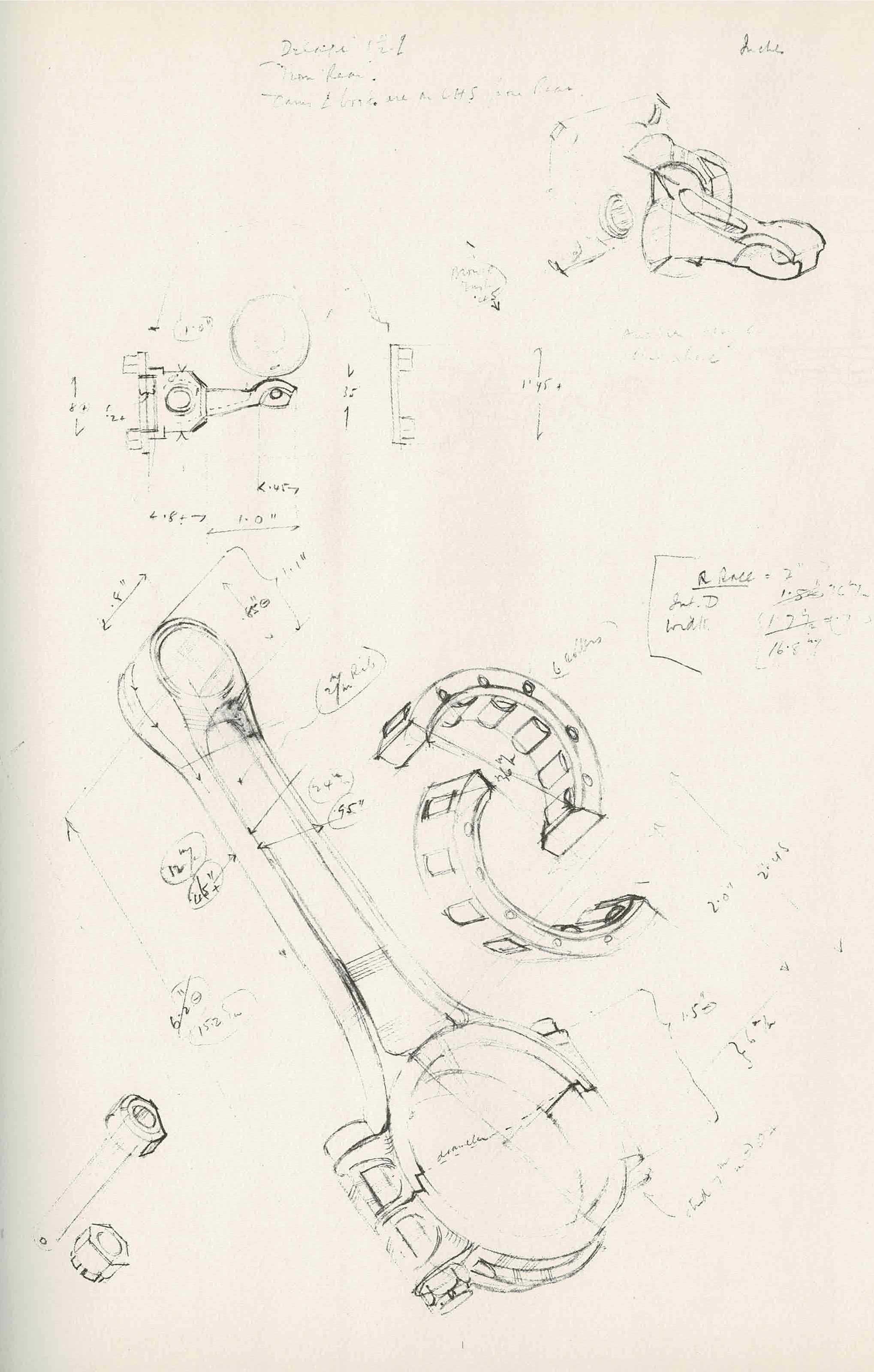
“The engine,” Pom continued, “also had a remarkably high mechanical efficiency, roller bearings being used throughout the whole of the crankshaft assembly and for almost all of the auxiliary drives, the total number of bearings of this kind being no less than 48.”
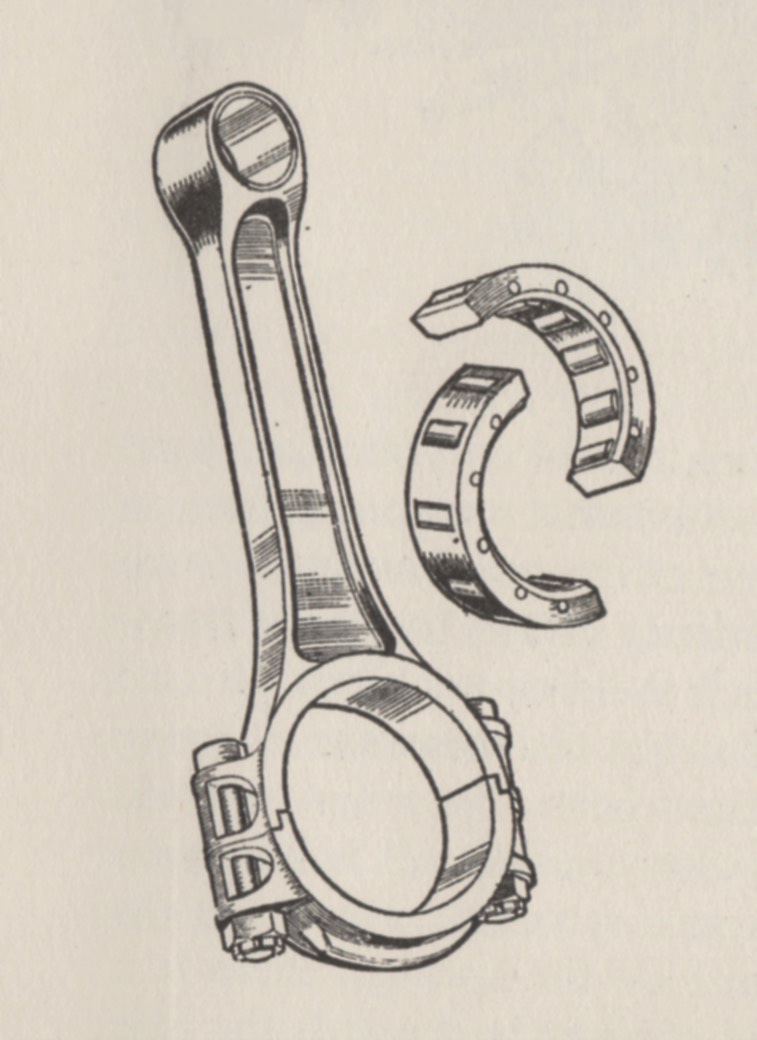
A Delage roller-bearing con rod.
1932 Alfa Romeo Type P.3. Pom recounted, “In 1931 Sig. Jano designed a [bimotore] twin-engined car for Alfa Romeo, having two gearboxes and propeller shafts, with the driver and steering gear mounted on the centre-line of the car. In the following year he retained this principle for the P.3 model shown here, which had a single, eight-cylinder engine giving about 180 b.h.p.”
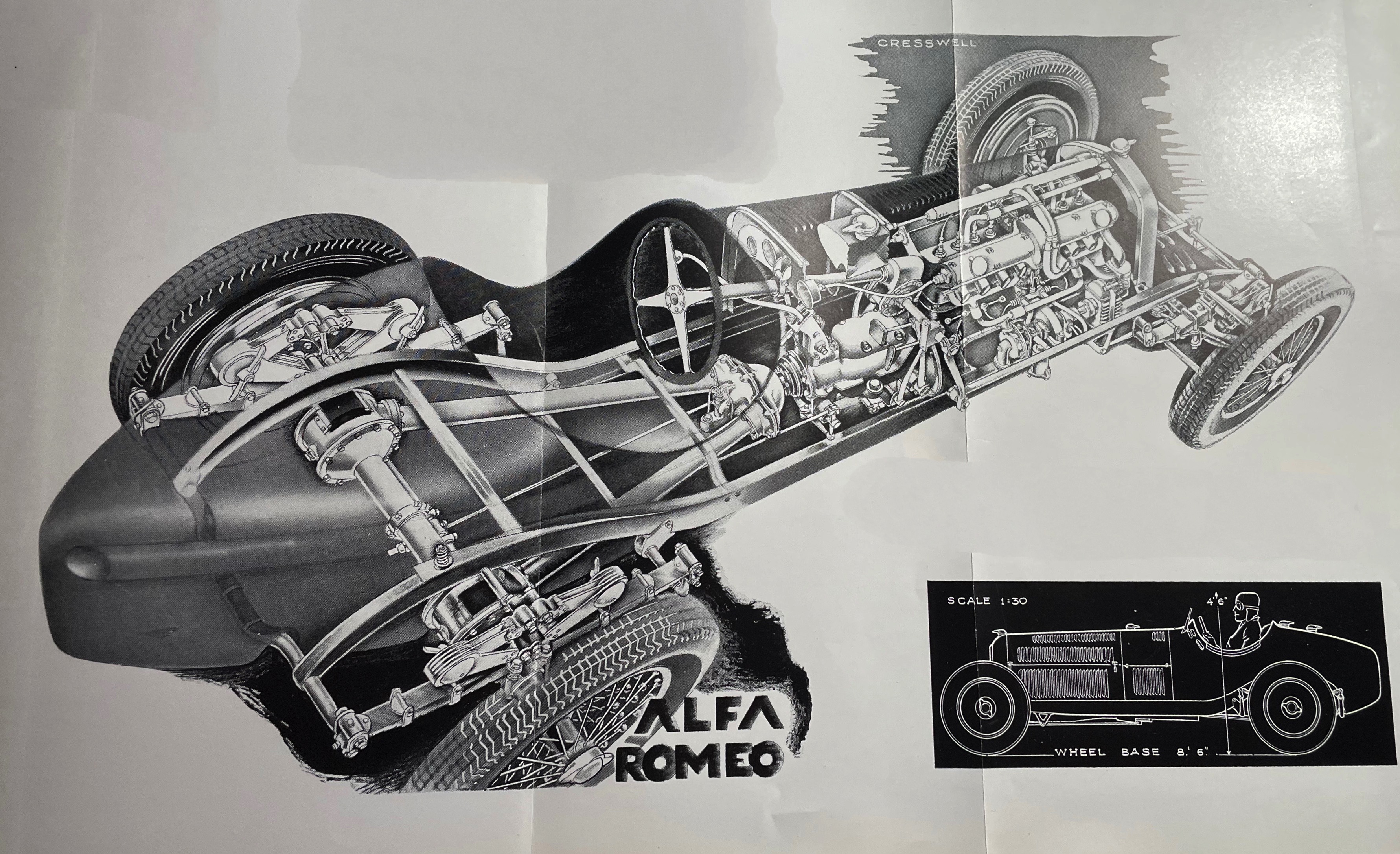
1932 Alfa Romeo Type P.3.
Pom continued, “A modified version of the 1931 transmission was used embodying two propeller shafts and two crown-wheels and pinions, the differential being mounted at the apex of the V and thus virtually sprung weight.”
P.3 Front Axle Detail. Pom also observed, “The semi-elliptic front springs … were shackled at both ends, the axle located by two radius arms attached below the H-section axle beam and set inside the springs. The axle was, therefore, prevented from turning when the front brakes were applied.”
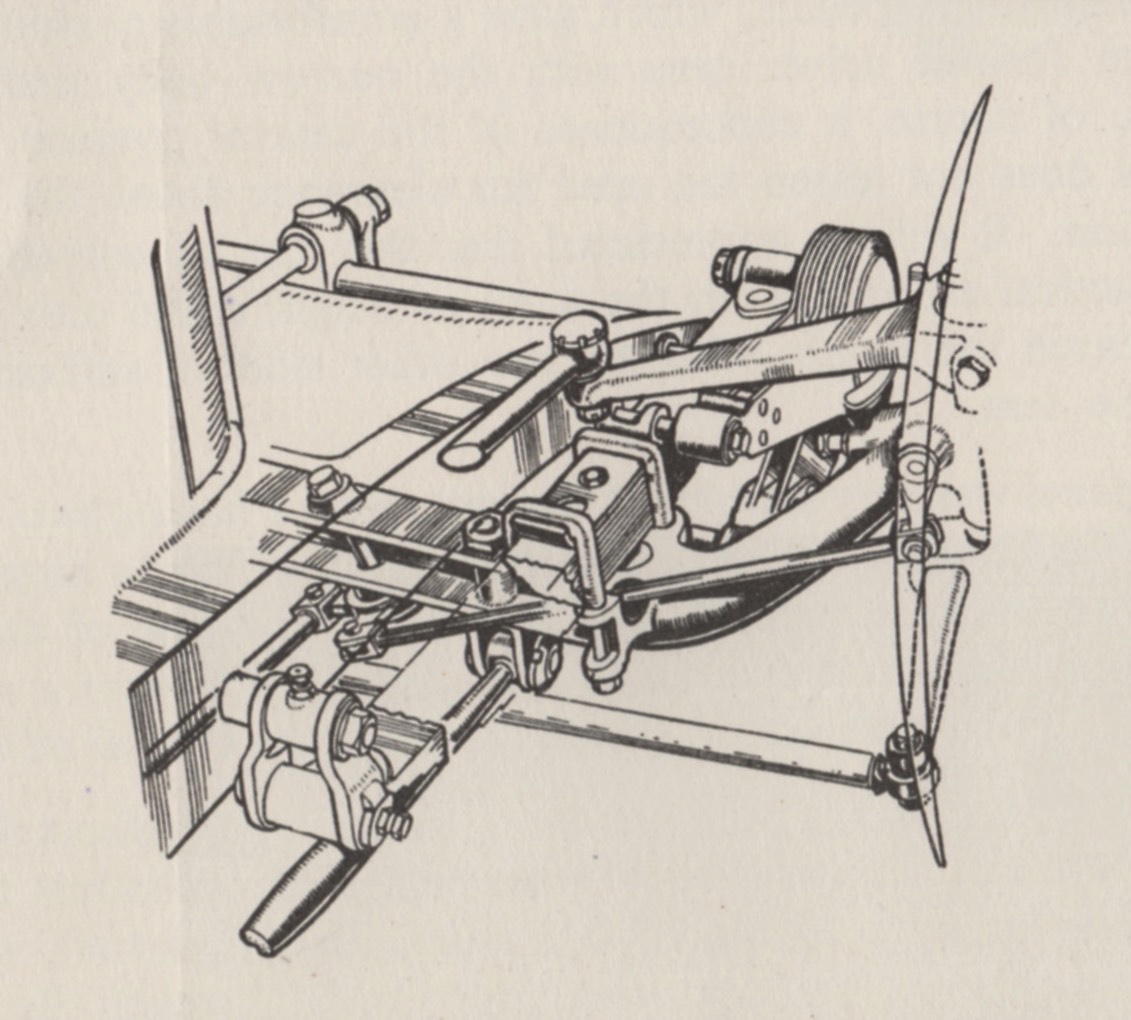
P.3 front axle detail.
Pom’s caption read, “The arrangement of the front axle radius arm which is in compression during braking can be seen in this detail drawing.”
1939 Mercedes-Benz, Type W.163. The W.163 evolved from the firm’s W.154 which, Pom noted, “was a direct continuation of the 1937 Type 125, many of the parts being interchangeable. In 1939 improvements were made in detail and the Type W.163 won five out of seven races in the last season before the outbreak of World War II.”
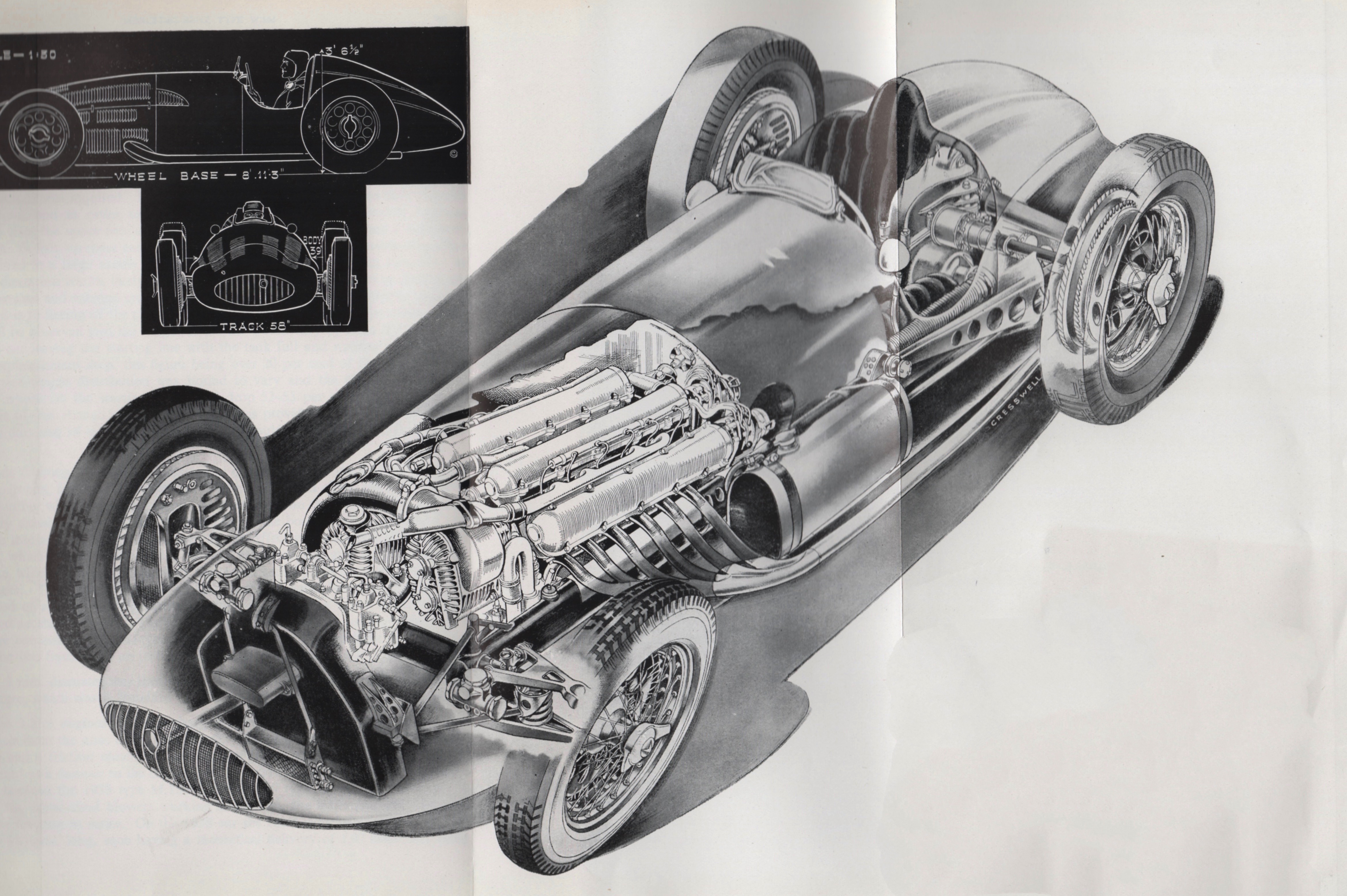
1939 Mercedes-Benz Type W.163.
Pom continued, “The twelve-cylinder V-type engine followed constructionally along the conventional lines of Mercedes-Benz engineering practice, but owing to the small size of the cylinders it was possible to raise the crankshaft speed to 7,800 r.p.m. In conjunction with a high supercharge pressure [ 26.5 lbs./2.86 ata.] from two Roots blowers working in series it was possible to obtain 483 b.h.p. at maximum engine speed.”
W.163 Rear Suspension Detail. Cresswell devoted a drawing to the W.163’s final drive, to which Pom observed that the De Dion rear end had an integrated back axle and gearbox.
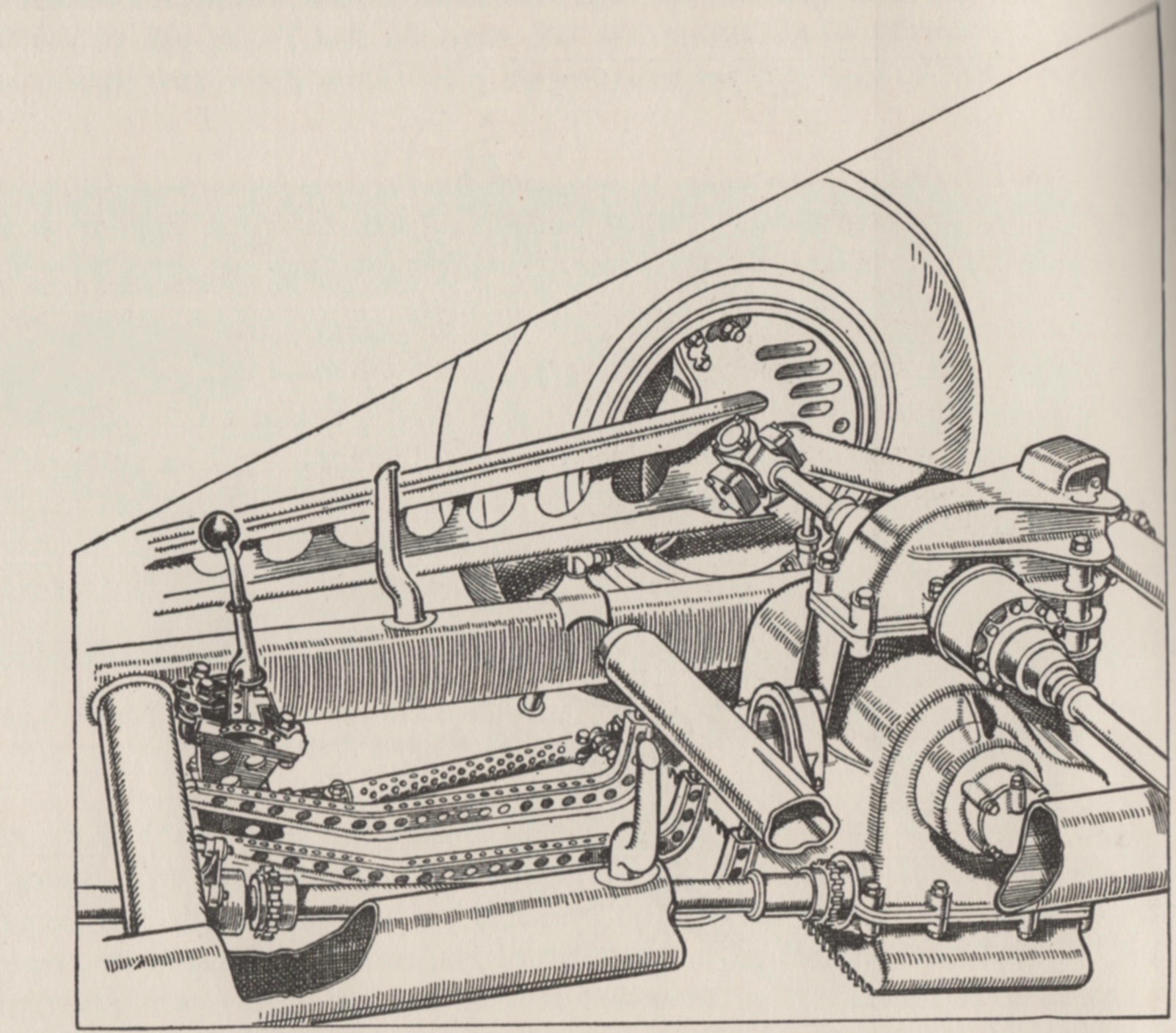
The W.163 shifter and De Dion rear.
“On all the eight-cylinder Mercedes-Benz cars,” Pom explained, “the propeller share was mounted substantially lower than the wheel hub centres…. With this arrangement it was possible to bring the seat frame well below the level of the propeller shaft without offsetting the driver in the car and to combine a very low centre of gravity with minimum frontal area and first-class visibility.”
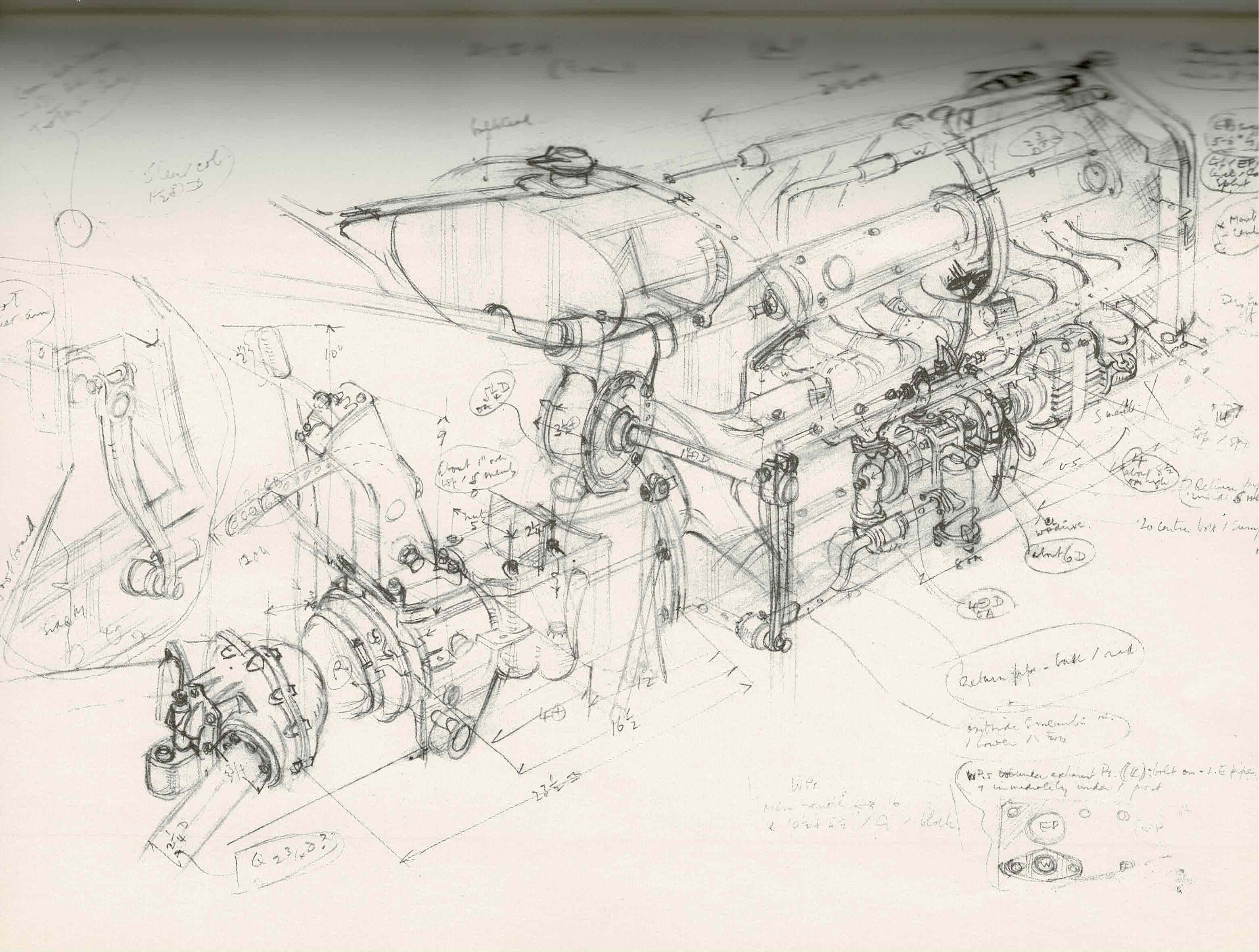
A Bonus Portfiolio of Cresswell Sketches. “These sketches,” Pom described, “show the nature of his original ‘note-taking’ which is done by the artist of the actual vehicle and it is from these that he builds up the magnificent tone and line drawings which are included in this volume in the form of double-page plates.”
And a Quiz. The following sketches, labeled A through F, are selected from the Portfolio. As Pom described, they are part of Cresswell’s “note-taking.” Your task is to identify each with Cresswell’s art exhibited above.
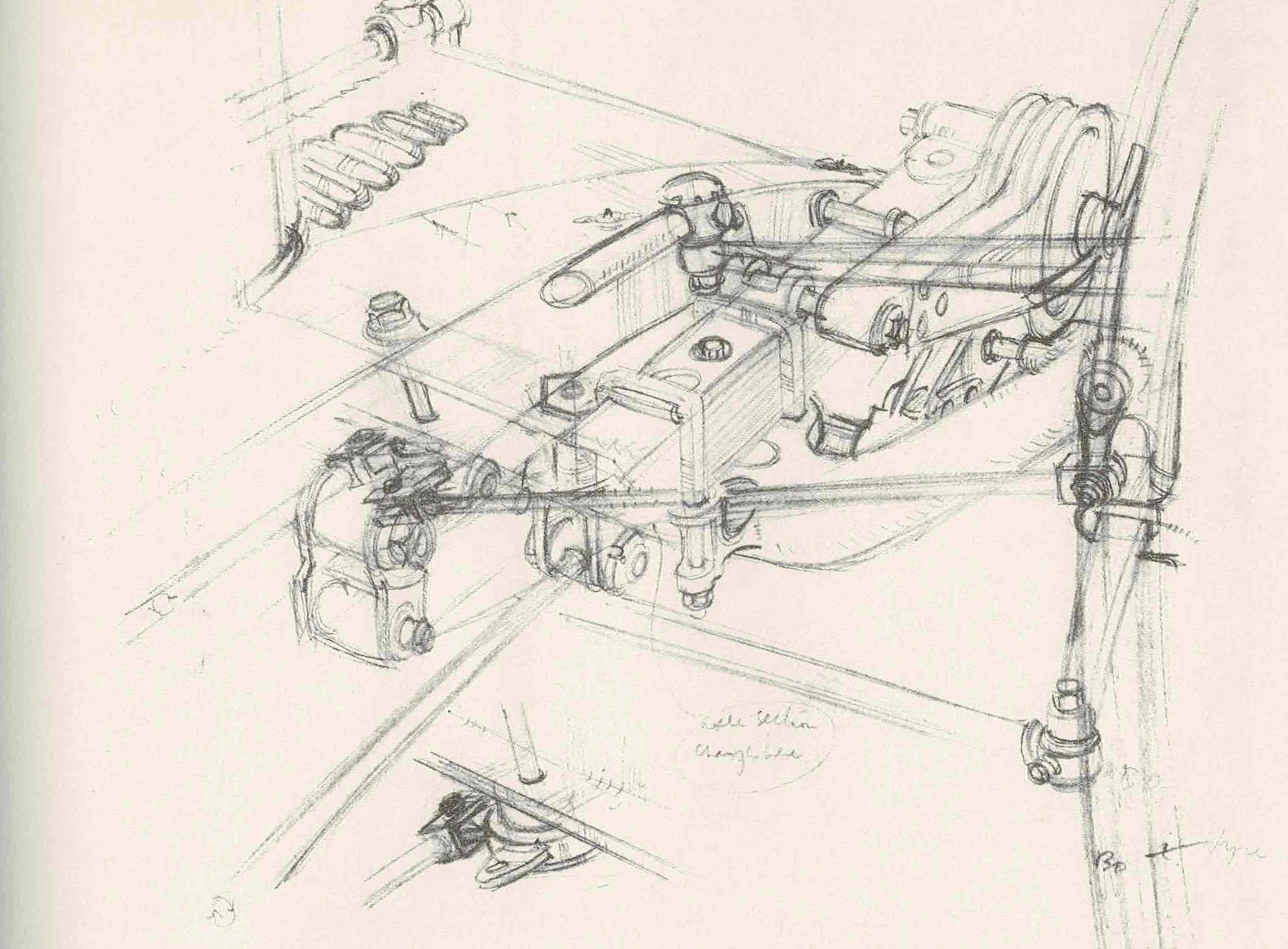
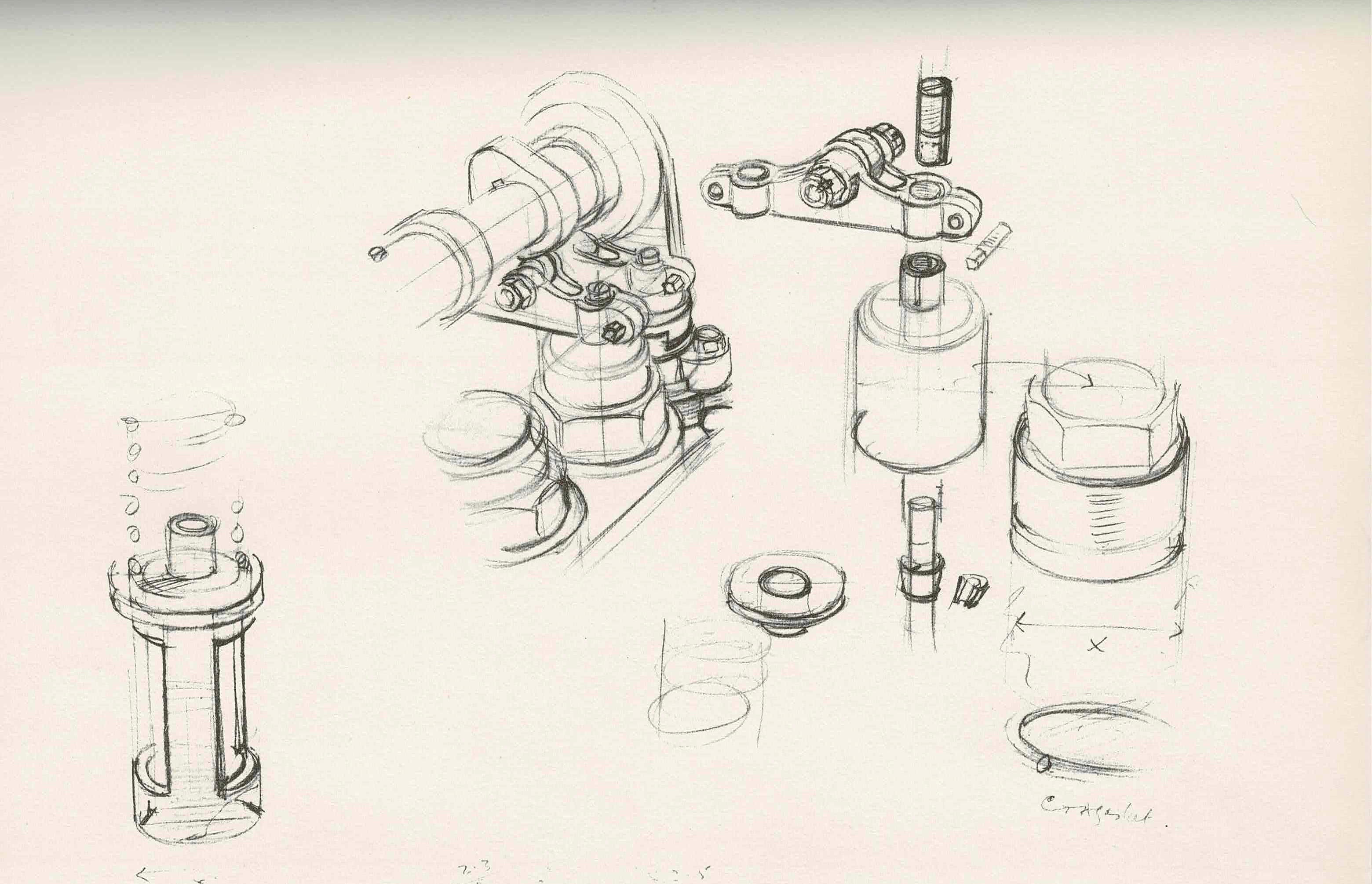
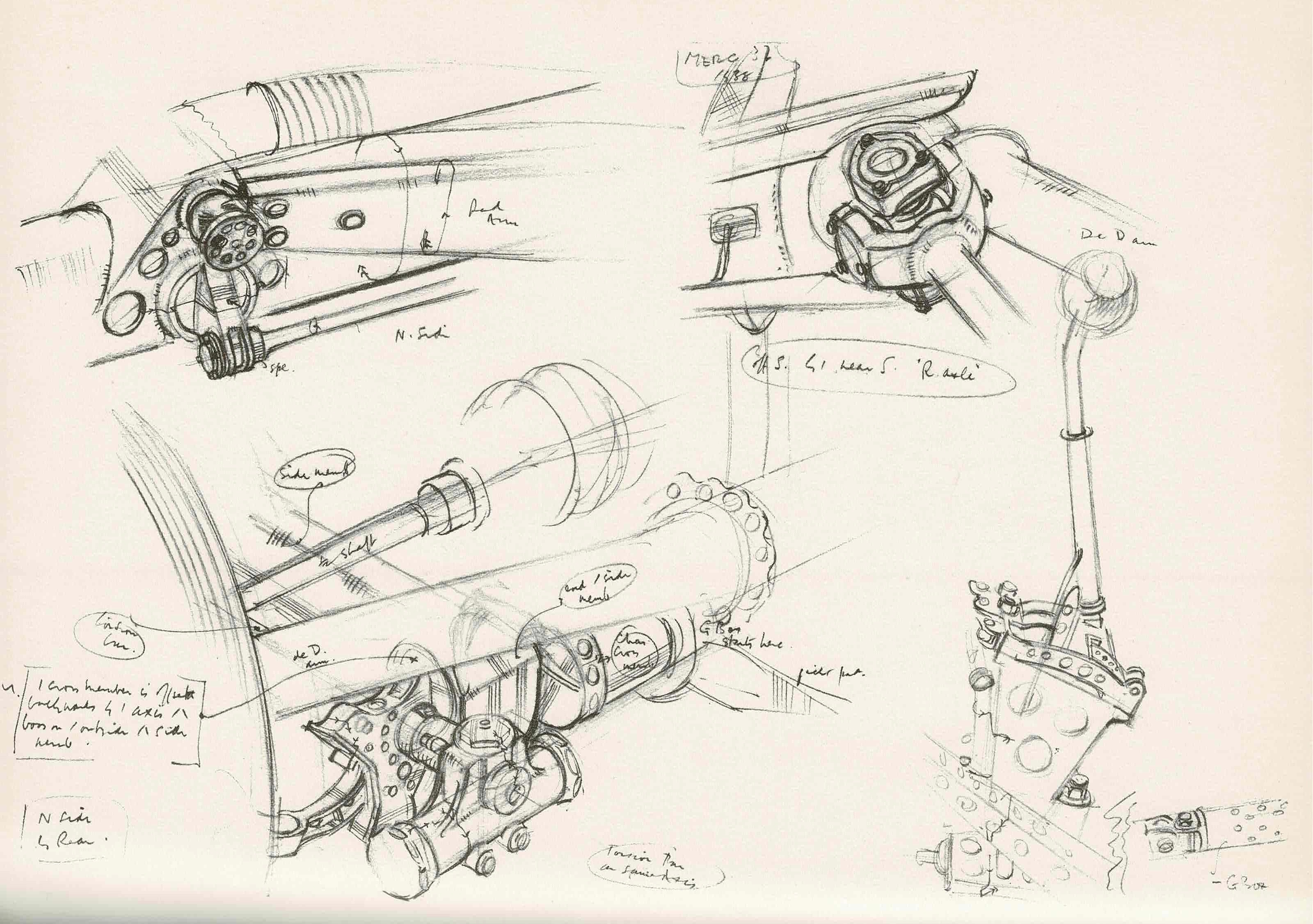
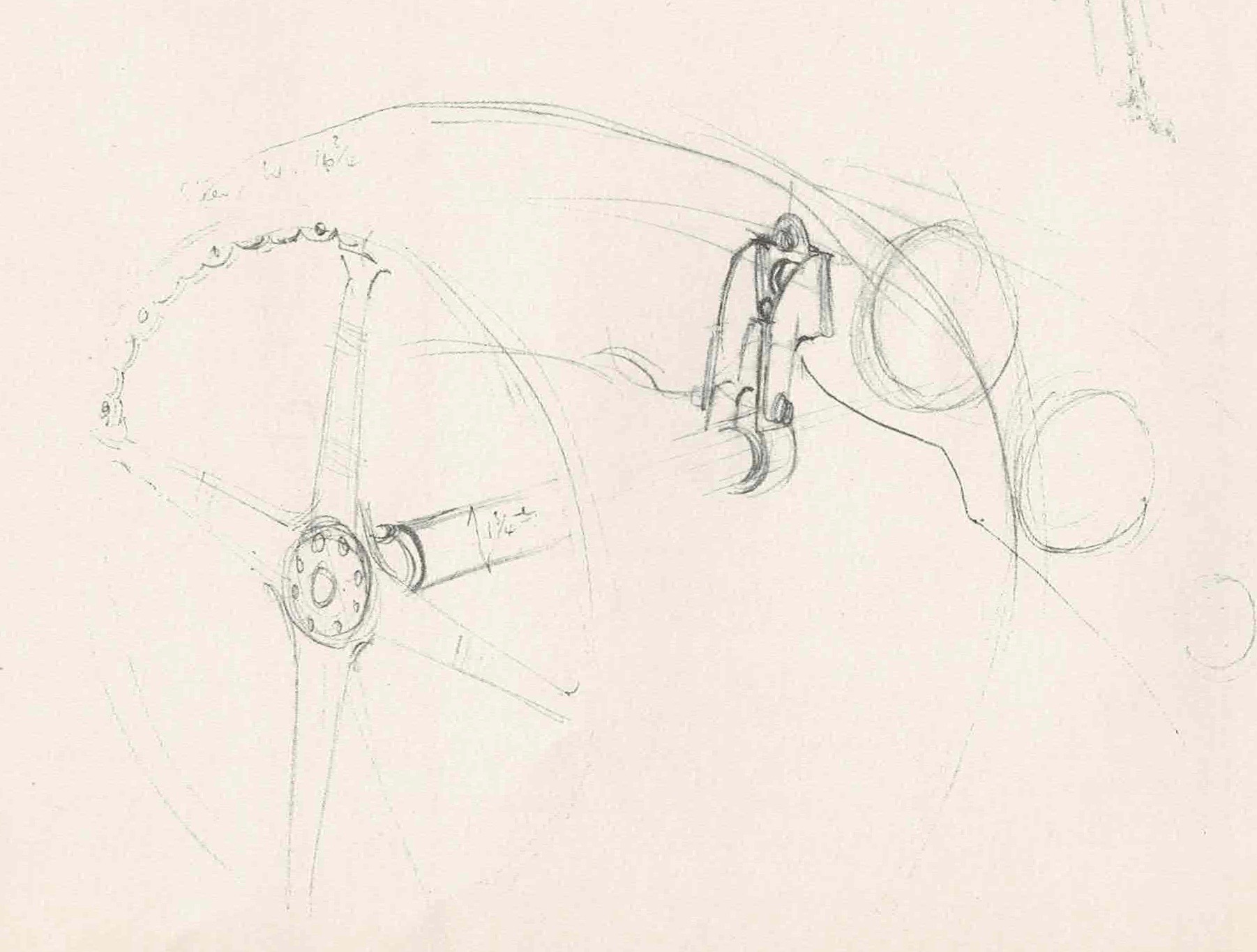
Aren’t Cresswell’s sketches glorious! Have fun. ds
© Dennis Simanaitis, SimanaitisSays.com, 2024


Wonderful stuff Dennis. In an age of digital renderings, it’s difficult to fully grasp the amount of time and skill needed to produce these highly detailed works of engineering art.
On a vaguely related note, a cherished possession of mine is a commemorative card produced by the Briggs Cunningham Museum in the 1970s incorporating a small, decorative pin which contained one of the 256 roller bearings from their 1927 Delage GP car.
The card also has a photo of the car, its history and an explanation of why the engine bearings were replaced during the rebuild. It was believed the bearings were original to the car as it raced in 1927. Kinda cool to be able to hold an actual piece of pre-war Grand Prix history.
Neat about the roller bearing!—d
A- Alfa P3
B- FIAT valves
C- Alfa P3
D- Alfa P3
E- Delage
F_ Alfa P3
Best, Bill.
Bill,
See if other readers agree. Hint: Consider C’s gearshift and U-joint.—d
Aahh yes… still in shock from a week ago… Thank you Dennis and wellness to you. Bill.
Just for the record, Bill was sharp-eyed and agreed with me on all but C. It’s the Mercedes De Dion.