
Simanaitis Says
On cars, old, new and future; science & technology; vintage airplanes, computer flight simulation of them; Sherlockiana; our English language; travel; and other stuff
CELEBRATING THE CELESTA—IN VARIED MEDIA
“THERE COMES A MOMENT IN ‘THE NUTCRACKER,’ ” Joshua Barone writes in The New York Times, December 8, 2024, “a ballet full of fantasy of fantastic music, when the Sugar Plum Fairy dances to a tune you’ve probably heard before.”

“The ‘Dance of the Sugar Plum Fairy’ is so familiar,” Barone says, “ that it’s difficult to imagine that when this music was new, in 1892, it was really new. And that’s because of the celesta.”
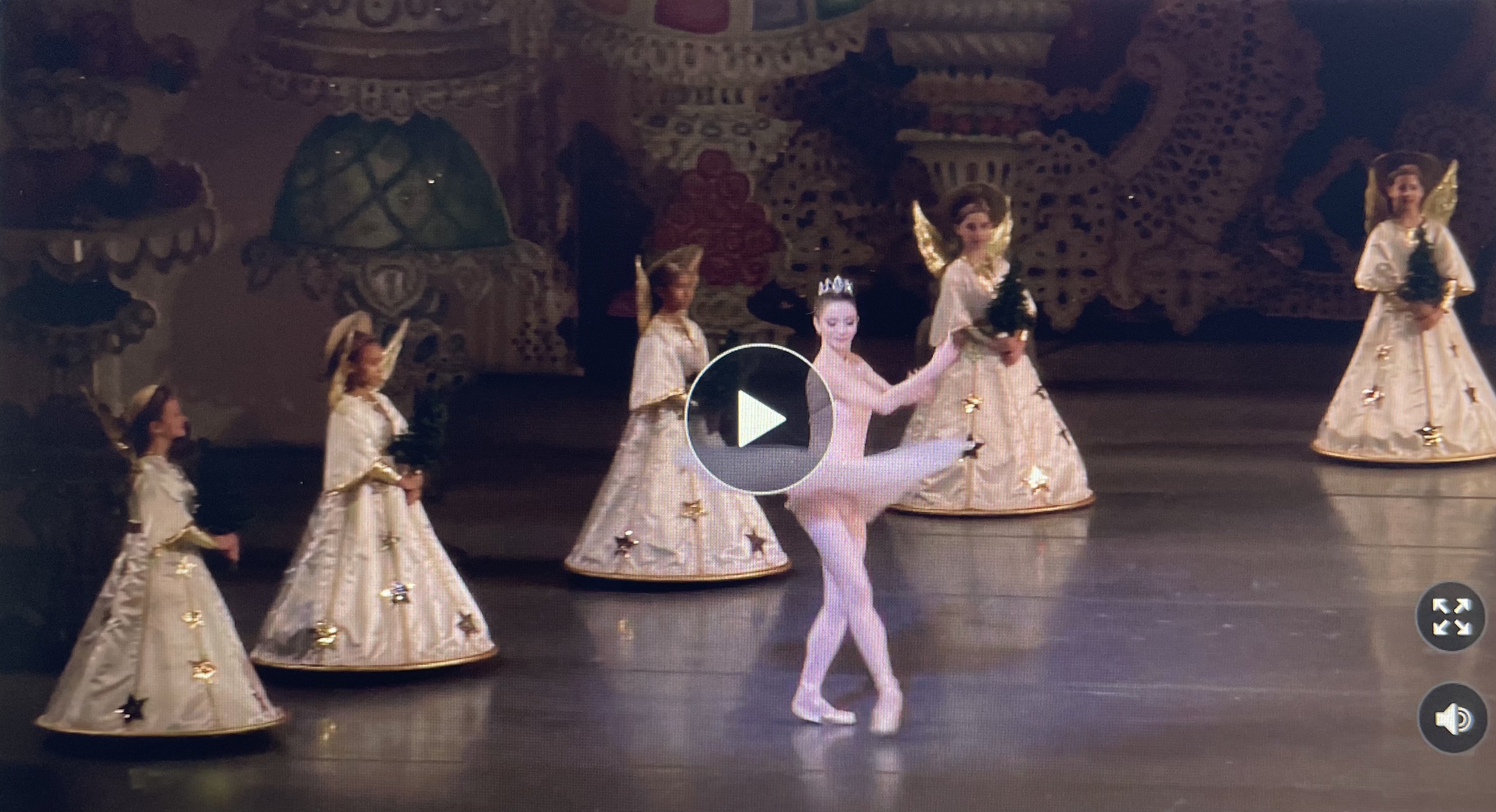
Megan Fairchild dances the Sugarplum Fairy in New York City Ballet’s production of George Balanchine’s production of The Nutcracker. (Activate if you’re online.) Image from the New York City Ballet.
In Varied Media. Here are tidbits about this relatively new musical instrument gleaned from Barone’s article and from my usual Internet sleuthing. Indeed, Barone’s online version, December 3, 2024, is exemplary of this electronic medium with its audible and visual links.
Alas, to the best of my ken these links don’t translate to SimanaitisSays. If you’re capable of accessing The New York Times online, I recommend you do so (as well as continuing here!).
Celesta Origins. Wikipedia describes, “The celesta or celeste, also called a bell-piano, is a struck idiophone operated by a keyboard. It looks similar to an upright piano (four- or five-octave), albeit with smaller keys and a much smaller cabinet, or a large wooden music box (three-octave).”
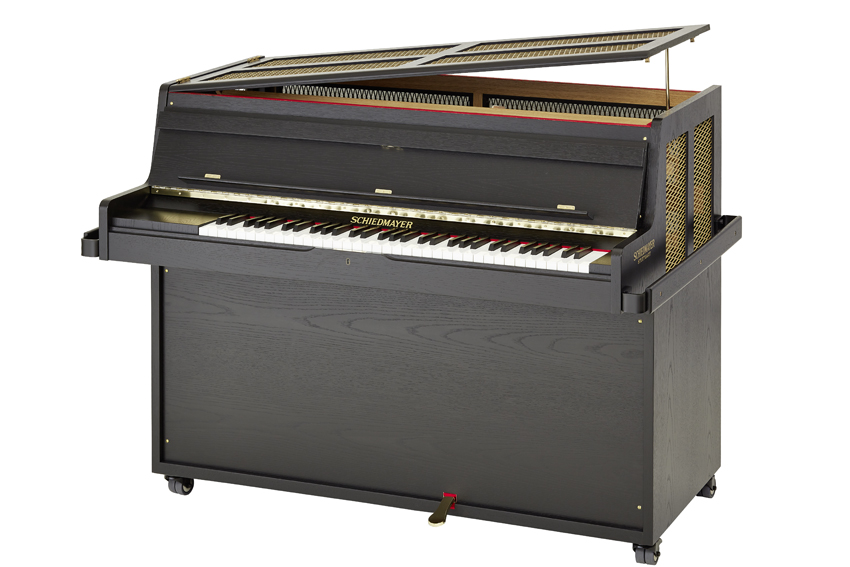
A Schiedmayer celesta. Image from Wikipedia.
“The sound of the celesta,” Wikipedia continues, “is similar to that of the glockenspiel, but with a much softer and more subtle timbre. This quality gave the instrument its name, celeste, meaning ‘heavenly’ in French.”
Harpsichord, Piano, and Glockenspiel. Barone places the celesta within its musical realm: “Take the harpsichord, a reigning keyboard instrument of the Baroque. To play it, you press a key, which triggers an action to pluck a string inside the wooden, boxlike frame. The resulting sound is bright and short lived. With the modern piano, a key is pressed to hammer a string inside; more sensitive and sophisticated than a harpsichord, the piano allows for different colors and degrees of strength, as well as the ability to sustain a note.”
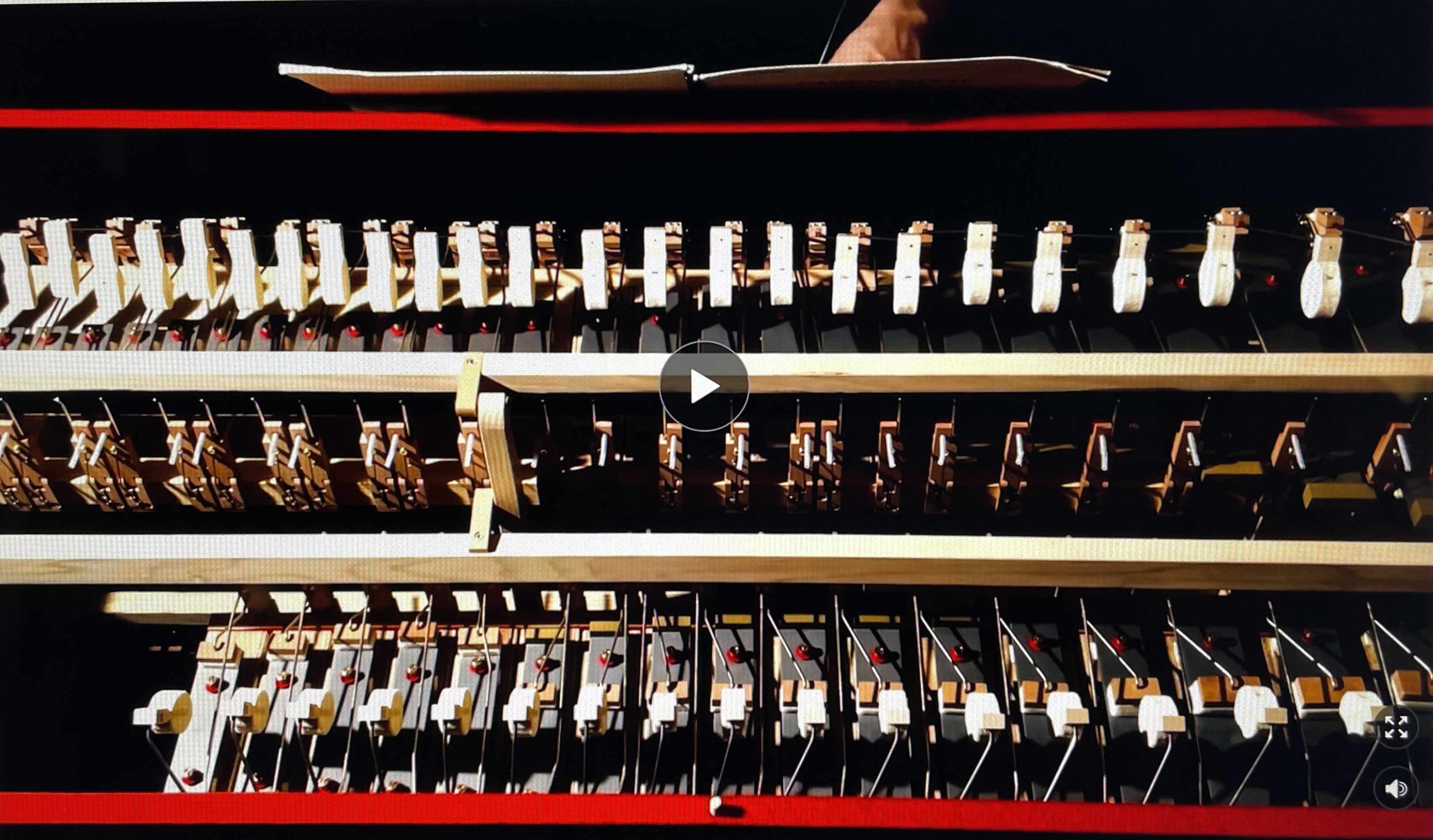
A celesta in action. (Unmute if you’re online; otherwise, note the hammering action.) This and the following image by Vincent Tullo for The New York Times.
“The celesta,” describes Barone, “came much later, invented by the Parisian organ-maker Auguste Mustel in 1886. It is smaller than the piano, almost a toy by comparison, and with a less expansive keyboard. Mustel’s innovation was to have the keys set off an action that, rather than plucking or hammering strings, hammered a small metal bar over wooden resonators. Picture a glockenspiel, a mainstay of orchestral percussion sections, hidden inside a piano.”
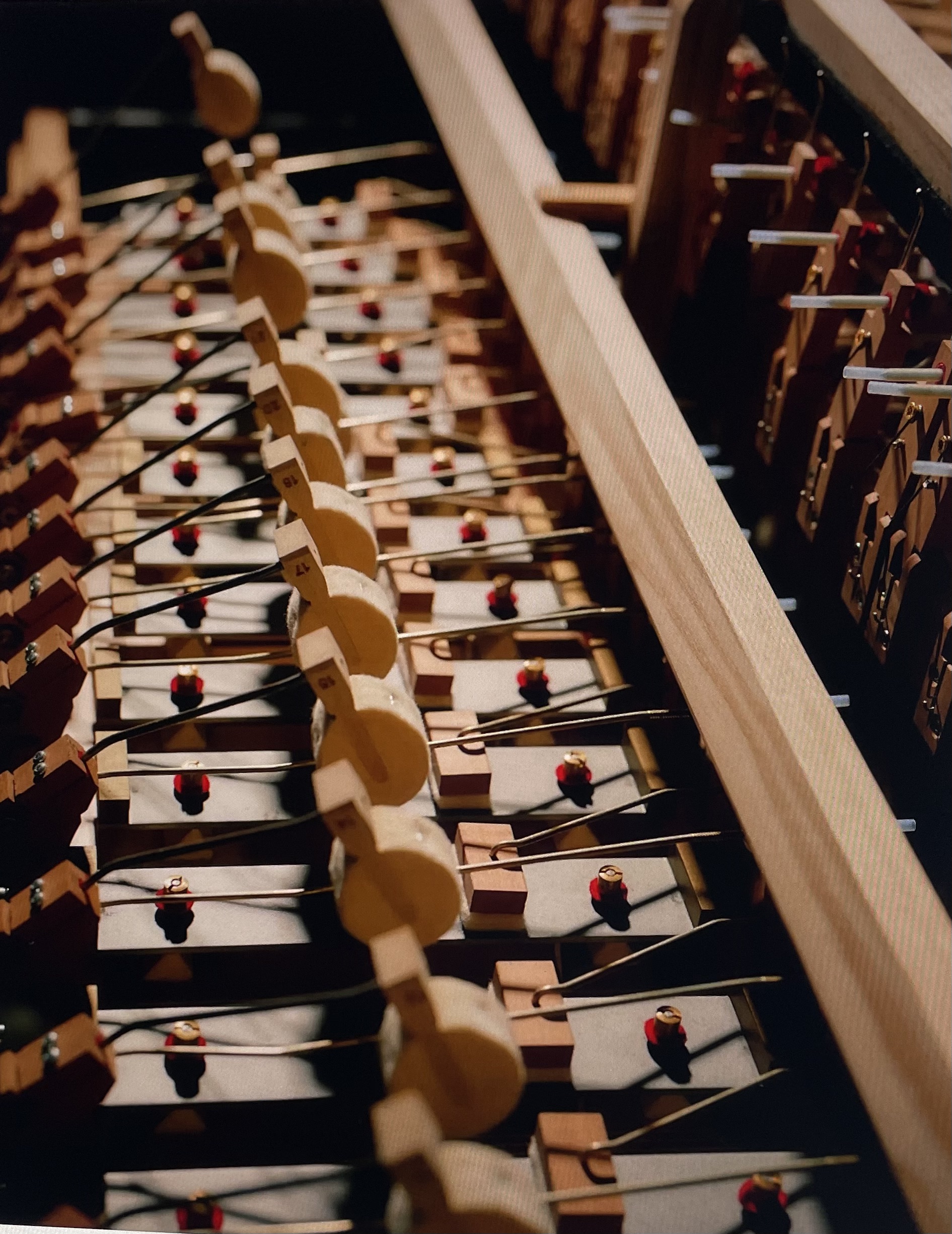
Another view of the celesta interior.
I think of the harpsichord as accompanying Handel arias; the glockenspiel, employed by Papageno in Mozart’s Die Zauberflöte. And the celesta, in Tchaikovsky’s The Nutcracker.
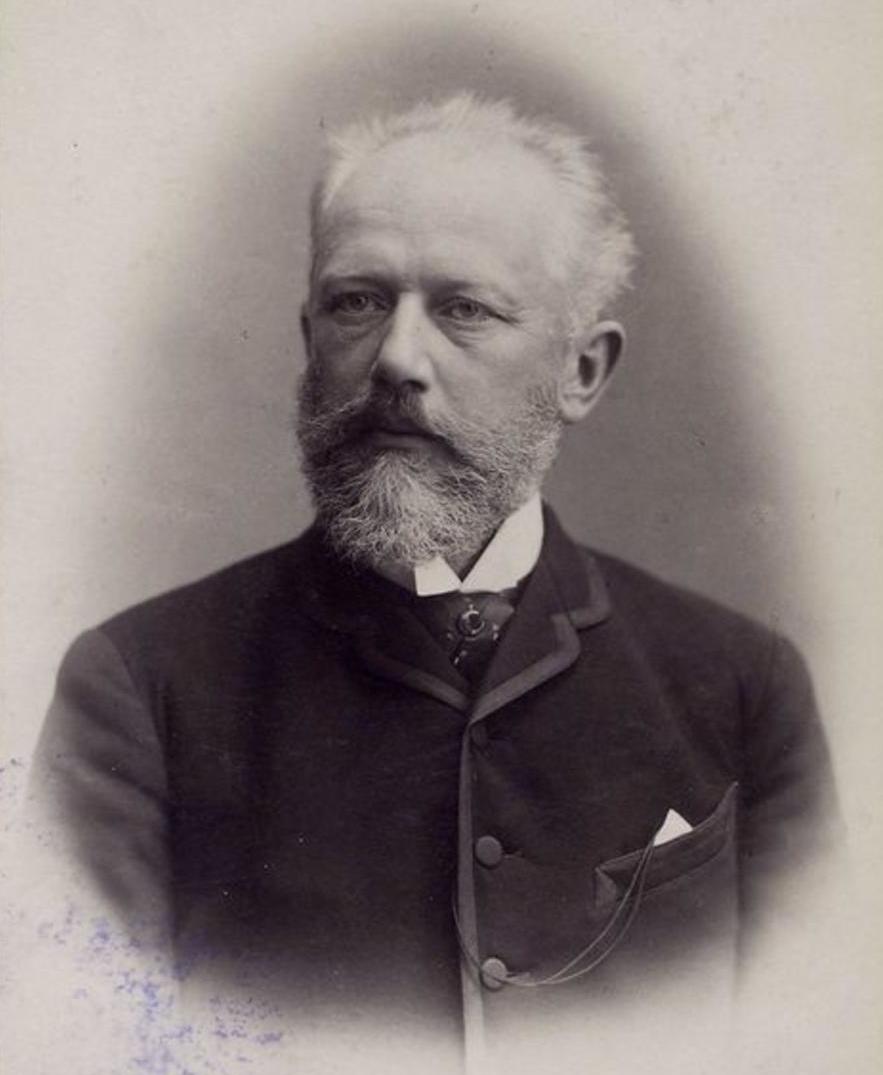
Pyotr Ilyich Tchaikovsky, 1840–1893, Russian composer of the Romantic period. Image, c. 1888, by Émile Reutlinger-NYPL Digital Gallery.
Tchaikovsky Writes his Publisher. Barone recounts, “Tchaikovsky heard the celesta in Paris while on his way to the United States, the historian Simon Morrison writes in his recent biography Tchaikovsky’s Empire. The composer described the experience in an 1891 letter to his publisher: ‘I discovered a new orchestral instrument in Paris, something between a miniature piano and a Glockenspiel, with a divinely wondrous sound. … The instrument is called the ‘Celesta Mustel’ and costs 1,200 francs. It can be obtained only from its Paris inventor, M. Mustel. I’m hoping you’ll order this instrument for me.’ ”
Barone says, “The instrument, Tchaikovsky predicted, would ‘have a colossal effect.’ He asked that his publisher not show the celesta to anyone else. ‘I fear,’ he wrote, ‘that Rimsky-Korsakov and Glazunov will hear about it and deploy its extraordinary effects before I get to do so.’ ”
Indeed, Ernest Chausson has already used the celesta in his incidental music [largely forgotten] for a production of Shakespeare’s ‘The Tempest’ in Paris. But Tchaikovsky and the Sugarplum Fairy surely beat them all in popularity. ds
© Dennis Simanaitis, SimanaitisSays.com, 2024
 Simanaitis Says
The Nutcracker is my favorite ballet. The music is extraordinary. I’d never known that a celesta existed!