
Simanaitis Says
On cars, old, new and future; science & technology; vintage airplanes, computer flight simulation of them; Sherlockiana; our English language; travel; and other stuff
BOXIES I HAVE KNOWN
WHETHER RANCH WAGONS, MPVS, ESTATES, SHOOTING BRAKES or whatever, I’ve been on good terms with boxy automotive shapes. Classic & Sports Cars Online jogged my memory about this with “20 Super Seven-Seat Classic Cars,” not that I’ve ever used the ones I’ve known for that many folks at a single time. Here are tidbits about them in the cars’ chronological order (and, more or less, in my experiences with them).

Ford Ranch Wagon. I won a Ford Ranch Wagon in 1967. This good fortune came through a local dealership celebrating its 13th anniversary. Why they chose this oddly numbered celebration I do not know. But I do recall when the guy called that I had won, he added, “Don’t get your hopes up because, like our dealership, the car is 13 year old.”
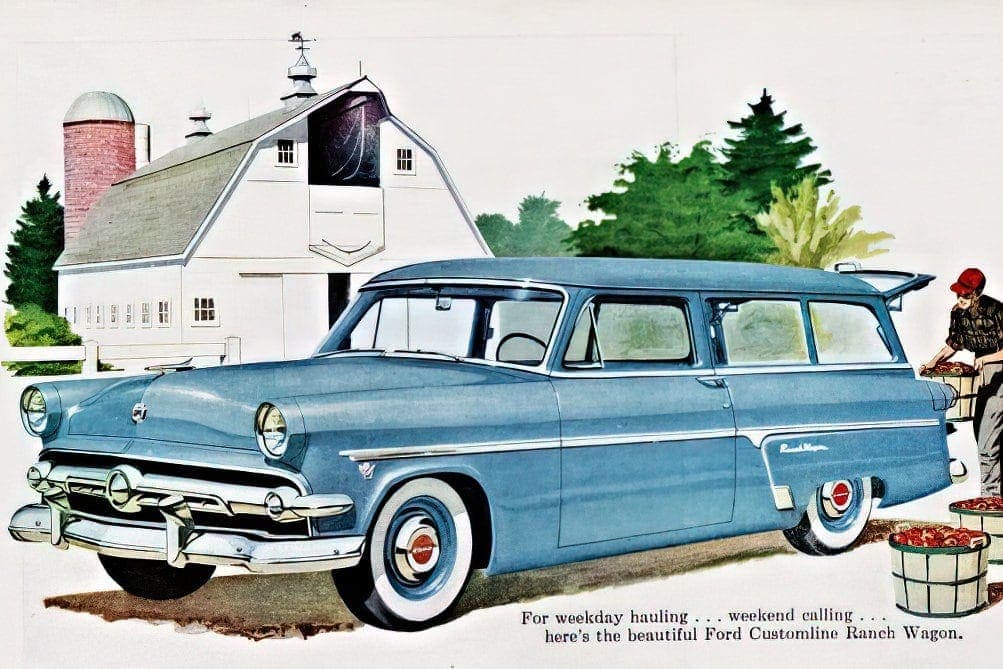
1954 Ford Ranch Wagon. My winning car was the same color.
The “Ranch” of Ranch Wagon differentiated it from Station Wagons having faux wood panels (or, originally, structure of wood itself). My ’54 had a V-8, a 3-speed stick, and sufficient gaps in its rusted door panels to allow a view of the street below. I commuted to grad school with it for a while, used it to move the family a few blocks, and then one day its left front suspension gave way as I entered a driveway.
By the way, one of the Classic & Sports Car beauties was a 1950 Ford Country Squire, somehow a classier name than Ranch Wagon.

1950 Ford Country Squire. Image from Classic & Sports Car.
Volvo 122S Wagon. I described my next boxy design here at SimanaitisSays in “Can It! But Keep the Opener.” Acquisition of a late-’60s Volvo 122S Wagon came shortly after arriving on St. Thomas in the Caribbean. I recall chickens pecking around in the makeshift car lot.
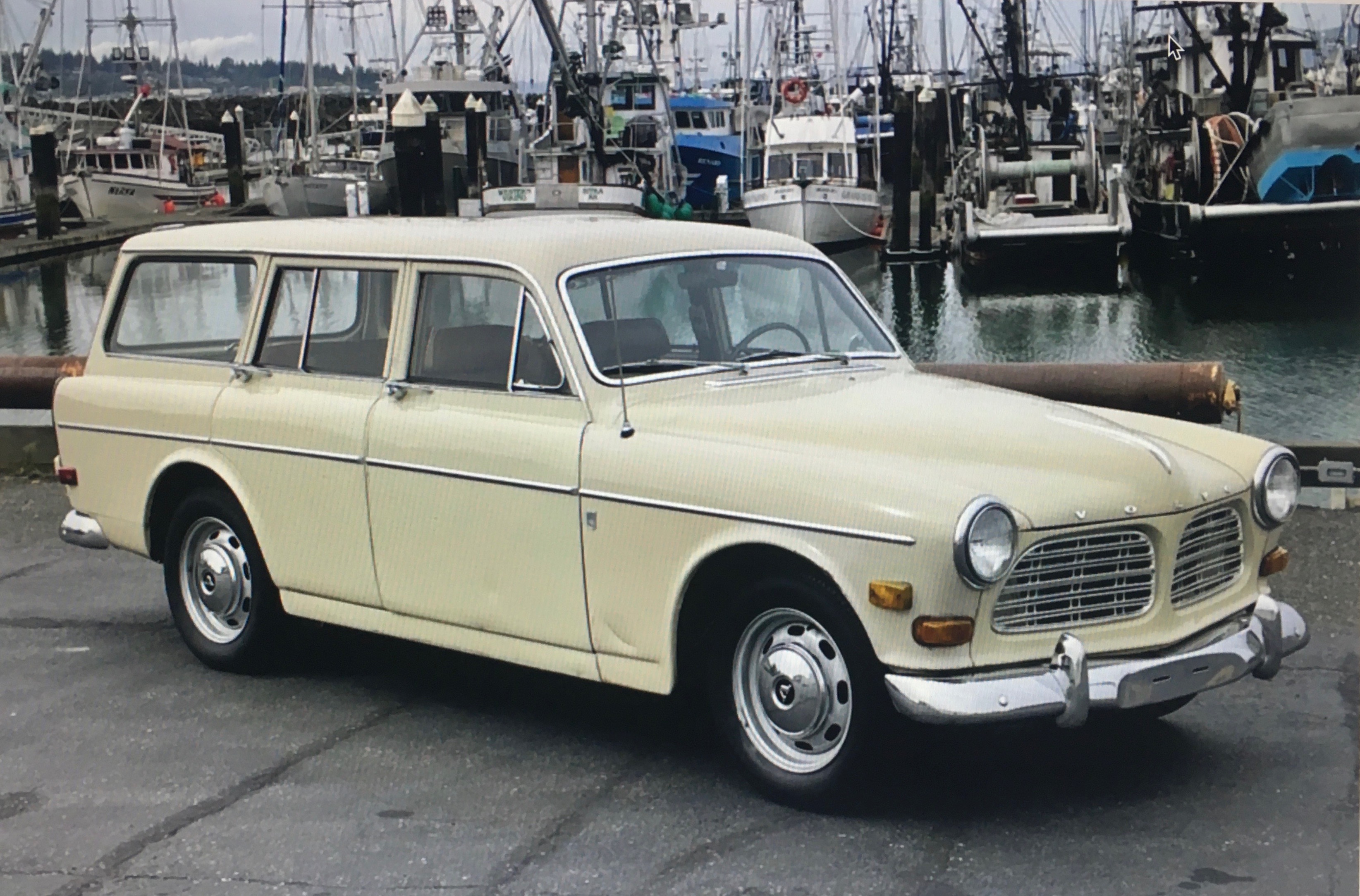
Here’s a 1968 sibling of my 122S Wagon. Image from Bring A Trailer.
A sturdy car, with exception of an exhaust system getting occasionally perforated by rocks and rust. And, yes, epoxy-swabbed beer cans held in place with radiator clamps did a great job when the nearest Volvo dealer was in Puerto Rico, maybe.
I had lots of experience with Volkswagen Buses and Transporters on STT, but owned only a Beetle and the Volvo. Until….
My Foreign Pinto Wagon. In the summer of 1973 I bought a Ford Pinto Wagon in Cleveland, drove it to Miami, and had it shipped over to STT.
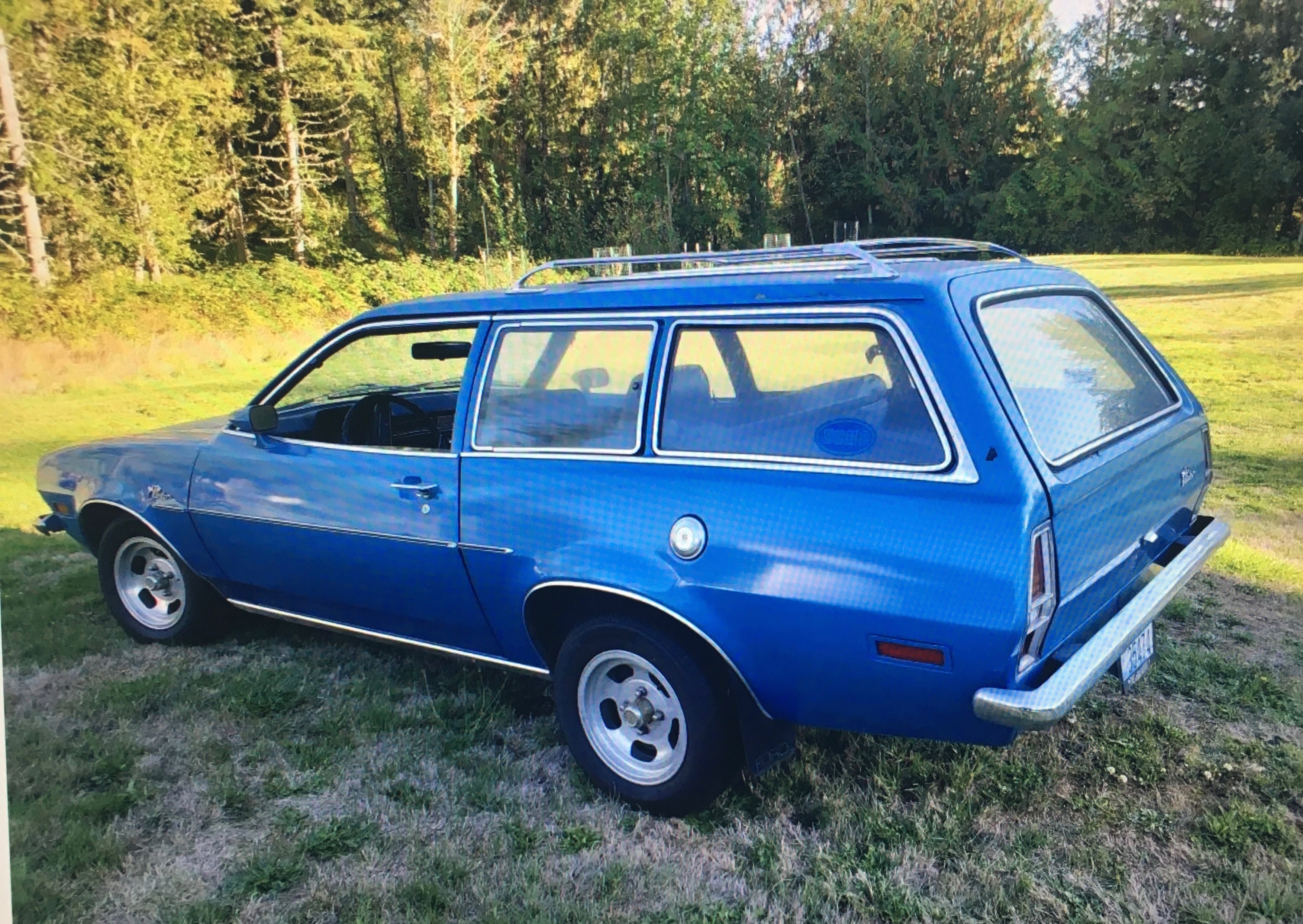
Here’s a sibling, even to its trick alloy wheels. This image from Barn Finds.
STT had (and likely retains) an odd customs deal of a certain fixed percent ad valorem of anything imported. This made European booze, watches, and the like a real bargain. It also surprised the hell out of me when the customs agent identified my Pinto as a product of a Ford Canadian facility and thus liable to the import tax. I recall throwing my motorcycle helmet across the dock.
The Pinto returned to the mainland (at no added tax). It and I became the local SCCA Autocross hotshots in class (i.e., among Pintos and other small sedans). I suspect a lot had to do with the wagon’s weight distribution being less nose-heavy.
A Borrowed Renault Espace. On one of my R&T press junkets/early-retirement stayovers, I borrowed a Renault Espace, another of the C & SC classics: “The seminal seven-seater?” the magazine writes, “Quite possibly, because the Renault Espace’s influence over MPVs and versatile family cars is still being felt today.”
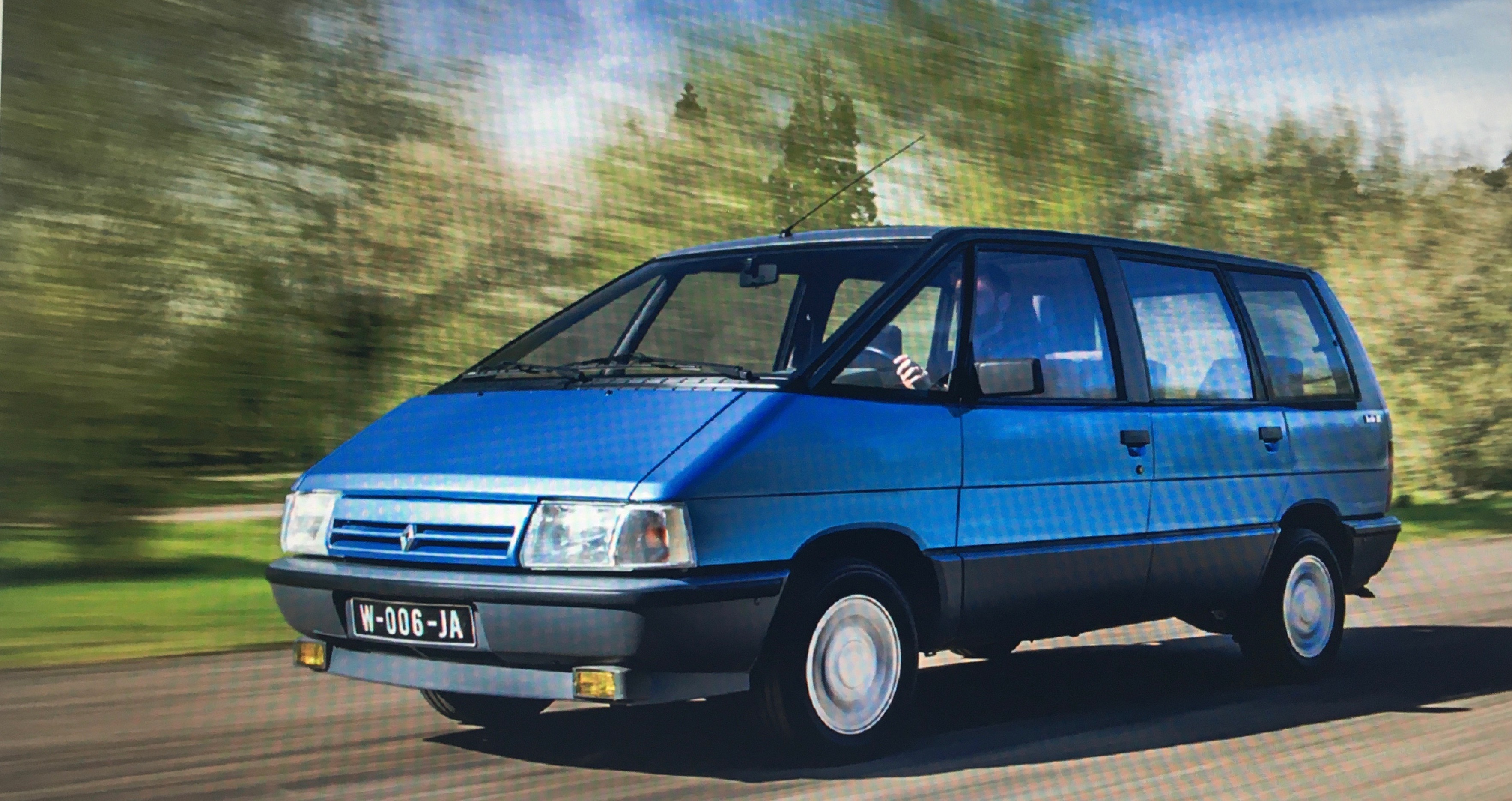
1984 Renault Espace. Image from Classic & Sports Car.
A Pair of Mini Mokes. One on STT, the other driven “From Sea to Shining Sea” offered entertainment and utility of another sort entirely.
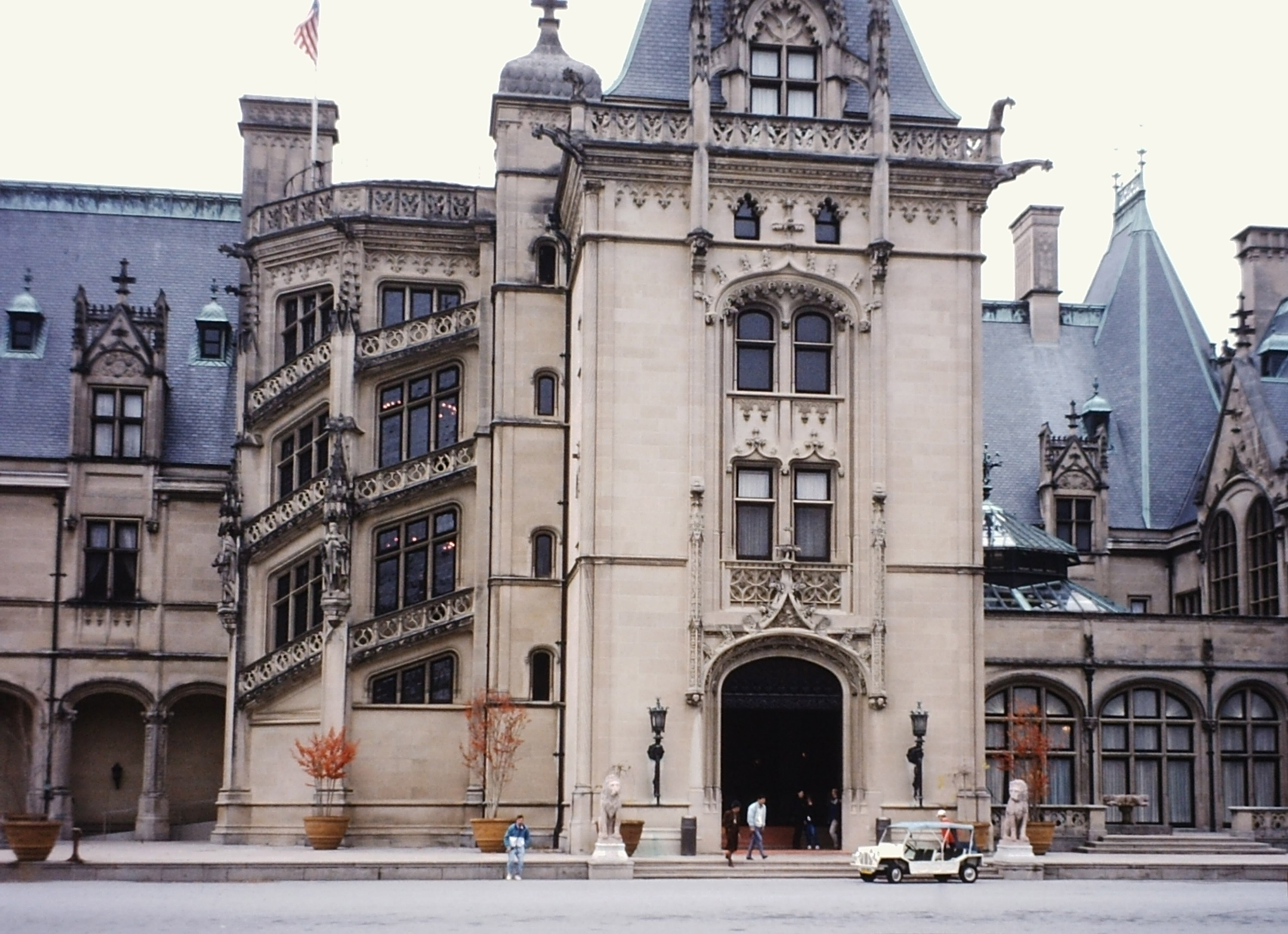
Here’s my second Moke at the Biltmore, Asheville, North Carolina.
Mokes were boxy, sorta. ds
© Dennis Simanaitis, SimanaitisSays.com, 2023


Glad you mentioned VW buses. With a family that eventually totaled 7 children, VW buses were an integral part of our family. I had a ‘67 bus till it rusted out( lived in St. Louis at the time). Traded that in on a ‘74 and only kept that one for a couple of years because I got tired of trying to keep the dual carbs in tune.
Bob ;
As a long retired Mechanic who used to do multi ~ carby adjustments for the maddening California AQMD’s annual smog tests, I assure you that “Carburetor” is a _French_ word that means “LEAVE IT ALONE” .
Because the symptoms appear in the carbys folks always assume they need touching when in fact it’s almost always the ignition, tight valves et cetera .
That ’74 Typ II you had, had the then new Typ IV engine that was not just powerful but able to last 250,000 plus miles when properly cared for .
-Nate
Boxes are good, they’re very practical, why pickups and vans were always so popular once the stigma of driving a Commercial vehicle died a bit .
Me, I’ve always loved boxes and in the late 1950’s my favorite car in the flesh or toys was the “A” Model Ford .
In 1954 Pops had a lecture circuit in Europe and returned home with the cheapest model of the wildly popular VW van, called a “Kombi” . it was perfect (if deadly, not a concern in those dayze) family hauler for his 6 squalling brats (we really were awful) and it lasted several years before the tin worm got it .
I’m not keen on modern cars but I am still driving to I bought my son’s modern (? 2000) CAMI Chevy Tracker, also made in Canada, allowing GM to abandon it’s many Suzuki derivatives when Suzuki pulled out of the U.S.A. a few years later .
Like an old aircooled VW Beetle it’s small on the outside but has amazing room on the inside and in design is quite simple making it a breeze to fettle after my son’s two child family and two large sweaty dogs filled it with UGH after three years of traveling the South Western Desert where he plans to retire one day .
When motivated, FoMoCo is entirely capable of designing and building very good vehicles and to a decent price point ~ your little Pinto Break is a perfect example ~ derided when new by Mechanics and those who thought they knew abut things, Pintos quietly soldiered on doing Yeoman Duty for decades without complaint or exce$$ive repairs .
The woman (she was no lady) who owned the antiques shop next t my old indie VW shop had a 1972 Pinto Break she’d bought new to haul her two kids in, a decade or more later it was still going strong, 135,000 miles and nary a scratch and the original clutch still working fine, nice upholstery et cetera .
I’ll never quite grasp what the Austin Mini Moke was designed for but like almost all Austin products back then, they were a hoot to drive (I dislike convertibles) and once properly fettled they took incredible beatings and kept on going .
Two of my 1960’s buddies who remained Down East have those little cube shaped, nearly Kei cars and absolutely love them for daily drivers in Boston and points North East when they get the urge .
-Nate