
Simanaitis Says
On cars, old, new and future; science & technology; vintage airplanes, computer flight simulation of them; Sherlockiana; our English language; travel; and other stuff
LES AUTOS VOISIN
IT WAS 14 years after founding Avions Voisin in 1905 that the highly talented—and even more highly eccentric—Gabriel Voisin turned from aeroplanes (www.wp.me/p2ETap-B3) to automobiles. And what automobiles!
Gabriel Voisin’s cars are rolling examples of Cubism, Art Deco, Dada and other art trends sweeping Europe in the 1920s and 1930s. They’re over-the-moon, yet elegant.
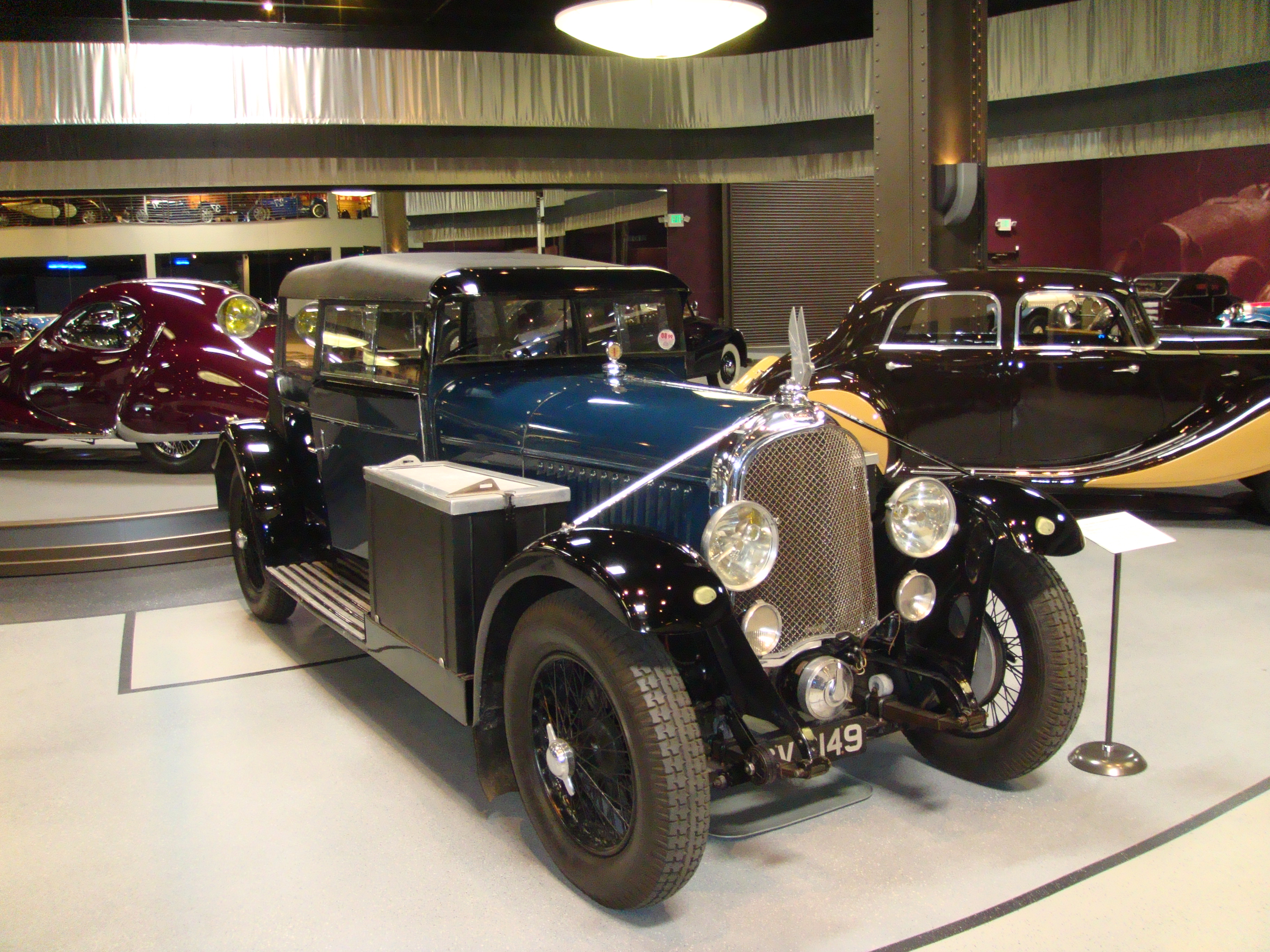
This 1928 Voisin C11 Lumineuse resides at the Mullin Automotive Museum (www.mullinautomotivemuseum.com), in Oxnard, California.
At first glance, the 1928 Voisin C11 Lumineuse looks like a Bentley of the era, though with odd features. Its front fender struts echo Voisin’s aero heritage. The running-board storage is ungainly, yet it optimizes interior room.
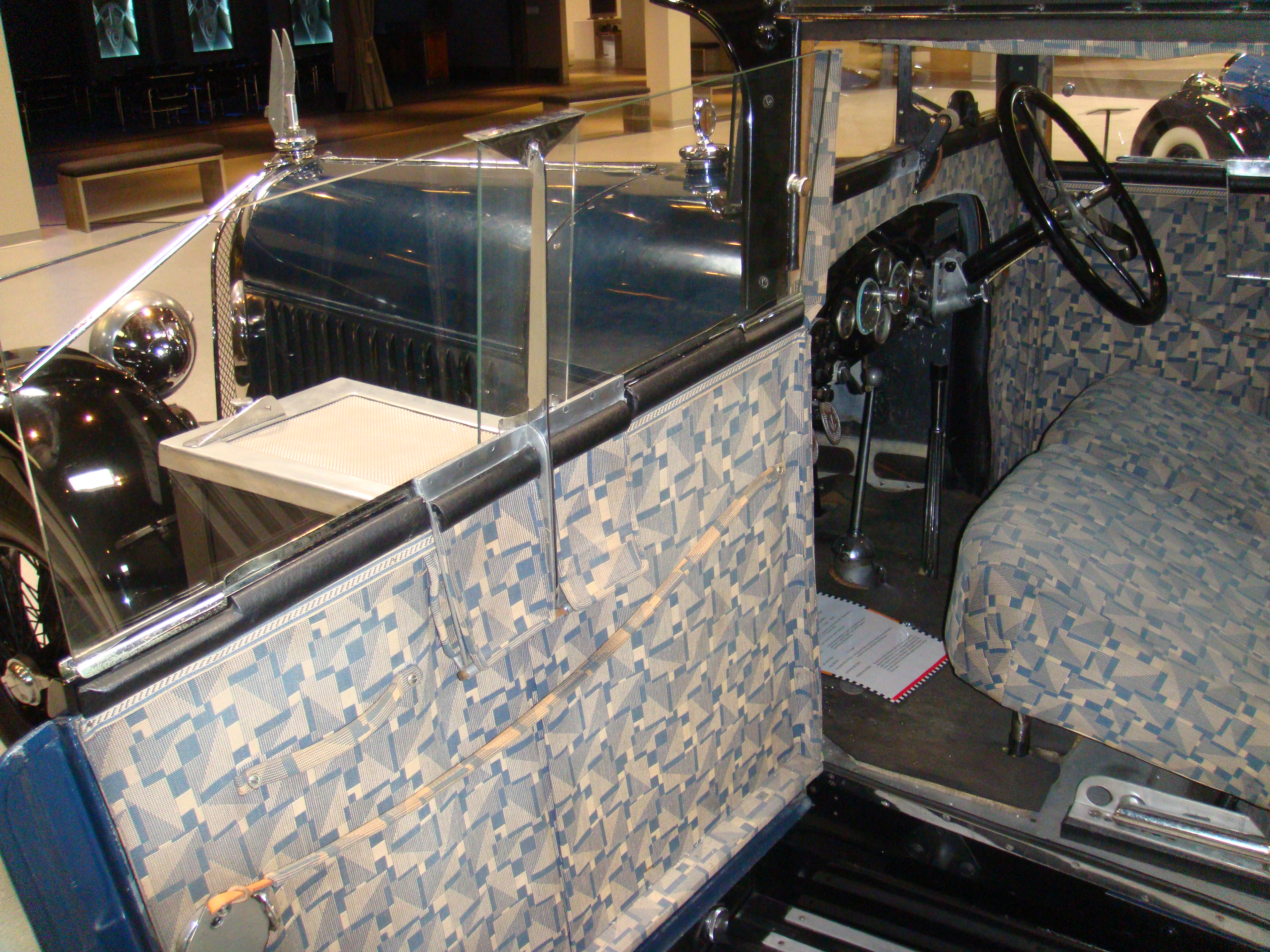
Bizarre fabric design is characteristic of Voisins. The expansive window treatment gives the car its name, Lumineuse, suggesting an abundance of light.
Not surprisingly, Voisins were popular with the art community of Paris. Photographer Man Ray drove one. Le Corbusier did as well.

Le Corbusier and his Lumineuse.
In 1925 this architect and urban planner proposed a Plan Voisin, supported by the automaker, replacing central Paris with an array of cruciform 60-story towers—the same out-of-the-box thinking that characterized Voisin’s cars.
The C11 was the first Voisin with 6-cylinder power; earlier ones were inline-4s. Most Voisins continued with these inline-6 powerplants. All were sleeve-valve engines produced under license from Knight.
Instead of conventional poppet valves opening and closing, sleeve valves slide up and down around the piston, slots in the sleeves defining the cylinder porting. Shortcomings of sealing and high oil consumption were disadvantages; quietness and, in the days of frequent “decoking” of conventional valves, sleeve-valve durability were benefits.
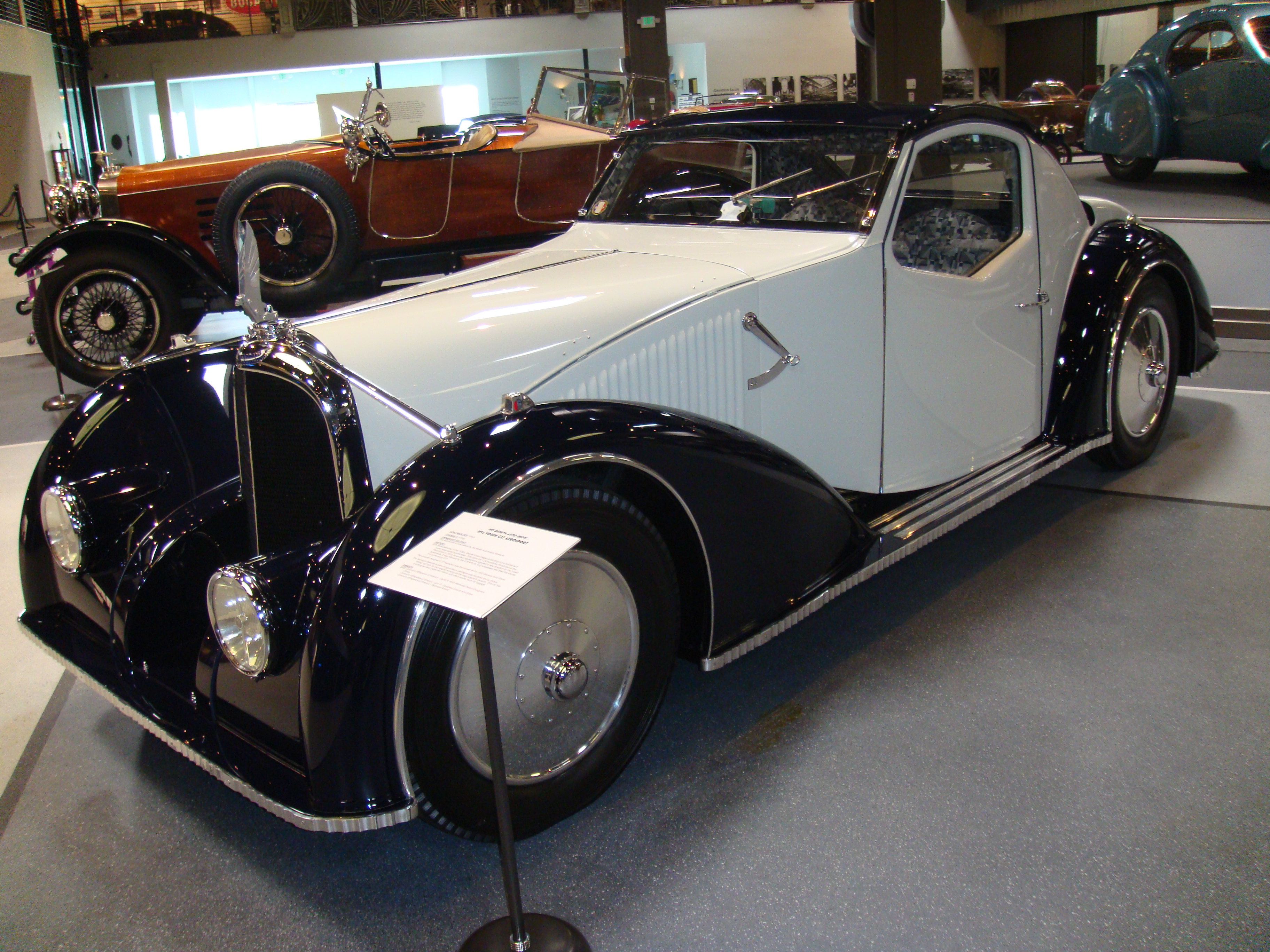
The 1934 C27 Aérosport, as it appears at the Mullin Automotive Museum, along with a Lumineuse and other Voisins. A special Mullin exhibition, La Vision de Voisin, runs through April 2013.
Together with exuberant styling—its side window shape, hood release hardware, wheel covers, door handles and textured detailing—the C27 Aérosport displays yet another Voisin innovation.
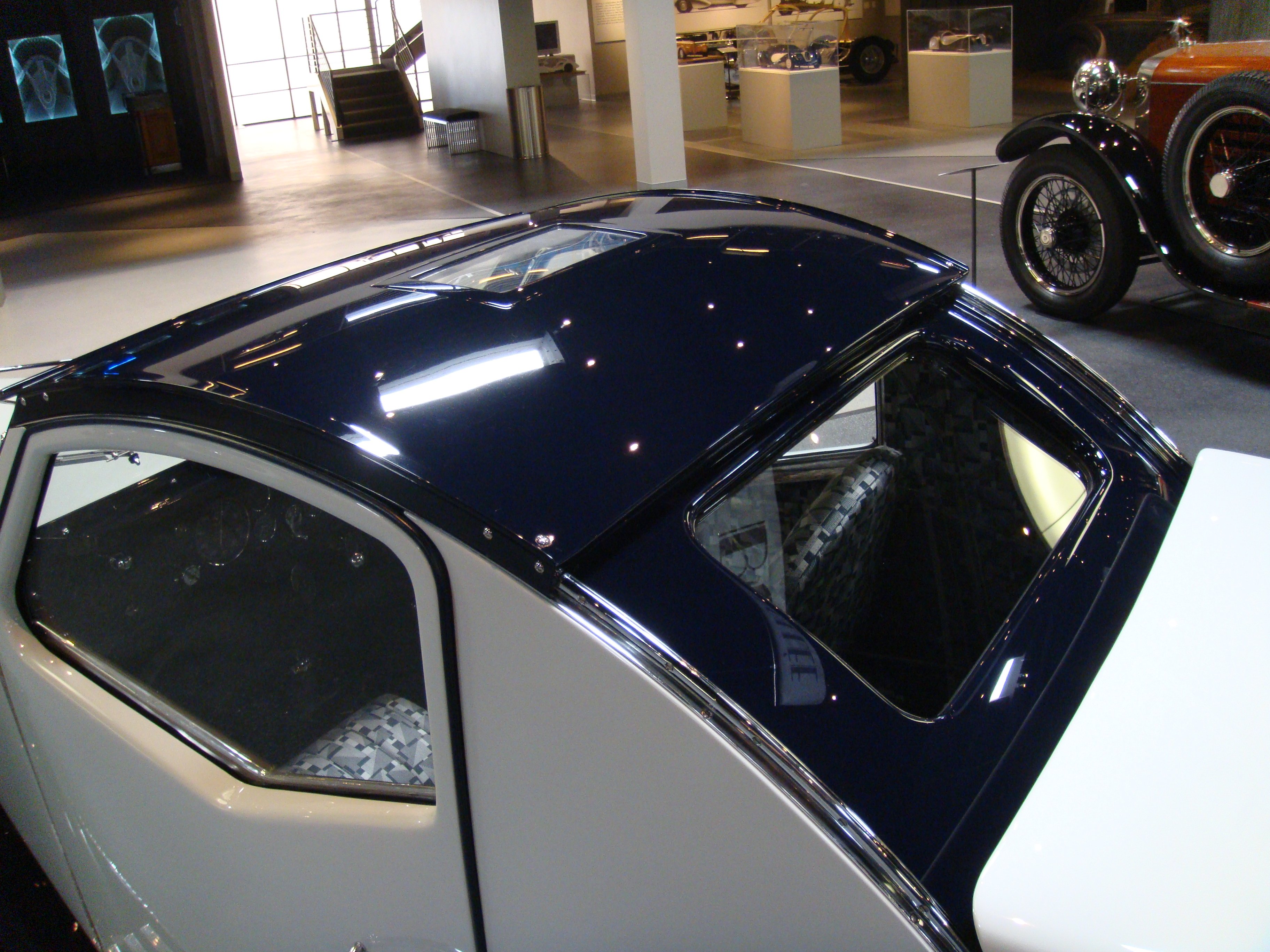
What looks like a tiny sunroof doubles for (really tiny) rear vision.
The hardtop of the C27 slides rear- and downward on rails, its actuation powered by engine vacuum. Offering only a modicum of rear vision once retracted, the roof incorporates a small glass insert, a mini sunroof when the roof is closed.
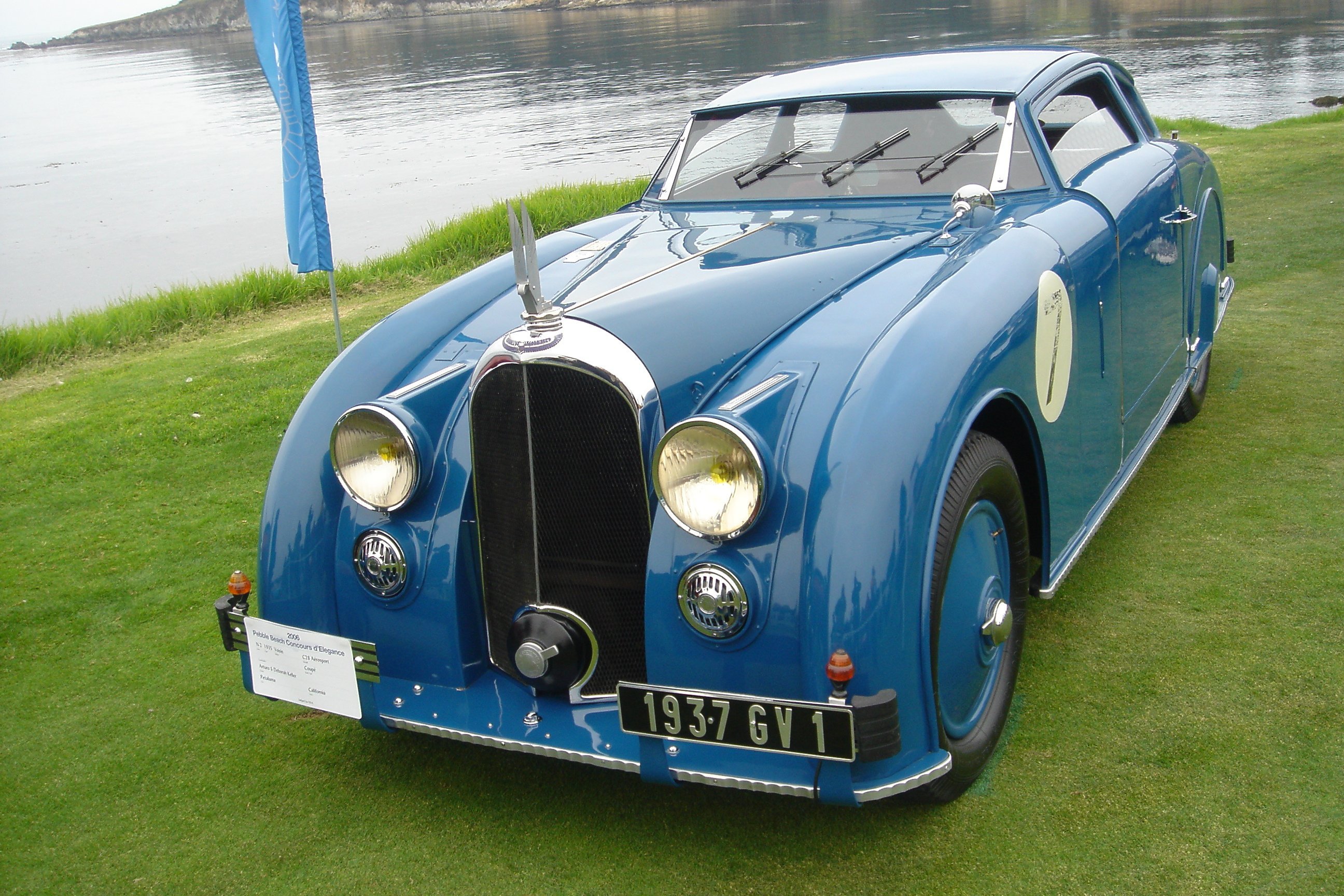
1935 C28 Aérosport Coupé.
The 1935 C28 Aérosport Coupé is my favorite. Its headlights nestle nicely between the fenders and Voisin grillework. Its pontoon fender line is tautly continued from front to rear.

Like other Voisins, the C28 Aérosport Coupé has coachwork that’s rich in aluminum.
Similar to the C27’s, the C28 Aérosport has a vacuum-operated roof panel and full-disc wheels. I love its tri-windscreen wipers and rear fender skirts, even with their odd discontinuity—but carefully alignment—of textured trim.

This wonderful recreation of the 1923 Laboratoire also resides in the Mullin Automotive Museum.
The 1923 Laboratoire Grand Prix car embodied many of Voisin’s radical ideas. A monocoque design primarily of flat aluminum panels, the Laboratoire had an extremely narrow rear track that eliminated the need for a differential. A small propeller at the nose drove the engine’s water pump.
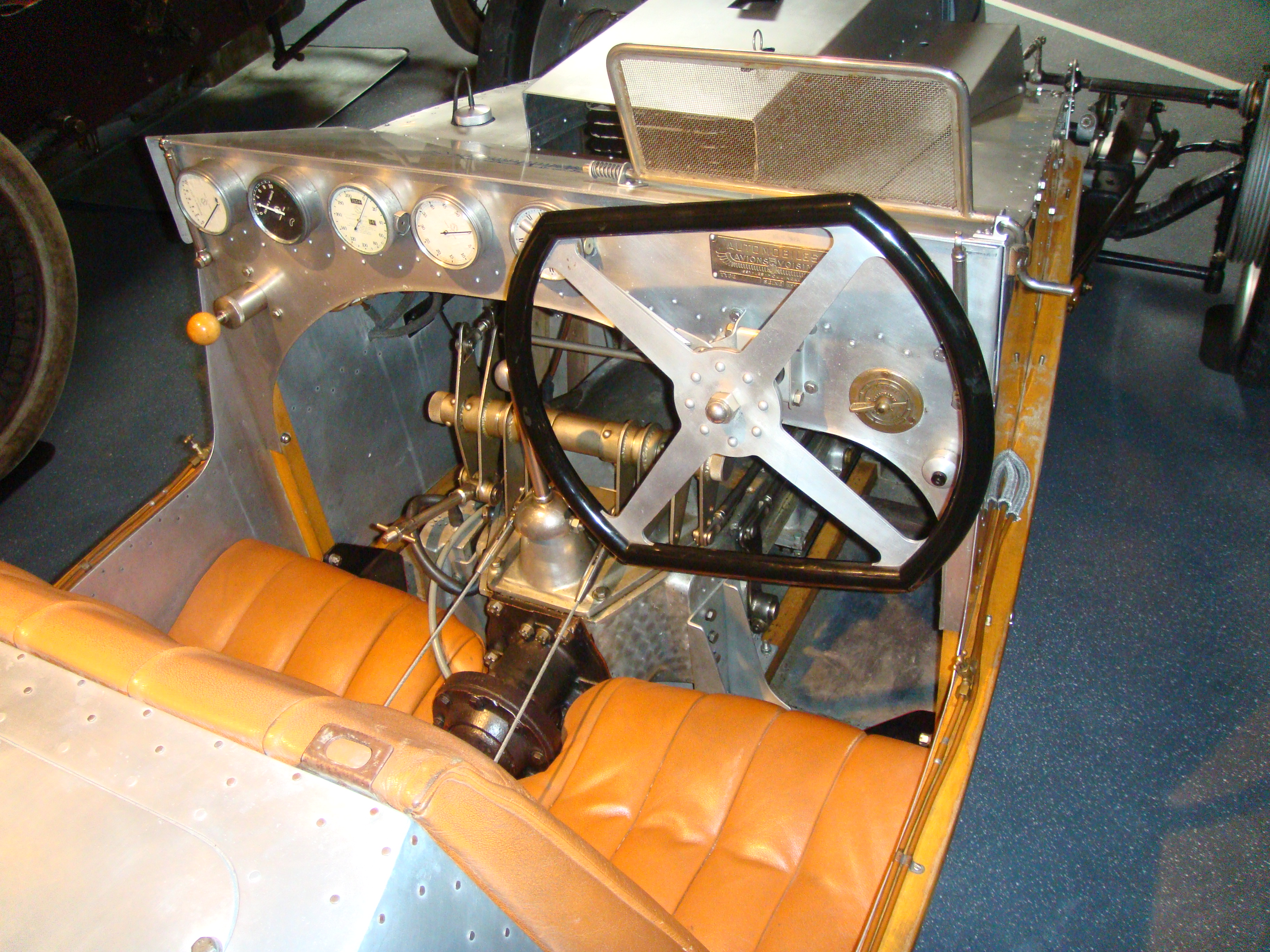
The Laboratoire’s cockpit would have seemed cramped by the end of the 1923 French Grand Prix, an event of almost 500 miles.
A team of Laboratoires contested both the French and Italian Grands Prix of 1923. One was fifth (albeit of only five finishers) in the 799-km (497-mile) French event, in a time of 7 hours 50 minutes 29.2 seconds.
Last, late in his career, in a war-ravaged Europe, Gabriel Voisin designed the Biscooter, utterly basic transportation that was built in Spain beginning in 1953 as the Biscuter.
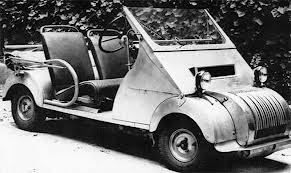
Above, the Voisin Biscooter, shown at the 1949 Paris Auto Show; below, Le Corbusier’s Voiture Minimum of 1936.
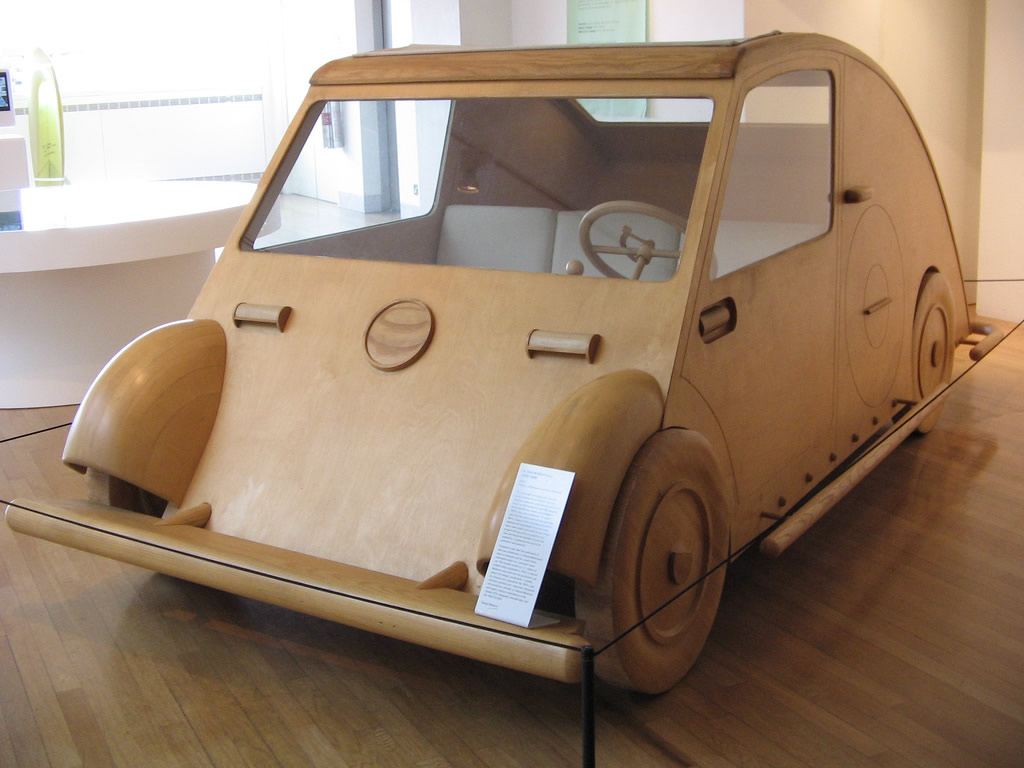
I’m reminded of an earlier artistic Voisin colleague: Le Corbusier proposed such a minimalist car in 1936. ds
© Dennis Simanaitis, SimanaitisSays.com, 2013
 Simanaitis Says
The creativity of these cars has always impressed me. Nicely done!
I was at a auction in jenks okla and won the bid on a all aluminun golf cart looking thing not all the parts were there and it has been sitting outside in the weather the little car has front-wheel drive
Sure looks similar to the one above
But half the motor was missing found a serial number with 000013 on the drivers side firewall and one on the motor case Snecma (Gnome &
Rhone) ,150 Boul, Hausmann, paris
No -000008
Type VB annec- 1951
Hello, Mike,
You might want to send a photo of your find to an expert for verification. I’d recommend the people at the Mullin Automotive Museum, http://www.mullinautomotivemuseum.com. They have an impressive exhibit of Voisins taking place right now until late June.
Generally I don’t read post on blogs, however I wish to say that this
write-up very compelled me to try and do it! Your writing style has been amazed
me. Thank you, quite great post.
Creative genius. All this led to Citroen being what they are .
Pingback: Uma joia do design francês automotivo