
Simanaitis Says
On cars, old, new and future; science & technology; vintage airplanes, computer flight simulation of them; Sherlockiana; our English language; travel; and other stuff
HURRAH FOR RENEWABLES PART 2
YESTERDAY Susanna Twidale celebrated renewables approaching the halfway point of global resources. Today in Part 2 we continue with a significant renewable not cited in her report.
How About Hydro? The U.S. Department of Energy includes it, citing “Hydropower, or hydroelectric power, is one of the oldest and largest sources of renewable energy. Hydropower uses the natural flow of moving water to generate electricity. Hydropower currently accounts for 27.37% of total U.S. utility-scale (electricity generated in large scales) renewable electricity (link is external) generation and 5.86% of total U.S. utility-scale electricity generation, while pumped storage hydropower (PSH) provides 88% of all utility-scale energy storage in the United States.”
This is corroborated by the Conservative Energy Network: “Some may be very large,” CEN notes, “but they can be tiny, too, taking advantage of water flows in municipal water facilities or irrigation ditches. They can even be ‘damless,’ with diversions or run-of-river facilities that channel part of a stream through a powerhouse before the water rejoins the main river.”
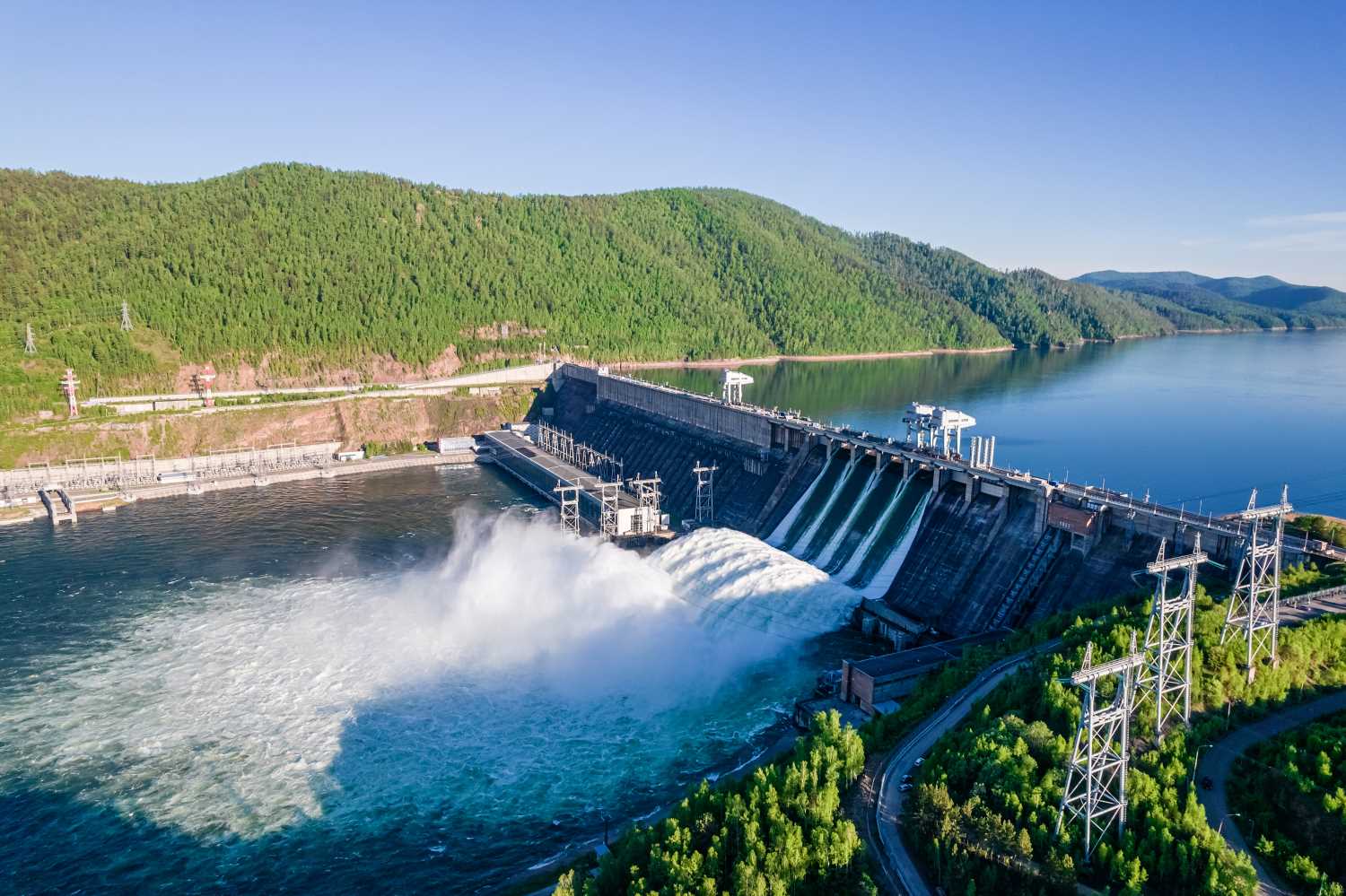
Image from Wilma Dykeman Legacy.
“Whatever the method,” CEN continues, “hydropower is much easier to obtain and more widely used than most people realize. In fact, all but two states (Delaware and Mississippi) use hydropower for electricity, some more than others. For example, in 2020 about 66% of the state of Washington’s electricity came from hydropower.”
Hydro Not Uncontroversial. SimanaitisSays once posited “What’s a ‘Renewable Resource’ Anyway?,” September 17, 2015. California, for example, makes the distinction between “large” and “small” hydropower, the Renewable Portfolio Standard cutoff set arbitrarily at 30 Megawatts. Other states, Michigan, Missouri, and Ohio, have distinctions of one sort or another.
According to the government’s Energy Information Administration, “About one-half of total U.S. utility-scale conventional hydroelectricity-generation capacity is concentrated in Washington, California, and Oregon. Washington has more conventional hydroelectricity-generation capacity than any other state and is the site of the Grand Coulee Dam, which is the largest U.S. hydropower facility and has the highest electricity-generation capacity of all U.S. power plants. East of the Mississippi River, New York has the highest conventional hydroelectricity-generation capacity, followed by Alabama.”
Yet Another Thing to Consider. The highly respected Pew Research Center describes “Americans’ Shifting Views on Energy Issues,” April 3, 2026. Brian Kennedy and Emma Kikuchi write, “Majorities of Republicans see wind and solar power as less reliable than other energy sources, and decreasing shares of Republicans say wind and solar energy is better for the environment. An overwhelming majority of Democrats continue to prioritize wind and solar power and say the federal government should encourage their development.”
Gee, another educational issue for another day.
In the meantime, let’s celebrate Susanna Twidale’s global findings about renewable growth. ds
© Dennis Simanaitis, SimanaitisSays.com, 2026
 Simanaitis Says
I Have read of the interruptions to wildlife like Salmon returning to spawn etc. and am of the opinion that hydro power is a good thing but needs to be carefully monitored .
-Nate