
Simanaitis Says
On cars, old, new and future; science & technology; vintage airplanes, computer flight simulation of them; Sherlockiana; our English language; travel; and other stuff
A CHAT WITH CHRIS: “PUTTING THE HEART BACK IN TECHNOLOGY”
CHRIS BORRONI-BIRD HAS APPEARED SEVERAL TIMES here at SimanaitisSays: Along with Larry Burns and Bill Mitchell, he’s coauthor of my much-cited Reinventing the Automobile: Personal Urban Mobility for the 21st Century.
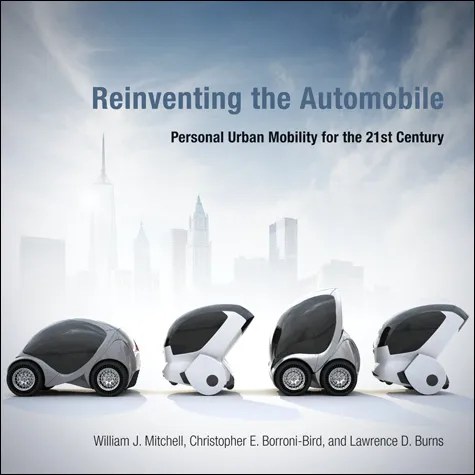
Reinventing the Automobile: Personal Urban Mobility for the 21st Century, by William J. Mitchell, Chris E. Borroni-Bird, and Lawrence D. Burns, MIT Press, 2010.
That a 16-year-old technical treatise is still highly relevant speaks highly for its three authors.

Chris Borroni-Bird, American engineer, automotive executive, and research scientist. This and the following image from SimanaitisSays via SAE Automotive Engineering, January 2018.
Also, “Borroni-Bird’s Afreecar,” SimanaitisSays, January 16, 2018, described an innovative means of personal mobility with solar-panel power, one particularly optimized for sub-Sahara Africa.
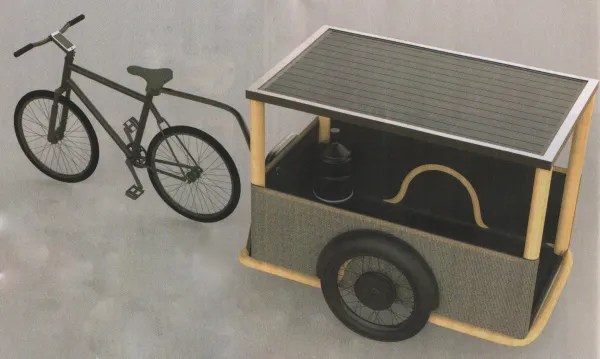
Chris’s Afreecar is envisioned as providing simple, low-cost, and robust transport.
Chris’s Latest Endeavor. The March 2026 issue of SAE International Automotive Enginering has an “SAE Author Spotlight” with Chris chatting with SAE’s Sebastian Blanco. Here are tidbits gleaned from this article about Chris’s latest book.
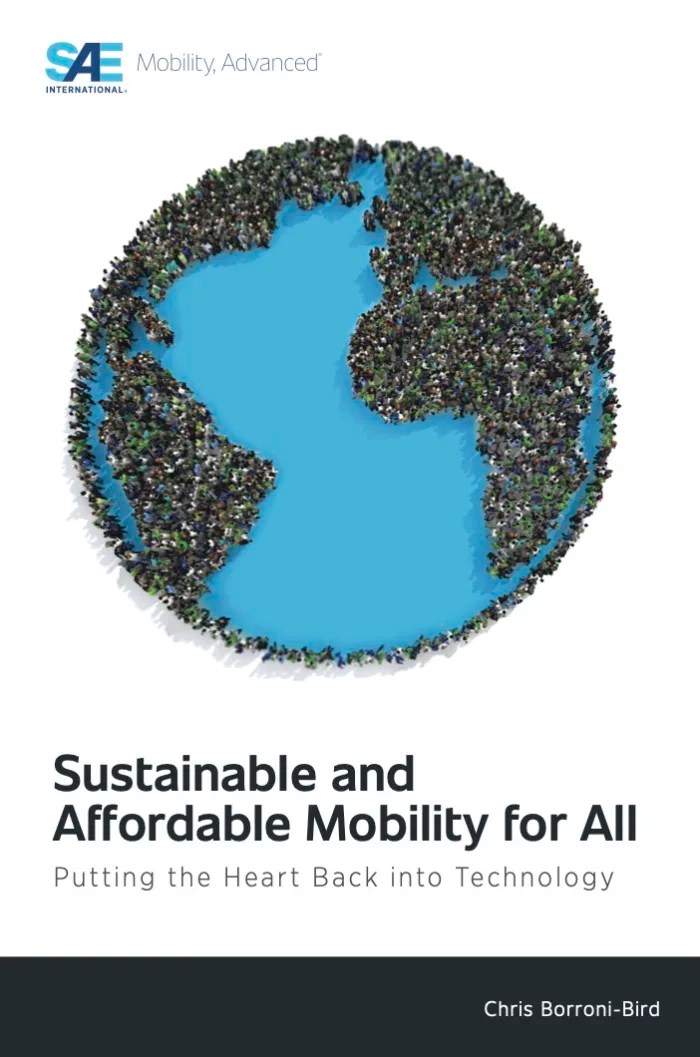
Sustainability and Affordable Mobility for All: Putting the Heart Back into Technology, by Christopher Borroni-Bird, SAE International, 2025.
EV Tradeoffs. Chris admits, “I remember the optimism when EVs were being developed because they were seen as freeing us from our energy and environmental issues, while also allowing automotive engineers and designers more freedom to control functionality and form. Recently, with the increased use of EVs, some of the dark sides—mining metals and the impact on water scarcity, water pollution, child labor, etc.—got me thinking about how the auto industry might be headed in the wrong direction. I started thinking more about the dark side of connectivity and autonomy, as well.”
“Sustainability and Affordabilty.” How to Achieve? “I realized,” Chris recounts, “that advanced technology was making vehicles increasingly expensive to purchase, repair and insure, and that vehicle affordability was becoming a bigger issue, outpacing median household income growth.”
Mobility-as-a-Service and Vehicle Right-Sizing. Chris continues, “My book tries to answer two questions: how to make vehicles more sustainable for the wealthy 10%, who can afford to buy a new car, and how to make mobility more affordable for the remaining 90%, who cannot. The solution involves leveraging autonomy, connectivity and electrification to enable mobility-as-a-service and vehicle right-sizing.
“For example,” Chris posits, “can technical and operational solutions developed for robotaxis allow people to avoid buying a vehicle in the first place, or allow them to buy a smaller vehicle for daily use but have convenient access to renting larger vehicles (with autonomous pickup and dropoff, insurance/cleaning/maintenance/refueling taken care of)?”
“Or,” Chris says, “can geo-fenced ‘robopods’ allow suburban residents easy access to nearby public transit hubs so that poorer or disabled people don’t have to walk 1-2 miles to access public transport networks?”
A Current Paradox. “We are going the wrong way,” Chris says, “because as more people buy bigger vehicles, it makes it more likely for others to feel the need to buy them, in order to feel safe. Road fatalities are rising in the U.S. because collisions are more likely to be fatal as vehicle height and mass increase, making them more dangerous to people walking, cycling or in small cars. A 2000 full-size pickup truck is now considered mid-size, and a 2026 pickup truck can have a 0-60 time equivalent to a sports car from 2000.”
Positive Trends. Chris observes, “I believe that the trends in urban last-mile goods delivery and ride-hailing will lead to more fleet purchases and to a more rational approach to vehicle right-sizing based on cost-per-mile economics and utility in crowded environments, rather than the traditional automotive messaging of horsepower and size.”
(The 90-Percent) Developing World. “When focusing on developing-world solutions,” Chris believes, “it is essential that they are affordable, useful, and reliable. It’s that simple. As solar power drops in price and improves in performance (just as has happened with batteries), I expect to see more solar-powered, lightweight EVs (think tuktuks or golf carts). [Or Chris’s Afreecar.] They use energy so efficiently (100 Wh/mile) that a solar-powered roof can provide 100 miles (161 km) of range in many parts of the sunny world.”
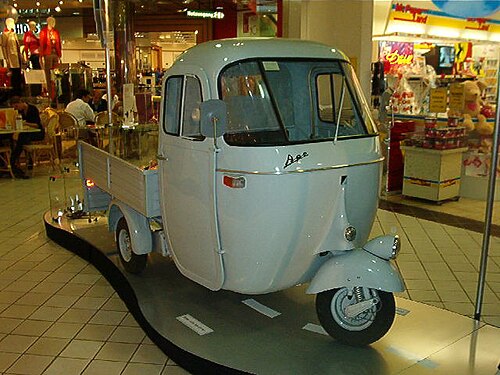
A vintage Piaggio Ape C (Tukxi), designed by Vespa creator Corradino D’Ascanio and first manufactured in 1948. (Ape is Italian for “bee.” Image originally uploaded by UglyKidJoe at German Wikipedia.
Chris continues, “As cities in Europe question the need for cars in their centers, this could introduce lightweight vehicles that don’t have to meet all crash, speed and performance requirements and so could be made from a much wider variety of materials (recycled plastics, agricultural byproducts).”
90-Percenter Mobility. Chris envisions, “They could be built in local microfactories, creating high-quality design, development, and manufacturing jobs. A rethinking of the vehicle like this is a challenge to the traditional auto industry, but companies could become valuable partners if they decide to work with cities, licensing or supplying the skateboard platform at an attractive price, due to the economies of scale, while allowing local microfactories to customize the coach to local needs and materials.”
More of Chris’s innovative—and iconoclastic—thinking is no doubt described in Sustainability and Affordable Mobility for All: Putting the Heart Back into Technology. ds
© Dennis Simanaitis, SimanaitisSays.com, 2026
 Simanaitis Says