
Simanaitis Says
On cars, old, new and future; science & technology; vintage airplanes, computer flight simulation of them; Sherlockiana; our English language; travel; and other stuff
CELEBRATING HISTORY EXTRA
I’VE LONG ENJOYED BBC HISTORY MAGAZINE, now rebranded History Extra. Its February 2026 number is no exception, with cover-blurbed features that are varied indeed: Lucy Worsley recounting a competitor of Jack the Ripper; the first Winter Olympics, London 1908—sans snow; and how Britain turned its back on fascism (despite Oswald Mosley, not to say several of the fabled Mitfords).
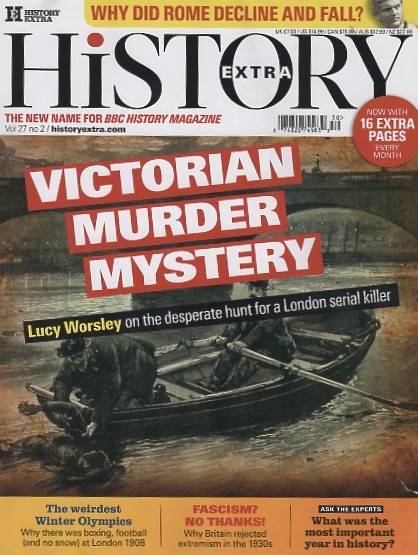
Also illuminating are its shorter features such as “Q&A, a Selection of Historical Conundrums Answered by Experts.” The following tidbits are gleaned from three of these: “Did Richard Cabell Inspire The Hound of the Baskervilles?,” “Who Was Mary, and Did She Have a Little Lamb?,” and “What Were the Origins of the ‘Pansy Craze’ of the 1920s and ‘30s?” Each, informative fun indeed.
Dirty Dick. Author/journalist Eugene Byrne recounts, “Legends of ‘Dirty Dick’ are numerous: that he sold his soul to the Devil; that he murdered his wife; that he abducted and forced himself on local women; that he and his pack of demonic hunting hounds can sometimes be seen racing across Dartmoor at night.”
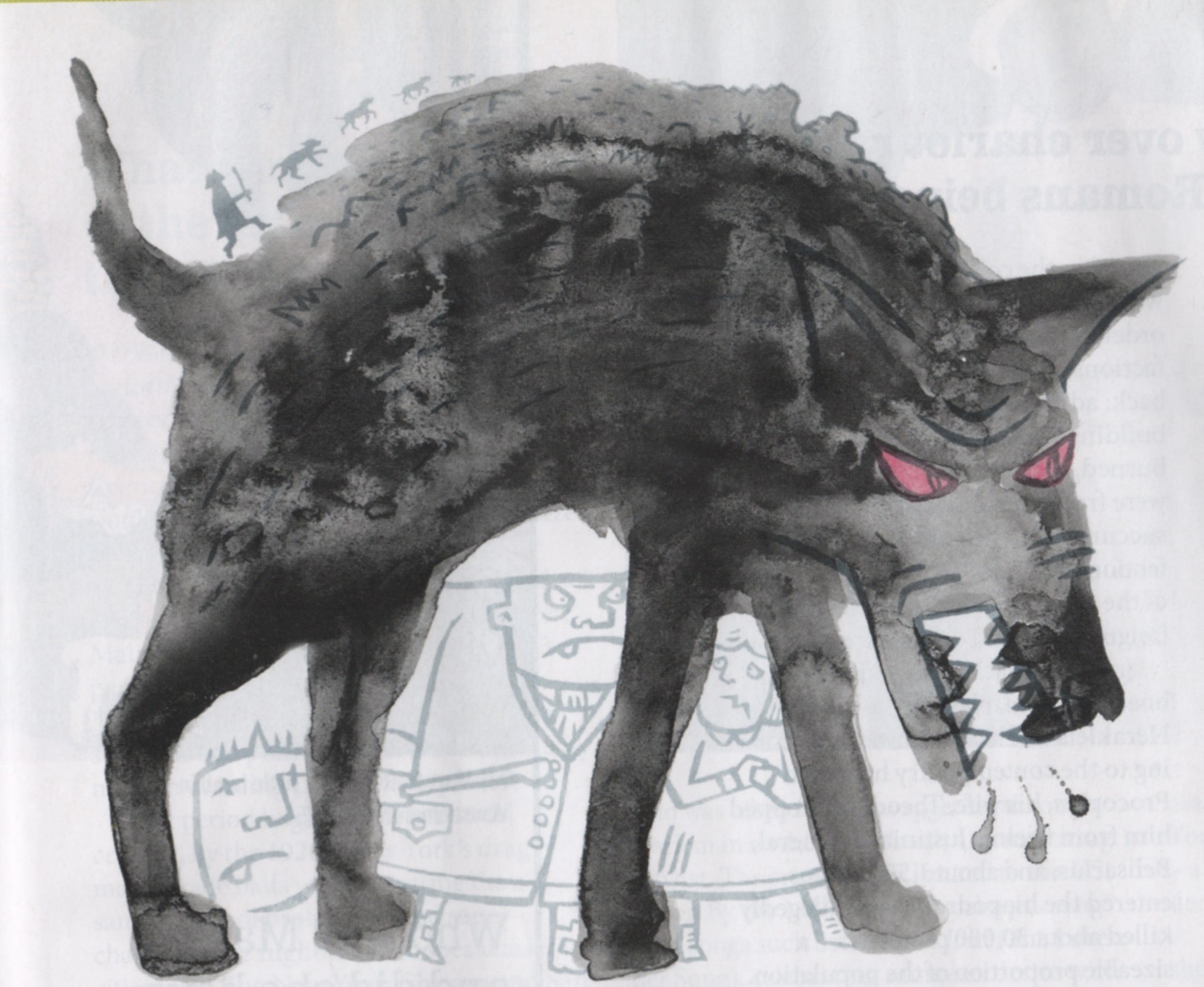
Image by Glen McBeth. This and following from History Extra.
A Dog on the Moor. It’s no surprise, Bryne continues, that “Conan Doyle claimed he was inspired to write The Hound of the Baskerville by a friend’s remark about ‘a dog on the moor connected to some old family.’ ”
The Facts: Bryne describes, “Richard Cabell was born in 1620 into a local aristocratic family, probably at Buckfastleigh. He studied at Oxford, attended one of its inns of court and fought in the royalist side in the Civil War.”
Uh, Not a Wife Murderer. “In 1655,” Byrne says, “he married Elizabeth Fowell and they had two sons and a daughter. Both sons predeceased Elizabeth and Richard, who died in 1677. Contrary to rumour, he didn’t murder his wife—she died nine years after him.”
However, There was a Heavy Stone. Bryne cites Devon clergyman and folklorist Reverand Sabine Baring-Gould who wrote in 1907 that Cabell “died with such an evil reputation that he was placed under a heavy stone, and a sort of penthouse was built over it, to prevent his coming up and haunting the neighbourhood.”
Pause here for a shiver.
And To This Day. Bryne concludes, “But local lore has it that you shouldn’t stick your finger through the tomb’s keyhole—or it might get bitten by one of his devil-dogs.”
I surely wouldn’t.
Mary, Her Lamb, Et Al. Freelancer Jonny Wilkes contributes several tales, including “Who Was Mary, and Did She Have a Little Lamb?” Wilkes recounts, “Sarah Josepha Hale, writer, magazine editor and ‘mother of Thanksgiving,’ published a poem in 1830 about a girl named Mary and her little lamb with fleece as ‘white as snow,’ which followed her to school one day.”
Maybe Hale, a schoolteacher, knew such a kid named Mary, maybe not.
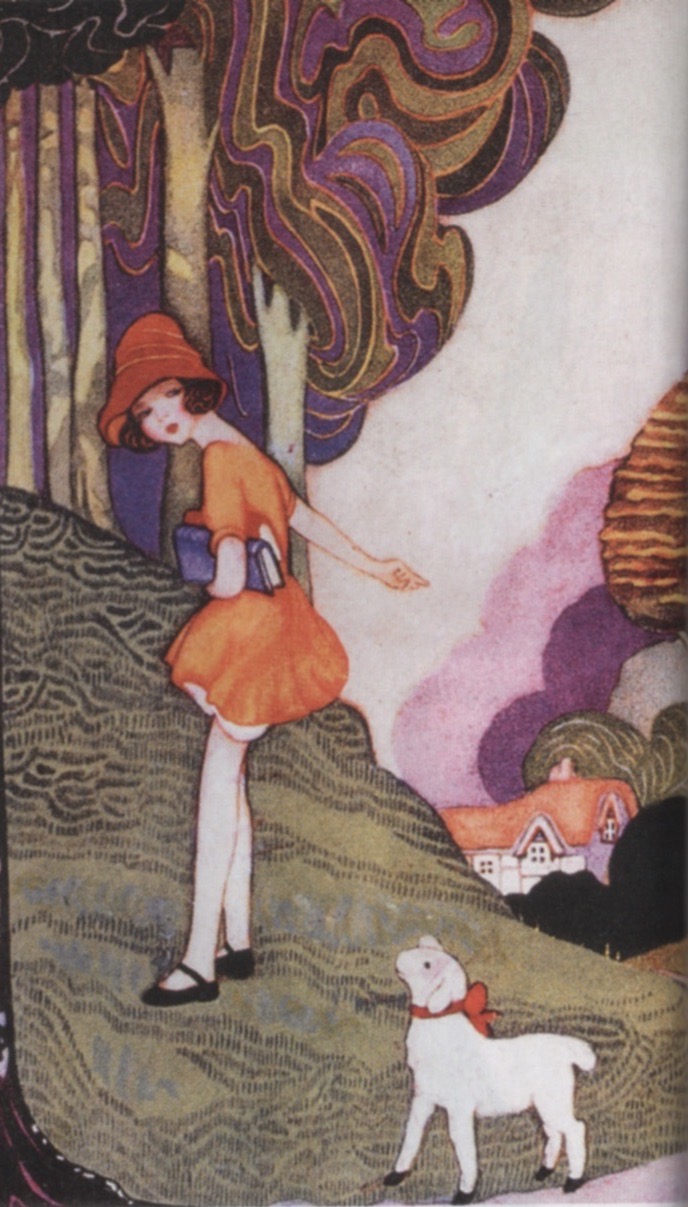
Did Mary first lead her little lamb in Massachusetts in 1815?
“Decades later,” Wilkes relates, “an elderly woman named Mary Tyler claimed that she was the original Mary…. One day, she took the animal to school; after the teacher turned it out of the classroom, it waited patiently outside for Mary. The sight inspired an older boy, John Roulstone, to pen a few verses that formed foundation to the rhyme.”
Among those inspired by Tyler’s tale, Wilkes cites Henry Ford, who “in the 1920s wrote a book advocating Roulstone as the original author.”
My Own Inspiration/Recollection. I recall Hachikō, the Akita waiting more than nine years for its owner’s return to Tokyo’s Shibuya Station. And also, “Mary, Mary, Quite Contrary,” whose garden grew “With silver bells and cockleshells”—and, in the version residing in my memory, a particularly ribald eggplant.
‘20s and ‘30s LGBTQ. Historian/journalist Hilary Mitchell recounts, “When the elegant, dapper and witty performer Jean Malin stepped onto the stage of Hollywood’s Ship Cafe in 1933, few realised that they were witnessing the end of a period of increased queer visibility that would later be described as the ‘pansy craze’ by the historian George Chauncey.”
“That period began,” Mitchell describes, “in the late 19th century. By the 1920s, New York’s drag masquerade balls were attracting thousands. Alcohol prohibition had supercharged queer nightlife, with speakeasies in cities including New York, Chicago and San Francisco all showcasing LGBTQ performers. Variety even informed readers that Broadway had nite [sic] places with ‘pansies’ as the main draw.”
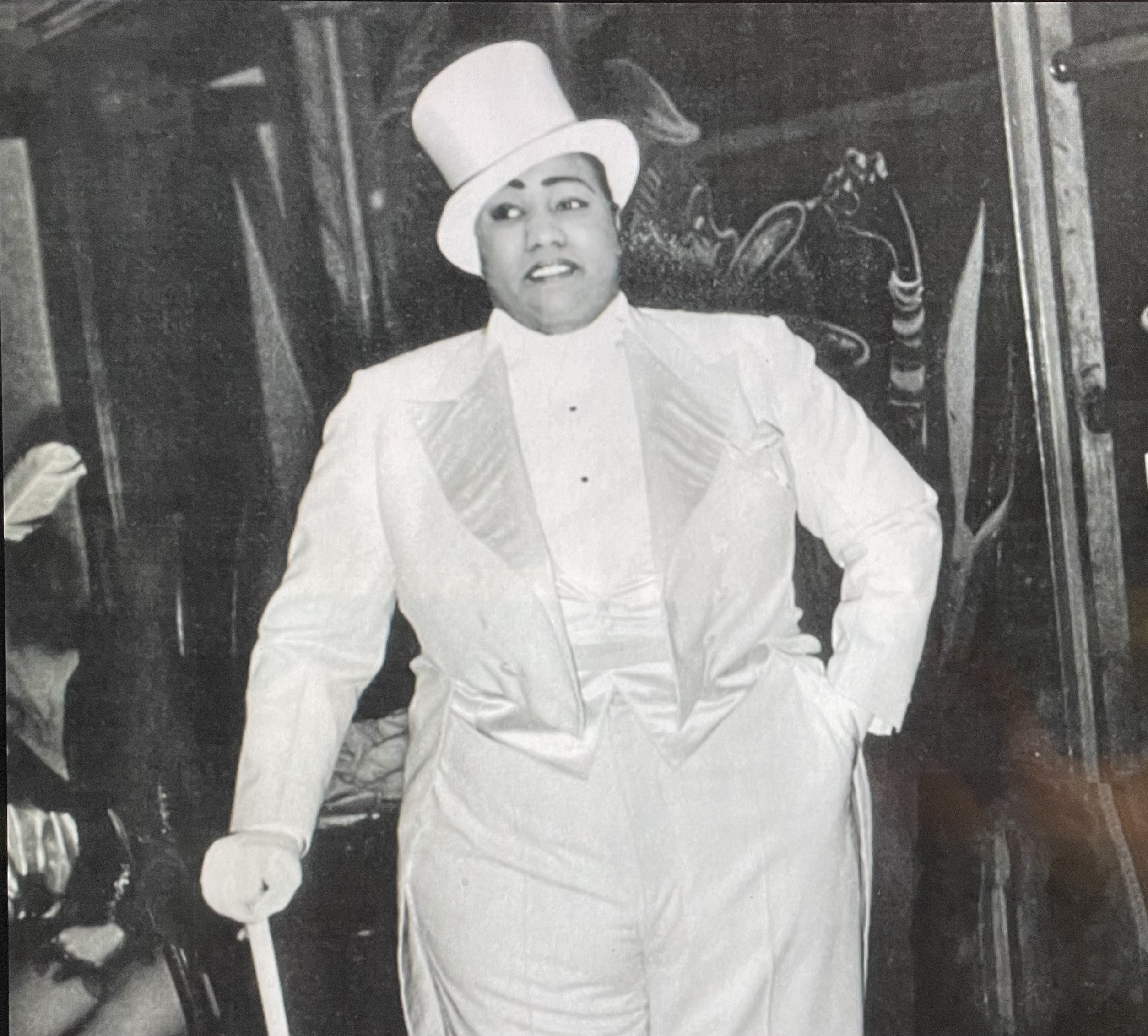
Blues singer Gladys Bentley in Harlem in 1930.
“By the 1930s,” Mitchell continues, “Berlin’s cabarets rang with songs such as Das Lila Lied (The Lavender Song), celebrating same-sex desire with confidence and boldness.”
“Sadly,” Mitchell relates, “that period of freedom and acceptance was all too brief.” The Hays Code “decreed that queer characters be erased. Across the Atlantic, the rise of fascism shuttered Berlin’s cabarets.”
Mitchell concludes, “… but the embers of the ‘pansy craze’ continued to glow—pushed underground but destined to spark future change.”
Thanks, Eugene Bryne, Jonny Wilkes, Hilary Mitchell, and History Extra for enlightening entertainment. ds
© Dennis Simanaitis, SimanaitisSays.com, 2026
 Simanaitis Says
Is it Bryne or Byrne?
Agg. I kept changing… It’s English journalist/freelancer Eugene Byrne. Thanks.—ds