
Simanaitis Says
On cars, old, new and future; science & technology; vintage airplanes, computer flight simulation of them; Sherlockiana; our English language; travel; and other stuff
WHAT’S THE LAST MASS MARKET PAPERBACK YOU’VE READ?
I REMEMBER VIVIDLY THE LAST TIME I read a mass market paperback: It was right after I had my cataract surgery that (thank you, Dr. Rowen!) gave me 20/15 vision and a new appreciation of blue in the sky and in a gas flame.
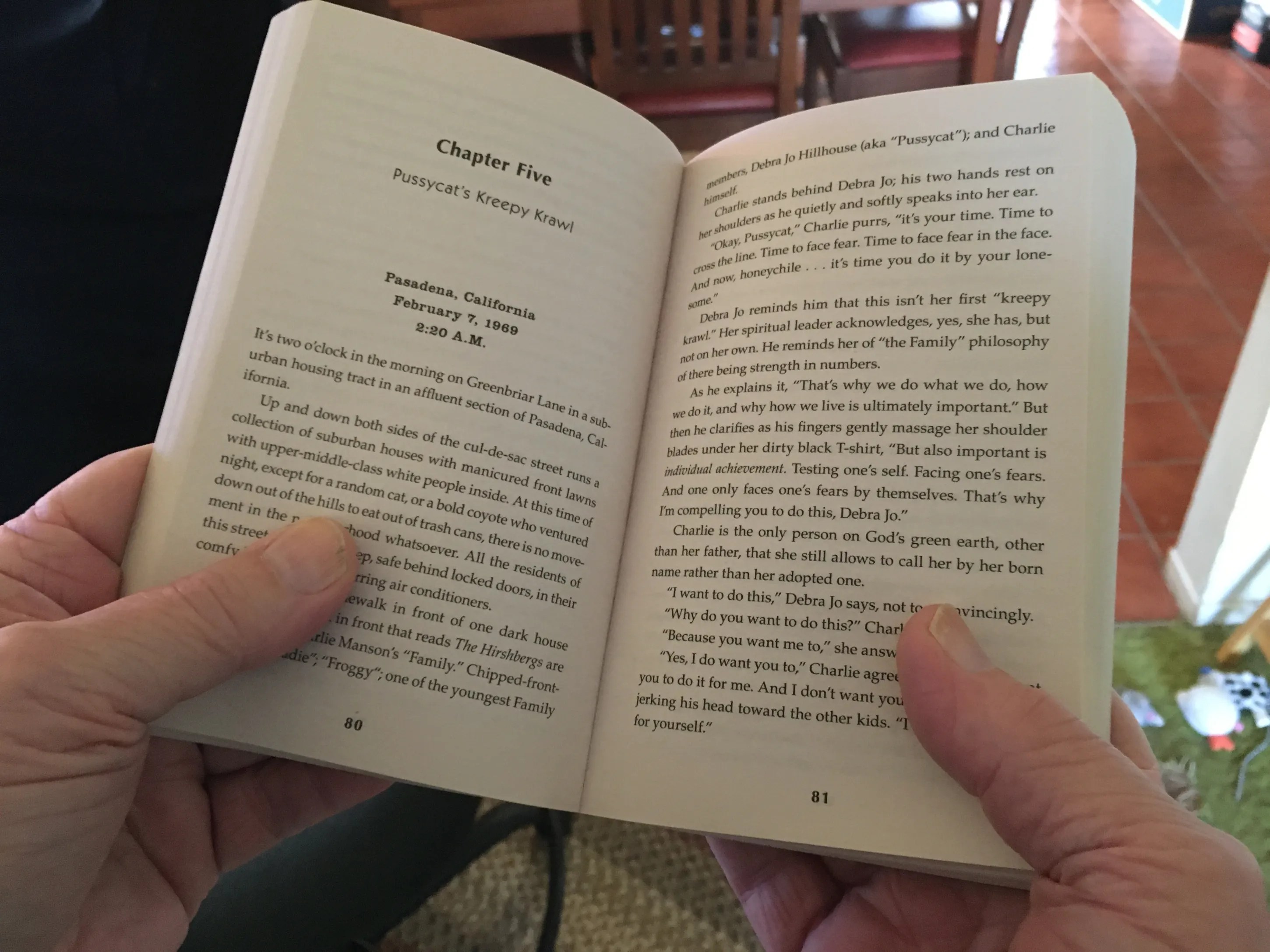
It also gave me access to the fine print and narrow margins of a book I had hitherto avoided reading.
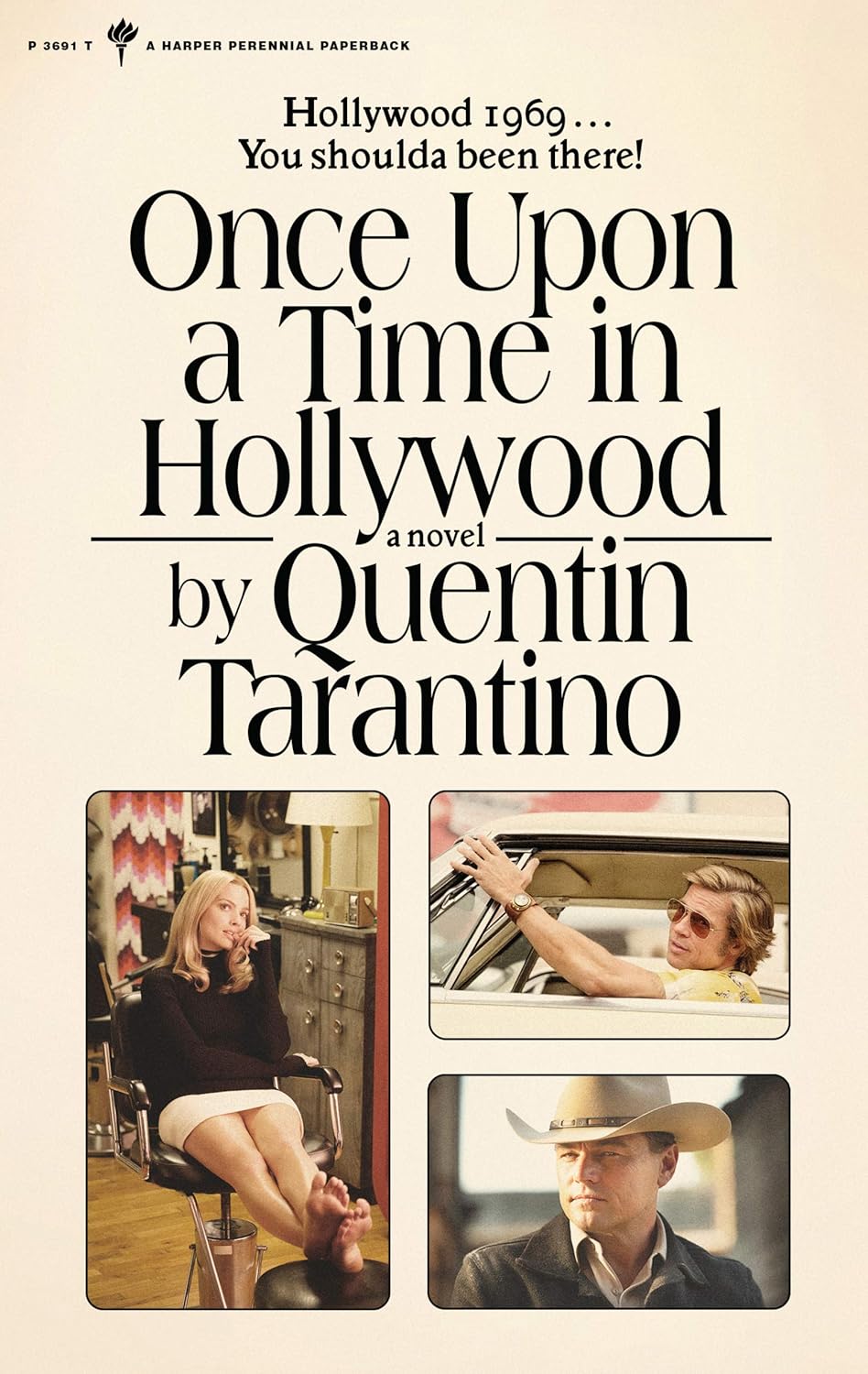
Once Upon a Time in Hollywood: The Long-Awaited First Novel from the Beloved Filmmaker, Based on the Oscar-Winning Movie, by Quentin, Tarantino, Harper Perennial mass market paperback, 2021.
Typical of mass market paperbacks, its $9.99 list was reasonable for its 416-page thickness (Amazon has it for $6.04). And also typical of mass market paperbacks, my copy started to exhibit loose pages before its completion.
These personal comments are preface to Elizabeth A. Harris’s “So Long to Cheap Books You Could Fit in Your Pocket,” The New York Times, February 6, 2026 (reappearing in The New York Times Book Review, February 22, 2026).
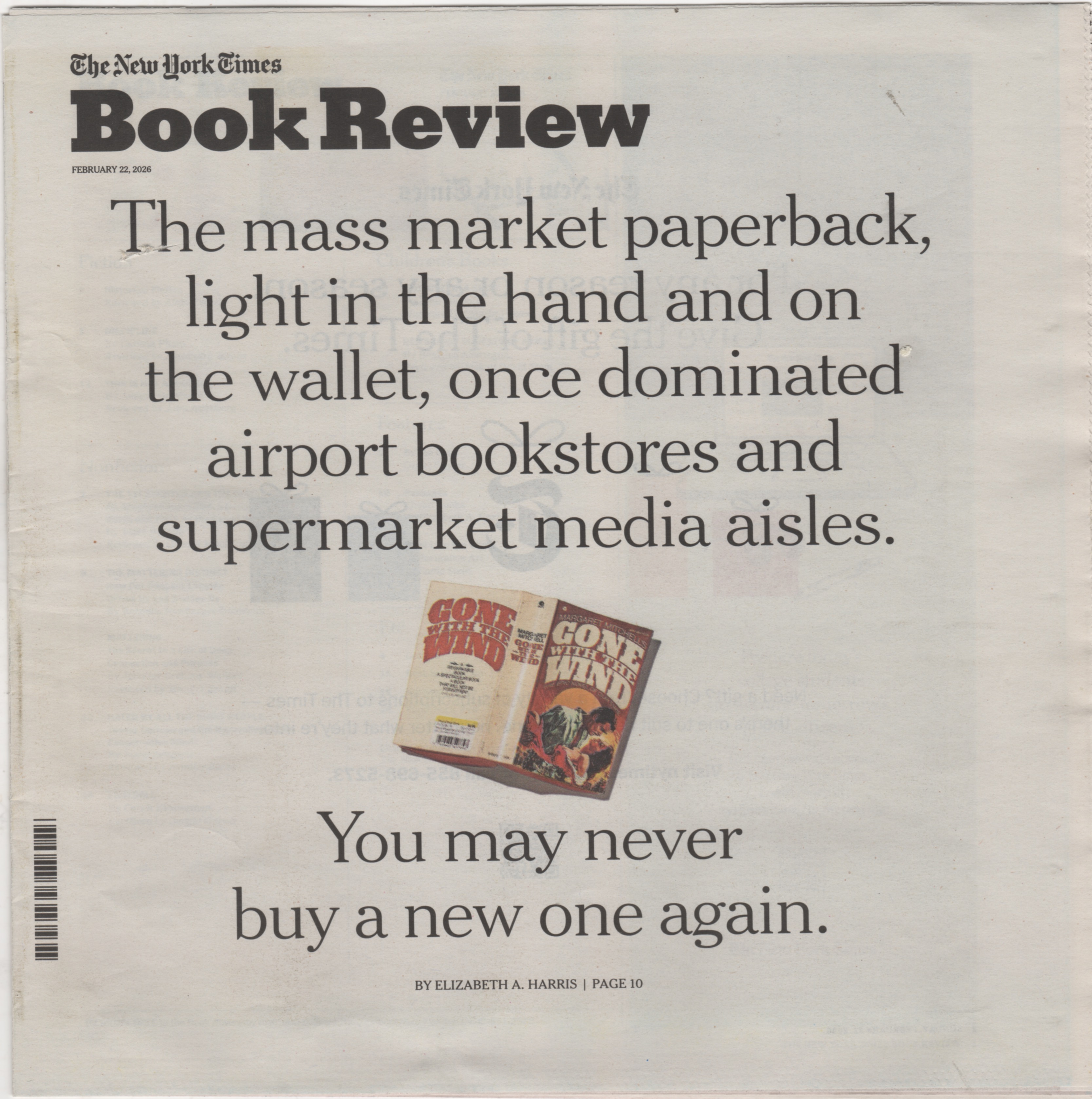
Here are tidbits gleaned from Harris’s article, interspersed with several more of my personal reading experiences.
Paperback Origins. Harris recounts, “Paula Rabinowitz, the author of a cultural history of paperbacks called American Pulp, traces the ‘creation myth’ of the modern paperback industry to the mid-1930s, when an English book editor named Allen Lane was so displeased with the reading options available to him at an Exeter train station that he committed himself to making better stories widely available. He went on to publish compact, smartly branded paperbacks and sell them in chain stores and tobacco shops for no more than a pack of cigarettes.”
What with ciggie prices these days, mass market paperbacks have tracked the economy. And, for entirely different reasons, their market presences are limited as well.
Mass Market Tradeoffs. “Such low prices,” Harris relates, “required inexpensive production. Because mass market spines were glued together instead of sewn, the covers often came off, or pages fell out. Libraries rarely bought them, in part because they were too fragile.”
They were certainly popular, though: Harris continues citing Rabinowitz: “There were, say, a few hundred book stores in the United States, but there were thousands of little drugstores and bus stations and so on in small towns. That’s why they’re called mass market.”
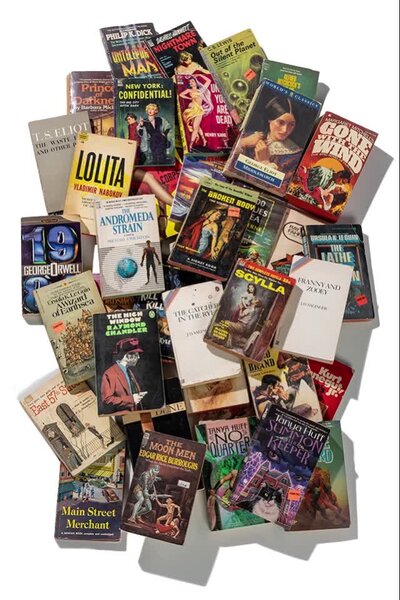
This image and those following are by Tony Cenicola for The New York Times.
WWII Paperbacks. Harris recounts, “During World War II, the American government distributed specially made paperbacks to soldiers, who couldn’t very well listen to the radio while sitting in fox holes, Rabinowitz said. The books were printed horizontally, to get more words on each page, and fit in the pockets of G.I. uniforms.”
“After the war,” Harris notes, “books and weapons were the only wartime supplies the armed services required soldiers to return. Publishers feared that otherwise, millions of free paperbacks would flood the American market, devastating their businesses. The books were often dumped in countries where Americans had fought before the soldiers headed home.”
To this day, of course, there are organizations dedicated to distributing secondhand books overseas. In my decluttering phase a few years ago, I assuaged getting rid of books with this comforting alternative.
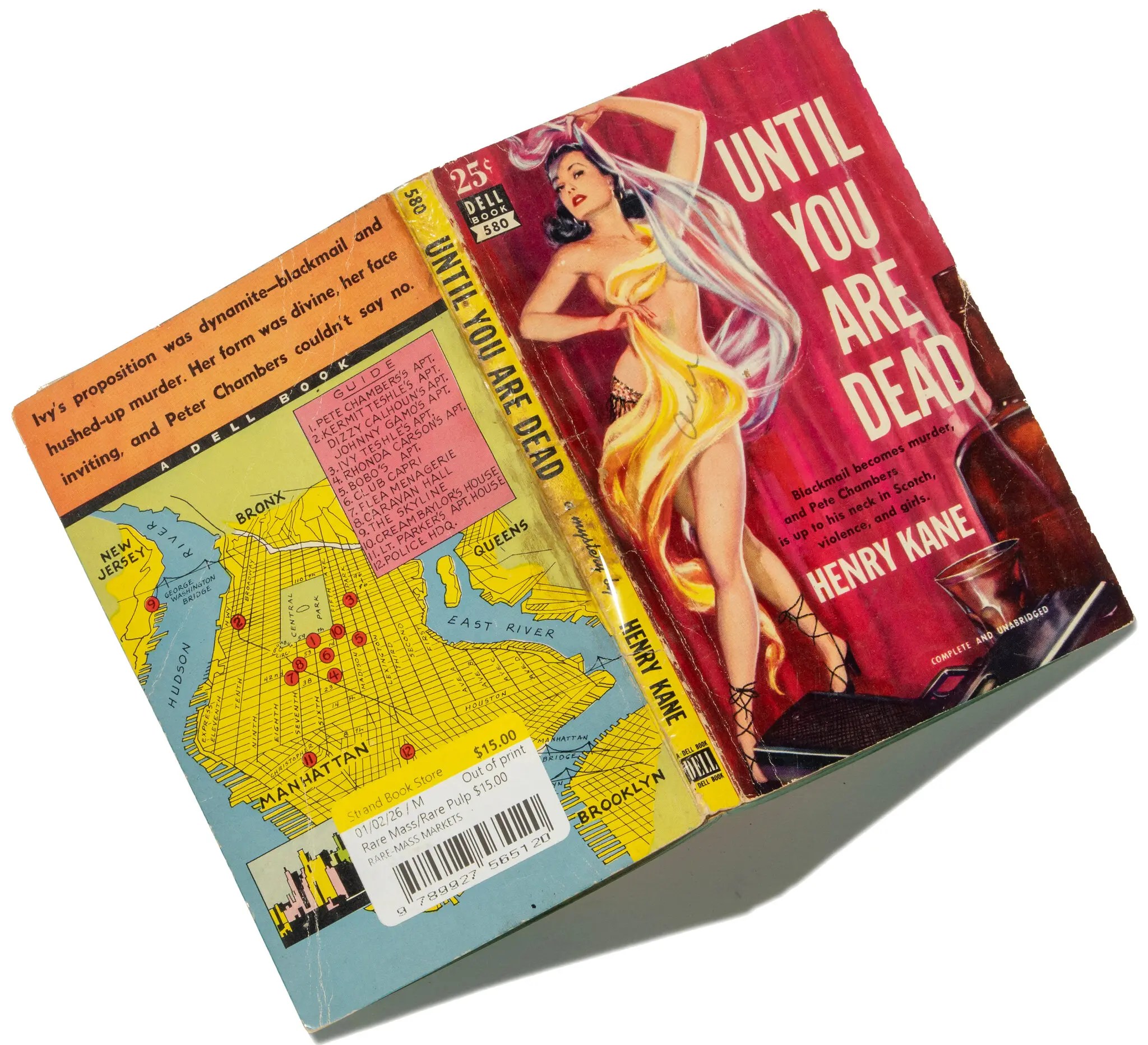
The Pulps. “In the middle of the 20th century,” Harris relates, “mass markets—or ‘pulps,’ as cheap paperbacks were called then—regularly sported covers we might now call ‘spicy,’ featuring a woman taking off an article of clothing. Many of these books were westerns, thrillers or self-help titles, and there were even popular gay and lesbian pulps available. Publishers that put out classics as mass markets would generally give those racy covers, too.”
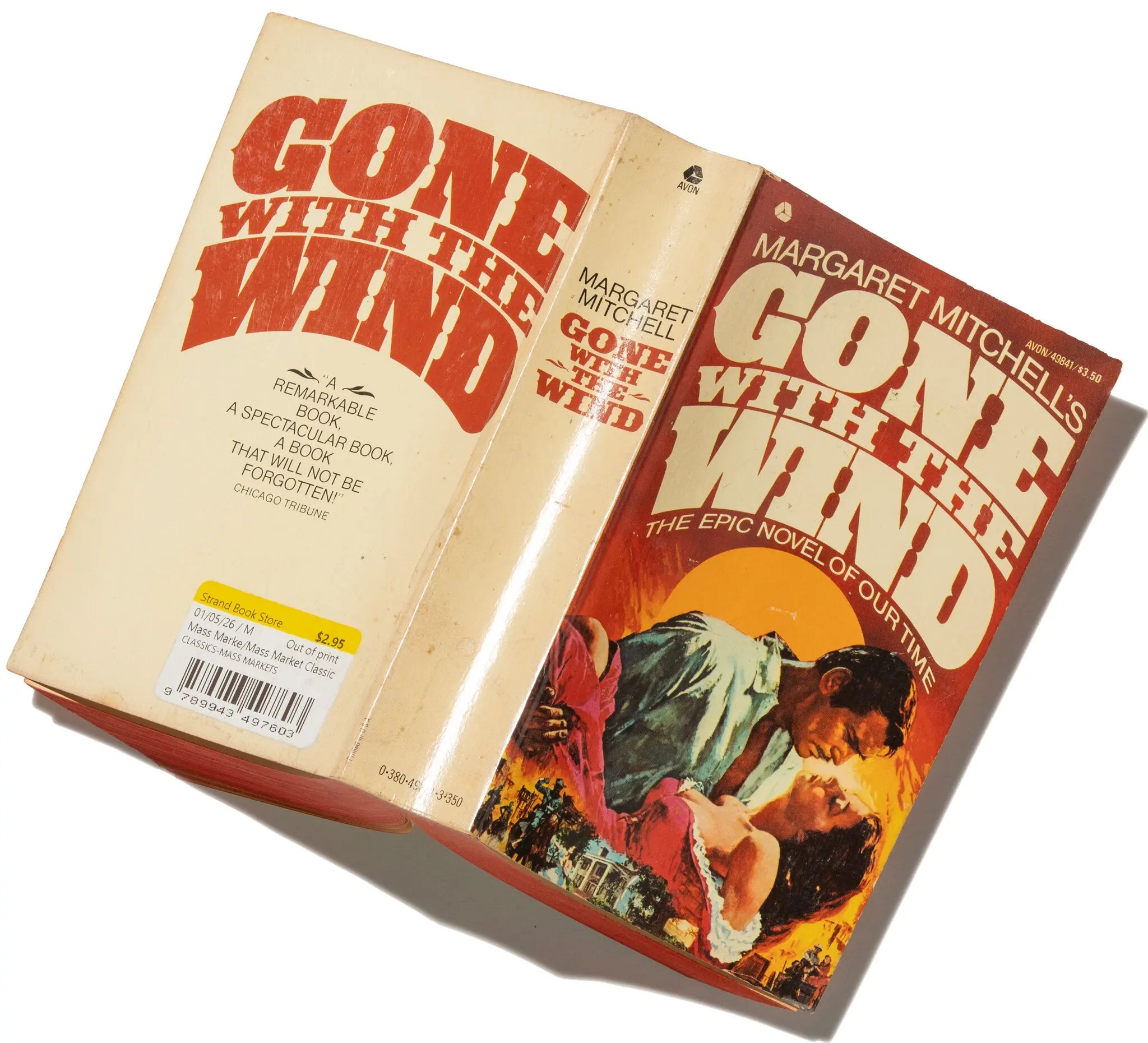
Goodbye to the Print Book? “In the 1990s,” Harris recounts, “with sales of mass markets beginning to sag, new technologies came along that were more portable than print books—and often even cheaper. After digital books were introduced to the public, publishers worried they would all but replace the print book. That hasn’t happened. Physical books still account for about 75 percent of book sales, according to the Association of American Publishers. But mass market paperbacks have been a casualty.”
Numbers are Telling. Harris notes, “According to Circana BookScan, which tracks most print book sales in the United States, about 103 million mass markets were sold in 2006, the year before the Kindle was introduced. Last year, readers bought fewer than 18 million of them.”
“Over the past decade,” Harris continues, “the number of mass market titles publishers made available in the United States dropped as well, but not nearly so sharply, falling to about 44,000 from 54,000. It wasn’t publishers leading the move away from mass markets. It was readers.”
Not Just E-Books. “Mass markets were not just cannibalized digitally,” Harris observes. “Readers now seem more willing to buy books in larger, pricier formats like trade paperbacks and hardcovers.”
Indeed, though I confess I’m not into e-books, my recent book purchases have all been hardbound.
Harris quotes Dennis Abboud, the chief executive of ReaderLink: “In the case of mass markets, the consumer spoke. They were just done with it.”
Economics of It All. What’s more, Harris cites, “There is only about a 30 cent difference, Abboud said, between producing a mass market and a trade paperback of the same title — but the trade version could easily sell for $6 more.”
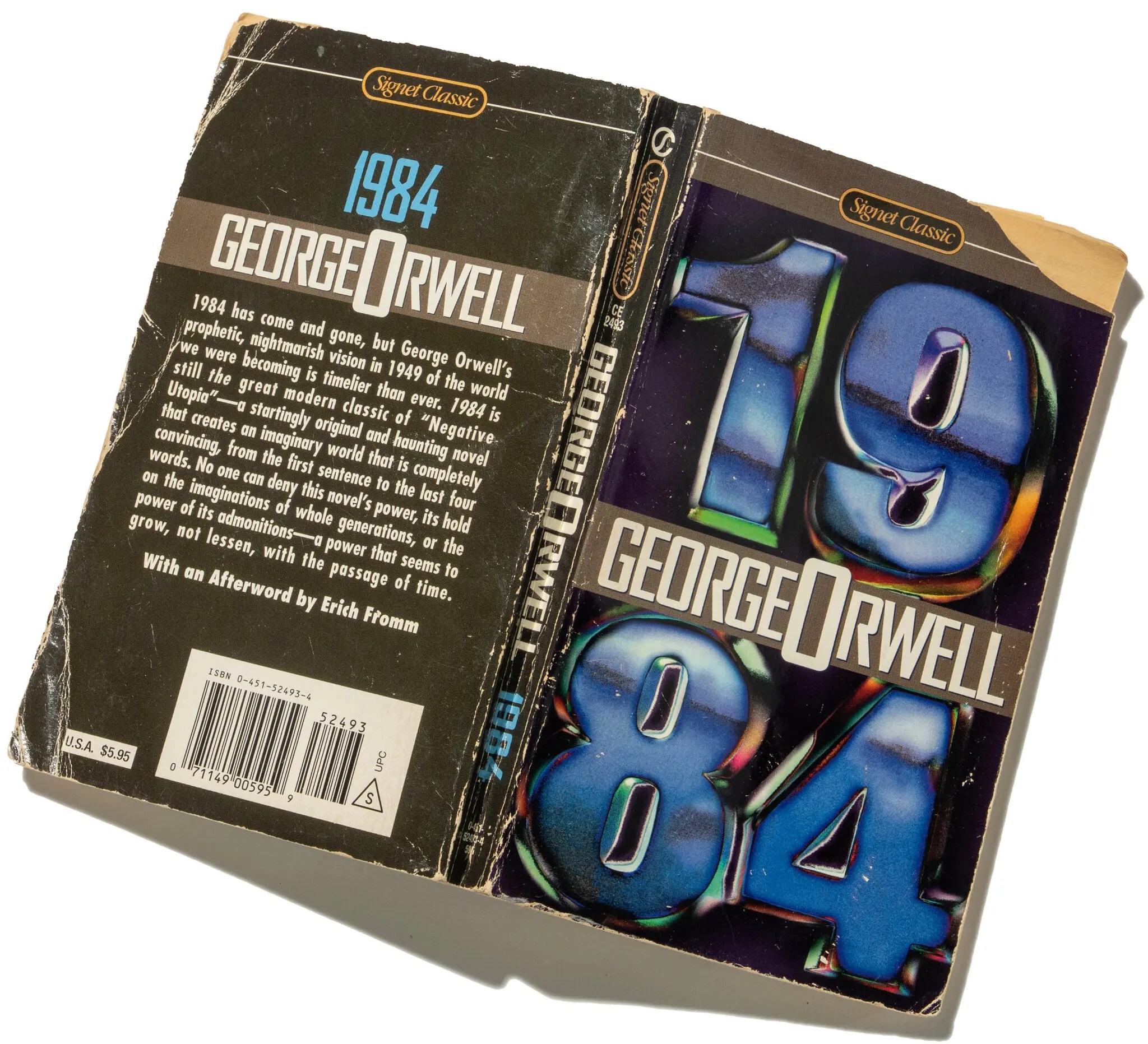
And, I note, trade editions seem not to lose pages as readily. ds
© Dennis Simanaitis, SimanaitisSays.com, 2026
 Simanaitis Says