
Simanaitis Says
On cars, old, new and future; science & technology; vintage airplanes, computer flight simulation of them; Sherlockiana; our English language; travel; and other stuff
A.I.’S PLACE, HUMAN EFFORT, AND FRICTION-MAXXING PART 2
YESTERDAY, DONALD MACKENZIE SHARED TRADEOFFS of A.I.’s seemingly unbridled upscaling. Here in Part 2, two means of human control are offered. One is pedagogical, though applicable to the rest of us as well. The other has general application independent of A.I.
The 30% A.I. Rule. The Coco Coders website offers “Understanding the 30% AI Rule—And Why AI Is a Good Thing When Used Well.” It describes, “The “30% AI rule is a simple guideline designed to help students (and adults!) use AI responsibly. It means that when you’re creating something—whether it’s an essay, a project, or a piece of code—no more than about 30% of the work should come directly from AI tools. The remaining 70% should come from the learner’s own ideas, research, and effort.”
Coco Coders observe, “This balance encourages students to use AI as a supporting tool, not a replacement for their own thinking. It’s like using a calculator in maths: helpful for checking answers or solving complex parts, but you still need to understand how to do the problem yourself.”
And, of course, you still need to understand basic arithmetic. Otherwise, how to know what quantities to enter into the supporting tool.
A.I. Can Help Us, Not Replace Us. Coco Coders relate that A.I. can “Spark creativity by suggesting new ideas or helping overcome ‘blank page’ moments. Save time on repetitive or tricky parts of projects. Support learning by giving instant feedback or extra practice. And Build confidence as children see their ideas come to life with a little help.”
“The key,” Coco Coders stress, is how it’s used—A.I. should never do the learning for children, but it can make the learning process more engaging and effective.”
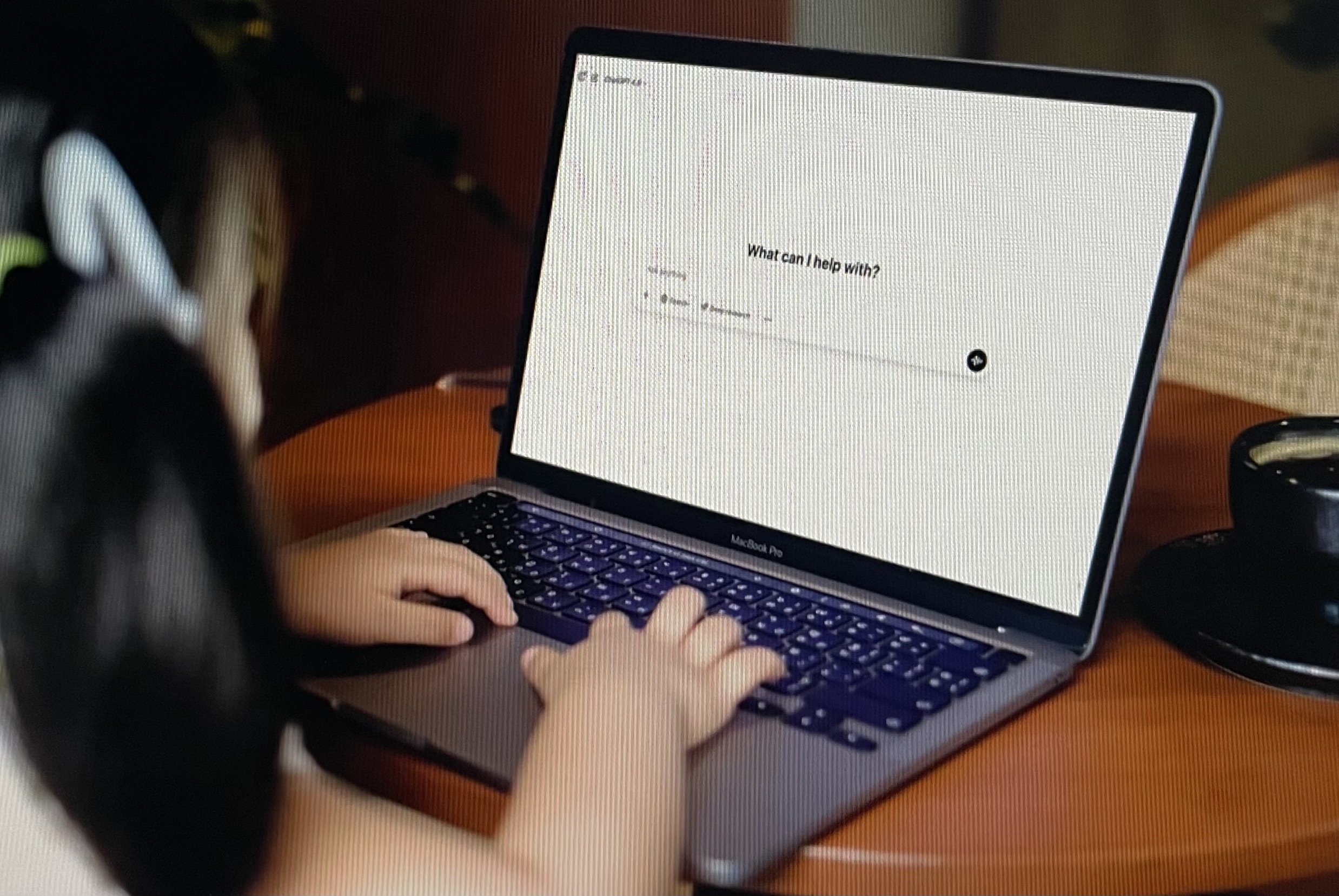
Image from Coco Coders.
Why Learning to Code is So Valuable. Even for kids, Coco Coders say, “Coding teaches more than just how to write computer programs. It helps children think logically, solve problems creatively, and persevere when things don’t work right away – all vital skills for the future.”
“When children learn to code,” Coco Coders note, “they also start to understand how technology (including AI!) actually works. Instead of seeing it as magic, they realise it’s built by people—which makes it far less mysterious and far more empowering.”
My Own Modest A.I. Applications. Being the Luddite I am, I confess to enjoy celebrating A.I. hallucinations and identifying its shortcomings in garbling SimanaitisSays facts scraped from the Internet (this, despite their copyrighted nature, but who’s complaining?).
Indeed, I frequently use Google as an archiving tool. I also find Google’s AI Overviews helpful in their brief descriptions—and especially, when offered, their references. Similarly, Wikipedia references are excellent means of digging deeper. As I’ve often noted here, research is good fun.
Thus, when I or other adults adopt the 30% Rule, we’re being creative, efficient—and rational—at least 70% of the time. Not a bad intellectual strategy. And, curiously enough, it leads directly into the concept of friction-maxxing.

It Used to be Called “Concentrating.” Alexandra Pattillo asks rhetorically, “Can ‘Friction-Maxxing’ Fix Your Focus?,” BBC, February 28, 2026. She posits, “With technology offering instant gratification and quick thrills, experts explain how adding friction to our day-to-day can help heal our attention span and deepen our sense of self.”
She amplifies, “That’s why a growing number of people are restoring to the hottest new trend: ‘friction-maxxing,’ or rebuilding tolerance for inconveniences…. This could, for example, involve going ‘old school’ and swapping digital tech tools for analogue solutions, such as reading rather than watching YouTube, navigating by road signs in place of Google Maps or calling a friend for advice instead of consulting ChatGPT.”
How very novel: Using one’s own mind.
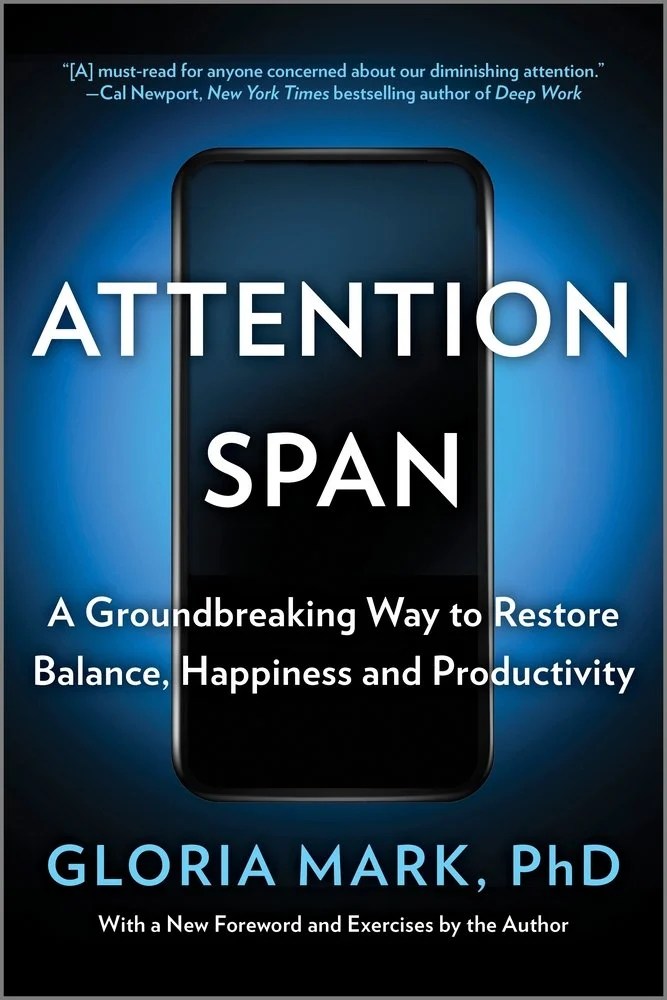
The Mind: At Work and At Play. Pattillo cites Gloria Mark, a psychologist who studies human-computer interaction at the University of California, Irvine, in the US, and author of the 2023 book, Attention Span: Professor Mark notes that attention span has undergone an “alarming and shocking” decline over the last two decades: “Technology, as it stands, is leading us toward a light, ‘hedonic’ kind of well-being full of quick thrills and simple delights.”
Pattillo recounts, “But our brains operate on a ‘use it or lose it’ principle, says Mark. Experiments in animal models show that effortful learning keeps new neurons in the brain alive. Studies also show that cognitively-stimulating activities like learning an instrument, reading, playing games and doing puzzles can preserve cognitive function as we age.”
Mark observes, “If people are putting in effort, it makes them more intentional and thoughtful.”
I’m all for giving friction-maxxing a try. If only I could find that Gore Vidal Palimpsest review I may have composed. ds
© Dennis Simanaitis, SimanaitisSays.com, 2026
 Simanaitis Says
When I was a child/teen I’d often visit my dad’s study and grab a book from his Encyclopedia Britannica set to look something up. Often I’d spend hours reading all kinds of stuff and sometimes even come away without ever even touching on the original item that I had sought to find.
Now I do the same thing but use the Internet (my father gave me the encyclopedia in his will, but for a number of silly reasons I never actually got it – it now residing in my kid brothers library and probably never used). Now I use Wikipedia and other interesting Internet resources. AI summaries can also help some of the time, although hallucinations can sometimes cause conflicting information even in the same response to a query.
I have enjoyed travel, and love heading out on adventures on foot, bike or car, but after binge watching Rick Steve’s travel shows during my daily morning exercise sessions (I’d never manage 40 minutes walking on the treadmill without the distraction of PBS or BritBox stimulation) I realize that I’m not going to be able to travel to all the places that I’d want to see, so often I travel by Google Maps using street view and Wikipedia to “see” many places that I probably never will make it to in my life time.