
Simanaitis Says
On cars, old, new and future; science & technology; vintage airplanes, computer flight simulation of them; Sherlockiana; our English language; travel; and other stuff
A QUITE PROPER MEDITERRANEAN CRUISE—1923 PART 1
THEY CERTAINLY KNEW HOW TO TRAVEL BACK THEN. And to write about it as well: Rolland Jenkins noted cogently, “In looking over the material available in the form of what might be styled guide books, little is found that is concise and comprehensive, and nothing that is up-to-date, and which takes into account the many changes wrought by the Great War, the effects of which have been so widely felt even in countries heretofore called ‘unchanging.’ ”
And, as I’ve noted repeatedly about old guidebooks, if something was worth seeing back then, and still extant, then it’s certainly worth a traveler’s look today.
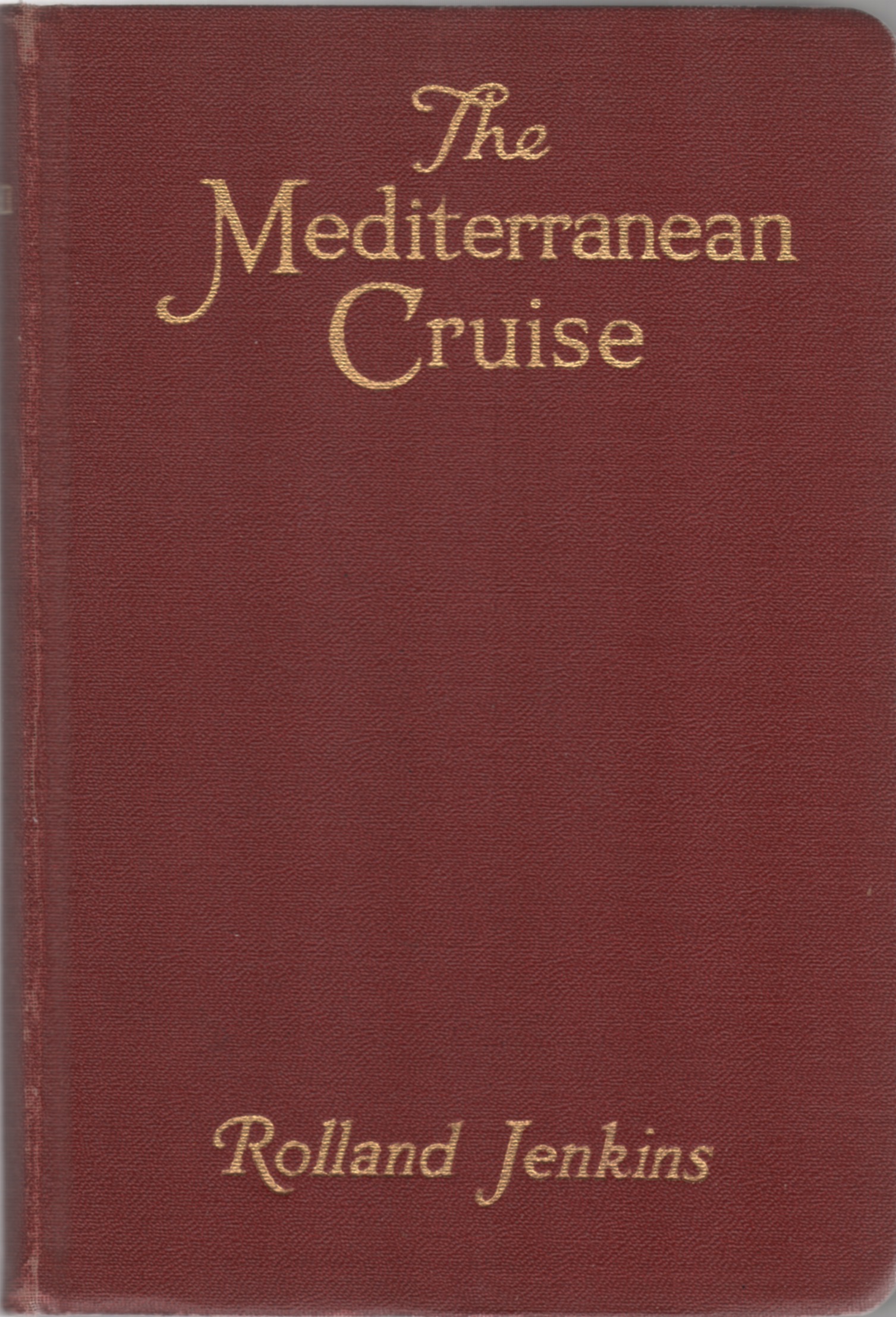
The Mediterranean Cruise: An Up-to-date and Concise Handbook for Travelers, by Rolland Jenkins With Concise and Unusual Notes by George G. Brownwell, Ph.D., G.P. Putnam’s Sons, 1923.
Here are tidbits gleaned from The Mediterranean Cruise, together with comments recollected from travels of my own.
Preparing for the Cruise. George G. Brownwell, Ph.D., observed, “To remain on a steamer for forty to sixty days, with few days ashore in the interim, is quite different from a transatlantic voyage lasting six to ten days.”
“A most important consideration,” he continued, “is an abundance of deck space. In the mild climate which is to be expected, living in the open air for a greater part of the day permits the fullest possible enjoyment of the invigorating sea air, and the ever-changing panorama of the restless, blue ocean….”
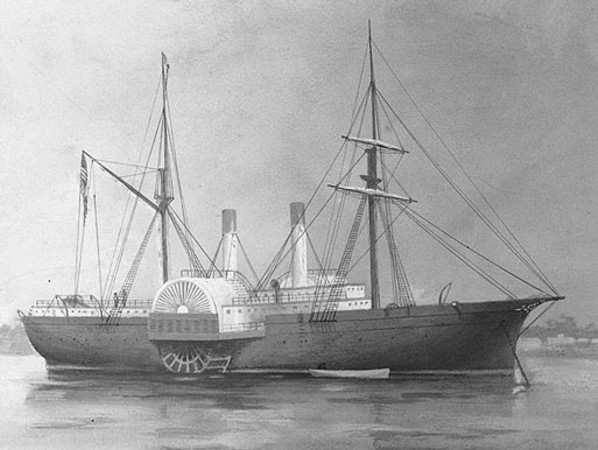
USS Quaker City. Wash drawing by Clary Ray, c. 1900 via Wikipedia.
Brownwell recounted, “The Quaker City immortalized by Mark Twain in his Innocents Abroad was the first steamer which attempted an extended cruise in the Mediterranean…. Today many of the world’s finest steamers seek the pleasant waters of the Mediterranean in the cold winter months, laden with thousands of travelers seeking the wealth of learning and enjoyment to be found in these fascinating lands.”
Gee, where do I sign up?
Jenkins’ Madeira: “Madeira has long been famous for its climate, and the exceedingly pleasant surroundings and the agreeable warmth have made it a winter resort which attracts many hundreds of visitors. The demand for accommodations for transients has resulted in several fine hotels, the most noted being Reid’s Palace Hotel….”
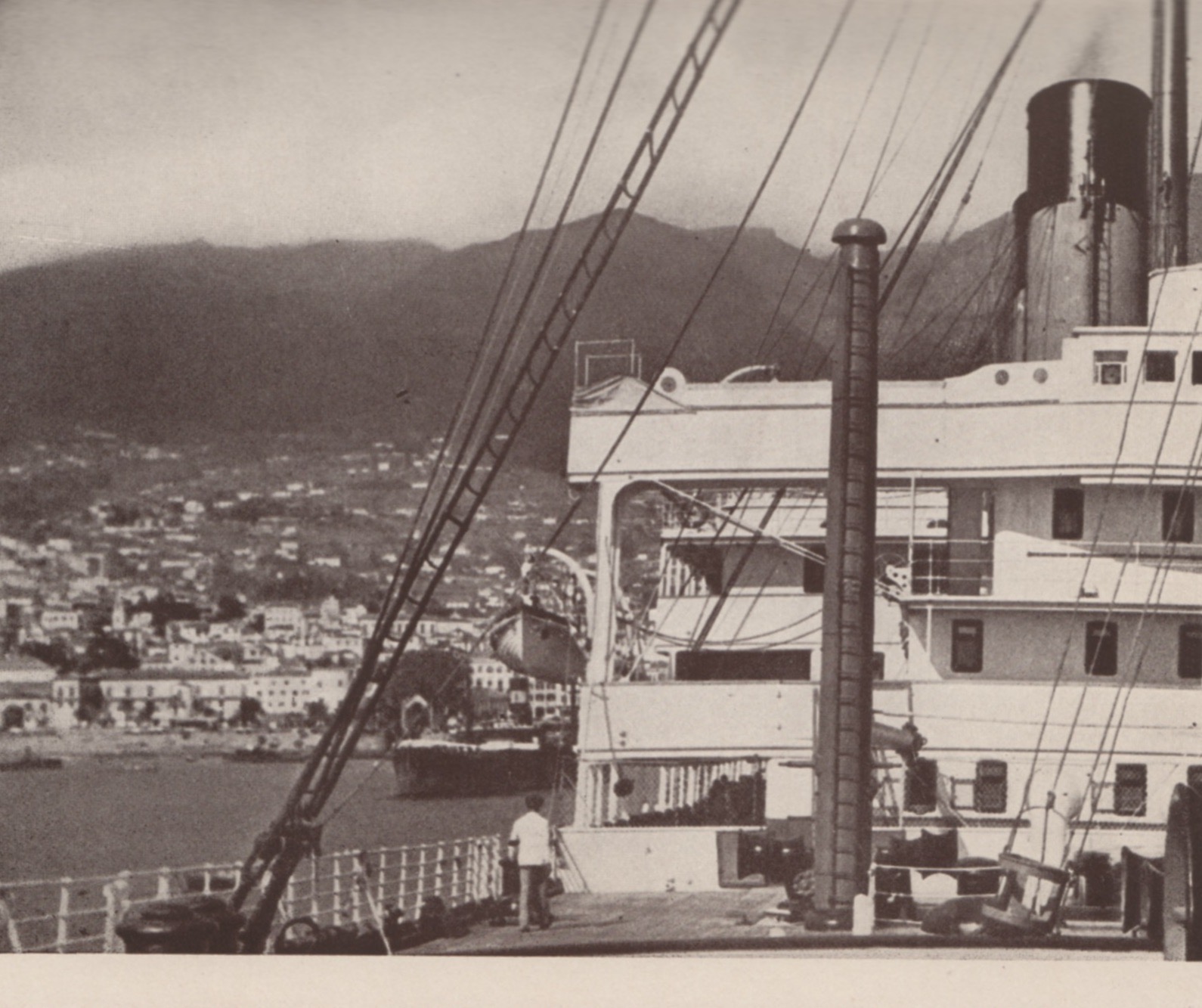
“No harbor on earth affords a more charming scene than the amphitheatre of noble, colorful hills which circle about Funchal Bay. Image and caption from The Mediterranean Cruise.
“One never thinks of Madeira without visions of the famous, old, mellow wine….,” Jenkins noted.
My Madeira. Indeed, “Have Some Maderia, M’Dear” quotes a favorite Flanders & Swann ditty. And my stay at Reid’s was most refined.
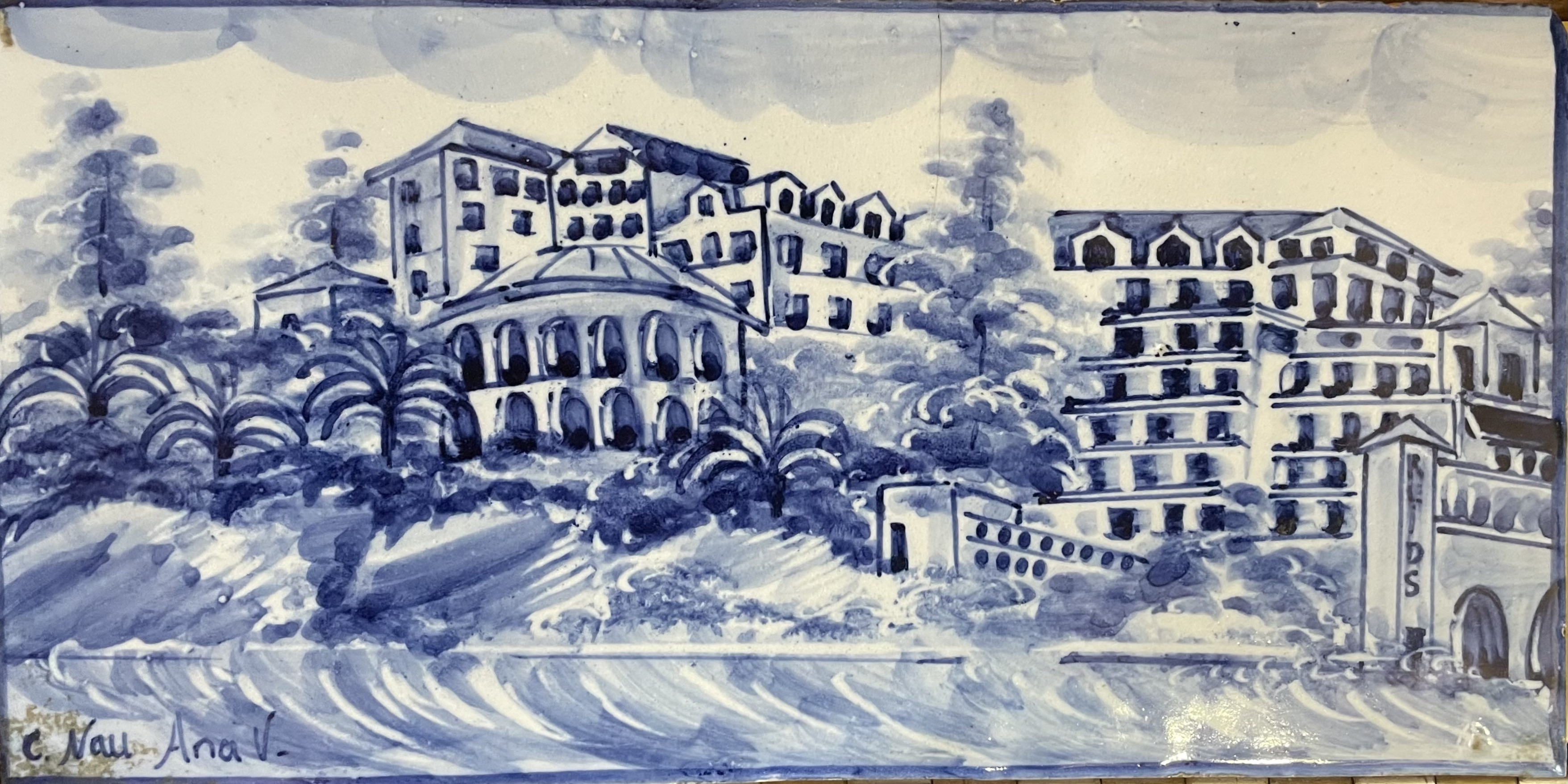
My souvenir tile of Reids.
Jenkins’ Cadiz. “Caesar and Pompey,” Jenkins recounted, “quarreled over Cadiz; and during the time of Augustus it became the chief port for the shipment of the rich products from the fertile valley of the Guadalquivir. Because of its noted wines and dancing girls, Roman authors speak of Cadiz as the City of Venus.”
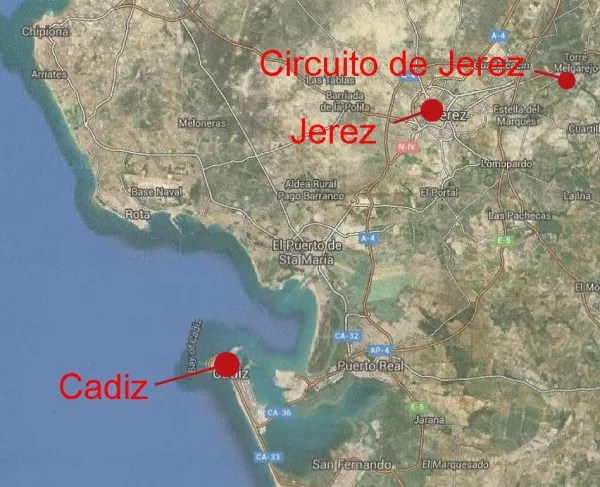
Image from Google Maps.
My Cadiz. My visit to a Cadiz festival is described in“Jerez, Cadiz, and a Baseless Glass of Sherry.” As I noted, “In early February 1989, the winter testing took place at the Circuito de Jerez in the south of Spain, in the midst of its sherry region. As was my custom at the time, I was able to combine work with early retirement, in this case involving carnival floats and a sherry glass that couldn’t stand on its own.”
Gibraltar. Jenkins recounted, “Gibraltar gets its present name from the Arabic Jeb-el-Tarik, the ‘mountain of Tarik,” in memory of the Moorish leader who about 711 A.D. invaded Andalusia with 12,000 Arabs and Berbers, in order to secure communication with Africa.”
“Gibraltar,” he continued, “as a consequence of its immense strategic value, has undergone many battles and sieges…. A thirteenth siege occurred in 1727, but the ‘great siege’ of 1779–1783 left England in final possession.”
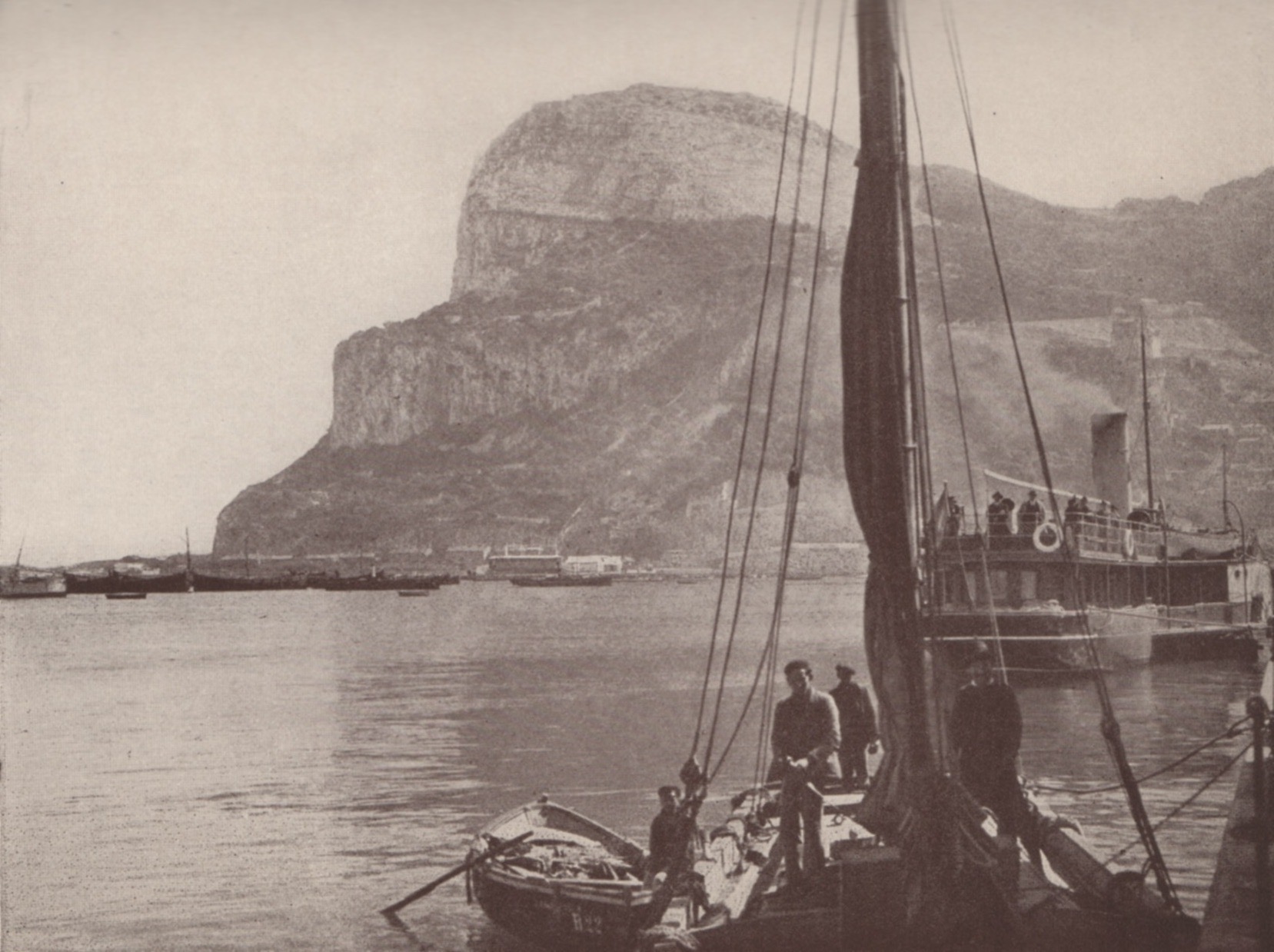
“The very image of an enormous lion, crouched between the Atlantic and the Mediterranean, and set there to guard passage for its British mistress.”— W.M. Thackeray.
My Gib. The Rock has appeared twice here at SimanaitisSays: “Celebrating Sir Peter Ustinov”and his Grand Prix of Gibraltar; and “Gibraltar News” and its North Front runway intersecting Churchill Avenue.
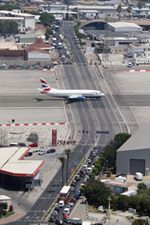
Image offered by Tom Tyson via “Gibraltar News.”
And, come to think of it, how many guidebooks quote W.M. Thackeray? Tomorrow in Part 2, we continue around the Mediterranean with Jenkins—and encounter “a wild impetuous daughter of the desert.”
Yep, that’s surely to get one’s attention. ds
© Dennis Simanaitis, SimanaitisSays.com, 2026
 Simanaitis Says