
Simanaitis Says
On cars, old, new and future; science & technology; vintage airplanes, computer flight simulation of them; Sherlockiana; our English language; travel; and other stuff
MERRY CHRISTMAS! HAPPY (EARLY?) ALREADY HANUKKAH! HAPPY KWANZAA!
WHEN I WAS A KID, MY PARENTS GIFTED ME WITH “The World’s Great Religions,” a Time-Life set of six volumes, devoted to Buddhism, Christianity, Confucianism, Hinduism, Islam, and Judaism. There’s a goodly number of Google references to it, including a one-volume compendium listed at Amazon.
It’s important to note that the six volumes are each of approximately the same length.

A Little World Visit. Many years later, as an adult I had the significant religious experience of visiting Japan’s Little World, its Values Hall giving rather more of the world’s religions exhibited in display cases—of equal size.
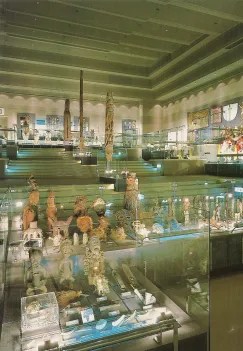
The rising stairs at its far end, usually in semi-darkness, has a soft audio of religiously inspired music.
And, as recently as yesterday, Christmas Eve 2025, I continued my traditional practice of listening to BBC’s annual broadcast of King College Cambridge’s “Festival of Nine Lessons & Carols.” Here it’s at 7:00 a.m. Pacific.
There are interesting similarities and contrasts in what Little World calls the world’s Values, how its various peoples assess their place in the universal scheme of things. Heady philosophical musings indeed. Here are several essentially random tidbits that arise.
Was This Year’s Hanukkah Early? No, actually, last year’s dates, December 25, 2024–January 2, 2025, were later than usual. This year’s December 14–22 is more or less back to normal.
The Jewish calendar is lunar/solar-based; the Gregorian calendar is solar. (See also “A Perpetual Calendar.” It was Pope Gregory XIII who corrected an assumption of the earlier Julian Calendar that the year had 365 1/4 days, whereas it’s actually 10 minutes and 48 seconds less.) [See correction below.] (By the way, Gregory XIII isn’t the Gregorian Chant Gregory; that’s Gregory I.)
The Dating of Hanukkah. I Googled “Hanukahh dating” and the A.I. Overview gave me jazz about it’s being “a great time for mixed-faith couples….” Ha.

How did it know: Years ago, Daughter Beth married into the Jewish faith and converted (as it’s the mother’s faith that determines the kid’s). I try to time my holiday gift-giving for that side of our family to coincide with the Festival of the Lights.
I reworded matters to “Hanakkah dates” and A.I. Overview describes, “Hanukkah’s dates change yearly because it follows the Hebrew lunisolar calendar, always starting on the 25th of Kislev, which usually falls in late November or December on the Gregorian calendar; for example, in 2025, it runs from December 14-22, while in 2024, it was December 25-January 2, and in 2026, it will be December 4-12.”
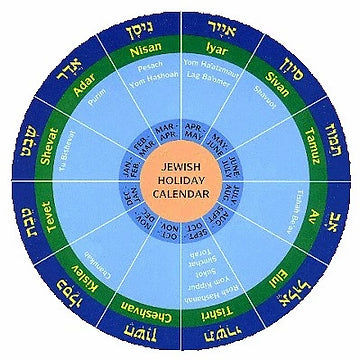
By the way, Hebrew calendar months (not unfamiliar to crossword puzzle fans) are Nisan (March/April), Iyar, Sivan, Tammuz, Av, Elul, Tirhrei, Cheshvan, Kislev, Tevet, Shevat, and Adar. Leap years insert an Adar I (Adar Aleph) ahead of Adar II.
Kwanzaa: Its Origin and Transformation. Wikipedia notes, “Kwanzaa is an annual celebration of African-American culture from December 26 to January 1, culminating in a communal feast called Karamu, usually on the sixth day.” It’s based on harvest festival traditions of various African cultures.
Wikipedia continues, “American black separatist Maulana Karenga created Kwanzaa in 1966 during the aftermath of the Watts riots as a non-Christian, specifically African-American holiday. Karenga said his goal was to ‘give Black people an alternative to the existing holiday of Christmas… to celebrate themselves and their history, rather than simply imitate the practice of the dominant society.’ ”
Originally, Karenga considered Christianity a “White” religion. Wikipedia notes, “As Kwanzaa gained mainstream adherents, Karenga altered his position so practicing Christians would not be alienated, stating in the 1997 book Kwanzaa: A Celebration of Family, Community, and Culture that ‘Kwanzaa was not created to give people an alternative to their own religion or religious holiday.’ Many African Americans who celebrate Kwanzaa do so in addition to observing Christmas.”
Wikipedia continues, “According to Karenga, the name Kwanzaa derives from the Swahili phrase matunda ya kwanza, meaning ‘first fruits’…. It was decided to spell the holiday’s name with an additional ‘a’ so that it would have a symbolic seven letters.”
Seven Principles. Each of the seven days of Kwanzaa is dedicated to what is recognized as a principle of African heritage: Umoja (Unity), Kujichaguila (Self-determination), Ujima (Collective work and responsibility), Ujamaa (Cooperative economics), Nia (Purpose), Kuumba (Creativity), and Imani (Faith).

A 2019 kinara (candelabrum) in New York City. Image by DanielPenfield via Wikipedia.
The Lighting of Candles—A Shared Unity of Purpose. The Judaic menorah holds seven candles (of ancient Jerusalem tradition) or nine of them in Hanukkah’s eight-day Festival of Light with a central shamash used for lighting them in succession, right to left. Multiplicity commemorates a miracle of the temple’s oil lasting so long.
Of Kwanzaa’s seven kinara candles, the central one is black for unity, three red ones symbolize past struggles, and three green represent future hope.
I hope you have a Merry Christmas today, a meaningful holiday, and a New Year filled with hope. ds
© Dennis Simanaitis, SimanaitisSays.com, 2025
 Simanaitis Says
Hello Dennis, as I write this we have Kings College carols on tv catchup, just to say thankyou for your daily ” says ” and to wish you a happy Christmas and a wonderful New Year, from Keith Powell ( UKs number one Chaparral fan ).
And back atcha! Thanks sincerely for your kind words. —d
Thank you for bringing back fond memories of the King’s, Cambridge choir, where I took a fellowship. My residence hall was near their practice hall, and my window usually open, so I read and studied often to the sound of their sessions. Almost better than the chapel sessions.My Navy years gave me time to absorb key writings on world religions and political philosophies like The Little Red Book, The Prince and insightful writings of polymath Richard Francis Burton. We fail when we hew to only one path, and disregard others.Merry Christmas, and most of all, Peace on Earth!
“It was Pope Gregory XIII who corrected an assumption of the earlier Julian Calendar that the year had 365 1/4 days, whereas it’s actually 10 hours and 48 minutes less.)”.
Surely you mean 10 minutes and 48 seconds less. 10 hours off 365.25 would make the normal year only 364 days.
And surely you’re correct, Sabre! I’ve now corrected it above.
My carelessness was in a mixup of time units. To wit, the difference between the Julian calendar’s 365.25 days and the Gregorian’s 365.2425 days is 0.0075 days or 0.0075 x 24 = 0.18 hours = 0.18 x 60 minutes = 10.8 minutes = 10 minutes 48 seconds.
In all that fiddling (more than 10 years ago), I lost track of hours/minutes/seconds.
Good for you! Nobody caught the error back in the original item (which I’ll now go and correct too).–ds