
Simanaitis Says
On cars, old, new and future; science & technology; vintage airplanes, computer flight simulation of them; Sherlockiana; our English language; travel; and other stuff
HURRAH FOR HAPPINESS! THANKS, MERRIAM-WEBSTER
IT COMES AS NO SURPRISE that MERRIAM-WEBSTER has “Ten Kinds of Happiness.” Here, arranged alphabetically, are tidbits gleaned from several of M-W’s “Joyful words from around the world,” together with my own views interspersed here and there.

Ayodele (Yoruba). “Joy in the home.” The Yoruba people reside in West Africa as one of the largest ethic groups on the continent.

Flag of the Yorubaland, the Oduduwa Nation. Image by Mupper-san via Wikipedia.
M-W describes, “Ayodele combines ayo (joy) with de (come) and ile (home), to express something similar to an English phrase like ‘a home filled with happiness.’ In both cases, joy is a kind of tangible presence.”
Firgun (Hebrew). “Happiness in another’s success; unselfish joy on behalf of someone else.” Years ago, I read a comment by American economist/scholar/diplomat John Kenneth Galbraith describing a Hindi word about “basking in the glory of another.”
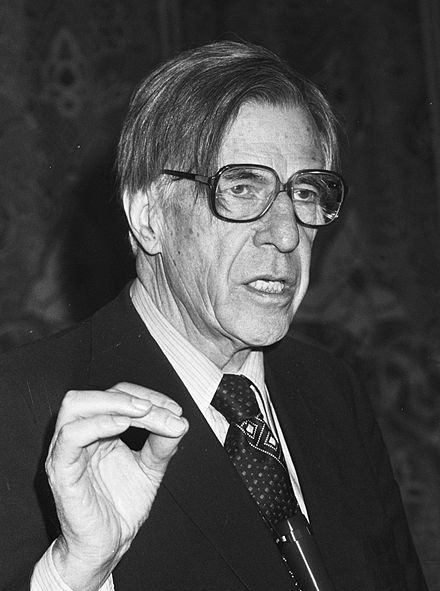
John Kenneth Galbraith, 1908–2006, Canadian-born American economist, public official, and diplomat. Galbraith was awarded the World War II Medal of Freedom in 1946 and the Presidential Medal of Freedom in 2000.
Firgun, of course, is the opposite of Schadenfreude (see below).
Gökotta (Swedish). “Rising early in order to go listen to birds singing outside.” Being a morning person (with BBC World Service at 6:00 a.m. Pacific) I can appreciate this one. I’m reminded of Robert Browning’s commentary from Pippa Passes: “The year’s at the spring/ And day’s at the morn;/ Morning’s at seven;/ The hillside’s dew-pearled;/The lark’s on the wing;/ The snail’s on the thorn; God’s in His heaven—/ All’s right with the world!”
And then there’s Chaucer’s “smale fowles maken melody/ That slepen al the night with open ye…”
Joie de vivre (French). “Keen or buoyant enjoyment of life.” The phrase is exemplified by one of the vinyls in my collection, Darius Milhaud’s suite “The Joys of Life.”
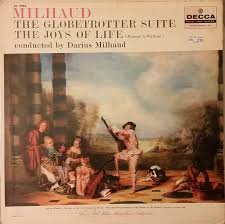
Milhaud was inspired by French Rococo artist Jean-Antoine Watteau’s painting of the same name. The music is based on folk themes of Milhaud’s Provence.
Schadenfreude (German). “Enjoyment obtained from the troubles of others.” One picture is worth….

A source of worldwide Schadenfreude. Image from huffingtonpost.com. See also “Words We Don’t Have, But Maybe Could Use.”
Merriam-Webster observes, “The concept of schadenfreude is not restricted to German; a number of other languages have synonyms. Dutch has leedvermaak, French has joie maligne, Finnish has vahingonilo, and Mandarin has xìng zāi lè huò, suggesting that taking pleasure in another’s misfortune may be a universal emotion.”
Tarab (Arabic). “Musically induced ecstasy.” Curiously, I felt tarab in an Arabic country, Morocco, induced by a welcoming Berber chorus.
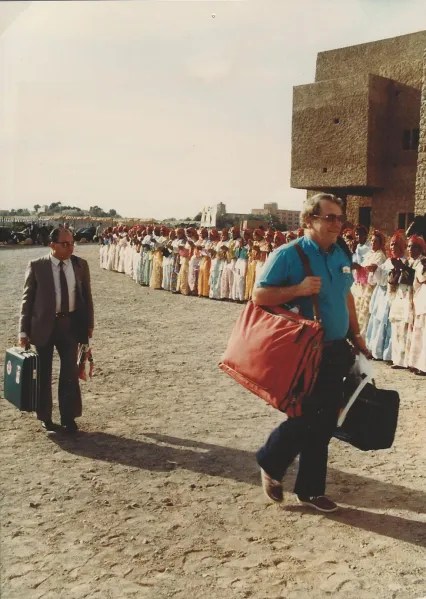
I’m the guy with the easily recognized orange bag.
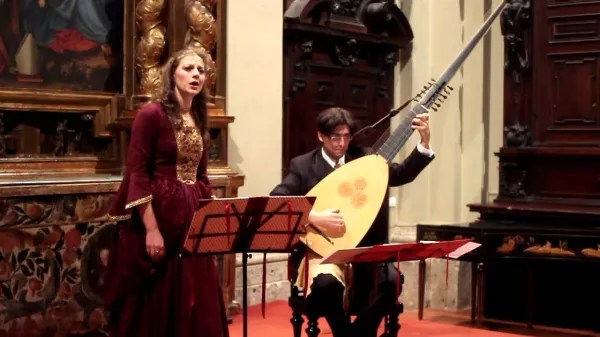
Indeed, plenty of music can induce tarab on my part: Aaron Copland’s works; jazz of Dave Brubeck; the lilt and lyricism of Amanti, io vi so dire (Lovers, I know you say) performed by soprano Peggy Béllanger and chitarronist Michel Angers; and the national anthems (both ours and theirs) played by Her Royal Marines Band from HMS Ark Royal in Emancipation Park, St. Thomas.
Waldeinsamkeit (German). “The feeling of solitude and peacefulness when alone in a forest.” I’m reminded of the Duke in As You Like It who muses, “And this our life, exempt from public haunts/ Finds tongues in trees, books in running brooks/ Sermons in stone, and good in every thing.”
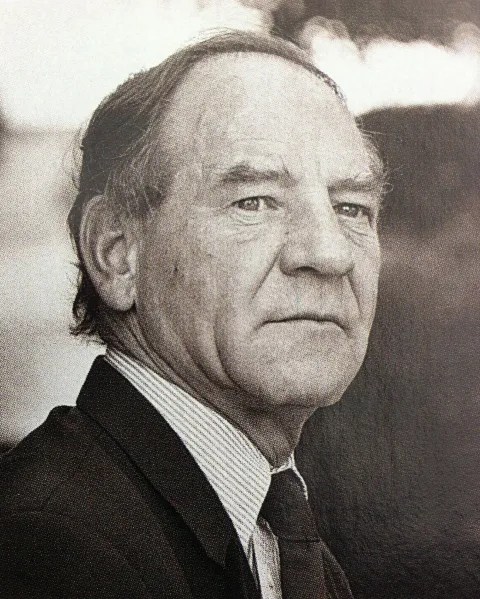
Robert McGregor Innes Ireland, 1930–1993. Image from mid-1980s, by Dorothy Clendenin.
Wife Dottie introduced our pal Innes Ireland to the California Redwoods. Innes’s redwood musings: “Standing so close together, the trees shut out much of the light.” Innes wrote, “I wondered how the earth could support so many trees, how it could supply the vast amount of water each one required to keep it alive. One tree was more than 5000 years old, the young ones 500. I wondered, too, how the shallow roots could hold such a weight in the howling gale, why they didn’t all blow down.”

Image from mirandagardens.com.
“It was a very moving experience,” Innes continued, “to be in the presence of such trees, to move about in the silence they created, a mere human being with a life expectancy of just three score years and ten.”
Thanks, Merriam-Webster, for suggesting these and other words worthy of inclusion into English. ds
© Dennis Simanaitis, SimanaitisSays.com, 2025


A rural expression:Happier than a pig