
Simanaitis Says
On cars, old, new and future; science & technology; vintage airplanes, computer flight simulation of them; Sherlockiana; our English language; travel; and other stuff
ON MATHEMATICAL PHILOSOPHIES
A CENTURY AGO, MATHEMATICIANS DEBATED THE EXISTENCE of numbers. “You’d think, after millenniums, we’d have gotten that straight,” writes Jordan Ellenberg in The New York Times Book Review, November 23, 2025. “But it’s not that simple,” Ellenberg says, “as Jason Socrates Bardi explains in his new book, The Great Math War.”
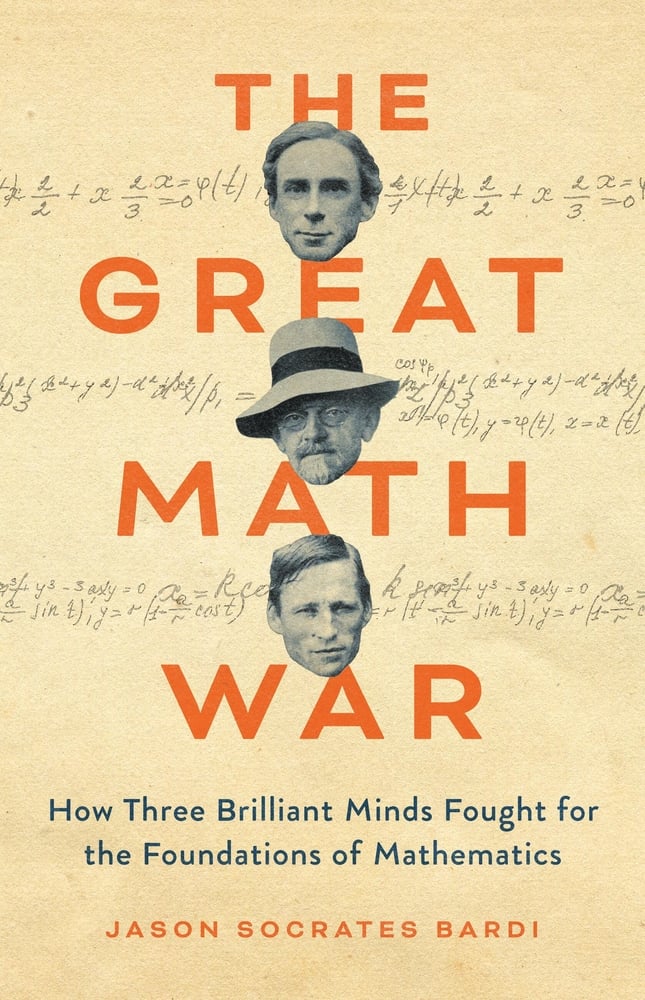
The Great Math War: How Three Brilliant Minds Fought for the Foundations of Mathematics, by Jason Socrates Bardi, Basic Books, 2025.
Reviewer Ellenberg is professor of mathematics at the University of Wisconsin. Bardi has published two other books about the history of mathematics, The Calculus Wars and The Fifth Postulate, and other articles about modern science and medicine.
Here are tidbits gleaned from Prof. Ellenberg’s review and Bardi’s book, together with my usual sleuthing. Indeed, “the three brilliant minds” have already appeared here at SimanaitisSays: Georg Cantor in “You Can Count On Me—Or Maybe Not,” Bertrand Russel in “Thinking About Change,” and Luitzen Egbertus Jan Brouwer in “Combed Coconuts Have Cowlicks.”
The Great War Spills Over. “In Bardi’s telling,” Ellenberg recounts (poo! a math pun), “it was only natural for mathematicians to feel anxiety that the centuries-old, apparently stable structures of mathematics might have obscure but fatal cracks; they’d just learned the same thing about their international political system.”
Ellenberg continues, “Mathematics is a human activity, and the idea that mathematical reasoning can be fully separated from the rest of our lives is a fantasy. Bardi is very good at showing how the exclusion of German mathematicians from international conferences, long after the war’s end, created resentment that bled into the way scholars treated one another’s theories.”
Paradoxes—in Math and in Life. Ellenberg cites, “Bertrand Russell, who came up with some of the first paradoxes that threatened math’s basic structure, is especially well drawn. Russell was torn between his respected academic research and his mostly hated work as an antiwar activist. He was also constantly involved in one love triangle or another. Most were sexual, but the one most movingly rendered here is composed of Russell, his lover Ottoline Morrell and the young Ludwig Wittgenstein—whose stormy relations with Russell were about math only.”
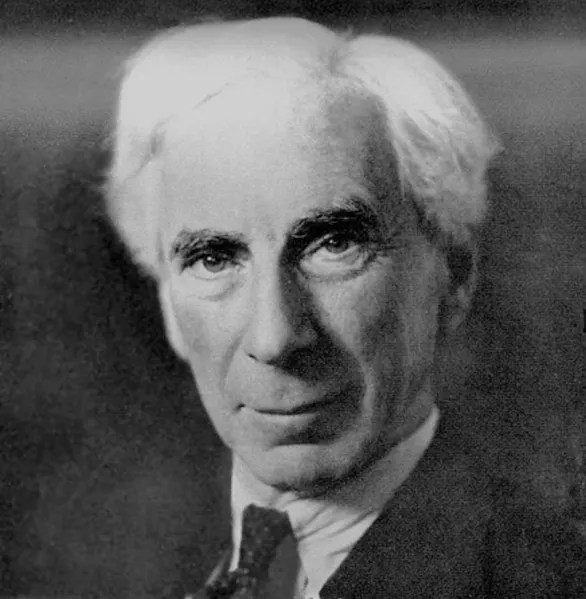
Bertrand Russell, 1872–1970, English philosopher, writer, mathematician, social critic, political activist, Nobel Laureate in Literature, 1950. Photo from 1938.
“For anyone who has admired Russell’s cool, heady philosophical writing,” Ellenberg observes, “it’s bracing to see that his personal life was a hot mess.”
Cantor’s Many Infinities. “In the late 19th century,” Ellenberg notes, “Georg Cantor had proved, startlingly, that there wasn’t just one kind of infinity, but infinitely many kinds. And the infinity of the set of real numbers, while relatively modest, was not the very smallest. Numbers are complicated!”
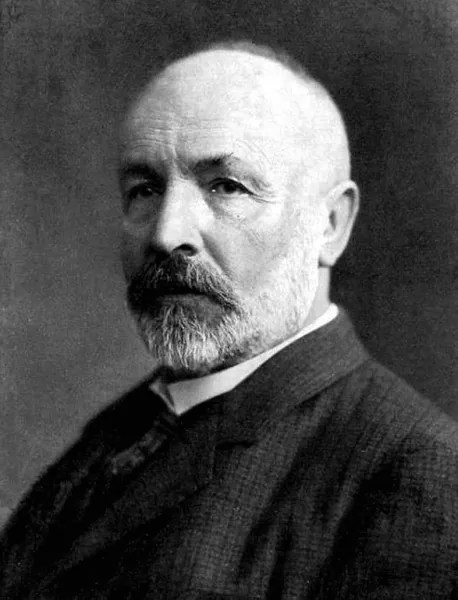
Georg Cantor, 1845–1918, German mathematician, discoverer of set theory and of the uncountability of the real number line.
“Cantor’s theorem,” Ellenberg cites, “shows that the infinity of describable numbers— such as 3/25, or ⅙—is much, much smaller than the infinity of all real numbers.” Yet, Ellenberg notes, “There are numbers we simply cannot describe. Can you give an example? By definition, no. If that makes you uneasy, great. It made everybody uneasy.”
Brouwer as an Intuitionist. Ellenberg introduces a third “general in Bardi’s war”: “L.E.J. Brouwer advocated a radical solution: According to him, and to the ‘intuitionists’ who shared his views, the only things that are real in mathematics are things human beings with a finite life span can describe, and the only things that are true are those that admit a proof of finite length.”
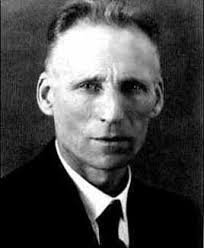
Luitzen Egbertus Jan Brouwer, 1881 – 1966, Dutch mathematician, a proponent of intuitionism, as opposed to mathematical formalism.
Ellenberg describes, “His opponents, [the formalists] chiefly represented here by the German mathematician David Hilbert, thought such a restrictive view gave away too much—throwing out most of the points on the number line, for instance.”

Intuitionism vs Formalism. Curiously (what with all the bitching I’ve done), Googling “Intuitionism vs Formalism” gives a cogent A.I. Overview of the two: “Intuitionism views mathematics as a product of the human mind, where truth requires a mental construction, while formalism sees mathematics as a formal system of symbols and rules, with truth determined by the consistency of the system, independent of human intuition.”
Without Trashing Either: We formalists enjoy mathematics as a game of symbols and rules. A mathematical statement is purely syntactic; it acquires application only with an interpretation.
I’m reminded of our purist grad school joke about doing applied math only with your office door locked.
Revisiting a Century-Old Controversy: Ellenberg concludes, “This dispute was not settled a hundred years ago, and it probably won’t be now. But in uncertain times, there’s value in remembering that we have been in a place like this before.” ds
© Dennis Simanaitis, SimanaitisSays.com, 2025
 Simanaitis Says