
Simanaitis Says
On cars, old, new and future; science & technology; vintage airplanes, computer flight simulation of them; Sherlockiana; our English language; travel; and other stuff
FERRARI 212 VIGNALE SALON AND CLASSIC TEST
I’VE GROWN ENAMORED OF R&T’S CLASSIC TESTS, what the magazine termed accurate syntheses “of material published during the time the car was produced.” Recently, this R&T time machine was actuated here at SimanaitisSays changing 2025 to September 1958, and 1934: its subject, the Alfa Romeo 2.3 Mille Miglia. This time around, the time leap isn’t nearly as broad: R&T’s November 1958 Salon and Classic Test of the 1953 Ferrari 212 Vignale Coupe.
Here are tidbits gleaned from this report.

Indeed, R&T (and SimanaitisSays) had plenty of contemporary data from which to choose: “Ferrari 212 Export Barchetta,” (body by Touring); and “Ferrari 4.1 Vignale Coupe,” (larger engine, the same coachbuilder).
A Restorer’s Confession. Salon author Tony Anthony wrote, “My Ferrari madness actually started years ago, when I saw a small, Vignale-bodied coupe go roaring down Hollywood’s Sunset Strip, accompanied by a cop on a motorcycle. I knew I wanted that car, preferably without the cop.”
“Three years later,” Tony recounted, “I did own it, but by then its original beauty had faded away and most of its roar had turned to a smoking dribble.”
His options were limited: 1) “Sell the car to another enthusiast, preferably one in another state far, far away.” 2) Move to Italy. “Then I will be closer to all the parts that aren’t available there, either.” 3) “… sign my name to a blank check and have someone else do the work.” 4) “I bought it, so I’d better get to work. This I did.”
A wise (and brave) choice, this.
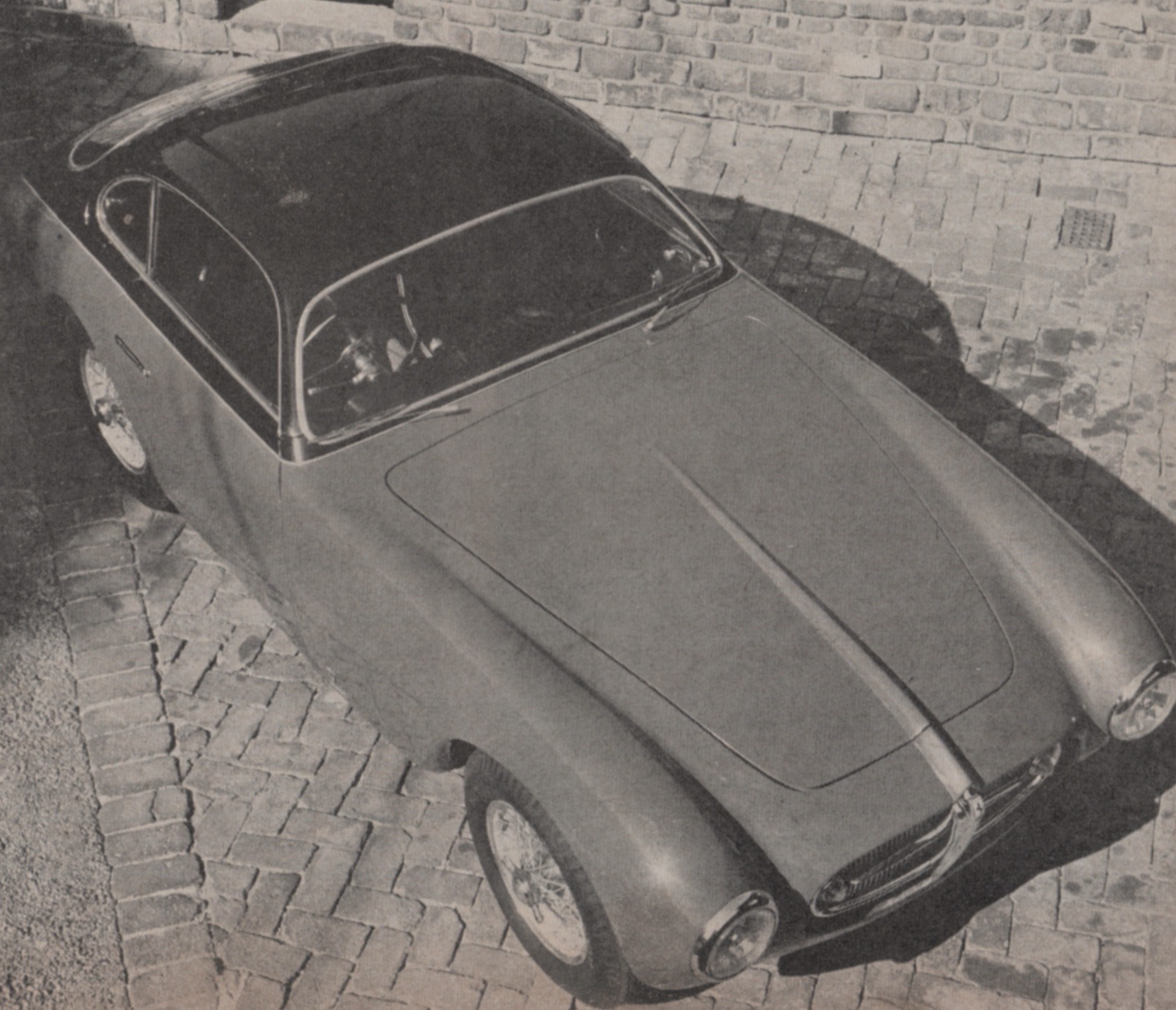
Restoration Points. “I had always thought,” Tony said, “that cylinder walls and pistons were round; mine weren’t, so we added new pistons and liners to the list. As to price, I shall say only that the complete gasket set must have been made of parchment from the Dead Sea Scrolls.”
“To keep my hands in,” Tony admitted, “I volunteered for all the menial tastes…. Filling my hands and pockets with wrenches, sockets and various size screwdrivers I set about removing every possible piece of chrome and aluminum trim from the body and interior. I came to the conclusion very rapidly that Italian coachbuilders don’t build their masterpieces to be taken apart by some amateur in California.”
I’m enjoying Tony’s way with words. To the best of my research, this is his sole appearance in R&T, more’s the pity.
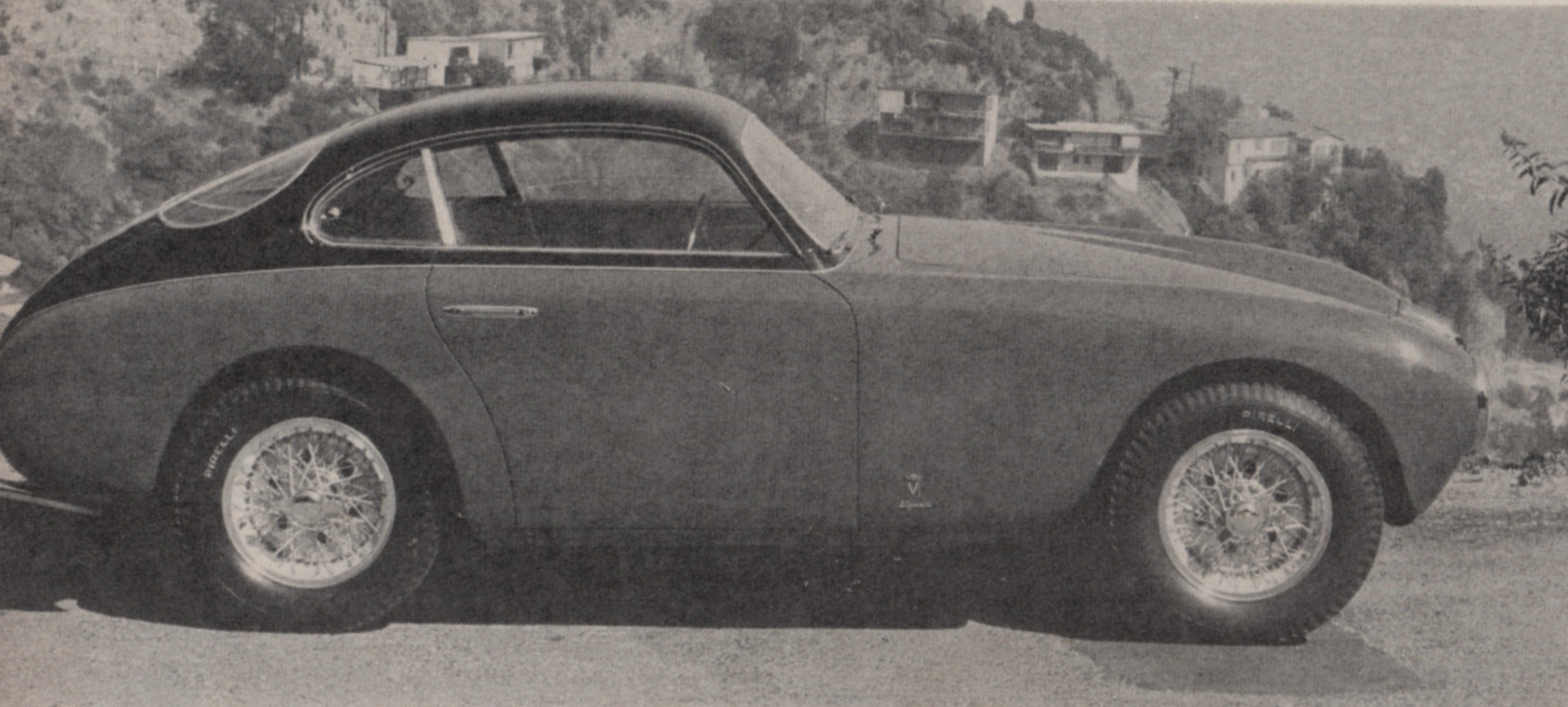
Eventually, Tony related, “I had few friends and little money when I got my Ferrari on the road. The next few weeks were spent in becoming happily accustomed to the car and mastering its power, performance, and handling.”
Tony cites no direct encounters with motorcycle cops, despite mufflers “now passable in traffic but… progressively louder up the range to a great crescendo at around 7000 revolutions per minute.”
I’ll bet these were accompanied by a great smile.
R&T’s Classic Test: “March 1953. The first Ferrari road test published by Road & Track appeared in November 1952; it was a Type 212 with roadster body by Touring, owned by Phil Hill. This test car is very similar, but has a heavier and more streamlined body. Ferrari calls the chassis the Type 212 ‘Tuboscocca.’ ” (Google Translate: “tube body.”)
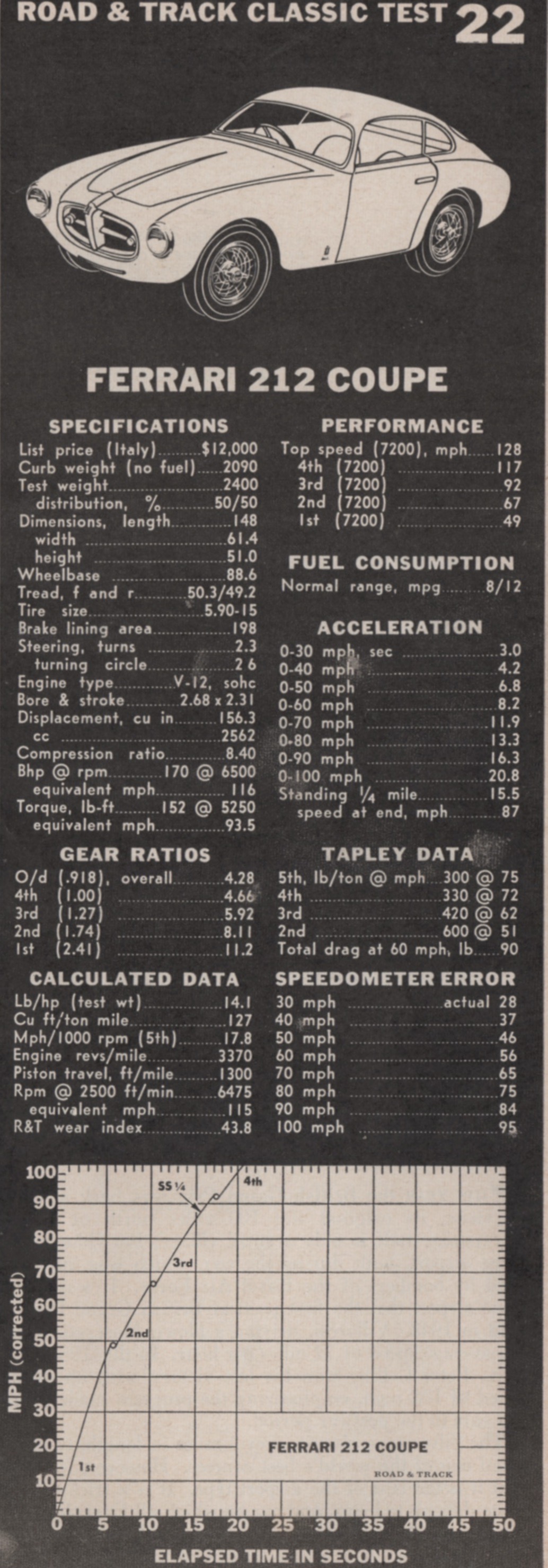
Accommodations. “A first impression of the Vignale-bodied coupe is bound to be marked by surprise at the diminutive size of the machine (see overall dimensions), but inside there is more than ample room for two occupants, if they wear no hats.”
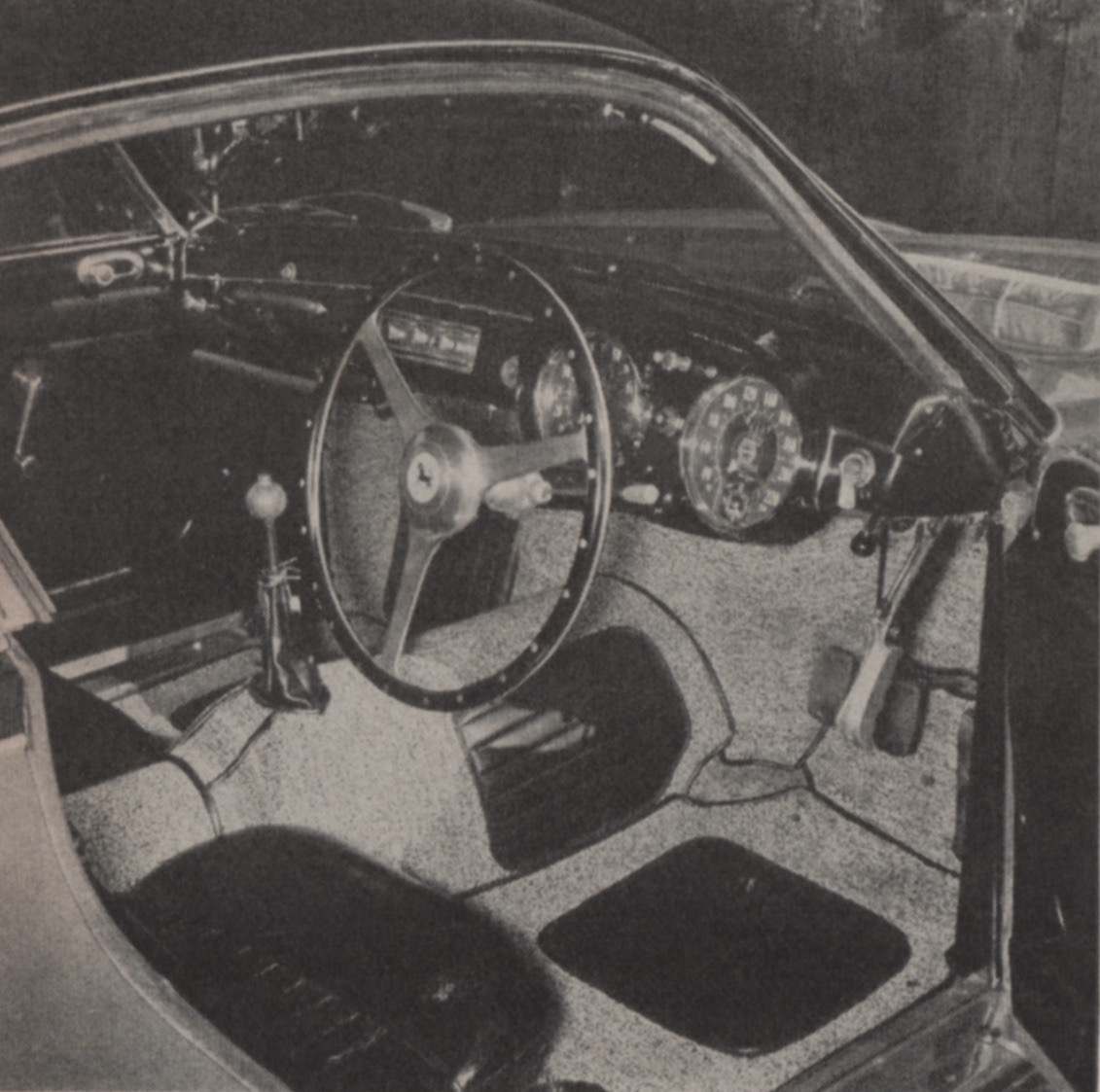
Powertrain. “The engine starts almost instantly, with a characteristic starter rasp and a roar that is unlike anything else—almost as if it were deliberately designed to make timid females swoon and scare little children half out of their wits.”
Wife Dottie, rest her soul, was evidently not timid. Thus, her years at R&T.

“First gear,” R&T commented, “is not exactly quiet, though when used hard the magnificent engine scream drowns out all other considerations…. Second gear is not synchronized and must be engaged somewhat deliberately to avoid crunch, but it gives acceleration up to nearly 70 mph at a rate which, again, defies description. For a mere ‘2.6 liter’ [the 212, typical of Ferrari designations, represents displacement of an individual cylinder, sorta], the time from 0 to 60 is only 8.2 seconds—which is phenomenal, fantastic and unbelievable, but true.”
Roadholding. “As for handling,” R&T assessed, “this coupe is a tiny thunderbolt that feels as though it can be hurled about with absolute safety. There is no such thing as a ‘boulevard ride’ here; it feels solid, even harsh, around town. Only at 50 or 60 mph do things begin to smooth out, and the suspension is at its best on slightly rough, winding roads. Then the combination of springing, steering and gear ratios available is an absolute ecstasy to the driver who knows how to make the most of his machine.”

In Summary, Retrospectively: “The Ferrari’s forte, after all, is its ability to maintain extraordinary average speeds over the open highway. In its proper environment, it is absolutely unapproachable.”
And what an elegant machine the Vignale Tuboscocca is. ds
© Dennis Simanaitis, SimanaitisSays.com, 2025
 Simanaitis Says
What a tiny blighter. And such small cylinders. One Ferrarrist said 30,000 miles about it before the three-liter Colombo required work. And the above even smaller pistons. Knowing more of pensioned inline six Sceptered Isle sport cars and old domestic straight eight road cars, wonder if anyone, anywhere, managed 70, 80,000, let alone 100,000 miles from such wee V-12s as above with only oil changes, tune ups?