
Simanaitis Says
On cars, old, new and future; science & technology; vintage airplanes, computer flight simulation of them; Sherlockiana; our English language; travel; and other stuff
CELEBRATING 100 YEARS OF ART DECO PART 2
THIS THEME BEGAN YESTERDAY WITH GLEANING TIDBITS of Art Deco from Emma Bastin’s “Designs for Life,” BBC History, August 2025. Here in Part 2 she continues with ads “at 100km an hour,” marketing even for the masses, and the proven timeliness of the genre today.
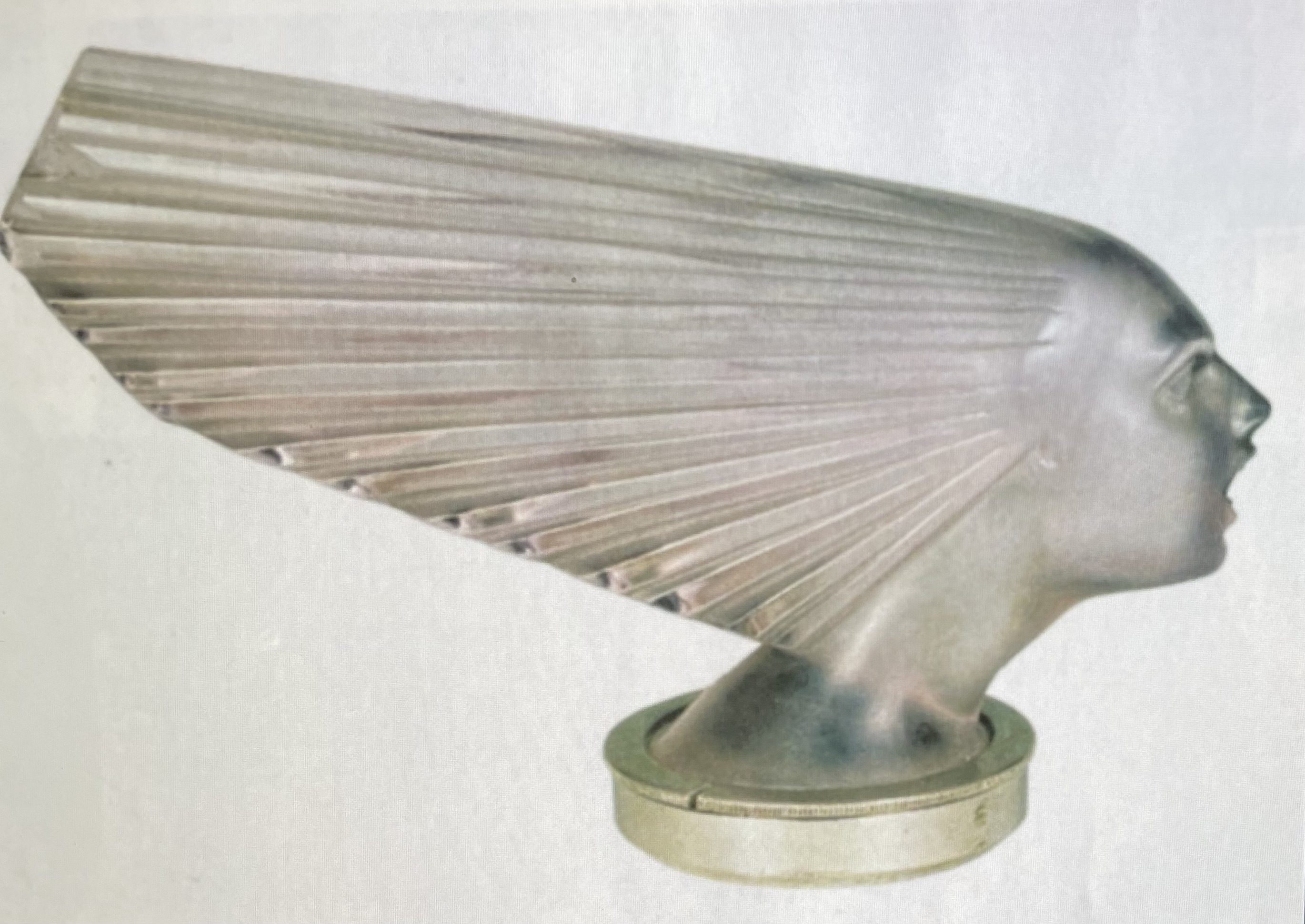
Victoire, René Lalique, 1928. “Created to mark the anniversary of the 1918 armistice, this androgynous figure was also known as Spirit of the Wind.” This image, the following, and captions are from BBC History.
A Need for Speed. “Beyond the cinema,” Bastin relates, “Art Deco adorned advertising boards, magazine and newspapers. Graphic designers embraced the new style, recognising that simplicity and ease of reading were essential for capturing the public’s attention; French poster designer Paul Coin noted that the best advertising ‘must be readable at 100km an hour.’ ”
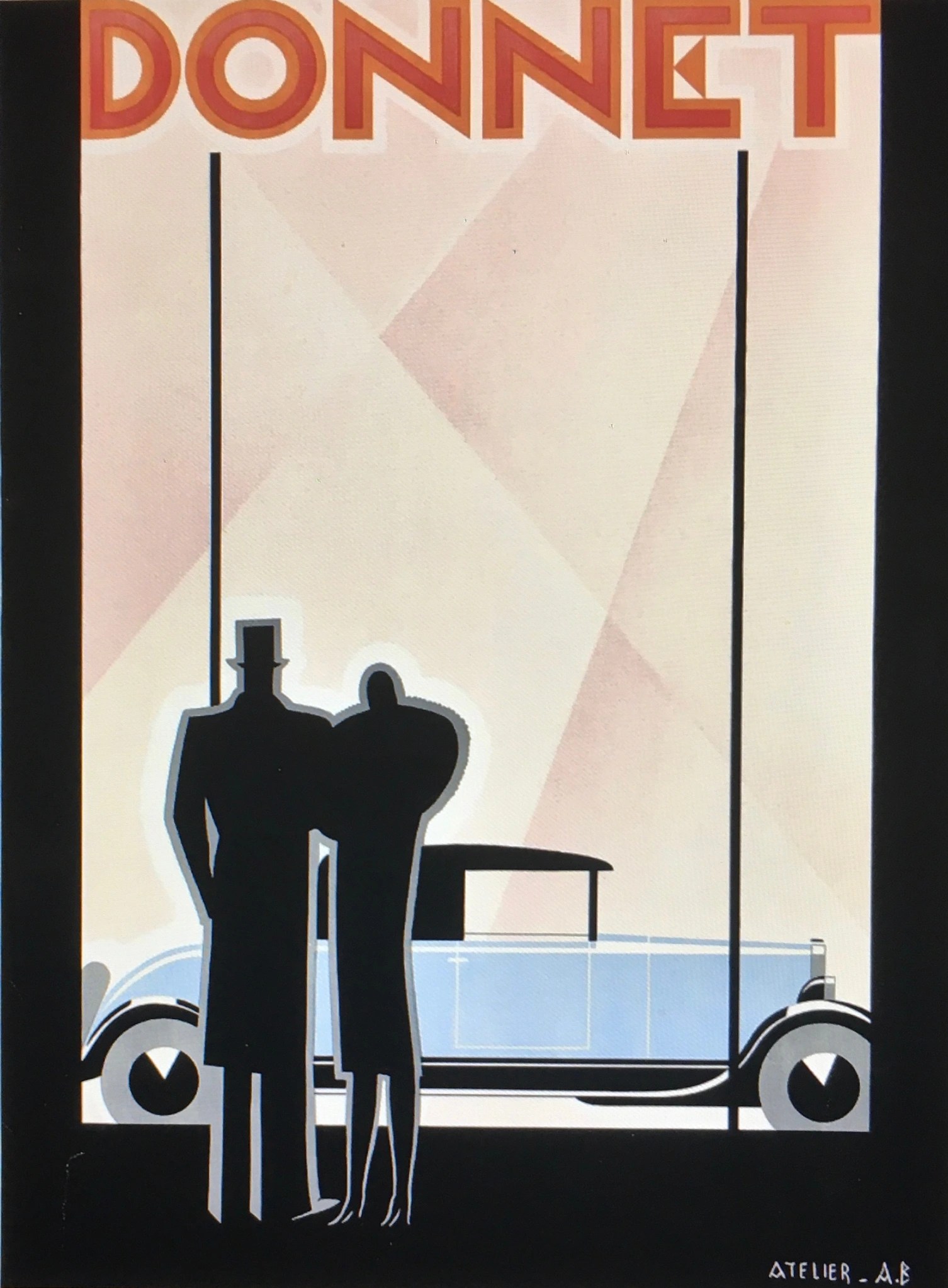
An ad for Donnet, “the fourth largest French carmaker by 1927.” Image from “Putting Art Deco To Work.”
Mass Marketing. Bastin recounts, “Manufacturers quickly realised that Art Deco was a style that could easily be reproduced en masse. Its simplicity of form and design allowed objects such as radios, telephones, mirrors, china, and printed fabrics to be created easily, often using mass-production techniques.”
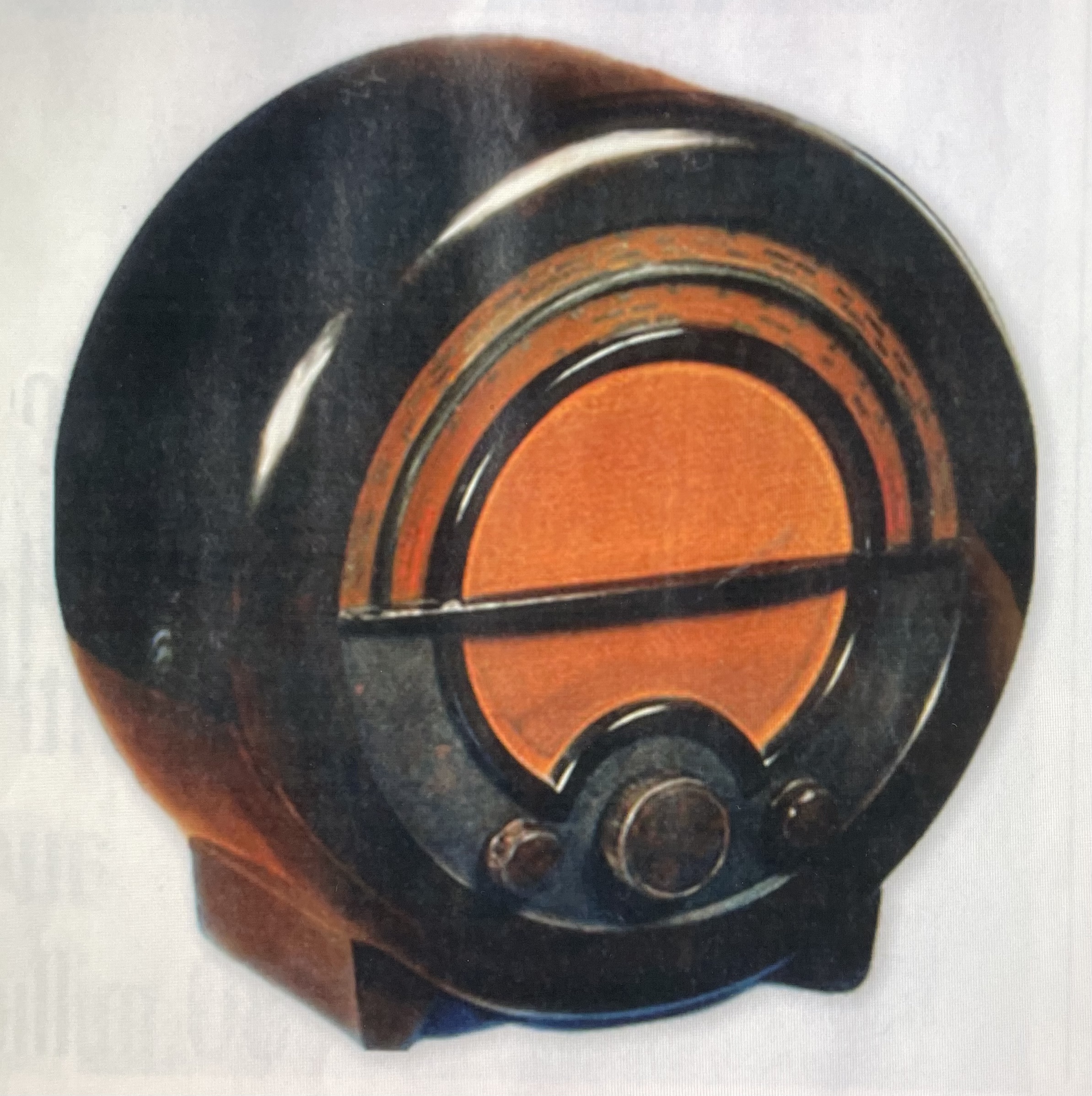
An Ekco A76 radio, c. 1934. “Radio ownership boomed in the interwar years, when the use of Bakelite (an early plastic) allowed Ekco to create alternatives to earlier square wooden cases.”
“Even those on limited incomes [a booming Twenties was followed by Thirties Depression] could buy into the look,” Bastin notes. “Littlewoods offered Art Deco tea sets, electric light pendants, and dressing-table trinkets for as little as 10 shillings, payable in installments.”
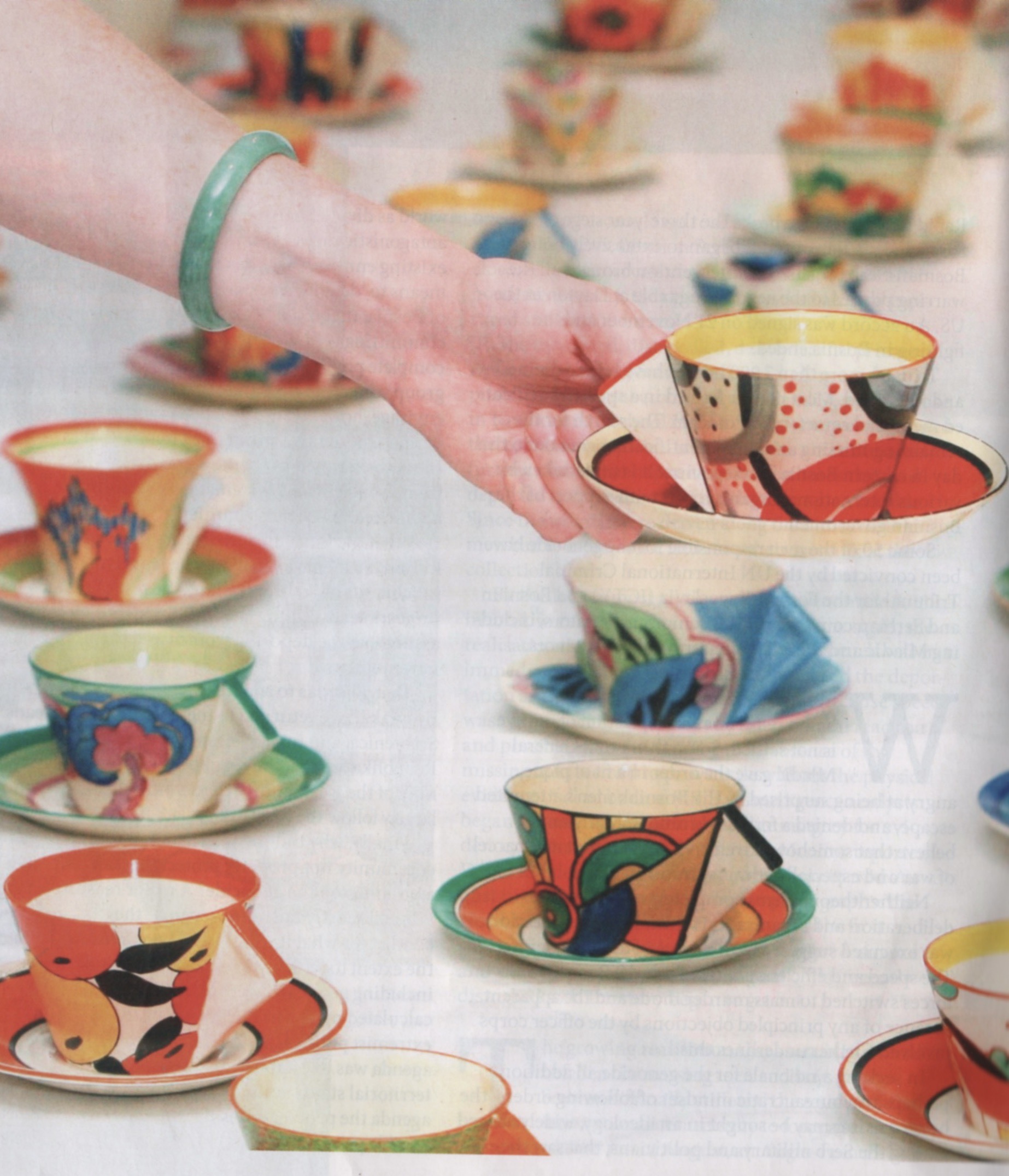
Clarice Cliff teacups. “Pieces designed by Cliff are instantly recognisible for their bold shapes and strong colours.”
Another War—Despite the Earlier One Ending All Wars…. “The heyday of Art Deco,” Bastin notes, “ended with the outbreak of the Second World War. Quickly, utility and practicality replaced consumerism and design.”
Reclaiming the Past: 1965—. Bastin observes, “The 1920s and 1930s represented a period before the living memory of younger members of society but, in their desire for self-expression, they looked to the interwar era as a golden age of individualism, youth, and newly liberated sexuality.”
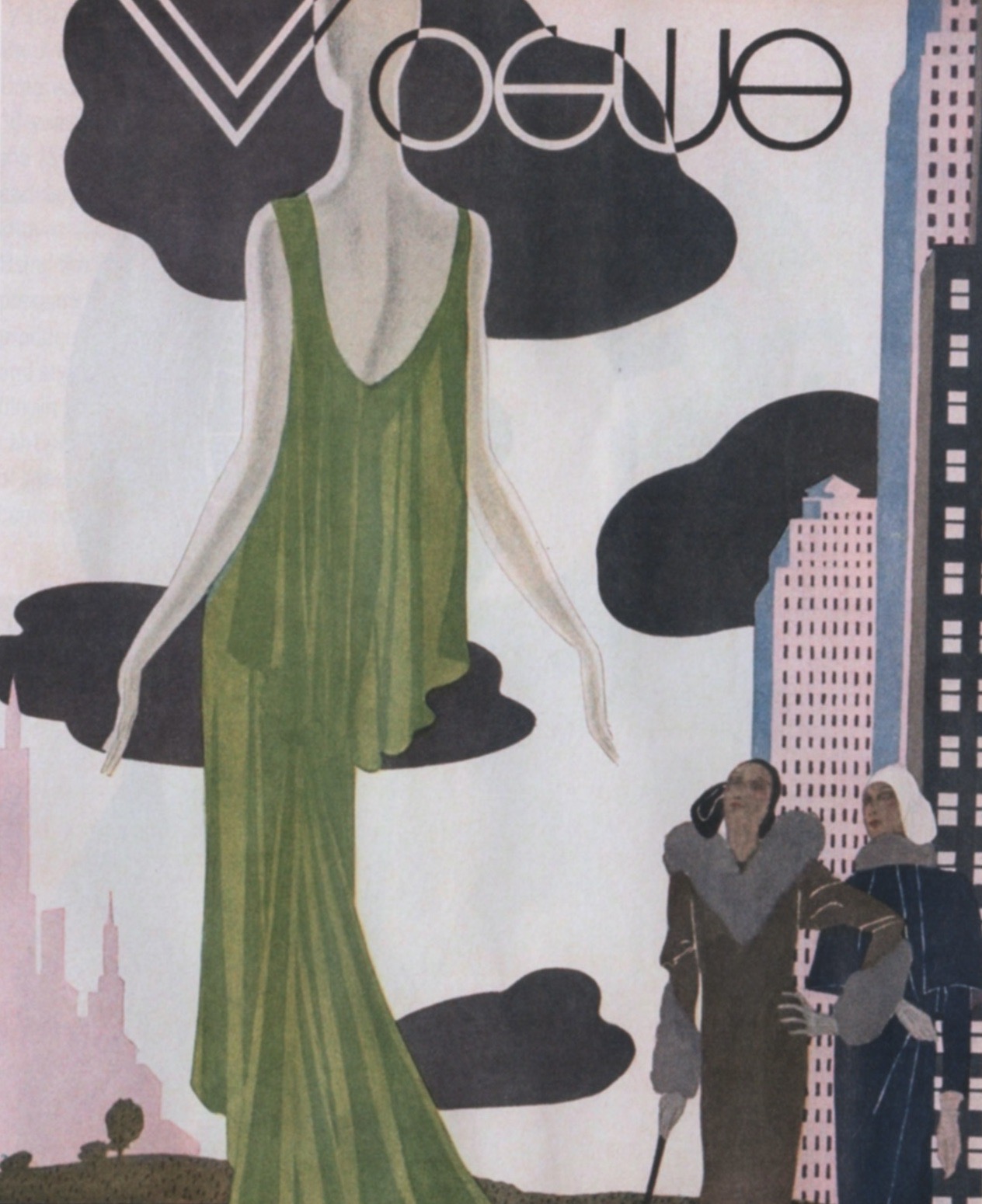
Vogue cover by Pierre Mourgue, 1930. “This example from 1930 exudes elegance, shows off the latest fashions, and references the modern skyscrapers springing up in New York City in that era.”
In Summary. “Art Deco,” Bastin concludes, “has proved to be timeless. Its sleek aesthetic transcends shifts in fashions, and the glamour and luxury it epitomises remain desirable. It changed the way we view art and design: no longer the preserve of the rich and urbane, mass produced objects were beautiful, fun, and functional, accessible to all.”
“Today,” Bastin says, “the ideal of Art Deco—melding beauty with utility—remains a guiding principle in design and its consumption.”
And I continue to love it. ds
© Dennis Simanaitis, SimanaitisSays.com, 2025
 Simanaitis Says
Art Deco and streamlining should have never gone out of style .
Vehicles in particular are still beautiful to my eyes .
Yesterday I was looking at an early 1940’s Plymouth business coupe- _SO_ beautiful and looks fast even when sitting still .
-Nate