
Simanaitis Says
On cars, old, new and future; science & technology; vintage airplanes, computer flight simulation of them; Sherlockiana; our English language; travel; and other stuff
HEARING OURSELVES IN OPERA PART 2
SIMON BANKS’ OPERA: THE AUTOBIOGRAPHY OF THE WESTERN WORLD encouraged thoughts about the operas of John Adams. Today in Part 2 we pick up with my personal view about controversy surrounding Adams’ The Death of Klinghoffer. We follow up with operatic nuclear drama and a local return to the Rhine.
A Personal View. I’ve yet to see The Death of Klinghoffer in an HD theater or as part of my Met subscription. Indeed, as described in newmusicusa.com, June 17, 2014, “After concerns were raised that its plans to transmit John Adams’ opera The Death of Klinghoffer might be used to fan global anti-Semitism, the Metropolitan Opera announced its decision today to cancel its Live in HD transmission, which was scheduled for November 15, 2014.”
This, despite composer John Adams statement in response to the cancellation: “My opera accords great dignity to the memory of Leon and Marilyn Klinghoffer, and it roundly condemns his brutal murder. It acknowledges the dreams and the grievances of not only the Israeli but also the Palestinian people, and in no form condones or promotes violence, terrorism, or anti-Semitism. The cancellation of the international telecast is a deeply regrettable decision and goes far beyond issues of ‘artistic freedom,’ and ends in promoting the same kind of intolerance that the opera’s detractors claim to be preventing.”
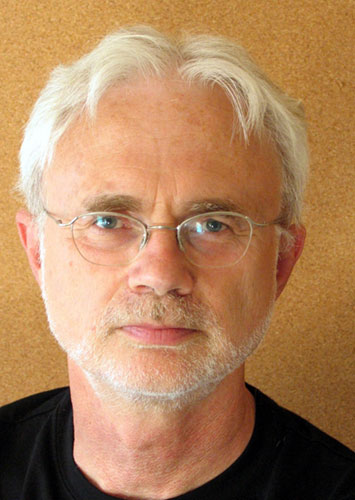
I agree with John Adams, particularly in light of the Met having gone forward with its stage presentation of The Death of Klinghoffer in its scheduled run of eight performances in October and November 2014.
What’s more, immense complications to this long-standing Israeli-Palestinian conflict are added by the Hamas horror of October 7, 2023, and its subsequent Israeli response tragically also involving so many innocent deaths.
Another Tragedy. Here in the U.S., it has given rise to another tragedy: Defense of any Palestinian view seems to be arbitrarily called anti-Semitic, even though instead some may be seen as more specifically anti-Netanyahu.
Talk about opera being as provocative as today’s headlines.
On the Brink of Annihilation. If this isn’t enough to justify opera’s relevance, Banks includes John Adams’ Doctor Atomic in the discussion: “During the tense final hours as the Manhattan Project lurches toward possible disaster,” Banks recounts, “ ‘Doctor Atomic’ piles all the moral responsibility for the world’s darkened future onto JR Oppenheimer himself. The other male characters are his tormentors, assaulting him relentlessly with one terrifying moral or practical problem after another.”

Oppenheimer (center left with broad brimmed hat) and General Groves (center right with military cap) inspect the site of the first detonation of an atomic bomb. Image from Opera: The Autobiography of the Western World.
As another Wagnerian link, Banks describes, “The deep bass Edward Teller, to the sinister growling music of Wagner’s Fafner [one of Das Rheingold’s Giants], sings with ghoulosh gallows humour that chain reaction may cause the earth’s atmosphere to ignite.”

And Speaking of Das Rheingold…. Daughter Suz and I enjoyed a semi-staged version of this first of Wagner’s Ring Cycle conducted by Pacific Symphony’s Carl St.Clair at our nearby Renée and Henry Segerstrom Concert Hall. The term “semi-staged” places it midway between a concert version (singers performing in front of the orchestra) and a fully staged production (full scenery and costumed). Indeed, the performers in this one were appropriately Ring-attired and moved around scrims onto which projected images enhanced the action.
The 2024-2025 season marks Maestro St.Clair’s 35th year leading Pacific Symphony. From 2008-2010 he doubled as general music director for the Komishe Oper in Berlin. He also served as general music director and chief conductor of the German National Theater and Staatskapelle in Weimar, Germany, where he conducted a complete Ring Cycle.
Among the capable cast, Renée Tatum brought a nuanced portrayed of Fricka, Wotan’s wife. Daughter Suz recognized her from the Met’s Ring Cycle in which she portrayed Waltrute, one of Wotan’s many daughters, and covered for Flosshilde, one of the Rheinmaidens. Dennis Petersen portrayed Loge as a slimy-lawyer semi-god (think Roy Cohn). No, then again, don’t let D.C. skullduggery get in the way of the good old-fashioned operatic variety. ds
© Dennis Simanaitis, SimanaitisSays.com, 2025
 Simanaitis Says
Opera is not really our thing, so to speak (live theatre is what we enjoy mostly), but we did attend an innovative performance just recently where Edmonton Opera performed at the Telus World of Science in the planetarium, in a performance called Aquarius. To quote from an article in a local paper: “While the space isn’t known for hosting live music, Craig said it’s proven to be easier than anticipated to find room for performers and musicians in the Zeidler. Intimacy in the space will work for them, with performers taking centre stage in the small performance space as the cosmos whizz by overhead.”
There was one other interesting performance that we weren’t able to attend about a dozen years ago, where Carmen was performed by the Israeli Opera, outdoors at Masada by the Dead Sea. Unfortunately it happened the week after we were there, but we were able to attend a rehearsal, as one of our hosts was a chorus member, and took us along for the session.
On another topic, recalling your recent article about curved architecture, the main part of the Telus World of Science (formerly called Edmonton Space Science Centre), which incorporates the planetarium and an Imax theatre was designed by local First Nations architect Douglas Cardinal, to resemble a flying saucer. Subsequent additions have been more conventional in design, but have been designed to work with the original structure, leaving its original round shape quite evident.
Cardinal’s architecture emphasizes curved shapes (sometimes to the point of impracticality in some areas of buildings), and his projects have included: St. Mary’s Church in Red Deer Alberta (award winning design); St. Albert (Alberta) Civic and Cultural Centre (basically city hall, museum, performance space and public library complex); Grande Prairie Regional College (since renamed Northwest Polytechnic Institute) in Grande Prairie, Alberta; Museum of History in Ottawa, Ontario; National Museum of the American Indian in Washington DC, and Adelante Healthcare in Goodyear, Arizona.
The following website lists 15 of his iconic projects, including his own house: https://www.re-thinkingthefuture.com/know-your-architects/a3053-douglas-cardinal-architect-inc-15-iconic-projects/.
Although I have never met him personally, I did actually work on two of his projects as a structural engineer (one of the peons in the trenches of the consulting company). One was a hotel addition that I don’t believe ever got built due to a recession that started about that time. The other was a house that we worked on for the contractor because he was concerned that with the exterior being all windows he felt that there was no support system for wind loads. As a result we reinforced the large central fireplace to act as a central core similar to the concrete cores of many highrise buildings. Funny thing is that I never realized that he was the architect on that house until today when I was doing a little research for my comments here.
Interesting, all. Ain’t research fun?-ds
Reminds me of my younger days (pre Internet) when I’d venture into my Dad’s study, grab a volume of the Encyclopedia Britannica to research something and emerge hours later after following several interesting topics, often not even getting to my original research item. Kind of like my trips to the grocery store of late to get one specific item and arriving back home with a bag or two of groceries, frequently WITHOUT the originally intended purchase being among them!