
Simanaitis Says
On cars, old, new and future; science & technology; vintage airplanes, computer flight simulation of them; Sherlockiana; our English language; travel; and other stuff
TRUMPIAN INANITIES
FOR A “VERY STABLE GENIUS,” OUR QUEENS FELON seems to be coming up with some lamebrain actions. Here are several.

Image by abc7.com
The Tariffs. Despite many learned economists professing otherwise, Trump has upset the entire world order, not to say our country’s stock and bond markets, with on-again/off-again change-this/change-that tariff rulings, several of which have caught even his own confidants by surprise.
So much for Signalgate Trumpkrieg.
Goods, Not Services. Trump’s focus on trade imbalances solely of goods—and not services—ignores the fact that the U.S. has significant advantages around the world in the latter.
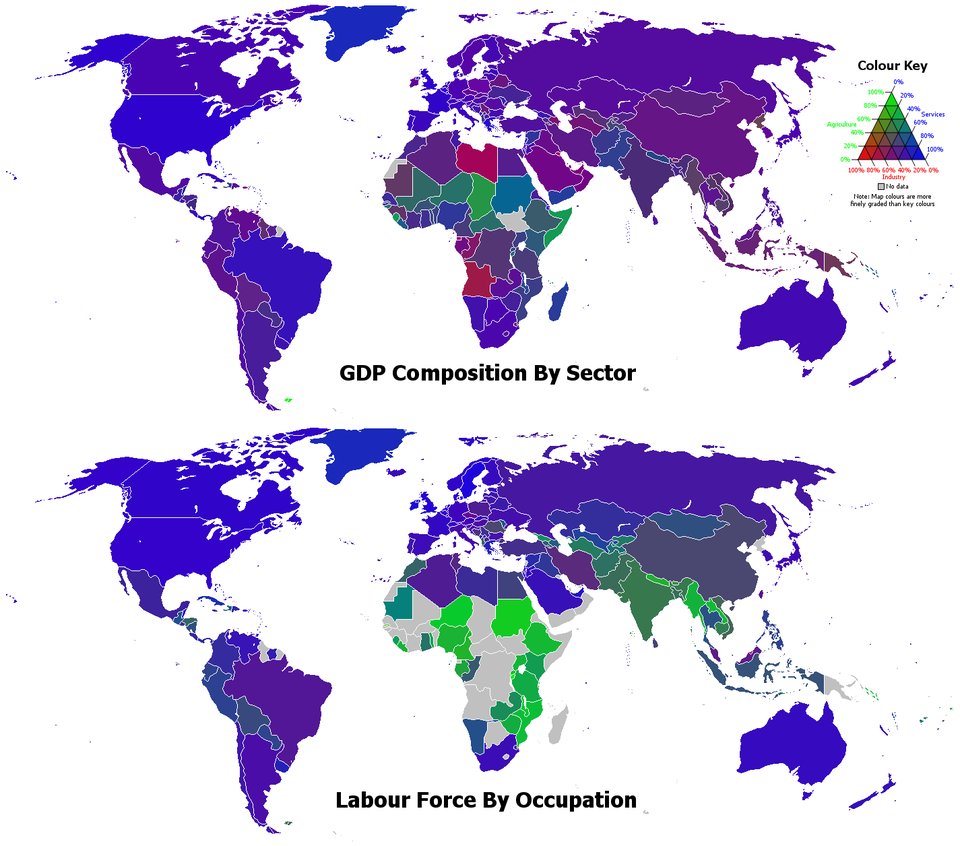
Image by Safalra (Stephen Morley) via Wikipedia.
The U.S. is largely an advanced service economy, and very successful at components such as information technology, financial, retail, education, hospitality, health, and human services.
Complexities of Global Trade. The European Union’s Trade Commissioner Maroš Šefčovič offers an interesting point: “The U.S. makes up 13 percent of global goods trade. Our priority, along with the rest of the WTO, is to protect the remaining 87 percent and make sure that the global trade system prevails for the rest of us.”

As Trump is often fond of boasting, just who has the cards in this?
Trump’s Incoherency. Jamelle Bouie writes “The Tariff Saga Is About One Thing,” The New York Times, April 9, 2025. “It’s a fool’s errand,” Bouie recounts, “to try to rationalize President Trump’s obsession with tariffs…. He did not reason himself into his preoccupation with tariffs and can neither reason nor speak coherently about them.”

Bouie continues, “There is no grand plan or strategic vision, no matter what his advisers claim—only the impulsive actions of a mad king, untethered from any responsibility to the nation or its people. For as much as the president’s apologists would like us to believe otherwise, Trump’s tariffs are not a policy as we traditionally understand it. What they are is an instantiation of his psyche: a concrete expression of his zero-sum worldview.”
A Zero-Sum Mentality. “The fundamental truth of Donald Trump,” writes Bouie, “is that he apparently cannot conceive of any relationship between individuals, peoples or states as anything other than a status game, a competition for dominance. His long history of scams and hostile litigation—not to mention his frequent refusal to pay contractors, lawyers, brokers and other people who were working for him—is evidence enough of the reality that a deal with Trump is less an agreement between equals than an opportunity for Trump to abuse and exploit the other party for his own benefit.”
“For Trump,” Bouie says, “there is no such thing as a mutually beneficial relationship or a positive-sum outcome. In every interaction, no matter how trivial or insignificant, someone has to win, and someone has to lose. And Trump, as we all know, is a winner.”
The Bond Retreat. Well, maybe up until yesterday. Trump’s chaotic tariff actions caused stocks and bonds (the latter, a measure of trust in the U.S.) to plummet.

CNN reporters Kevin Liptak, Jef Zeleny, Phil Mattingly, Kayla Tausche, and Alayna Treene describe “Inside Trump’s Tariff Retreat: How Fears of a Bond Market Catastrophe Convinced Trump to Hit the Pause Button.” They recount, “Even for a president famous for his policy bobs and weaves, Wednesday’s announcement he was pausing his long-touted reciprocal tariffs for three months amounted to a stunning reversal of a plan he had appeared only a day earlier to be fully behind and came as his own trade representative was testifying on Capitol Hill to the benefits of the tariffs, seemingly catching him unaware of the pause.”
Trump’s exhortations moved from typical all-caps “MY POLICIES WILL NEVER CHANGE” to “They were getting yippy” as criticism of his tariff chaos quickly materialized.
Then, typical of Trump, he even had the audacity to take credit for the substantial market gain that followed his retreat.
Sorta like Napoleon taking credit for the springtime of 1813. And then there was Waterloo in 1814. ds
© Dennis Simanaitis, SimanaitisSays.com, 2025
 Simanaitis Says
Nice post 🙏🎸
Thanks, Satyam. Actually I merely collect facts.—ds