
Simanaitis Says
On cars, old, new and future; science & technology; vintage airplanes, computer flight simulation of them; Sherlockiana; our English language; travel; and other stuff
A USED CAR AFTER WHICH I LUST
“THE ASTON MARTIN CYGNET,” this fabled sports car manufacturer said back in 2011, “was designed as a luxury solution to urban mobility.” A city car that’s “Elegant and distinctive whilst individual and practical.”
Having enjoyed Austin Mini Mokes—the ultimate city cars of 1960s’ London—I was attracted to the Cygnet when it made its debut in 2011. Offered retirement less than a year later, I opted for something considerably larger and more practical, a Honda Crosstour (the mobility of which I enjoy to this day).

The Cygnet V-8. However, Christopher Smith reports at the motor1 website, February 27, 2025, “Aston Martin Once Built a V-8 Cygnet. Now It’s For Sale.”
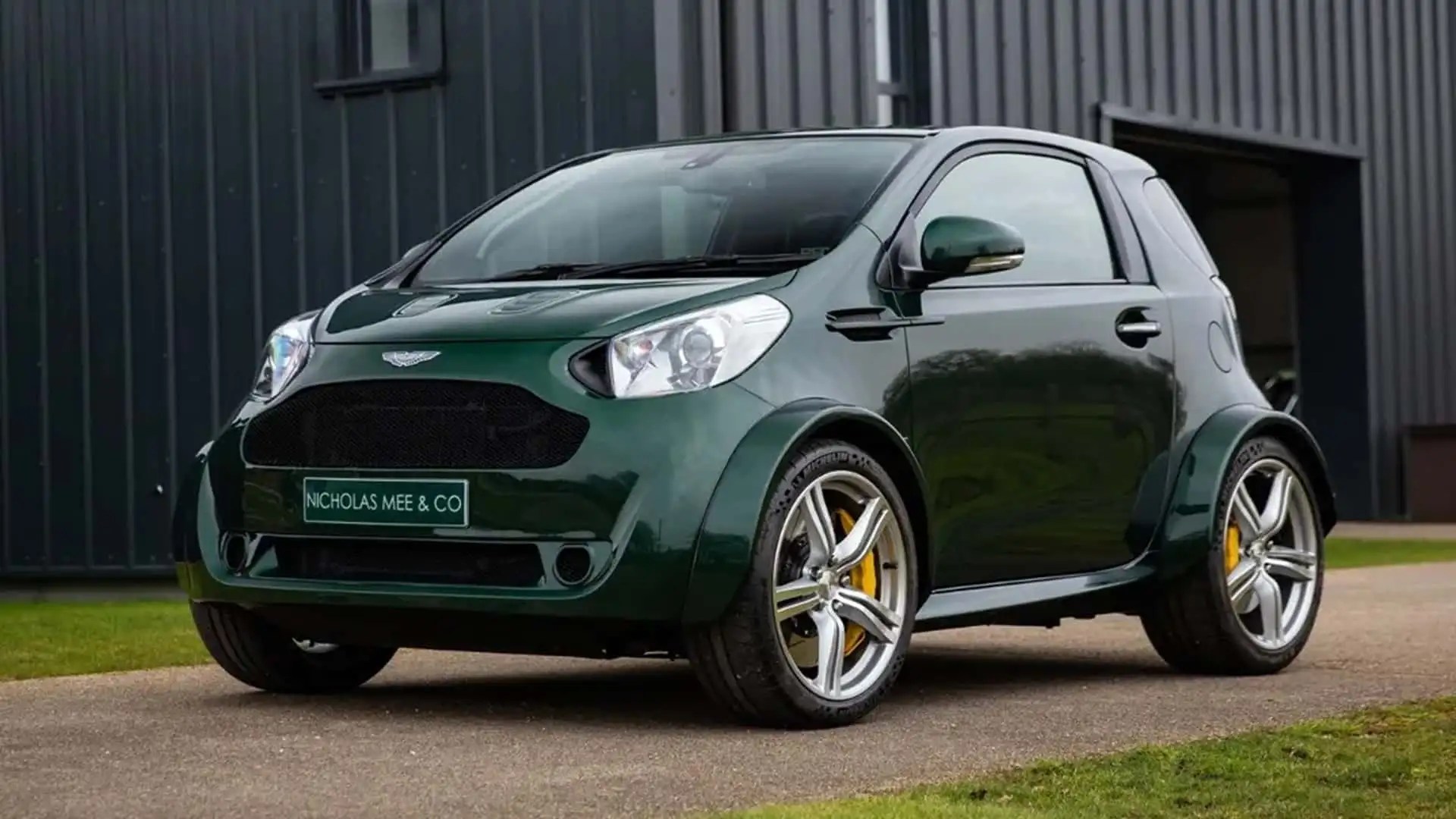
This and following images by Nicholas Mee via motor1.
Smith recounts, “A few years ago, Aston Martin proved that you can do just about anything if the price is right. We have no idea how much the owner of the world’s only V-8-powered Aston Martin Cygnet originally paid for this wild creation. Similarly, we don’t know how much that owner is selling it for now. But it is for sale. And you won’t find another one like it anywhere in the world.”
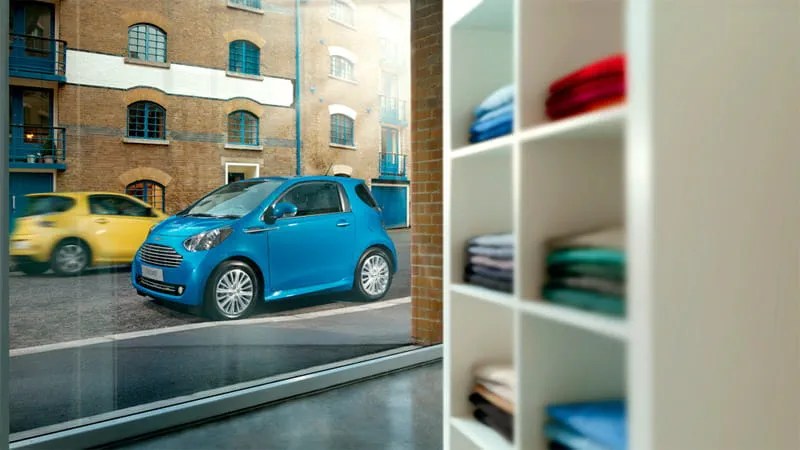
The Aston Cygnet was originally envisioned as a sweet little addition to city life. Image from Aston Martin’s website.
Backstory. “To refresh your memory,” Smith continues, “the Cygnet was Aston Martin’s short-lived city car. Literally a reskinned Toyota IQ, less than 1,000 were built before Aston Martin pulled the plug in 2013. But at some point after that, someone approached the company’s Q by Aston Martin customization service and asked for one with a V-8. Why? Who cares… it’s a V-8 shoved into something barely large enough for seats. Be glad that it exists.”
Its Potent Bits. “Of course,” Smith notes, “V-8-swapping a Cygnet is no simple task. Aston Martin started with a bare body and fabricated a roll cage, transmission tunnel, front bulkhead, and all the required mounting points to use front and rear subframes from a late 2000s Vantage.”
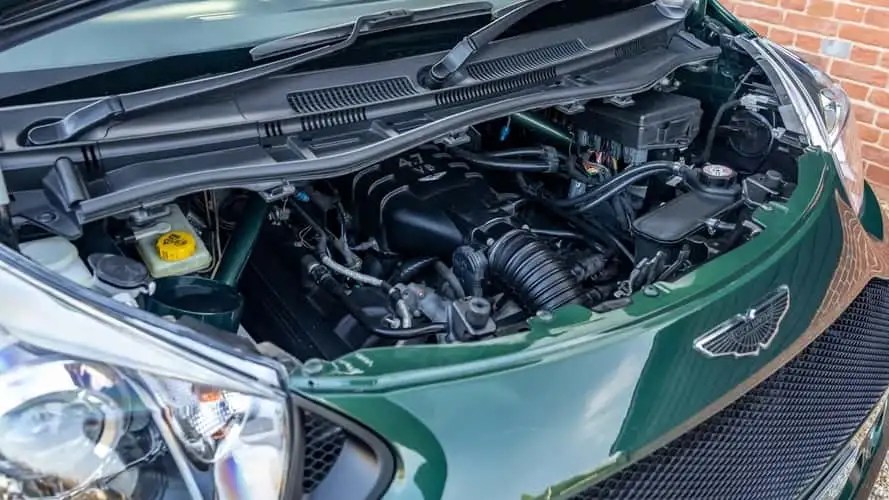
Aston’s 4.7-liter V-8 fits ever so tidily in the Cygnet’s nose.
“The 4.7-liter V-8,” Smith continues, “also comes from that era Vantage, making 430 horsepower and 361 pound-feet of torque. It goes entirely to the rear wheels through a seven-speed Sportshift automated manual. Considering the ultra-short wheelbase, we suspect parasitic power loss is minimal.”
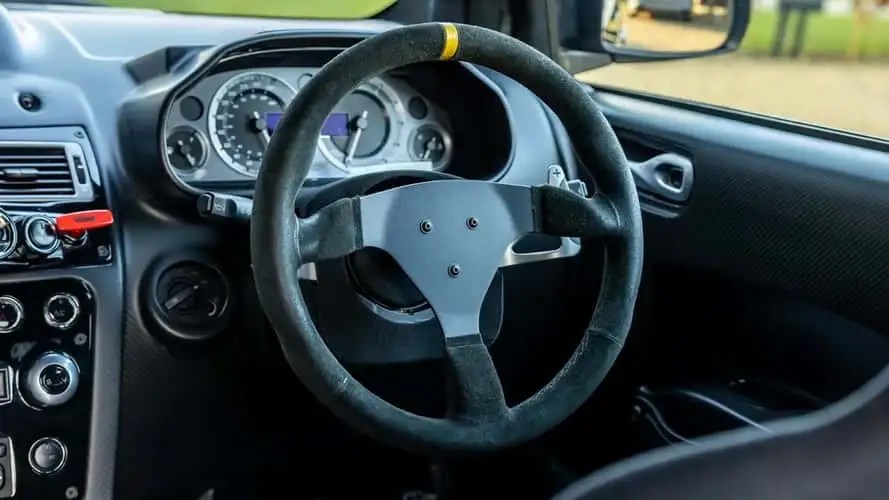
2018 Goodwood Festival Debut. Smith describes, “Aston Martin showcased the car at the 2018 Goodwood Festival of Speed before turning it over to its owner. It’s now listed for sale through Nicholas Mee, a dealership north of London that specializes in Aston Martins. The original owner managed to survive approximately 2,900 miles behind the V-8 Cygnet’s wheel, and it’s reportedly still in ‘almost as new condition.’ ”
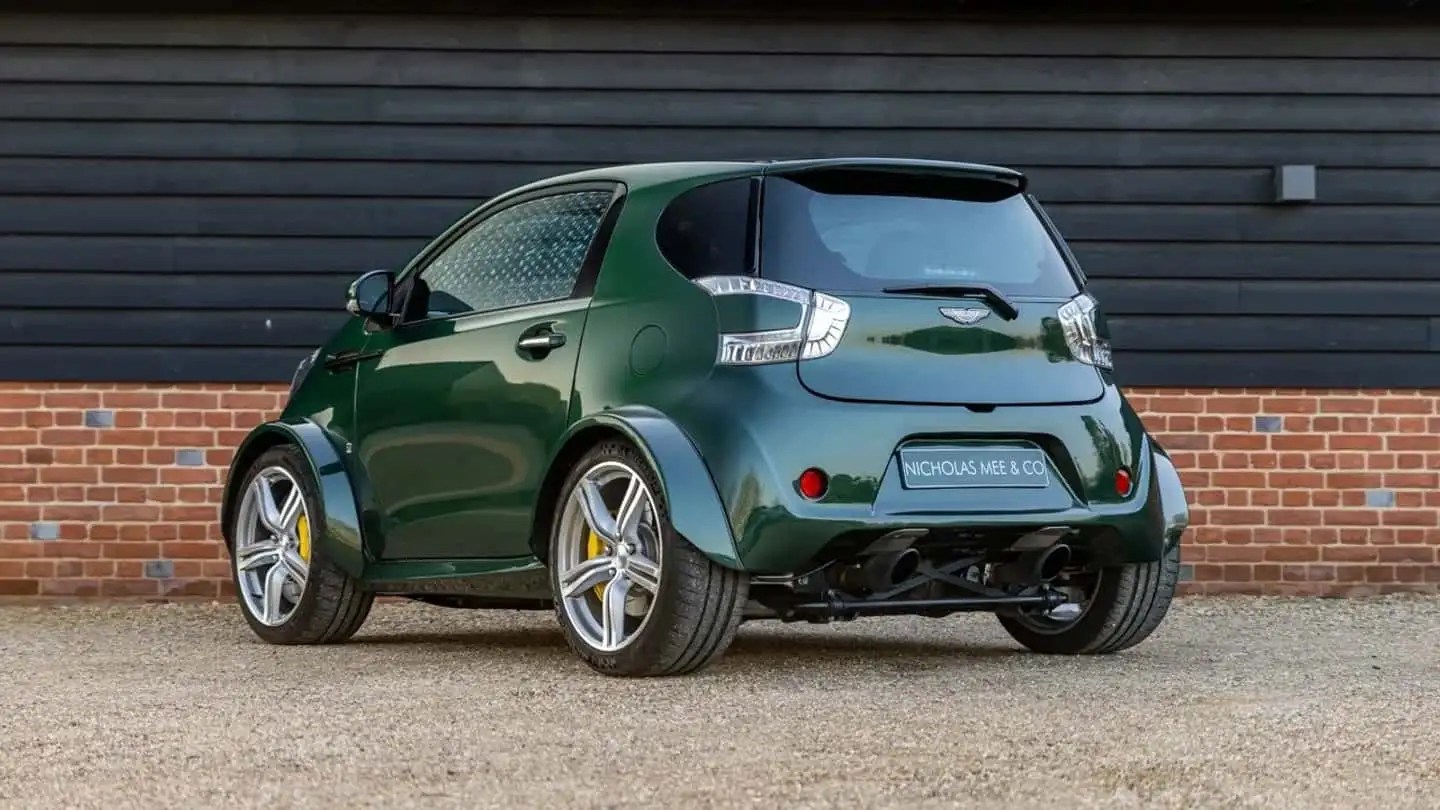
One would expect this would be a frequently viewed aspect of the V-8 Cygnet.
Smith’s Advice: “Included in the sale is a car cover, technical specifications, and the only Cygnet V8 owner’s manual in existence. Not included: a place to store your immense chutzpah should you actually attempt to reach the car’s quoted top speed of 170 mph.”
“It’s done 2,900 miles,” Smith says, “We dare you to drive it more.”
Personal Recollections. I’ve never driven a standard Cygnet, let alone this unique one. However, two tidy boxes with hopped-up power come to mind: “Le Car Popped Steroids” and “Oil Crises I Have Known and Lived Through.”
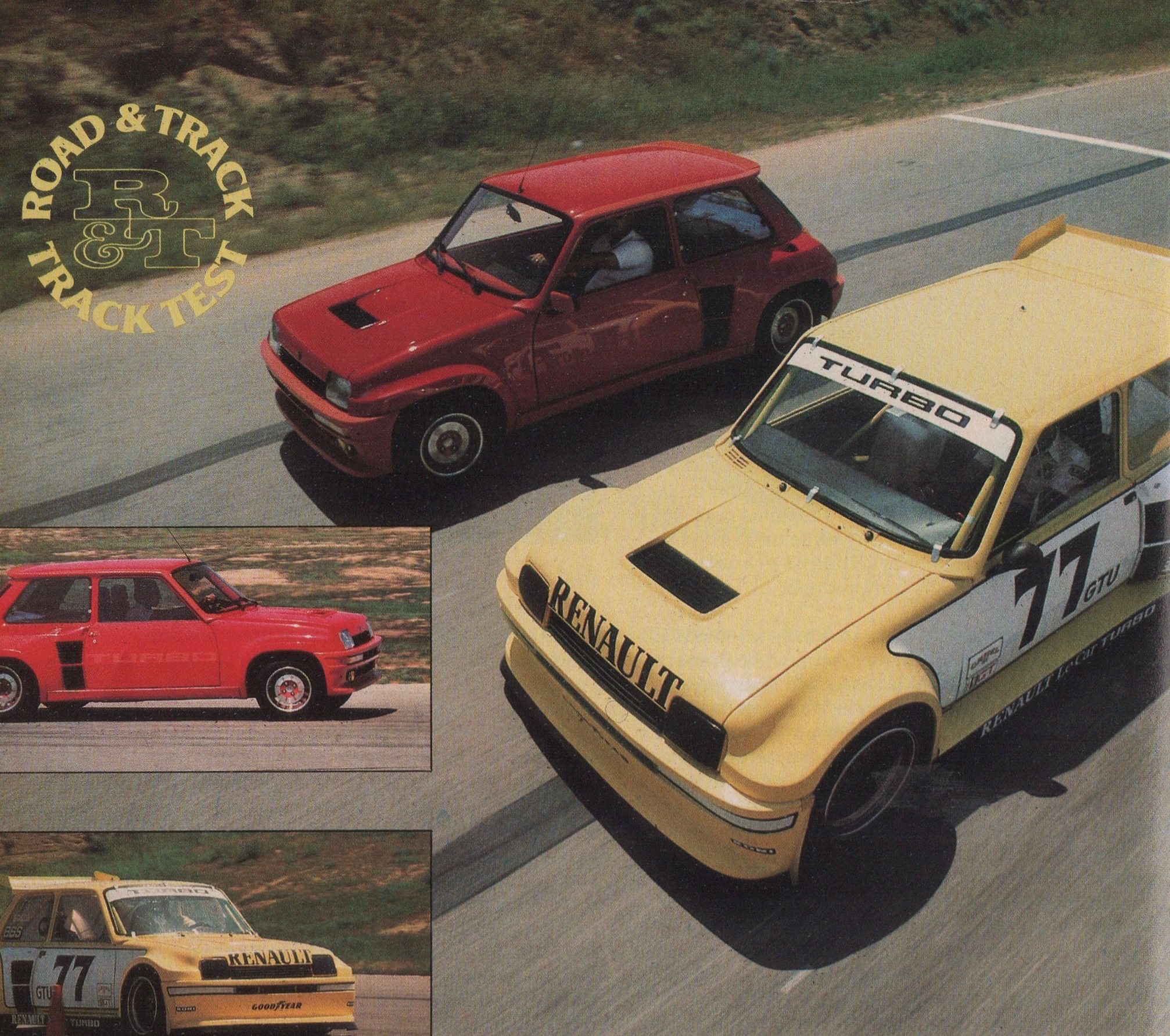
Image from R&T, September 1981.
Renault GTU Car. As for the steroids, I wrote, “In 1980, the [Renault] 5’s nice little fwd got swapped for a rear turbocharged engine”—and voilà—a modified 5 Turbo evolved into a GTU Le Car Turbo: 0–60 in 4.8 seconds; standing quarter in 13.3 at 89.0 mph; and an astounding 68.0 mph in our slalom (pipped by only two cars during my era, the Lancia Group 5 Turbo’s 68.5 mph and the Swift DB-1 Formula Ford’s 72.2 mph).
Healey Fiesta. When the Healey Fiesta visited the R&T office, I remarked, “… it was precisely my cup of British Racing Green tea: a pint providing a quart-size excitement.” Tony Hogg wrote, “On driving off, the first impression is that the engine is entirely free to wind out as far as it will go, and it had that harsh feel unique to high-compression engines.”
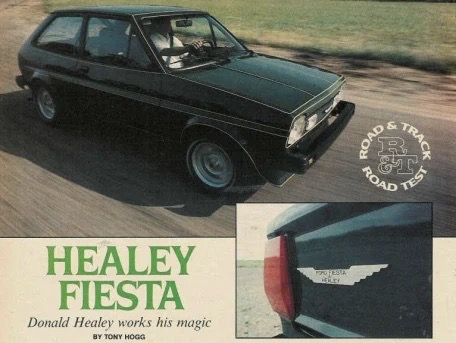
Image from R&T, August 1979.
The Oil Crisis? “Just the thing for an entertaining weekend, so I assigned the Healey Fiesta to myself. It had only to be fueled up after its day of track testing.”
“However,” I found, “the Healey Fiesta’s 10.1:1 compression ratio called for premium gasoline, and this was the day the 1979 oil crisis hit home. High test became unavailable…. The Healey Fiesta, with enough fuel to get to its next auto show gig, spent the weekend in the R&T garage.” ds
© Dennis Simanaitis, SimanaitisSays.com, 2025
 Simanaitis Says
Dennis:
Maybe I should try a similar swap with my 2CV. Have you driven one?
I never had that pleasure. I loved the Jeff Zwart 2CV shoot with all those ducks.
I once drove a Mehari, sorta a Citroen Mini Moke.—ds