
Simanaitis Says
On cars, old, new and future; science & technology; vintage airplanes, computer flight simulation of them; Sherlockiana; our English language; travel; and other stuff
WADDINGTON’S WAR PART 1
“CRIKEY!” SAID THE BRITISH WW II POW, “I’ve just landed on Regent St. and it has a hotel!” He also recognized that his escape plans were enhanced by this Monopoly game from John Waddington Ltd., No. 40, Wakefield Road, Stourton, Leeds.

Image by David Stewart from Wikipedia via Mental Floss.
I came upon this novel bit of WW II skullduggery at the Mental Floss website’s “How ‘Monopoly’ Helped Defend the Free World,” February 13, 2025. By the time five other websites had been identified, I learned about maintaining the decorum at Royal Command Performances, secreting escape aids within Monopoly tokens, mixing real currencies within the game’s Bank Notes, and enhancing wartime deception through urine or guncotton. All, very James Bond. And, come to think of it, recall that 007’s Ian Fleming had been involved in British Intelligence during the war.
Silk and a Serene Royal Box. The WW2 Escape Lines Memorial Society notes, “John Waddington was a theatrical printer in Leeds in 1896.” The commentary “M.I.5 & No. 40, Wakefield Road” recounts, “We had printed theatre programmes on silk for the Command Performances, twelve copies each year for the Royal Box.” (Silk eliminated the annoying rustle of paper programmes.)
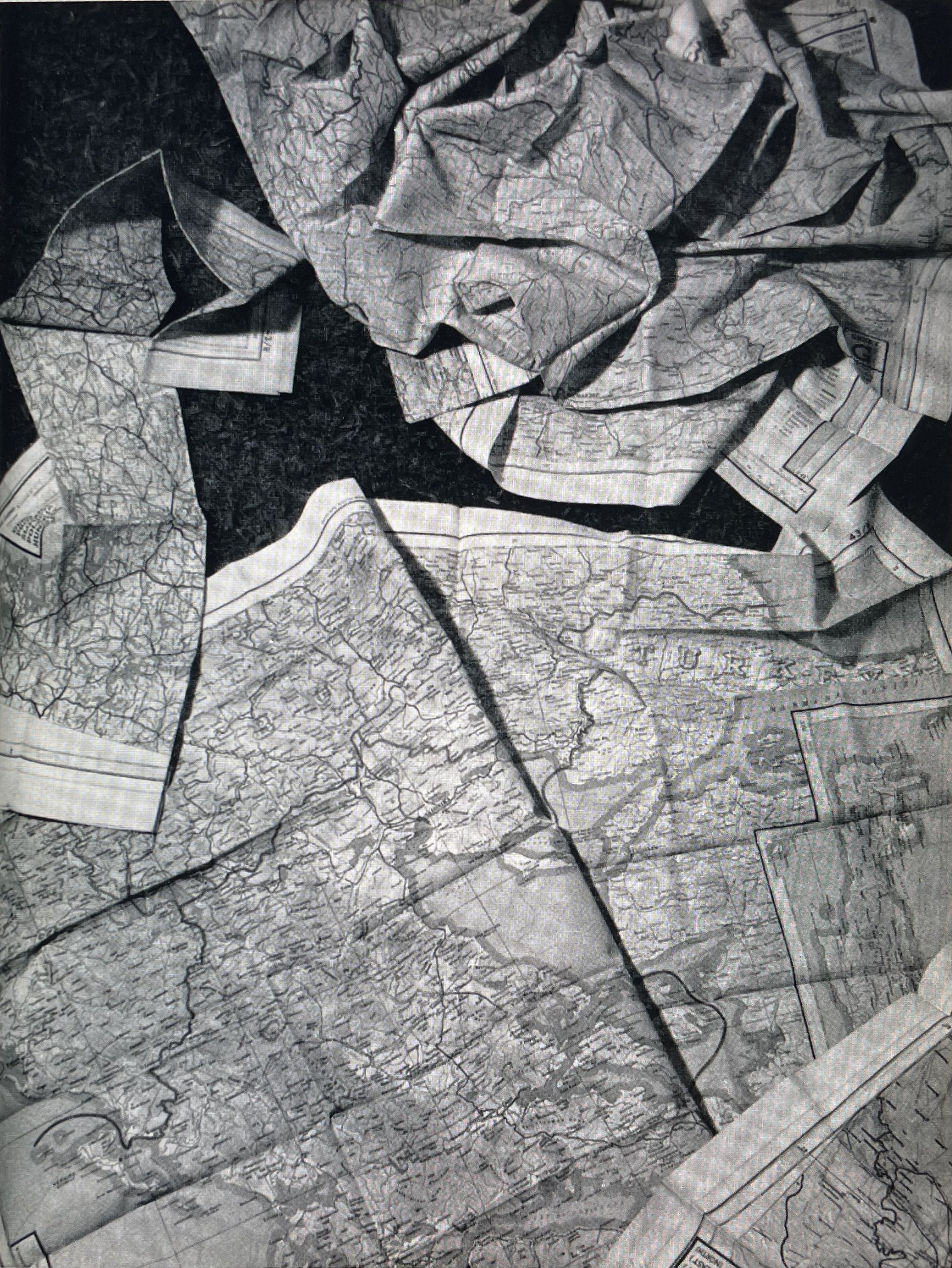
Silk printings are lightweight, compact, water-resistant, not damaged by crumbling—and don’t annoy the royals with paper rustling. Image from “M.I.5 & No. 40, Wakefield Road.”
Waddington and Parker Brothers. “In the early 1930s,” WW2 Escape Lines observes, “Waddingtons was sent a new board game from the USA developed by the Parker brothers called Monopoly. The board game had been created by an out of work heating engineer called Charles B Darrow, and centred on buying and selling property in the streets around Atlantic City, New Jersey.”
WW2 Escape Lines continues, “Waddingtons was asked to test the game, they were very impressed, contacted the Parker brothers, and received the rights to sell the game worldwide and adapt it to suit a British market. After a frantic dash to London and a taxi around the main routes, all street and road names were changed to London addresses.”
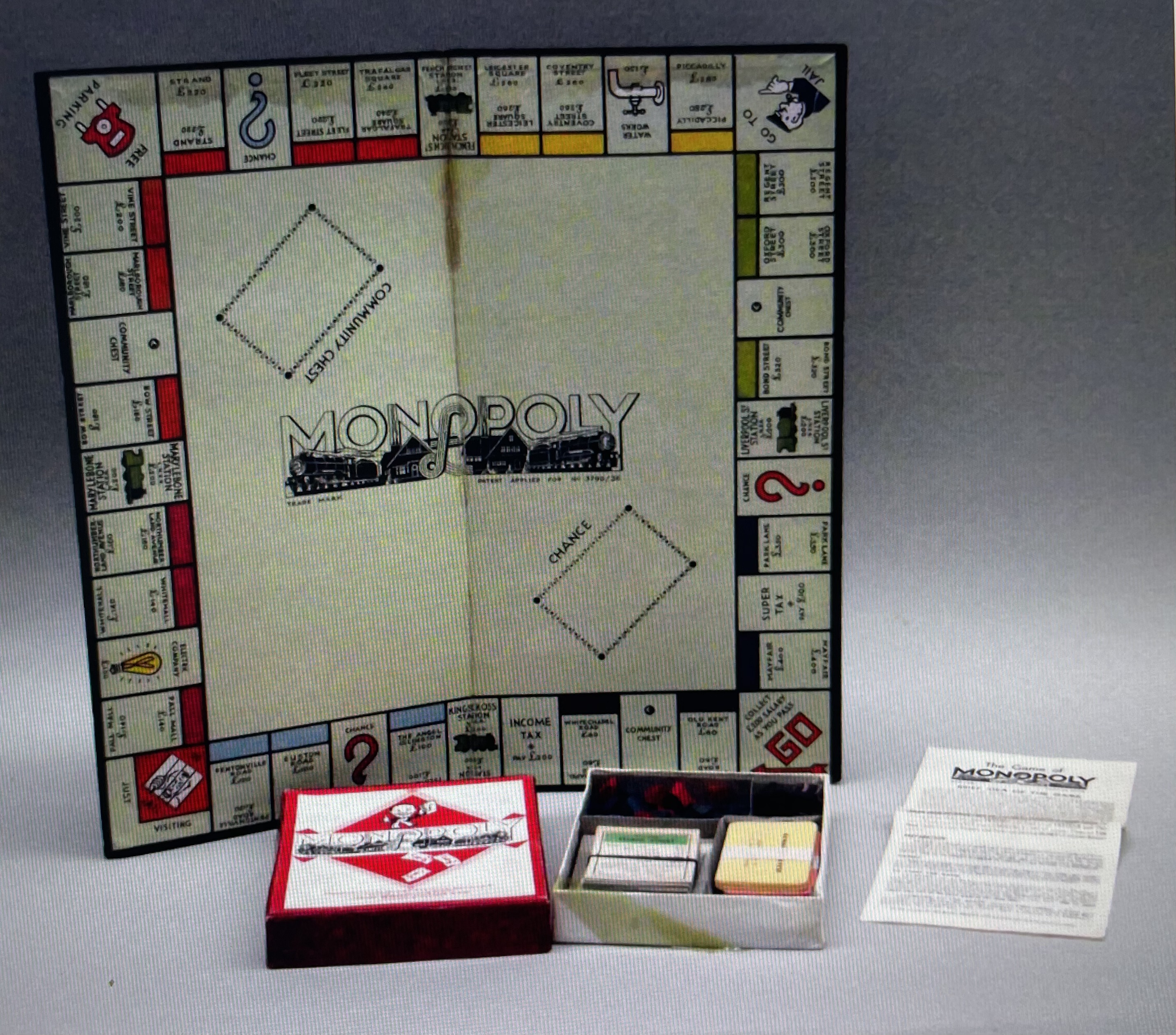
A Waddington Monopoly, 1943. Image from My Learning. Whitechapel and Old Kent are in the low-rent district; a £100 Super Tax resides between tony Mayfair and Park Lane.
A POW Tool. My Learning’s “Monopoly—More Than Just a Game?” describes, “The story starts with someone called Christopher Clayton Hutton and the famous game company Waddington’s, which was based in Leeds.… In 1939 Hutton was employed by the British Secret Service MI9 to help prisoners of war escape from German prison camps across Europe.… MI9’s role was to get as many back to safety as possible and Hutton’s role was very similar to James Bond’s Q.”

Image from mojo-nation.
“In 1941,” My Learning continues, “Hutton worked with Waddingtons on an ingenious plan to create escape kits hidden inside Monopoly boards. The escape kits included silk maps of European countries, such as Norway, Sweden, Germany, France, and Italy. Other tools like knives, metal files, miniature compasses, rope and real money were also hidden in the boards.”
Tomorrow we’ll learn of more skullduggery supporting POWs “at Monopoly play” and otherwise. ds
© Dennis Simanaitis, SimanaitisSays.com, 2025
 Simanaitis Says
Wow, who knew ? .
I remember in the mid 1960’s some military surplus place was selling off tons of WWII surplus Army Air Core stuff, they had silk maps of Europe they claimed had been hidden on the collars of leather flight jackets .
-Nate
As an Air Force brat and Boy Scout in the mid-50s, stationed at Ramstein AFB in the Schwarzwald, we cadged those silk survival maps for the area, still in use by the flyers. They came in thick paper packets, about 3″ square, a good size to fit into a flight suit pocket. They are remarkably durable, detailed and accurate, with topo and man made features. We used them on hikes in the woods, they were that accurate.I still have some, in great shape, even 80 years later. We also had them issued in my Naval Air excursion to Vietnam, and I don’t regret the lack of opportunity to try them out.