
Simanaitis Says
On cars, old, new and future; science & technology; vintage airplanes, computer flight simulation of them; Sherlockiana; our English language; travel; and other stuff
REGIONAL YUMS
THE DISCOVERY BLOG OFFERS “10 Regional U.S. Dishes You Have to Try Once,” several of which I’ve enjoyed more than that. I’ve picked out five of them to share here, together with personal comments thereon. By the way, The Discoverer’s links are particularly well-chosen.
Cincinnati Chili. When I was a youngster growing up in Cleveland, I didn’t like food to touch. My idea of a peanut butter and jelly sandwich involved three plates. It wasn’t until my teens that I discovered two things that changed my life—Chinese food and girls.
One of them, a good friend of my teens, ended up marrying a guy from Cincinnati. Her family had a restaurant/catering background and, as I recall, so did her husband. Though I’ve never visited Cincinnati, I probably learned about the 3-way, 4-way, and 5-way around that time.

Cincinnati Chili. This and the following image by Brent Hofacker/Shutterstock.
The Discoverer explains “Cincinnati chili isn’t your traditional bowl of chili. Instead, this Ohio staple comes with a bed of spaghetti topped with chili, cheddar cheese, beans, and onions, though you can alter your order to your liking. Many establishments offer Cincinnati chili either as a 3-way (just spaghetti, chili, and cheese), a 4-way (adding beans or onions), or a 5-way (adding beans and onions).”
“The concept,” says The Discovery, “originated with Greek immigrants who added Mediterranean flavoring to differentiate the dish from more common American chilis. You may note hints of cumin, paprika, cinnamon, allspice, and other non-traditional chili seasonings in each bite, though many purveyors remain mum about their special recipes.”
Any of its “ways” would have broken my no-touch rule, but perhaps because of my girl pals I was over it by then.
Hot Brown Sandwich—Louisville. The Discoverer recounts that “The Hot Brown originated at Louisville’s Brown Hotel in 1926. This open-faced turkey sandwich contains bacon laid out in an X-shaped formation, sliced Roma tomatoes, and a smothering of mornay sauce—a bechamel sauce with cheese added. Prior to being served, the sandwich is topped even further with pecorino, parsley, and paprika, and then brought to the table piping hot.”

Hot Brown Sandwich.
What a wonderful use of bacon! I make my Hot Browns with deli-purchased Primo Taglio Cajun Turkey Breast.
Philly Cheesesteak. Cheesesteaks are typically prepared with sliced beef and onions, and topped with either American cheese, provolone, or a heaping spoonful of Cheez Whiz. You can also add hot peppers, mushrooms, or marinara sauce.”
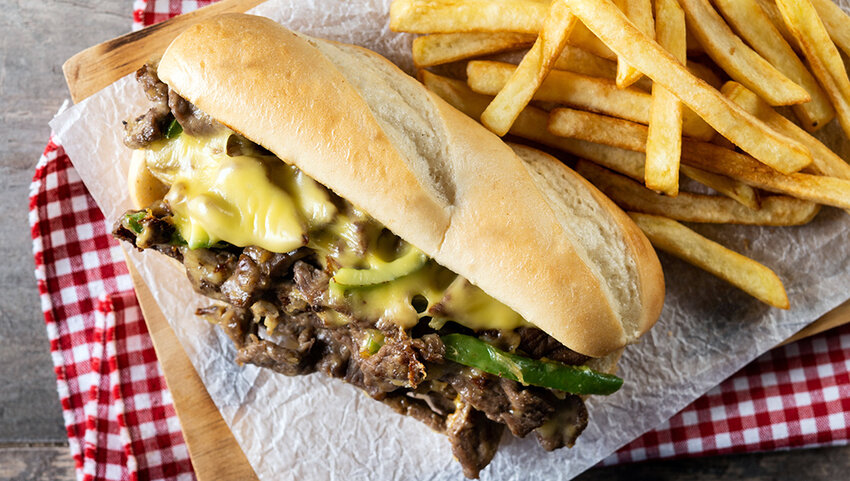
Philly Cheesesteak. Image by etorres/Shutterstock.
Having spent youth stints in Eastern Pennsylvania, I inherited firm beliefs that it has to be Cheez Whiz. Any other Philly Cheesesteaks are pretentious.
Spam Musubi—Hawaii. “Spam musubi,” the Discoverer says, “is very similar to traditional sushi, and it contains a small bed of rectangular rice, topped with a piece of lightly caramelized Spam, and then wrapped inside edible seaweed.”

Spam Musubi. Image by Brent Hofacker/Shutterstock.
The Discoverer notes, “Spam is incredibly popular throughout Hawaii in general, and gained that positive reputation back in World War II. The tinned meat was often served to servicemen stationed in Hawaii, and it later found a use in a wide variety of Hawaiian dishes. Today, Spam is eaten throughout Hawaii sliced up in breakfast hashes, laid atop sandwiches, and even in poke bowls.” I’ve made Spam Musubi at home too, though I usually pick it up from SoCal Hawaiian take-aways.
Frybread—Indigenous Cuisine. The Discoverer describes, “Frybread is an indigenous culinary staple created using wheat flour, salt, fat, and water. Those elements combine to create a flat dough that’s then fried in oil and served topped with various foods from ground beef to honey. While frybread is commonly found at many Native American-run establishments today, its origins date back to the 1860s.”

Frybread, awaiting typical toppings. Image by Ken Duffney/Shutterstock.
The Discoverer continues, “It’s said that frybread was created by the Navajo during the ‘Long Walk’ of 1864, a tragic event where the tribe was displaced from their homeland in Arizona. Utilizing the government rations that they were provided, the Navajo sustained themselves by creating a new recipe that ultimately became frybread.”
The Copperstate 1000 introduced me to frybread. I like jazzing it up into a kinda Navajo pizza, though I understand purists prefer just a dash of honey. Whenever I have one today, at county fairs and the like, I can’t help but think of our Morgan 4-Passenger Family Tourer getting blown off by a Navajo schoolbus.
Thanks, The Discoverer, for rekindling great memories and encouraging great munching. ds
© Dennis Simanaitis, SimanaitisSays.com, 2025
 Simanaitis Says
Check out what foods Utica NY is famous for.
Hint “FIATS”
and I am Irish.
John
I’d almost forgotten about hot browns – I lived in Kentucky a long time ago, and they were great! That cheesy sauce, hot all over the bread was delicious!
“Frybread—Indigenous Cuisine.” Similar to what First Nations in the Great White North call bannock. It is either fried or baked. Bannock was originally from Scotland, and we encountered some there when we visited last fall.
My wife makes it with sage and wild mushrooms (baked).
Mmm fry bread 🙂