
Simanaitis Says
On cars, old, new and future; science & technology; vintage airplanes, computer flight simulation of them; Sherlockiana; our English language; travel; and other stuff
THE AUTO INDUSTRY (SANS TRUMP, MUSK)
YESTERDAY WE REVIEWED Automotive News tidbits admittedly gleaned with political twinges. But enough already. There are plenty of tidbits in the auto industry to continue the theme sans you know who(s).
China Looks Automotively Inward. Western automakers used to see Chinese sales as ripe for plucking. For years, more Buicks were sold over there than in the U.S. BMW and Mercedes were the luxury brands of choice, with essentially no local competition. And Volkswagens were genuinely the “people’s car” of that country’s 1.4 billion.

No longer. Automotive News reports, “VW, BMW and Mercedes Are Getting Left in the Dust by China’s EVs,” October 15, 2024, and “German Automakers Fight to Regain Lost Ground in ‘Intense’ China Market,” October 17, 2024.
William Boston writes in Automotive News, “China’s policy of providing steep subsidies for its domestic brands has helped them gain share, but analysts and auto executives say domestic manufacturers have also created competitive cost structures and are faster at getting new cars from the drawing board to the showroom, a feat that auto executives call ‘China speed.’ ”

No Longer Buick Country. Keith Bradsher writes in The New York Times, “G.M. Led in China for Years. Here’s How It Ended Up 16th in Sales,” December 19, 2024. Bradsher writes, “China allowed foreign carmakers like G.M. into the country only as part of a publicly stated, long-term policy to gain technology and build its own globally competitive industry. Government leaders were also intent early on to shift away from cars that needed gasoline, which China mostly imports, and toward electric cars powered by energy sources at home like coal, solar and wind.”
Subaru Tops Consumer Reports (Again!) In Automotive News, December 5, 2024, Michael Martinez writes, “Subaru for the second time in four years led Consumer Reports’ annual brand report card as domestic automakers struggled in a ranking that measures factors including vehicle performance, safety and reliability.”
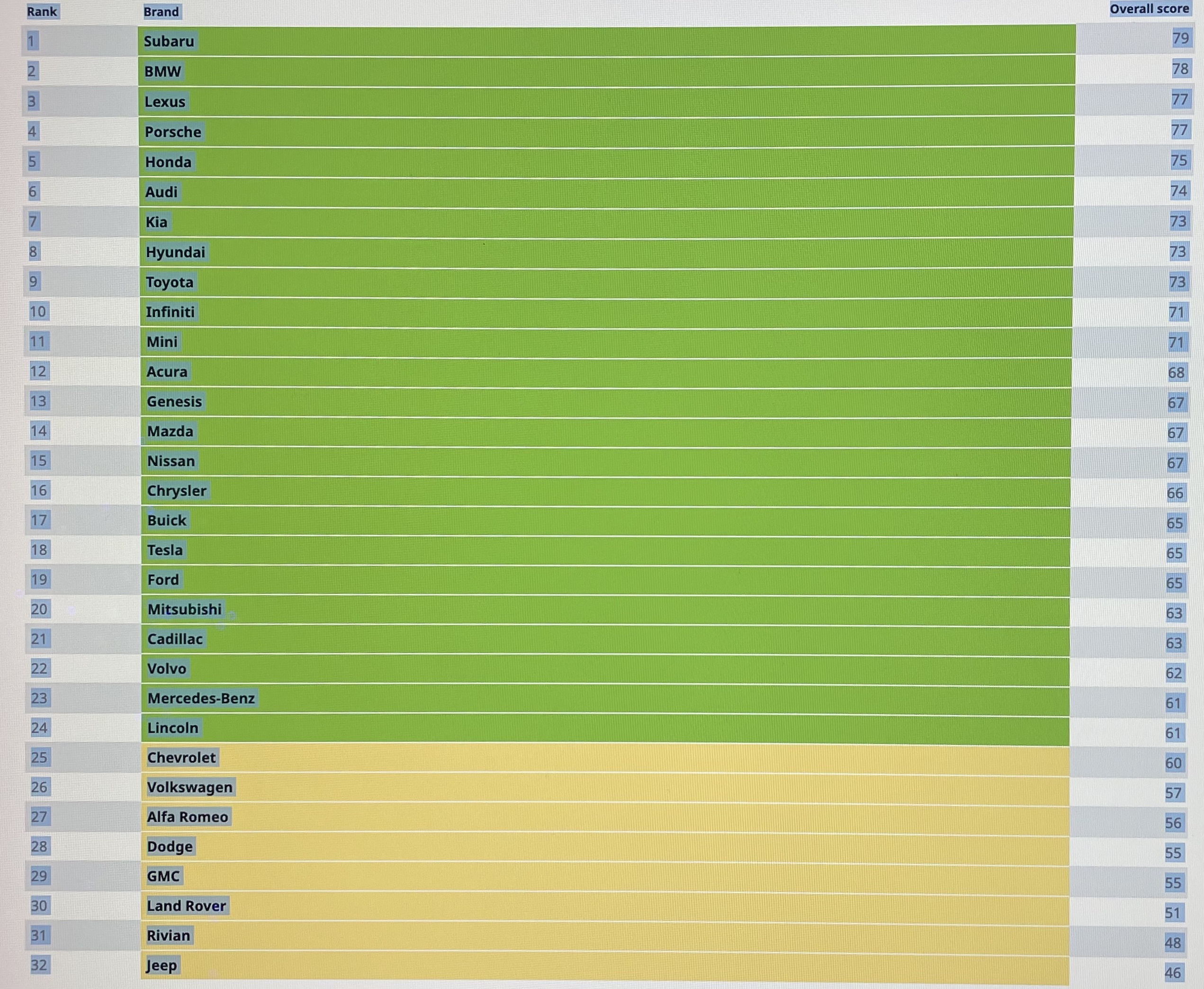
Image from Consumer Reports via Automotive News.
Martinez continues, “BMW, which topped the brand report card in 2024 and 2023, missed out on being No. 1 this year by one point. Lexus, Porsche, Honda, Audi, Kia, Hyundai, Toyota and Infiniti rounded out the top 10.”
The best domestic was Chrysler, ranking 16th overall.
Fisker Hassles: Bankruptcy and a North Korean Spy. Nick Buntley reports in Automotive News, October 29, 2024, “A remote information technology employee hired by Fisker Inc. turned out to be a spy for the North Korean government. That’s according to the Danish magazine The Engineer, which said Fisker was among numerous U.S. companies targeted by a money laundering scheme that funneled more than $6 million to North Korea’s ballistic missile program.”
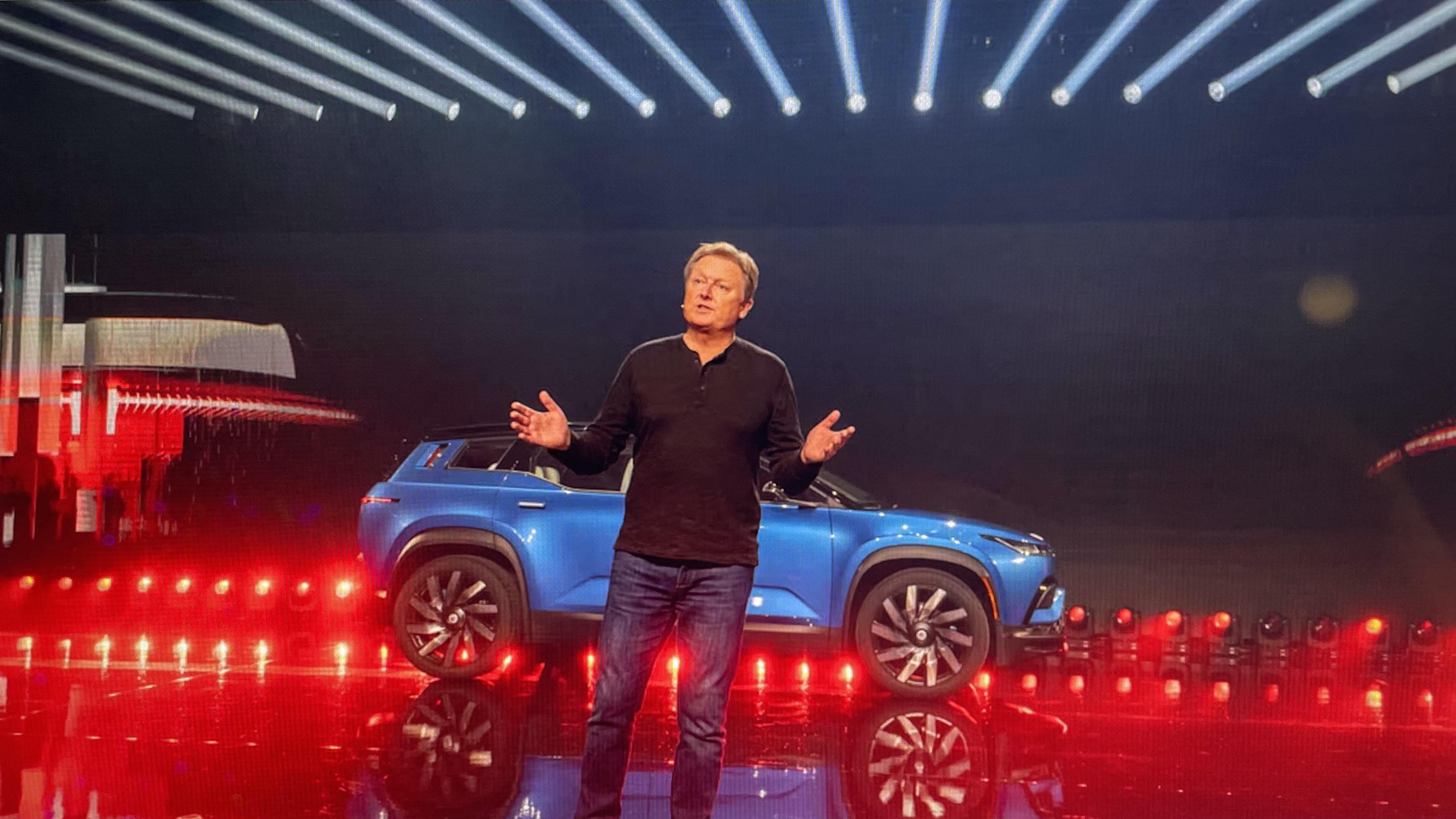
Fisker CEO Henrik Fisker said the case “is with the FBI.” Image from Automotive News.
Bunkley describes that remote IT worker Kou Thao’s “purported address in Arizona actually belonged to a woman named Christina Chapman, who set up laptop computers that the North Koreans accessed through Russia and China.” Thao was hired by Fisker in October 2021 and was terminated in September 2023 “after the Justice Department notified the electric vehicle maker that it was being scammed. Fisker filed for bankruptcy in June 2024.”
Bunkley continues, “Fisker wasn’t the only automaker targeted. The Justice Department’s April indictment of Chapman identifies one of her co-conspirators as ‘Frank C.,’ a contractor who worked for ‘a Fortune 500 iconic American automotive manufacturer located in Detroit, Michigan’ starting in April 2022. The document doesn’t name the company.”
A streaming series to come? ds
© Dennis Simanaitis, SimanaitisSays.com, 2024
 Simanaitis Says
I’ve had my company now for 30 years, and have refused to partner with firms in China, India or Russia. China (like Dubai used to) requires a local host company. India doesn’t require this, but it ends up being the same issue: You are transferring your core business to your future competitor(s).
This is what you get with multi-national companies headed by cookie cutter CEOs who only care about the next 3 or so years before they move on. My company is private. Our IP stays with us. Our profits may be smaller, but we won’t be put out of business by our own foreign subsidiaries.
Russia is “the wild, wild, East.” That is literally how a Russian who wanted to do business with us in Russia described it. Thanks. No, thanks.
Thank you for this so cogent insight.
PS: Merry Christmas!
And thank you, of course, for your readership. — Dennis (a fellow Husky lover)