
Simanaitis Says
On cars, old, new and future; science & technology; vintage airplanes, computer flight simulation of them; Sherlockiana; our English language; travel; and other stuff
KALININ K-7—A GMAX CHALLENGE PART 1
I’VE NOTED THAT GMAX computer modeling of aircraft is a fine hobby, with several recent examples displayed here at SimanaitisSays: the Cessna XMC, the Consolidated PBY, and the Santos=Dumont Demoiselle. Talk about aero variety!
In building a goodly number of these craft, I’ve come upon a truism of the GMax hobby: Be prepared to stare—for considerable lengths of time—at computer screen images of the model’s various stages of construction. A corollary of this is Never choose an ugly project.

The Kalinin K-7. Yet, as a counterexample, I offer the Kalinin K-7, what must be one of the most ungainly aircraft ever devised. As described in Wikipedia, “The K-7 was designed by World War I aviator and Soviet aircraft designer Konstantin Kalinin at the aviation design bureau he headed in Kharkiv, Ukraine.” Akin to a later Soviet aero monstrosity, the Tupolov Maksim Gorki, I suspect Kalinin was “asked” to design this craft by Josef Stalin. Neither airplane particularly followed the logic of form following function.
Here, in Parts 1 and 2 today and tomorrow, are tidbits about the actual Kalinin K-7 and also about my GMax confrontations with its ungainly features.
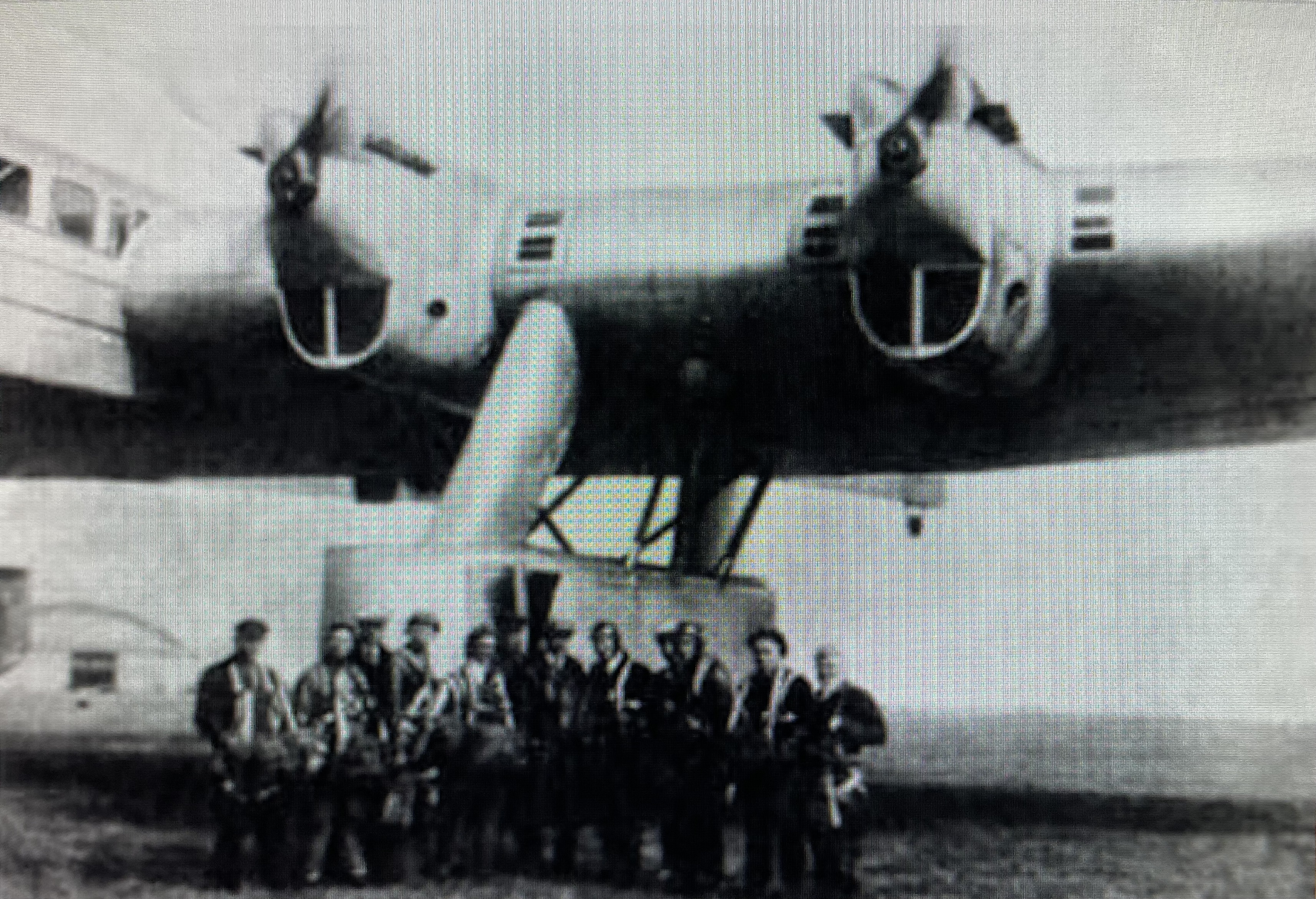
Image from thisdayinaviaiton.com.
Design. Wikipedia continues, “It was one of the biggest aircraft built before the jet age. It featured an unusual arrangement of six tractor engines on the wing leading edge and a single engine in pusher configuration at the rear.” The plan was to make it multi-functional: carrying 120 passengers, or 112 fully equipped paratroopers, or nine gunners lodged variously around the craft with some 21,200 lb. of bombs nestled within its 7 ft 7 in.-thick wing section.
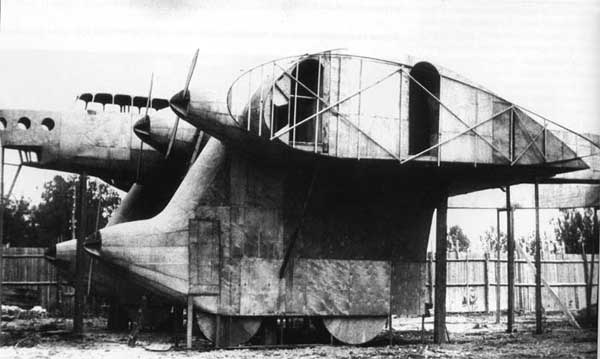
This and a following image of the K-7 prototype from ilovewwiiplanes.com.
A Propoganda Feat. No doubt appealing to Stalin’s ambitions, “It was constructed from welded chrome-molydenum steel, a fact that was considered a great achievement at the time, as it used Soviet made, instead of imported steel.”
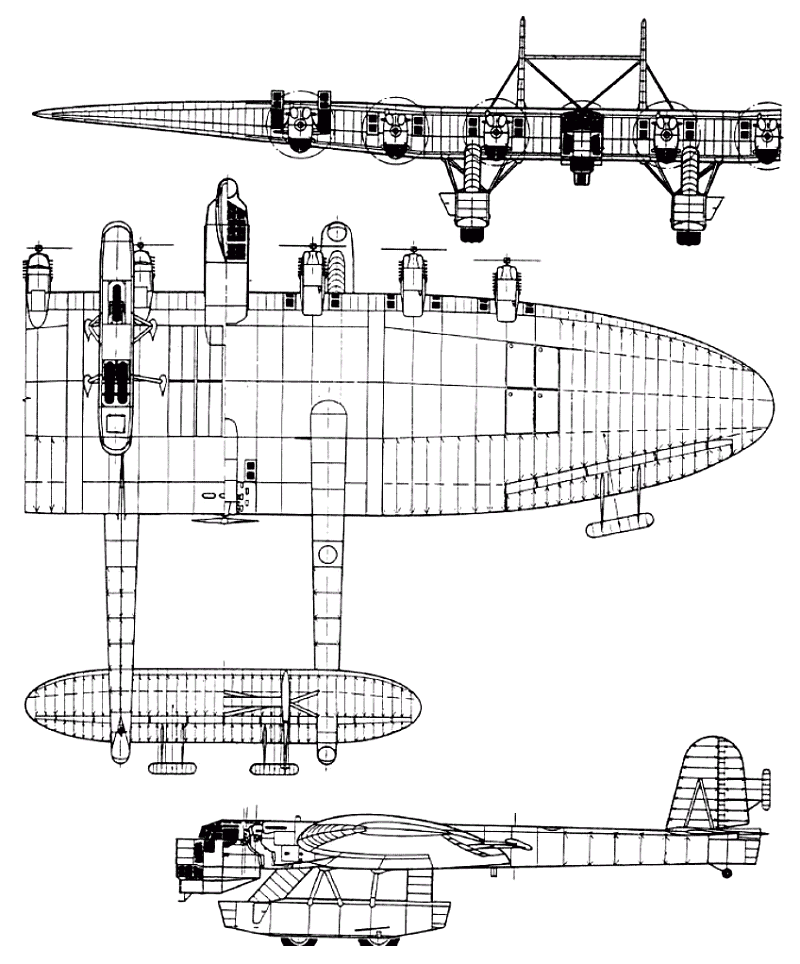
Image from migflug.com.
“Originally six engines were to be used on the leading edge of the wings,” Wikipedia notes, “but due to unforeseen excessive weight, it was decided to add two more engines to the trailing edge of the wings. Only one of these would be added though, behind the main passenger section.”
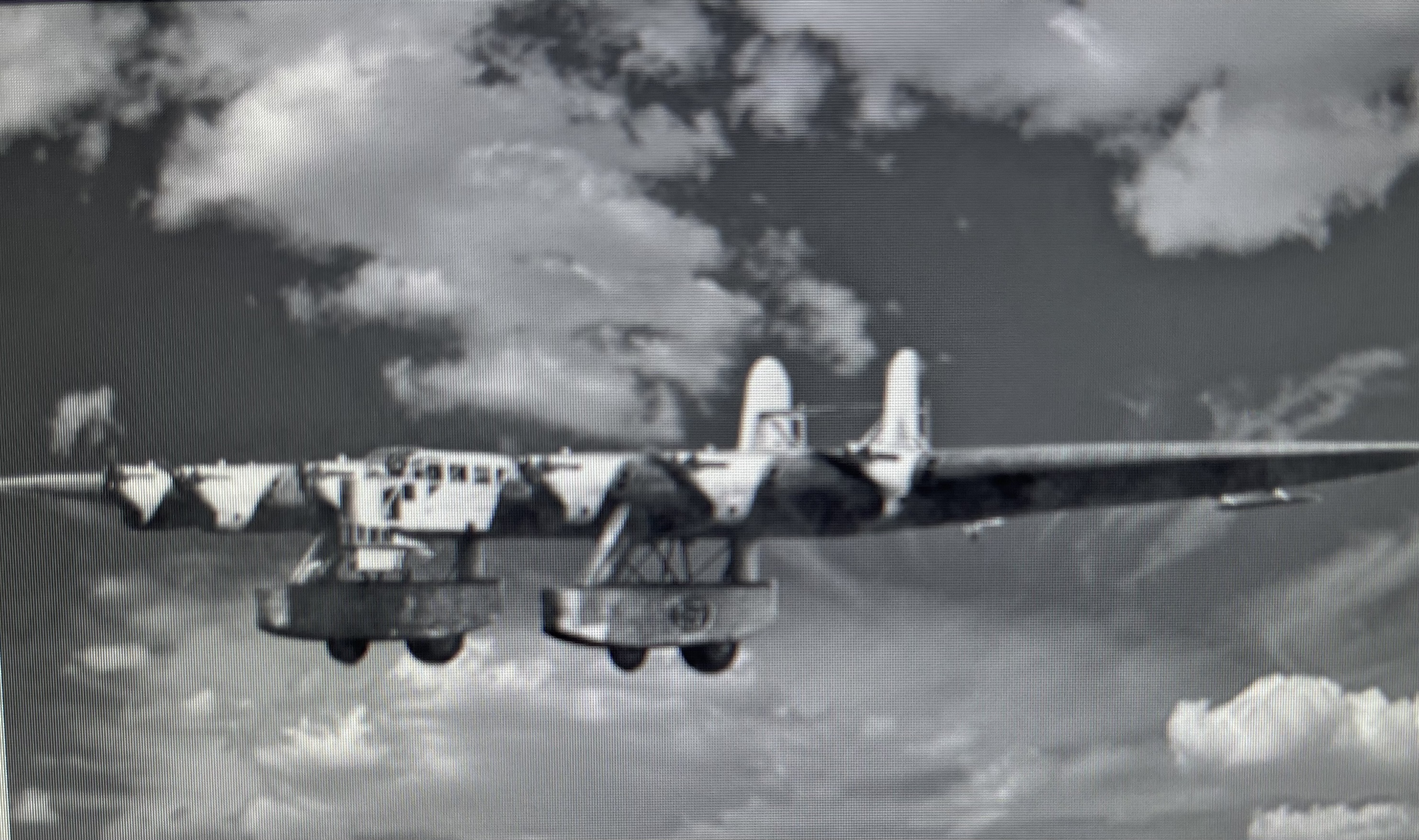
A computer-enhanced photo of the K-7 in flight. Image from migflug.com. (See also the Wikipedia image above.)
Not Without Design Shortcomings. The K-7’s first flight came on August 11, 1933. Wikipedia recounts, “The very brief first flight showed instability and serious vibration caused by the airframe resonating at the engine frequency. The solution to this was thought to be to shorten and strengthen the tail booms, little being known then about the natural frequencies of structures and their response to vibration.”
“The aircraft completed seven test flights,” Wikipedia writes, “before a crash due to structural failure of one of the tail booms on 21 November 1933.”
Pravda Spin. Wikipedia recounts, “The existence of the aircraft had only recently been announced by Pravda, which declared it was ‘victory of the utmost political importance,’ since it had been built with Soviet, rather than imported, steel.” Well, yes….
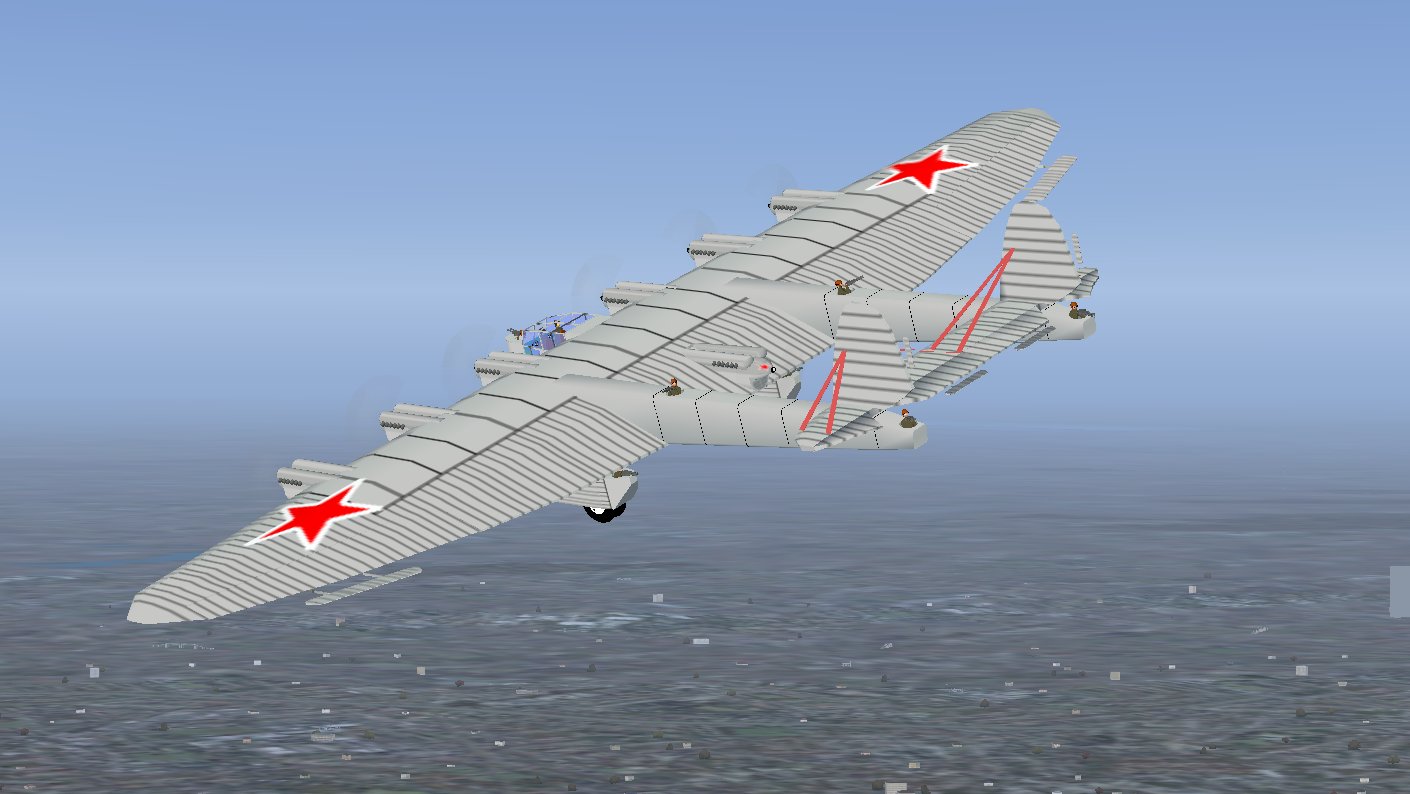
My GMax Microsoft FS9 Kalinin K-7. More images tomorrow.
Tomorrow in Part 2, we’ll learn how long I could stare at various aspects of the Kalinin K-7 construction (and what GMax tricks were employed to overcome its complexity). ds
© Dennis Simanaitis, SimanaitisSays.com, 2024
 Simanaitis Says