
Simanaitis Says
On cars, old, new and future; science & technology; vintage airplanes, computer flight simulation of them; Sherlockiana; our English language; travel; and other stuff
JOHN HONEYMAN—GEORGE WASHINGTON’S DOUBLE AGENT PART 1
NUGGETS OF KNOWLEDGE ARE FOUND in a variety of places. Recently on SiriusXM “Radio Classics,” mention was made in a vintage “Lux Theatre” broadcast of a Revolutionary War spy named John Honeyman.
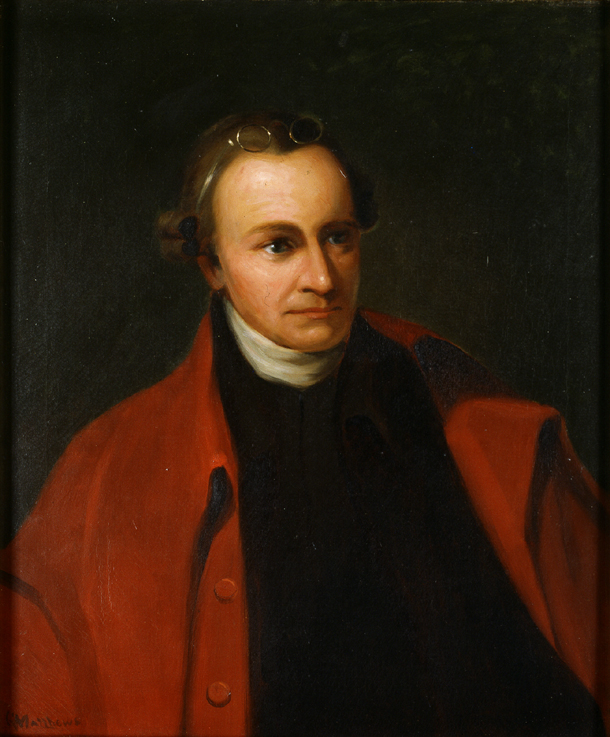
Recollections. Hmm…. Back when Civics was part of one’s primary education, I had been taught about Nathan Hale, one of Knowlton’s Rangers, our country’ first organized intelligence service. I’ve also been known to confuse Nathan Hale with Patrick Henry, first Governor of Virginia; this, because of famous comments dueling in my mind: colonial pol Patrick Henry’s “Give me liberty, or give me death” and colonial spy’s Nathan Hale’s “I only regret that I have but one life to lose for my country.”
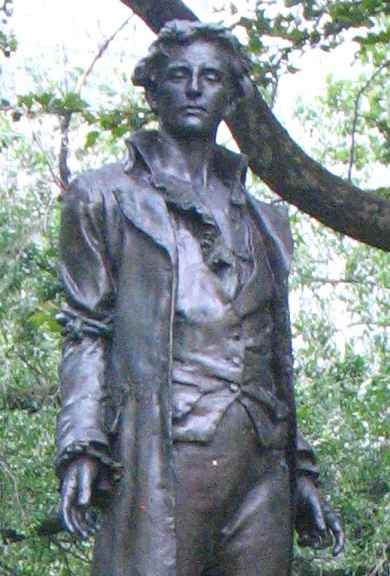
Above, Nathan Hale sculpture by Frederick MacMonnies in New York City’s City Hall Park. Below, Patrick Henry image by George Bagby Matthews after Thomas Sully. Both images via Wikipedia.
So what of that other guy, John Honeyman, double agent working for no less than General George Washington?
Wikipedia notes, “John Honeyman (1729–1822) was an American spy and British informant for George Washington, primarily responsible for spreading disinformation and gathering the intellence crucial to Washington’s victory in the Battle of Trenton.”
A full account of his life is offered in Leonard Falkner’s “A Spy for Washington,” American Heritage, August 1957. Here are tidbits gleaned from these two sources.
In a Dismal Winter of ’76, a Game Pretty Near Up. Falkner recounted, “From his headquarters on the Pennsylvania side of the Delaware, he [Washington] wrote one of his soul-unburdening letters to his brother John Augustine: ‘I think the game is pretty near up.’ ”
Across the river in Trenton, New Jersey, Falkner noted, “Lord Cornwallis, commanding the triumphant British forces in New Jersey, had started packing to go back to England…. The Hessians had all the bread they needed, and rum, but not enough meat for the Fröhliche Weihnachten so dear to their Teutonic hearts. Another cow or two!”
You Want Cows? Along came an accommodating butcher John Honeyman, acknowledged Tory. At that point of the Revolutionary War, there were whole villages still loyal to England.
Only, as Falkner noted, “The Irish predominating in Honeyman burned for independence from the British.” Two and a half years before, Honeyman first met General Washington; earlier they had both served during the French and Indian Wars.
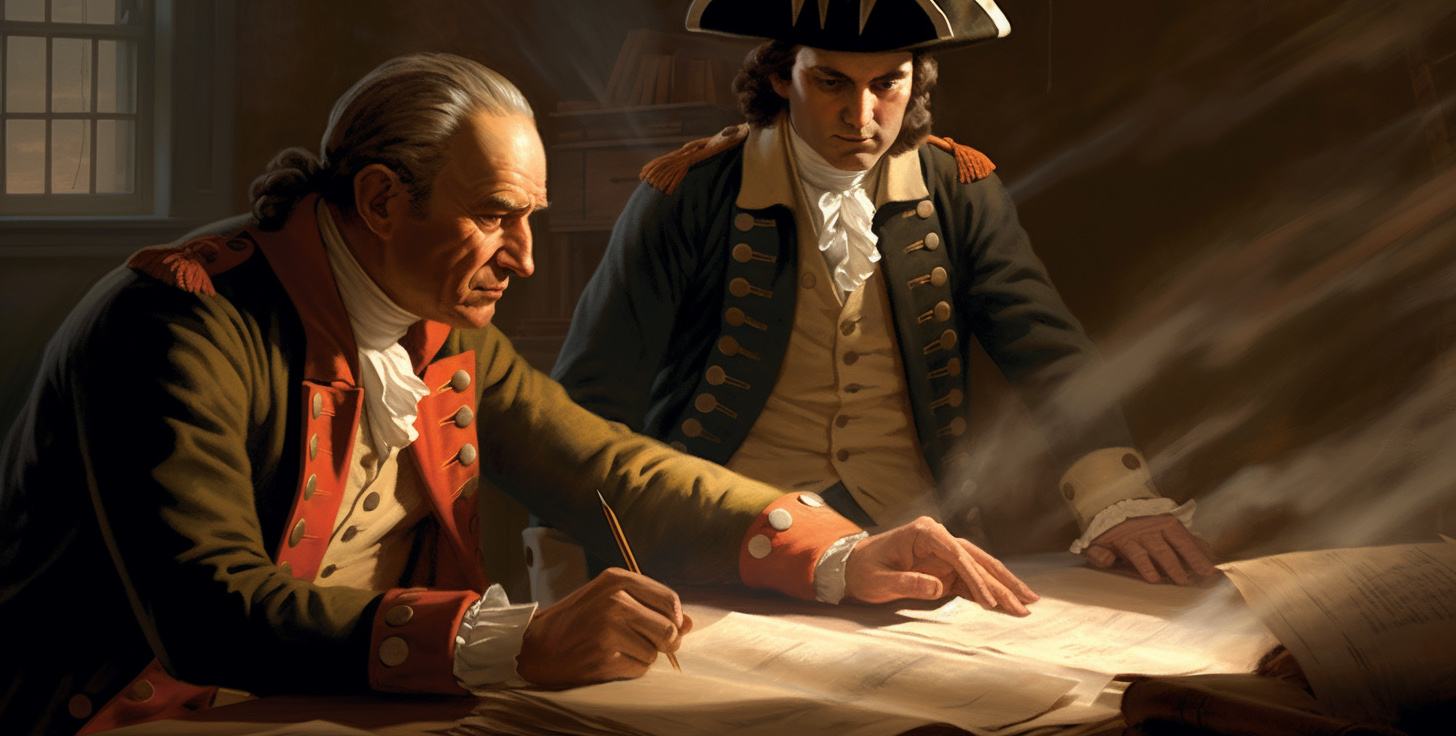
Image from genealogical.com.
“A plan was worked out,” Falkner described how Honeyman would use Tory butcher as his cover: “Whenever Honeyman thought he had important information, he should let himself be captured by Washington’s outposts, but not without a convincing struggle, so his usefulness wouldn’t end. If Washington had sudden reason to want him, he would in some way spread the word. Afterward, Honeyman’s escape would be contrived. He would be accountable only to Washington, and for his family’s safety the only other person who would know about it would be Honeyman’s wife, Mary.”
Plenty of deception, plenty of confusion. Excellent for a spy flick, eh?
Tomorrow in Part 2 we relocate to the Delaware River on Christmas night, December 25, 1776. ds
© Dennis Simanaitis, SimanaitisSays.com, 2024
 Simanaitis Says
Thank you again, Dennis! I’m enjoying your delving into Honeyman … a lot of murky accounting to sort through from those fraught times … almost as emotional and slanderous as today.
You’re at your best bringing out the overlooked and obscure; often picking aspects of history that go beyond interesting trivia and are in fact crucial to the era.
An example in that you mention Nathan Hale and Patrick Henry, both condemned by the government of the time, raised to statuary status post Revolution, and then both having their edifices vandalized by badly informed mobs in the recent mindless “summer of love” riot orgies.
Yes, Henry inherited slaves, but strongly advocated for their treatment, freedom, and opposed slavery, calling it a “lamentable evil”, writing that he could not justify owning slaves. Henry and Thomas Jefferson acted for ending the trans-Atlantic slave trade, and poor Nathan didn’t live long enough to be either a land or slave owner.
Compare their corrupted legacies to current golden boy Alexander Hamilton. Hamilton’s mother owned slaves, and he learned his financial skills at an import-export business in St. Croix that traded in enslaved people, helping inspect and price human chattal at auction. Hamilton married Elizabeth Schuyler, whose family owned slaves, taking at least one as a servant into their home and he used his skills buying and selling slaves for his in-laws.
But then, having a popular Broadway musical allows you to rewrite history.
You’ve also mentioned the haphazard history of financing our separation from Great Britain. Shipbuilder and merchant Robert Morris worked closely with revolutionary financier and Polish-born Jewish immigrant Haym Salomon to fund the Patriot cause for much of the war while the Continental Congress kept preoccupied with their other agendas.
btw – Per your Anglophilic quotes, each July 4, I can expect a note from my UK friend Michael King-Harman who tells me how he’s spending that British Thanksgiving celebration.