
Simanaitis Says
On cars, old, new and future; science & technology; vintage airplanes, computer flight simulation of them; Sherlockiana; our English language; travel; and other stuff
ACRONYMS FYI PART 1
SARAH ANNE LLOYD OF THE INTERESTING FACTS website assembles a list of familiar acronyms—though not necessarily familiar to all of us (er… IMHO, me). She writes, “From markings on your electronics, food packaging, and clothes to the words you see on water bottles and inside elevators, here are the meanings behind some mysterious letters you might see every day.”

Tidbits follow in Parts 1 and 2 today and tomorrow, together with personal musings here and there.
UL. Sarah Anne recounts that Underwriters Laboratories has been “conducting product safety testing more than a century…. The man who founded what became UL, William Henry Merrill Jr., got the idea to set up an electrical testing laboratory after being dispatched to check fire risks at the Chicago World’s Fair in 1893…. UL began offering its label service to certify products it had tested in 1906.”
I recall seeing the mark on electrical stuff, but nothing around here at the moment displays it outright.
Ha. Funny thing, I thought to check my friendly local pulse oxymeter and found it was multiply labeled: Among SpO2 (oxygen level) and C and US, it has a UL as well as our next acronym.
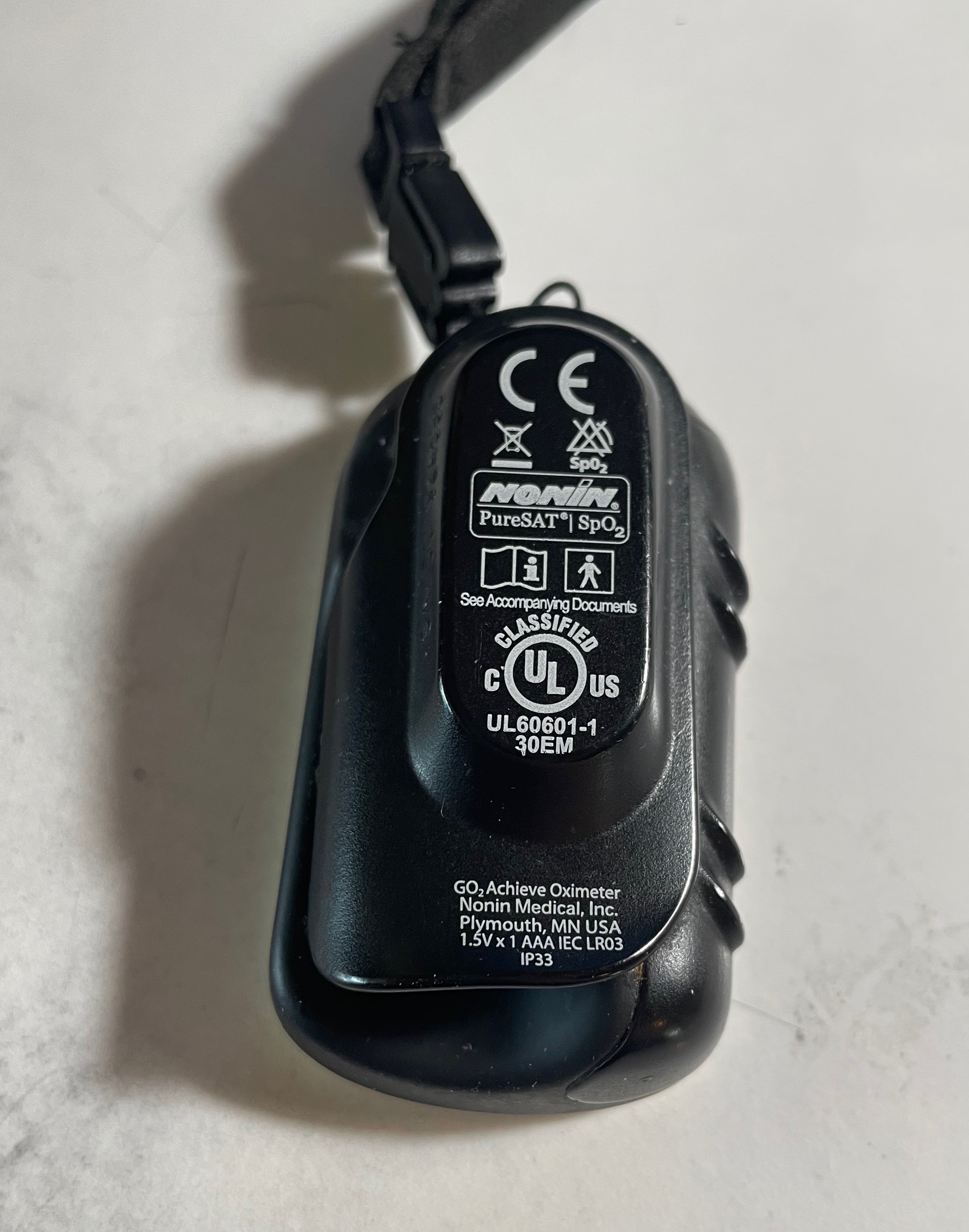
My oxymeter.
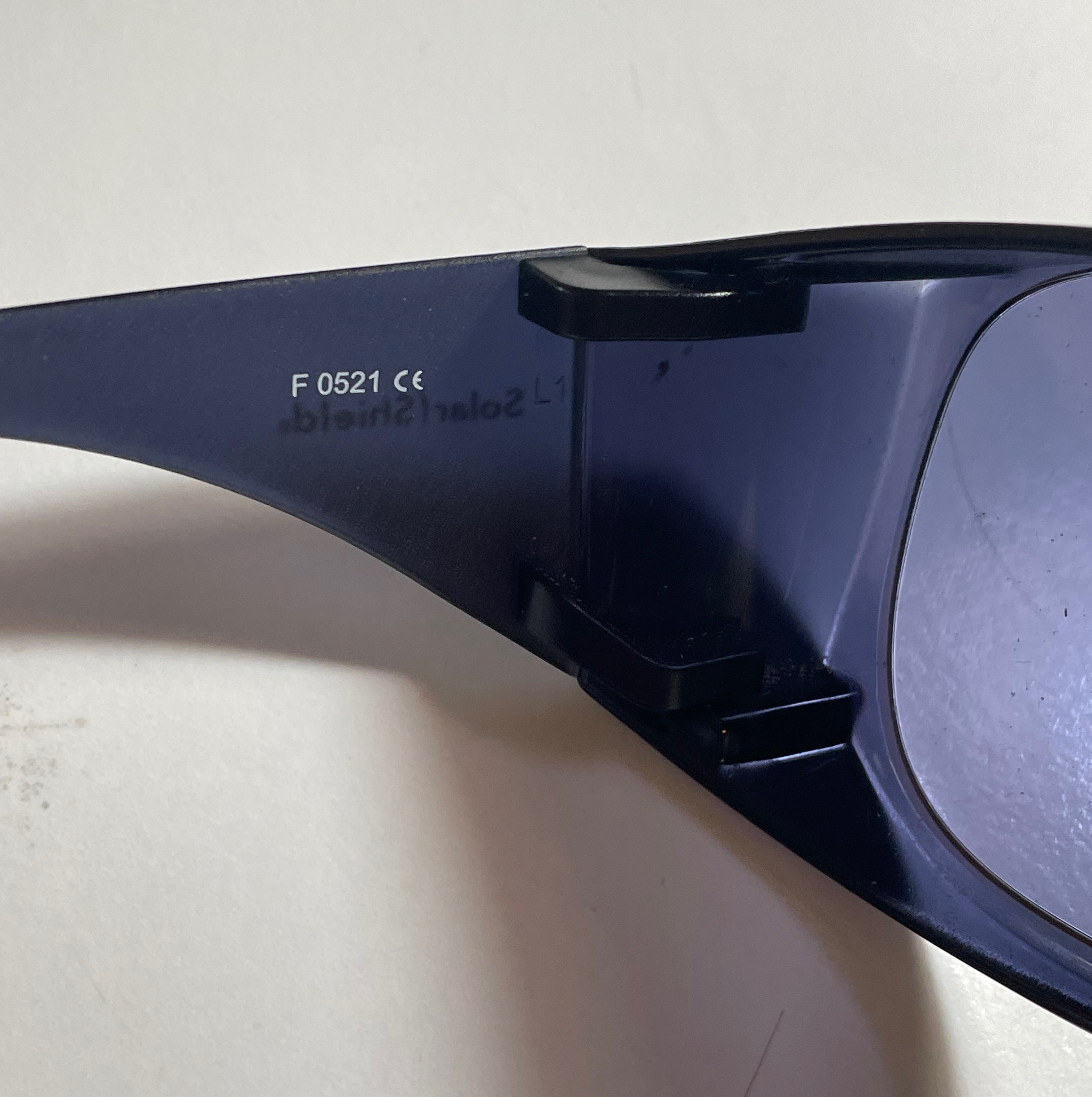
CE. Sarah Anne writes, “CE stands for the French phrase ‘Conformité Européenne,’ which means ‘European compliance.’ The CE designation indicates an item has met the standards to be sold in the European Economic Area. The certification process ensures that products in specific categories adhere to safety, health, and environmental standards. Placing CE on things isn’t required outside of Europe, but plenty of manufacturers leave the CE mark on items that are sold both in Europe and elsewhere.”
And, sure enough, the super shades provided me after I had my cataract surgery had this certification, even though these Solar/Shields were made in China.”
FCC. The Federal Communications Commission acronym is familiar, though I never thought about its graphical representation before.

Image by David J. Green/Alamy Stock Photo from Interesting Facts.
Sarah Anne observes, “At first glance, this logo can appear as if it contains just an F and a C next to each other, but a closer look will reveal there’s a second C hidden inside the first one.”
OTIS. Sarah Anne describes, “… you’ve likely seen ‘OTIS’ emblazoned on an elevator’s floor, control panel, or elsewhere. This isn’t an acronym or abbreviation—OTIS refers to the Otis Elevator Company.”
Funny she should mention Elisha Otis and his ‘Safety Elevator.’ Just this past week, SiriusXM “Radio Classics” had a “Cavalcade of America” episode with Bob Cummings portraying Elisha.

Otis free-fall safety demonstration, 1853. Unknown author—Copie de gravure ancienne. Public Domain via Wikipedia.
“Inventor Elisha Graves Otis,” Sarah Anne describes, “created an elevator safety brake, and in 1853, showed off his invention at New York City’s Crystal Palace Convention by ascending on an open platform, cutting the hoisting rope with an ax, and not falling thanks to the safety brake. Four years later, E.V. Haughwout and Company’s department store in Manhattan became the first business to use elevators equipped with this special brake.”
Not an acronym, but a fine tale. And, come to think of it, the French illo appears to have the guy with a knife, not an ax.
Tomorrow in Part 2, we continue with more acronyms, including genuine ones of international stature. ds
© Dennis Simanaitis, SimanaitisSays.com, 2024
 Simanaitis Says
I’m assuming that the C(UL)US designation indicates conformance with UL (US) and ULC (Canada).
And then there are acronyms that can have multiple meanings depending where you are located. For example AMA means:
On the last one, if an American traveller was in need of auto services in Alberta, their AAA card would be accepted by the AMA.