
Simanaitis Says
On cars, old, new and future; science & technology; vintage airplanes, computer flight simulation of them; Sherlockiana; our English language; travel; and other stuff
HOW COME PILLS ARE (OFTEN) IN ORANGE BOTTLES?
CHARLOTTE HILTON ANDERSEN offers interesting tidbits, “This is the Real Reason Pill Bottles are Orange,” in Reader’s Digest, July 1, 2024. Charlotte writes, “As a child who had to take a lot of medication—I grew up in the era when they gave you antibiotics if you sneezed twice—I had quite the collection of those plastic orange pill bottles with the white caps. I remember wondering vaguely why they were that strange color and then deciding that they must have been designed in the 1970s because everything from that decade seemed to have that weird sepia tone to it.”
By the way, her highlighted decade reference to “The Most Important Invention the Year You Were Born” is good fun as well, even if off by decades for some of us….

Back to Pill Bottles: “It turns out that I wasn’t far off chronologically,” Charlotte recounts. “Plastic began being used in pill bottles after World War II, but the modern plastic pill bottle as we know it today, with its distinctive orange hue (technically, it’s called amber) and its white ‘push and turn’ cap, wasn’t introduced until 1968. But I was wrong about the reason for the color.”
Charlotte talked to a specialist, Jennifer Bourgeois, PharmD at SingleCare Pharmacy, CEO of Well & Free, and the founder of A New View, a nonprofit that recycles and repurposes used eyeglasses.
Keeping Medications Potent. “ ‘It’s important that we protect medication from light, as it can degrade or lose potency when exposed to UV light,’ Bourgeois explains. The color orange helps filter out the UV light so it does not alter the medication.”
Keeping Medications Visible. “If you wanted to block all UV rays,” Charlotte notes, “ you’d just make the pill bottles opaque (and many are shipped from the manufacturer this way for this reason), but that would make it harder for patients to use them. So at the pharmacy, techs will often take the pills from the opaque bulk manufacturer bottles and dispense them into clear amber containers so the patient can see the medication inside.”
I can vouch for this. In these days of insurance-encouraged 90-day supplies, my pharmacy delivers several of mine in the manufacturers’ opaque bottles, typically white plastic. And, true, this tradeoff means I must rattle the opaque ones occasionally to keep track of which are getting low.
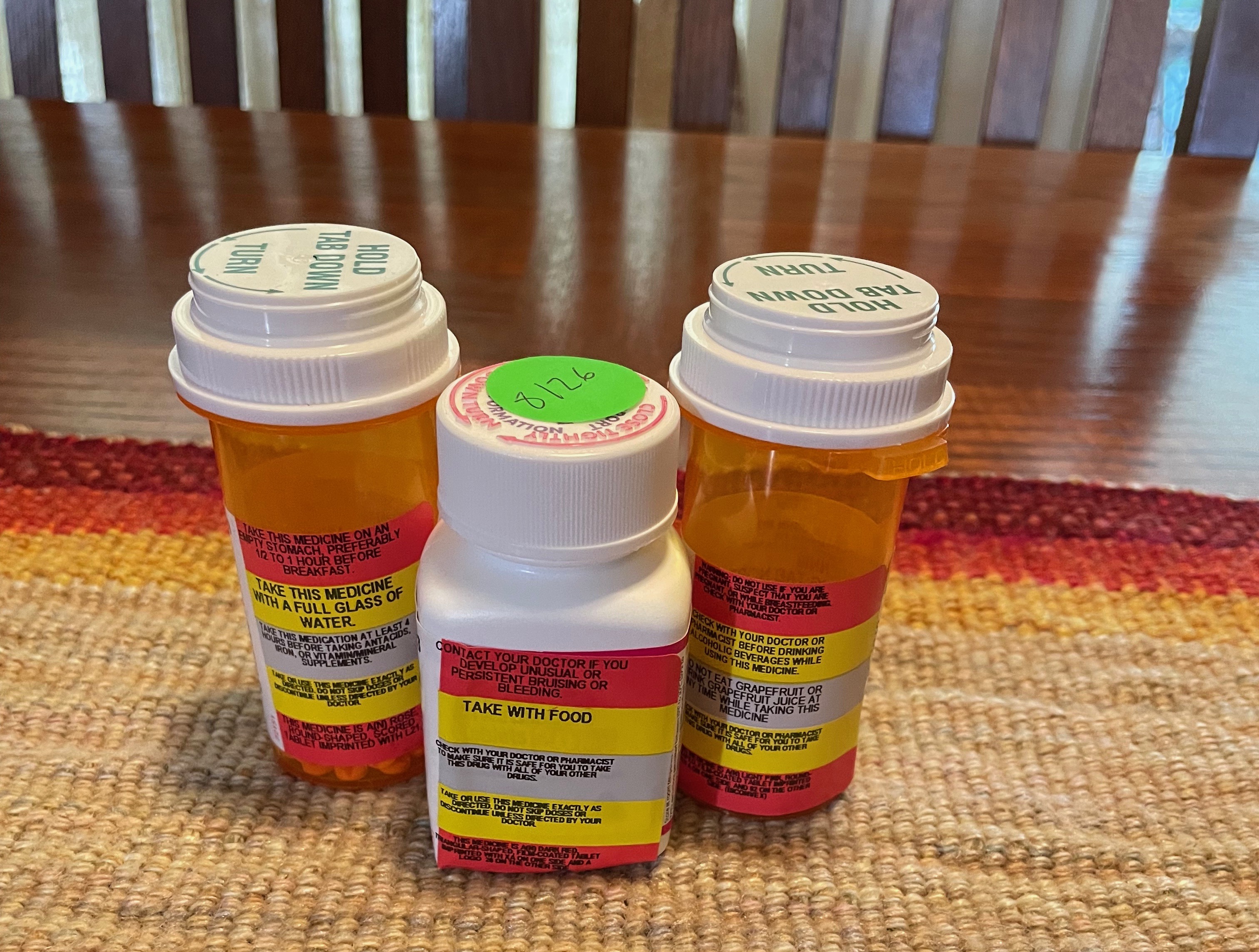
Keeping Them Recognizable. Charlotte says, “From a safety and marketing standpoint, making pill bottles one unique color is a smart move. ‘Orange prescription bottles have been accepted as the standard practice, and when someone sees an orange bottle, they connect this with prescription medication,’ says Bourgeois. This connection is so strong that it communicates across languages, ages and cultures that whatever is in the bottle is medication and should be treated with care.”
Twist Caps Keeping People Safe. Charlotte recounts, “The most common childproof cap in use today is the ‘palm and turn’ cap. It was invented by Henri Breault, a pediatrician who launched a public-health campaign in the early 1960s to reduce accidental poisonings in children after seeing far too many deaths in his young patients.”
“The public-awareness campaign did little, however,” says Charlotte, “so he partnered with an engineer to create the first childproof cap, designed to fit the amber bottles, in 1967. It inspired the United States to pass the Poison Prevention Packaging Act in 1970, mandating the use of childproof caps. It made a huge difference—rates of accidental medication-poisoning deaths in children under 5 have decreased by more than 80% since the act passed.”

Be Wary of Daily Pill Dispensers. Charlotte warns, “One problem pharmacists often see, however, is when patients remove the pills from the manufacturer or pharmacy packaging and put them in daily pill dispensers. Many of these are made from cheap plastic that is neither UV-resistant nor airtight, and that can degrade your medications. It also makes it less safe by making it easier for children and pets to get into.”
Back when I traveled a lot, I used a little plastic dispenser with pills arranged for the entire trip. Given that it spent the trip in my carryon, the pills got little UV exposure and posed even less kid or pet danger.
Disposing of Pills. For environmental reasons, don’t throw old meds in the trash or flush them down the drain. Pharmacists have pill-recyling; communities have recycling centers. And, by the way, I trust my doctors’ advice with regard to expiration dates. ds
© Dennis Simanaitis, SimanaitisSays.com, 2024
 Simanaitis Says
Stories like these are interesting and a bit depressing. I was too young to remember things like this, but how cool was it to have a government that was making laws that really helped average people be more healthy while simultaneously reducing accidental childhood deaths? [sigh]
How true.
Alas those (amber?) plastic bottles are apparently not recyclable because the color is too distinct and doesn’t play well with other colors.
Check with your vet’s office or local clinics. I take my bottles to my friend. His vet recycles pill bottles. She also accepts non-expired meds for economically challenged clients.
Many prescriptions, like pain meds, don’t go bad so much as lose potency but are still safely effective. This adviso the result of discussion with several longtime medicos.
Never discard any prescription down the train or toilet. Most towns now have recycling for such.
Or even, down the d r a i n. Blame that typo on a week of 100-degree heat, not any prescription.
I always wondered. My vet (and my non-prescription items) come in blue bottles. That makes it easier for me, taking a pain med instead of a dewormer intended for my dog.