
Simanaitis Says
On cars, old, new and future; science & technology; vintage airplanes, computer flight simulation of them; Sherlockiana; our English language; travel; and other stuff
SHAKESPEARE’S WORDS
THE Words Trivia website offers “5 Ways Shakespeare Changed English That You Never Knew.”

I add these Shakespearean tidbits to “Bereft of Insults?,” “Shakespeare’s Vocabulary,” and “OP Shakespeare,” this last one on how to pronounce the words as the Bard would have.
Quite the Inventer. Words Trivia notes, “It is estimated that he invented around 1,700 words, many of which are commonly used today. These include ‘assassination,’ ‘lonely,’ ‘radiance,’ and ‘bedroom.’ By changing nouns into verbs, verbs into adjectives, connecting words never used together, adding prefixes and suffixes, and devising words entirely original, Shakespeare enriched the English language, making it more expressive and colourful.”

Assassination. Given all his History Plays and Tragedies, I’m not surprised Shakespeare invented ‘assassination.” It appeared in “The Scottish Play,” 1605 (so named just in case you’re reading this out loud in a theater).

Researching origins in The Compact Edition of the Oxford English Dictionary, Oxford University Press, 1971, I learned that the root word “assassin” is much older, 1237. It comes from the Arabic word for ‘hashish-eater,’ hashshāshin, which traveled into Latin during the Crusades. Apparently, Saracen soldiers would get high before battling.
Radiance. Shakespeare used the related word “radiant” in A Midsummer Night’s Dream, 1590: In Act III Scene 1 when the mechanicals are performing Pyramus and Thisbe, she refers to him as “Most radiant Pyramus, most lily-white of hue.”

Shakespeare must have liked the sound because he upped the adjective to noun as “radiance” in 1602’s All’s Well That Ends Well, Act I Scene 1: Helena says of Bertram, “… he is so above me: In his bright radiance and colateral light, must I be comforted, not in his sphere.”
For more on this complex romance, check out “Shakespeare’s Vocabulary.”
Three years later, 1605, in King Lear Act I Scene I, the king swears “by the sacred radiance of the Sun…” (Spoiler: No eclipse, but things don’t end well at all.)
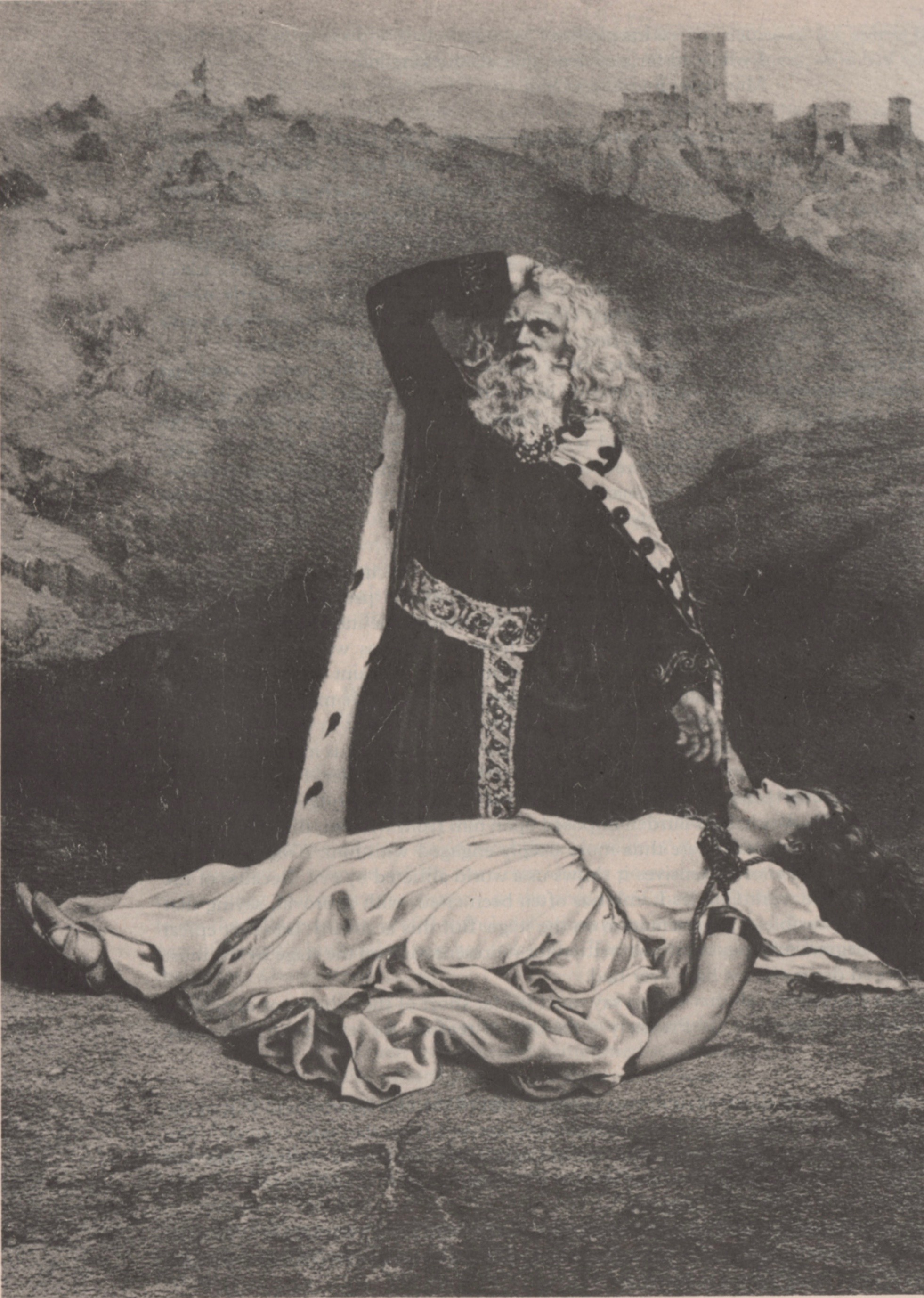
Bedroom. I am surprised that such a common word as ‘bedroom’ waited around until Shakespeare combined the two words. Gee, what did they call it before that?
“Bedchamber,” the OED says. And, sure enough, it credits Shakespeare with the first use of “bedroom” in 1590: In Midsummer’s Night Dream, Act II, Scene 2, Lysander says to Hermia (in fine iambic pentameter), “Then by your side, no bedroom me deny,/ For lying so, Hermia, I do not lie.”
She responds coyly, “Lysander riddles very prettily.”
I agree.
Lonely. In Coriolanus, 1607, Coriolanus leaves Rome under banishment in Act IV Scene 1, “Though I go alone, Like to a lonely dragon, that his fen Makes fear’d and talk’d of more than seen—your son Will or exceed the common or be caught with cautelous baits and practise.”

This one requires some digging. My Rowse’s Annotated Shakespeare identifies “cautelous” as “Crafty” and “practise” as “Tricks.” OED cites “cautel” as of Latin origin and appearing in English long before Shakespeare. And, okay; Elizabethan spelling was spotty.
Lonely Dragon. An interpretation of the “lonely dragon” comes in Jesse Russell’s “Slaying the Dragon in Shakespeare’s Coriolanus,” Brill, May 12, 2022. From his article’s Abstract: “Within William Shakespeare’s play Coriolanus, the title character Caius Martius Coriolanus refers to himself as a ‘lonely dragon.’ This image of a dragon in the play represents a powerful fusion of Celtic, Nordic, and classical myth as well as Christian theology—all of which contain depictions of dragons. Reading Martius as a dragon, using Jungian and archetypal terms mediated through Icelandic literature, unveils Shakespeare’s use of myth to fashion Caius Martius’s transformation into an untamable anti-social beast whose primal violence and aggression ultimately leads to his slaying by Aufidius, the dragon-like dragon-slayer.”
Local Dragons. SimanaitisSays has had its share: “Dragons Be Here and There” and “Yet More Dragon Lore.” I don’t believe any of these were particularly lonely. ds
© Dennis Simanaitis, SimanaitisSays.com, 2024
 Simanaitis Says
We owe him such a debt, adding such richness to mankind’s ability to express and emote.
How could we regress to this level where media analysts, phone bound youth and recent Presidents thrive on trite and limited, repetitive vocabularies?
This reminds me of my parting words from the office each day: “And now ’tis time that I should up and git,/ To ponder all the nonsense I’ve just writ.”