
Simanaitis Says
On cars, old, new and future; science & technology; vintage airplanes, computer flight simulation of them; Sherlockiana; our English language; travel; and other stuff
AN OLD FRIEND, A NEW GMAX PROJECT
THE CONSOLIDATED PBY CATALINA is an old friend at SimanaitisSays. In fact, it made an appearance here in “Twenty-six Miles Across the Sea, a PBY Has Transported Me.” Actually, I said back then it was more like 65 miles when I’d fly Antilles Airboat’s Catalina on its St. Thomas/San Juan route.
Earlier this year on January 18 I got around to setting a PBY as a GMax project. I’ve only recently finished the model (for one reason and another, one of my more lengthy projects). Here are tidbits about the real Catalina as well as those about its GMax construction.
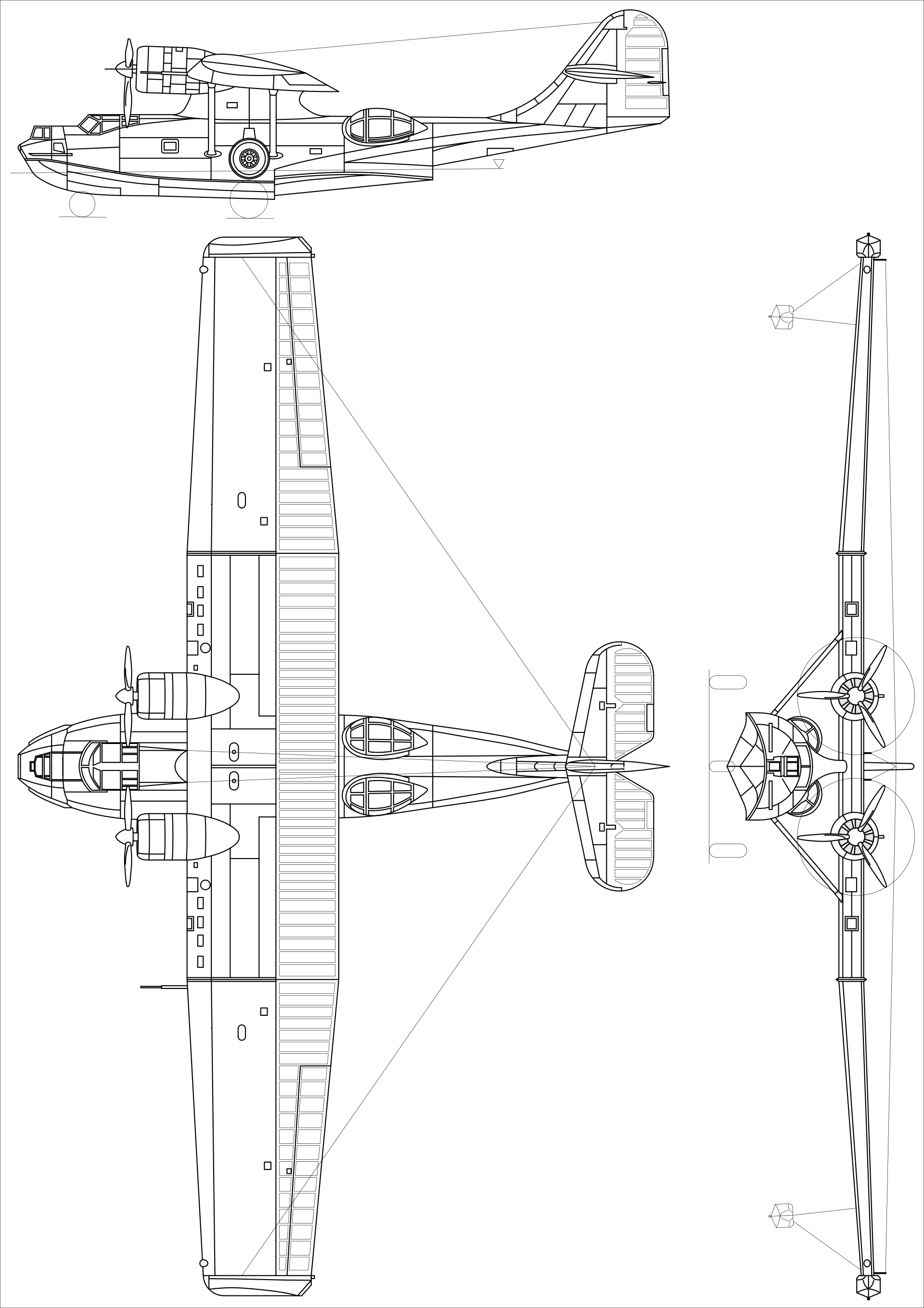
Design Details. The craft’s parasol wing, Wikipedia notes, “provides a high mounting point for engines and during the interwar period was popular on flying boats, which need to lift the propellers clear of spray.” The wing’s mounting pylon also housed the flight engineer’s station.
Wikipedia continues, “Wingtip stabilizing floats were retractable in flight to form streamlined wingtips and had been licensed from the Saunders-Roe company.” The Saunders-Roe Princess, another GMax project of mine, also featured retractable wingtip floats.
Powerplants. Power for the PBY-5 came from twin Pratt & Whitney R-1830 Twin Wasp 14-cylinder air-cooled radial engines, each producing 1200 hp.
It’s good GMax fun to model a multi-cylinder radial: Begin fabricating a single cylinder complete with pushrods, intake, exhaust, ignition, and other details. Then GMax-clone, rotate, and relocate the remaining cylinders.
Alas, it’s also parts-intensive. Well along into the model’s construction, I encountered a GMax parts/complexity limit.
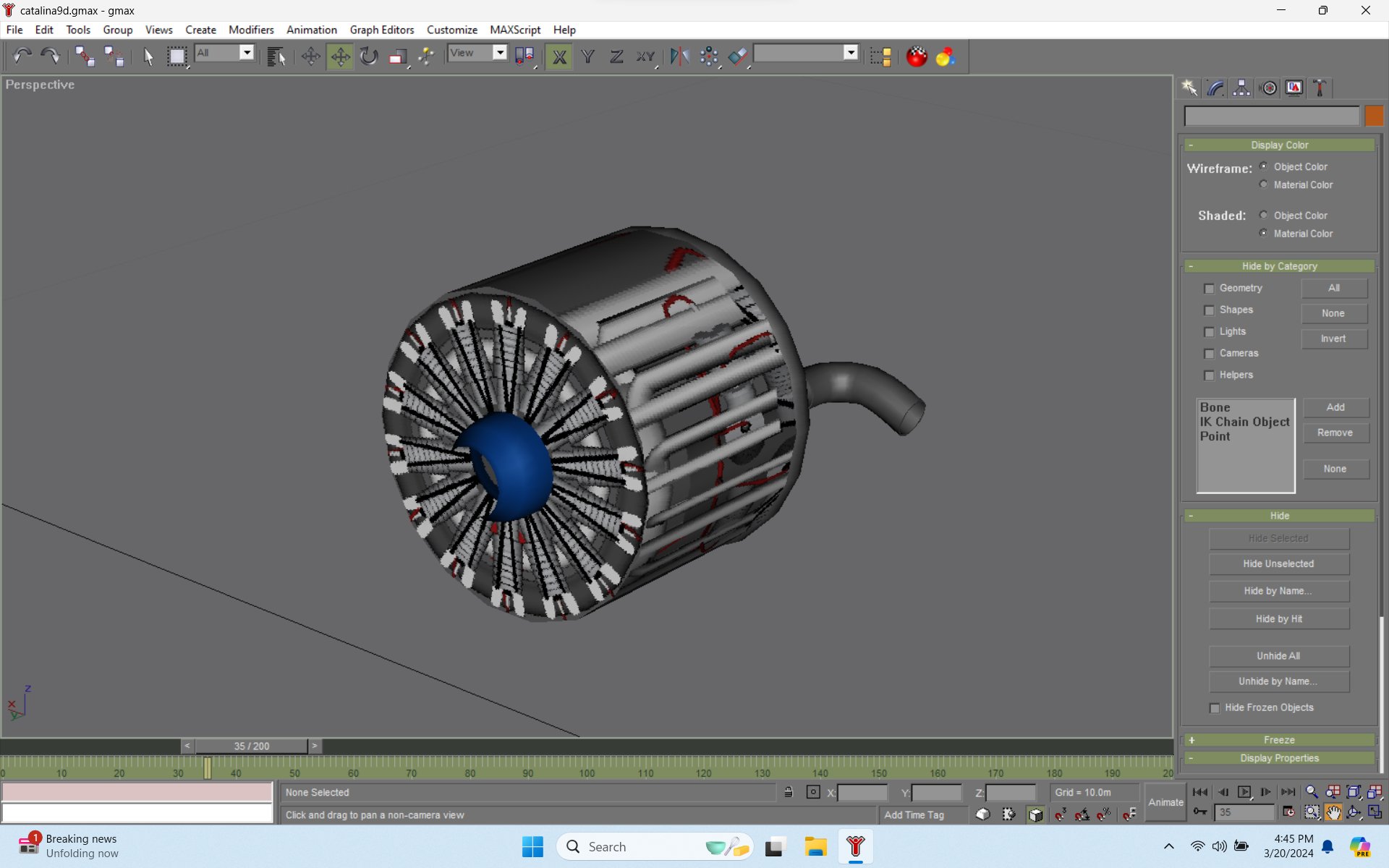
On previous models, my workaround was to put a simple picture at the front of the engine cowling. On the Catalina, though, I had already modeled full-functioning cowl flaps (revealing engine details when opened).
This time around, I fabricated a GMax Cylinder onto which I pasted pics of the front, side, and rear of the parts-rich engine.
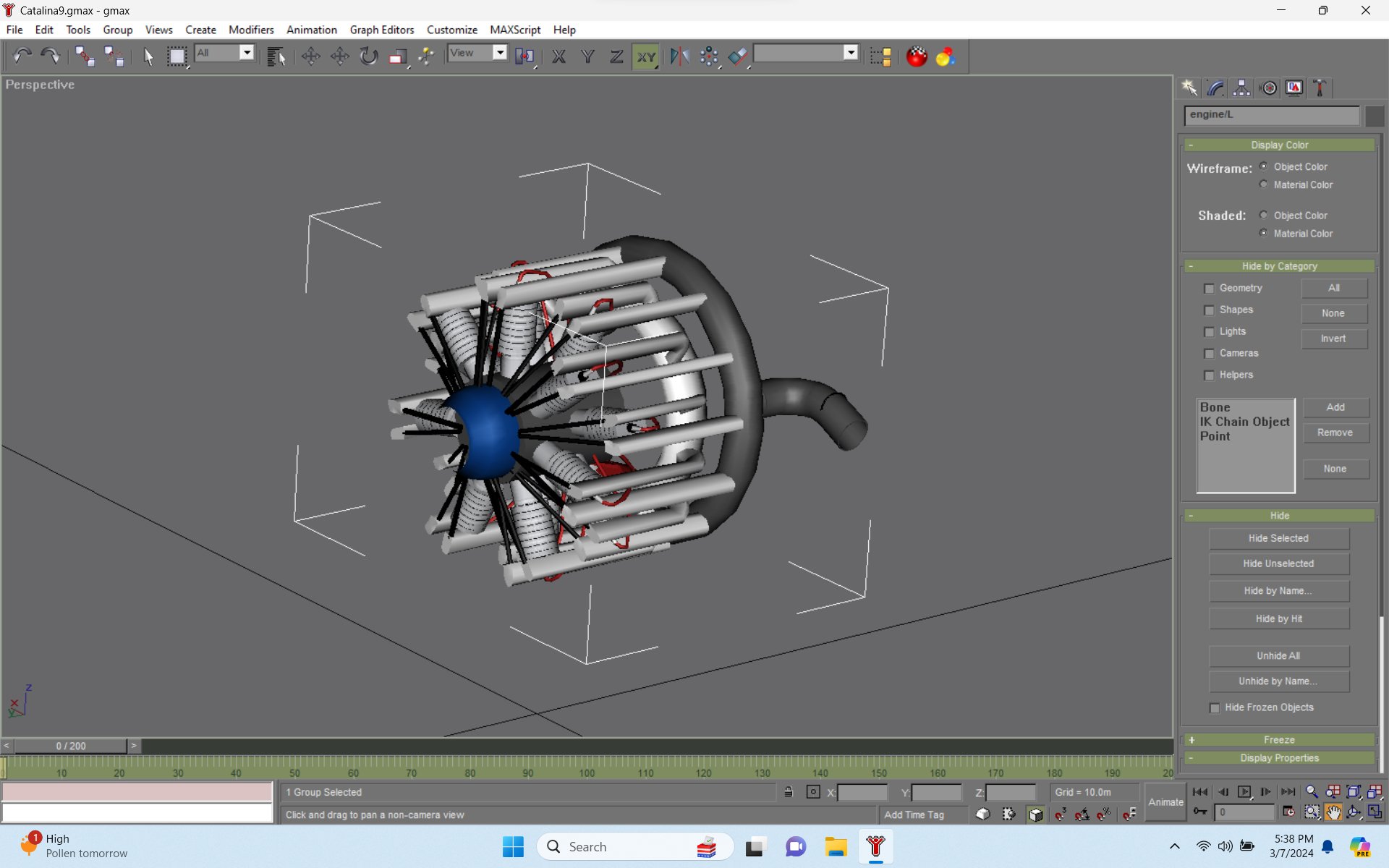
Above, my initial modeling of the Twin Wasp. Below, its parts-conscious reevaluation.
A Crew, Plus Viola. My Catalina has a crew of six, an observer in the nose (with code-actuated binoculars), a pilot (animated with the flight controls) and copilot, radio operator and navigator (each with a moving arm using code designed for rotating beacons), and the pylon’s flight engineer (who also fiddles with one thing or another). In full military trim, there would have been three gunners, including two in the side bubbles.
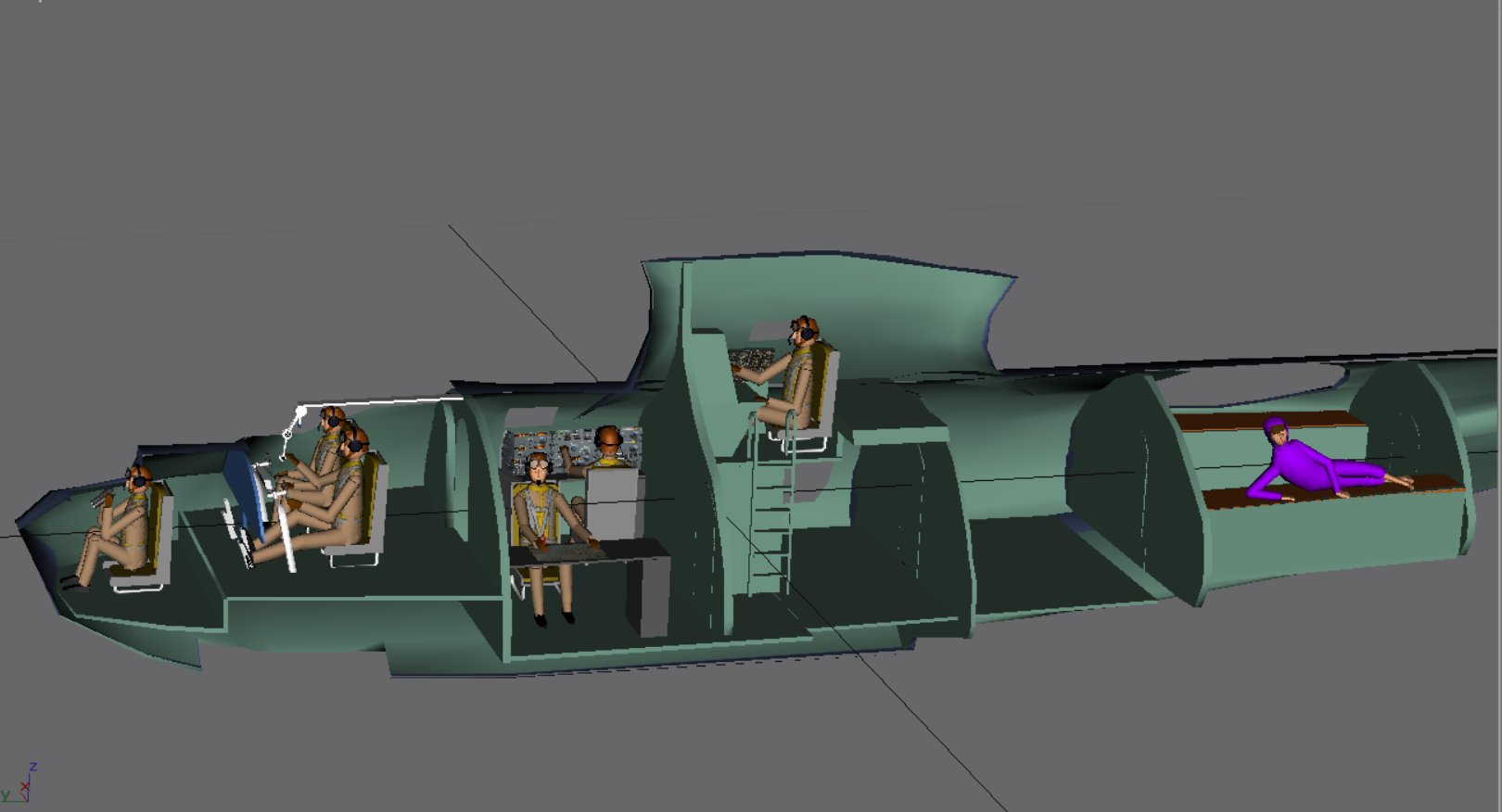
As a whim, instead I added my pal Viola to one of the side bubbles. She originally modeled a sleeping berth in the Curtiss Condor).
Personal Memories. I also flew in bubble locations on the Antilles Airboats Catalina. The STT/San Juan flight offered a great view of downtown San Juan as the craft headed straight toward the buildings and then banked hard to set down in the harbor.
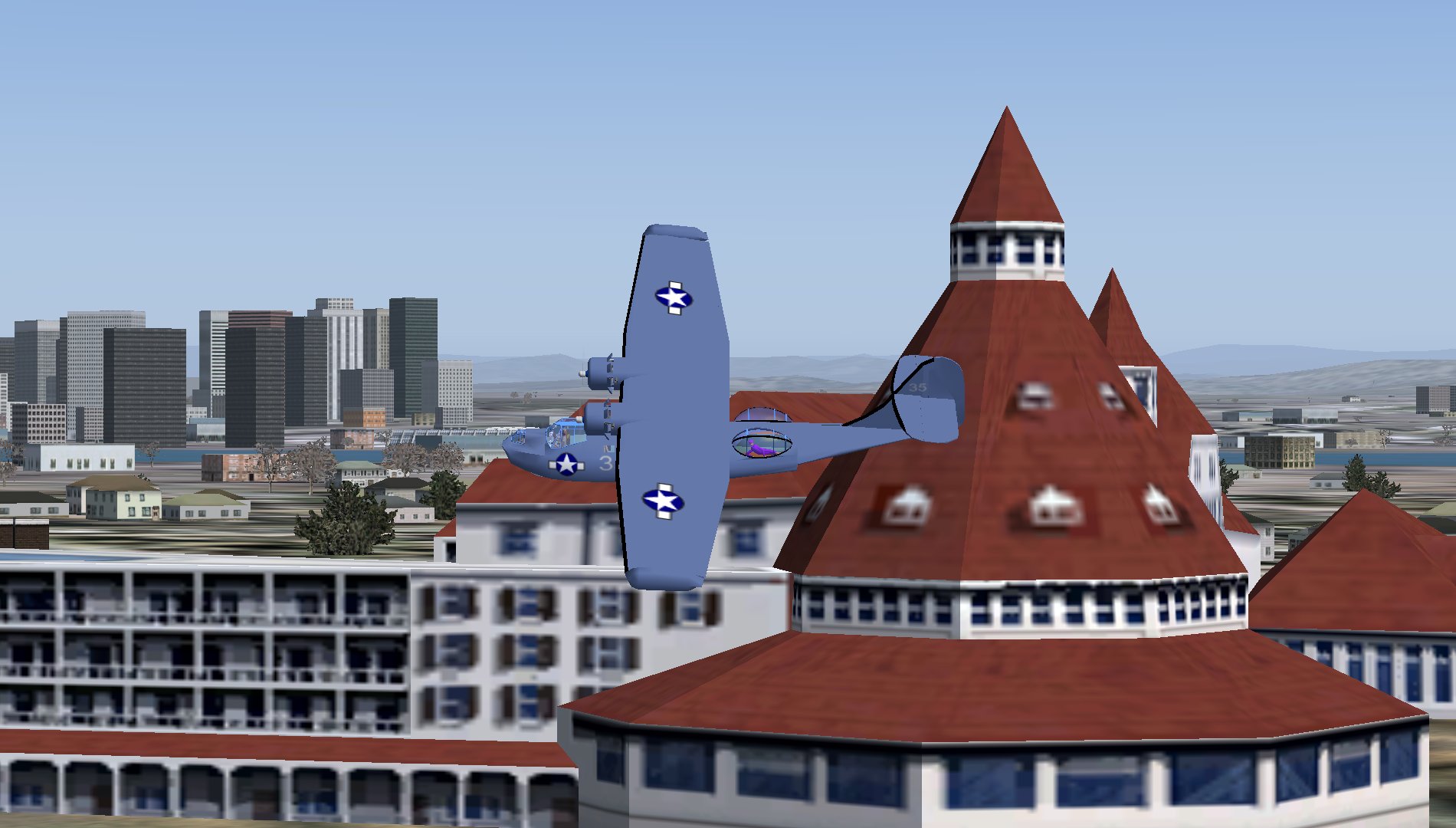
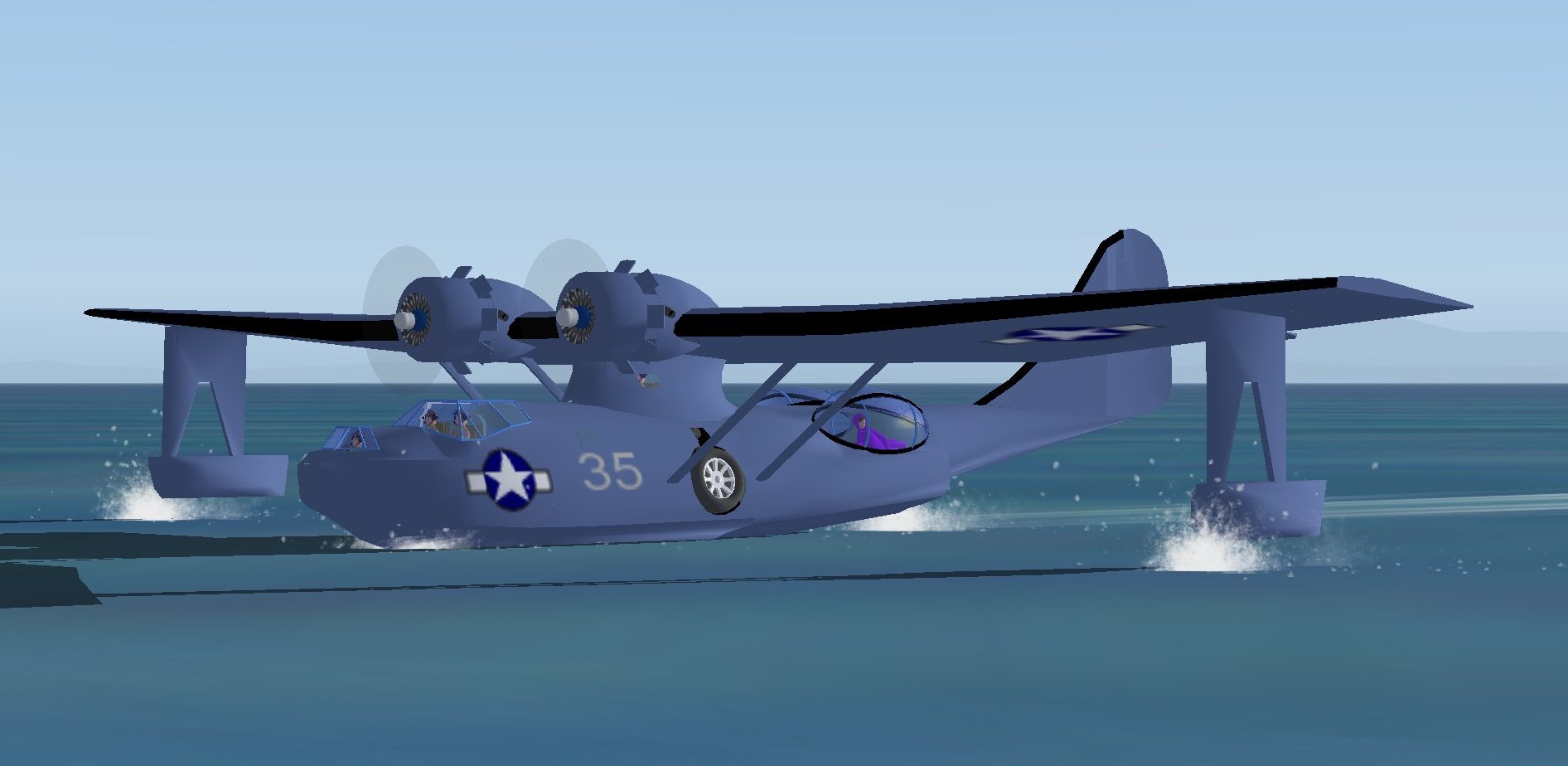
Above, my Catalina buzzes San Diego’s Hotel Coronado. Below, a pilot’s view.
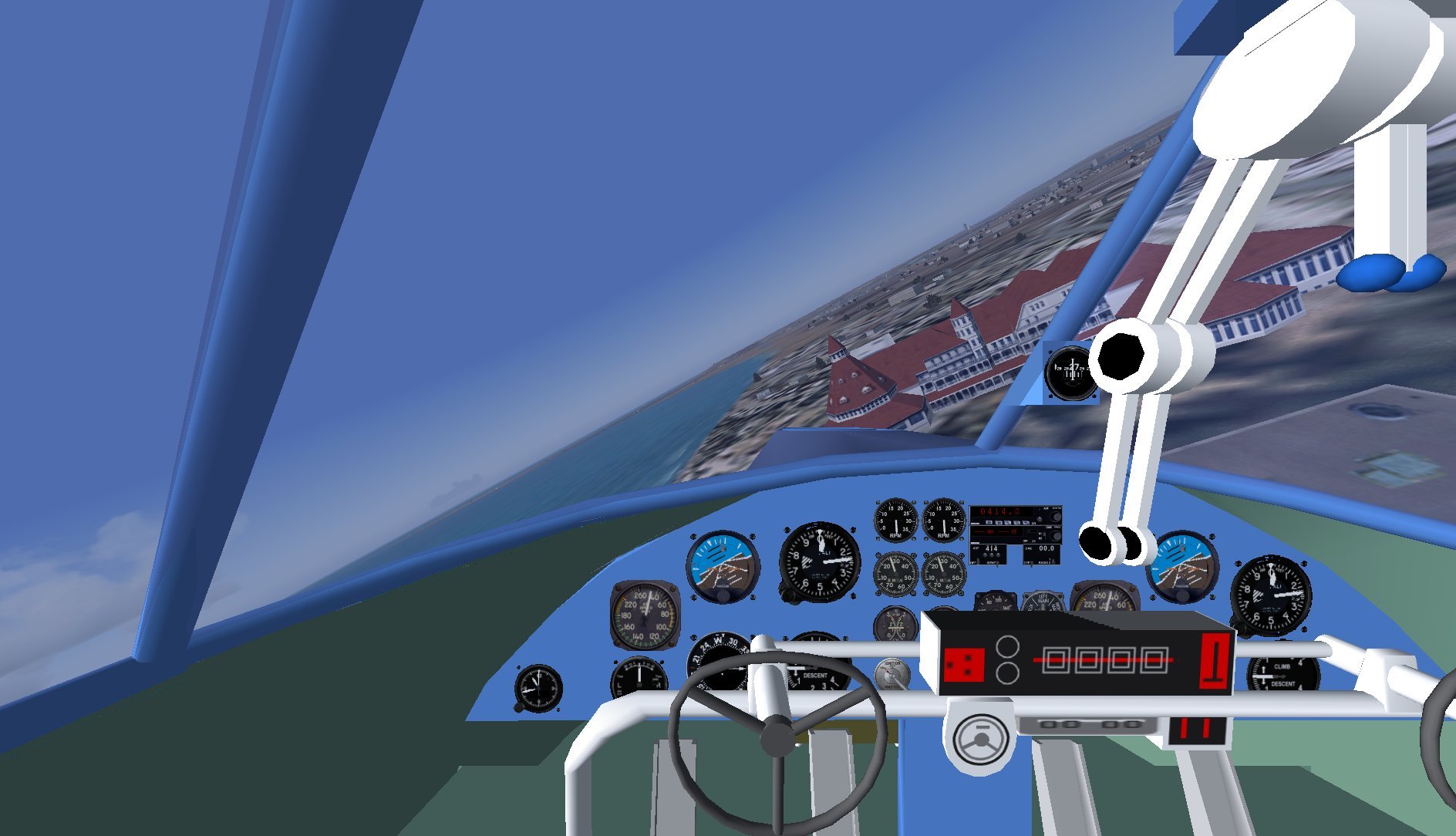
It’s okay to try this at home, kids, as long as you have Microsoft Flight Simulator. ds
© Dennis Simanaitis, SimanaitisSays.com. 2024
 Simanaitis Says
The attempted restoration of a Catalina is a plot feature of “Steelyard Blues,” a film from 1973. Donald Sutherland, Jane Fonda, and Peter Boyle star. Sutherland’s attempts to wreck, in demolition derbies, examples of every car produced since his character’s birth is also a prominent.