
Simanaitis Says
On cars, old, new and future; science & technology; vintage airplanes, computer flight simulation of them; Sherlockiana; our English language; travel; and other stuff
LET’S TALLY UP NOW
THIS ALL STARTED with my recently perusing Mayhew’s London and his tale “Of the Tally Packman.” Mayhew writes of 19th-century London, “The pedlar tallyman is a hawker who supplies his customers with goods, receiving payments by weekly installments, and derives his name from the tally or score he keeps with his customers.”
Hmm… Tallyman. Don’t I know that from somewhere?
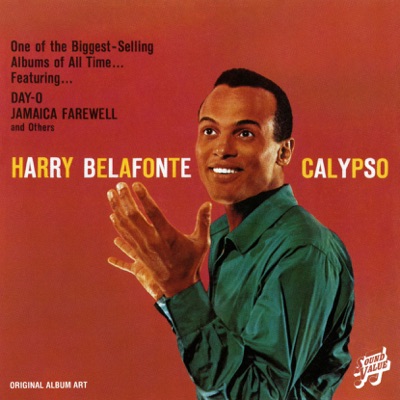
“Come, mister tally man, tally me banana…” Harry Belafonte’s Day-O, 1956, was long before calypso became part of my everyday listening while living on St. Thomas.
And, of course, the job of the tally man was to tally up the number of bananas loaded onto the boat.
Tallying, Possibly Palaeolithic. Wikipedia says, “A tally stick (or simply tally) was an ancient memory aid device used to record and document numbers, quantities and messages. Tally sticks first appear as animal bones carved with notches during the Upper Palaeolithic; a notable example is the Ishango Bone.”

The Ishango Bone on exhibition at the Royal Belgian Institute of Natural Sciences. Image by Joeykentin from Wikipedia.
The Split Tally. “The split tally,” Wikipedia describes, “was a technique which became common in medieval Europe, which was constantly short of money (coins) and predominantly illiterate, in order to record bilateral exchange and debts. A stick (squared hazelwood sticks were most common) was marked with a system of notches and then split lengthwise. This way the two halves both record the same notches and each party to the transaction received one half of the marked stick as proof.”

A Medieval English split tally stick (front and reverse view). The stick is notched and inscribed to record a debt owed to the rural dean of Preston Candover, Hampshire, of a tithe of 20d each on 32 sheep, amounting to a total sum of £2 13s. 4d. Image and information from Winchester City Council Museum via Wikipedia.
The Burning of Parliament, 1834. Tally sticks continued in use in British accounting until the 1800s. Wikipedia recounts that “The Palace of Westminster, the medieval royal palace used as the home of the British Parliament, was largely destroyed by fire on 16 October 1834. The blaze was caused by the burning of small wooden tally sticks which had been used as part of the accounting procedures of the Exchequer until 1826. The sticks were disposed of carelessly in the two furnaces under the House of Lords, which caused a chimney fire in the two flues that ran under the floor of the Lords’ chamber and up through the walls.”

The Palace of Westminster fire, October 1834. Image from Wikipedia.
Mayhew’s Tallyman. “Do you require anything in my way, ma’am?,” Mayhew quotes a “hawking tallyman.” He describes, “Linen drapery—or at least the general routine of linen-draper’s stock, as silk-mercury, hosiery, woolen cloth, &c.—is the most prevalent trade of the tallyman.”
“She doesn’t want perhaps any—she has no money to spare,” say Mayhew. He quotes a tallyman responding, “O, I’m sure your husband cannot object—he will not be so unreasonable; besides, consider the easy mode of payment, you’ll only have to pay 1s. 6d. a week for every pound worth of goods you take; why it’s like nothing….”
Pause here for 21st-century activity with my smart phone’s Calculator: Until as recently as February 15, 1971’s Decimal Day, the wonderfully archaic British monetary system consisted of 12 pence (12d.) to the shilling and 20 shillings (20s.) to the the pound sterling.
There was also the guinea (worth 21s.), but let’s leave this to “What’s That in Guineas?”

Back to the tallyman: “1s. 6d. a week for every pound’s worth of goods” translates into 18d. a week for 240d. of goods, a weekly repayment of 7.5 percent.
Is it an installment purchase or merely a rental fee?
Mayhew is unclear on the duration of these payments, though he does offer a tale of tallyman lament: “However charitably inclined the tallyman may be at first, he soon becomes, I am told, inured to scenes of misery…. when he called upon for the first payment, the woman said she didn’t intend to pay, the goods didn’t suit her, and she would return them. The tallyman expressed his willingness to receive them back, whereupon she presented him a pawnbroker’s duplicate. She pledged them an hour after obtaining them.”

Today’s “Never-Never.” The Brits still have installment purchasing, called “on the never-never.” What with interest and all, it seems you never stop paying and never really own the thing. ds
© Dennis Simanaitis, SimanaitisSays.com, 2024
 Simanaitis Says
Sir Frank Williams, creator/owner of a whole series of F1 teams confused USGP journos when mentioning that he relied on “Never-Never financing for his first teams.
Got that album of Harry’s.Great guy.
John