
Simanaitis Says
On cars, old, new and future; science & technology; vintage airplanes, computer flight simulation of them; Sherlockiana; our English language; travel; and other stuff
GRACE HOPPER FORCED COMPUTERS TO SPEAK ENGLISH, SORTA PART 1
NICE NEWS (A WEBSITE THAT DISTRIBUTES JUST THAT) recently, December 8, 2023, had a fascinating item about computer scientist/Rear Admiral Grace Hopper. Quite appropriately, Hopper was known as “Queen of Code.” But I think of her as a feisty little gal who forced computers to speak English, not to say other human languages. Here in Parts 1 and 2 today and tomorrow are tidbits about her gleaned from Nice News, from YaleNews, February 10, 2017, and from my usual Internet sleuthing.

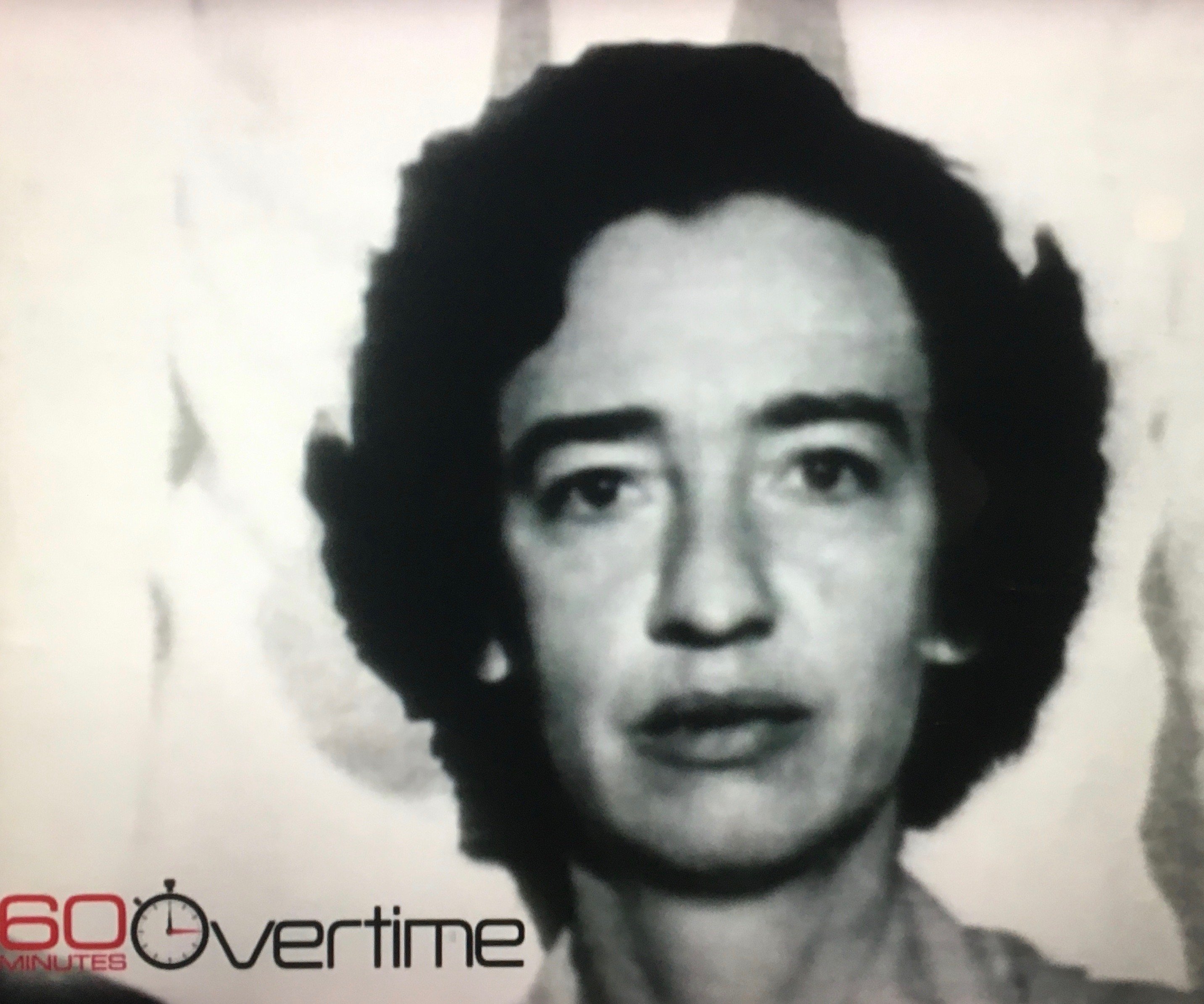
Grace Brewster Hopper née Murray, 1906–1992, American computer scientist, mathematician, educator, and U.S. Navy rear admiral. This and other images from “60 Minutes Rewind,” March 6, 1983.
How Do Alarm Clocks Work? As noted by Wikipedia, “Grace was very curious as a child; this was a lifelong trait. At the age of seven, she decided to determine how an alarm clock worked and dismantled seven alarm clocks before her mother realized what she was doing (she was then limited to one clock).”
Academe Attraction. Wikipedia continues, “Grace was initially rejected for early admission to Vassar College at age 16 (because her test scores in Latin were too low), but she was admitted the following year. She graduated Phi Beta Kappa from Vassar in 1928 with a bachelor’s degree in mathematics and physics and earned her master’s degree at Yale University in 1930.” Hopper began teaching mathematics at Vassar in 1931; a Ph.D. in mathematics followed in 1934 from Yale.
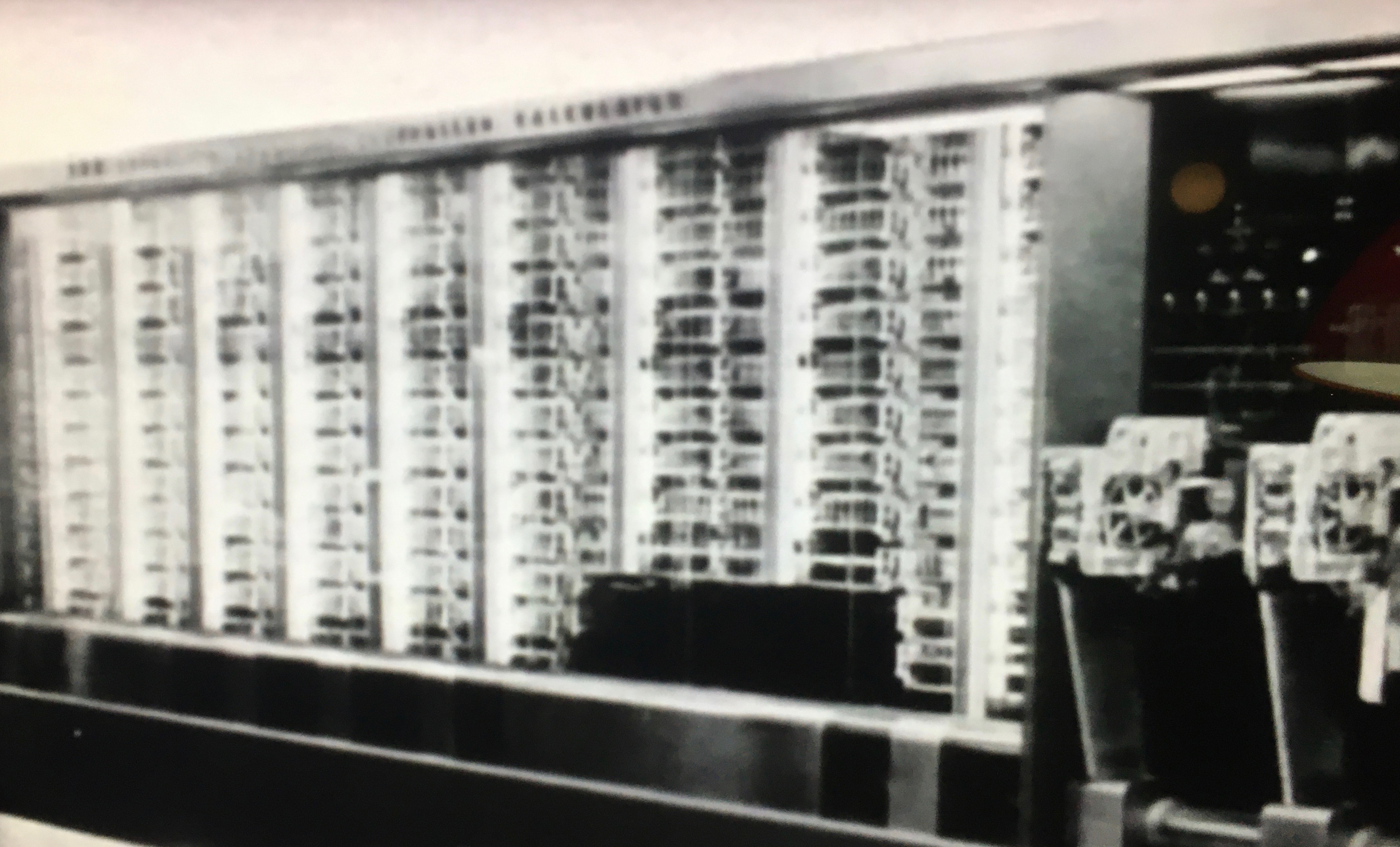
Grace Hopper was part of the Harvard team developing the Marks I, II, and III general-purpose computers.
YaleNews recounted, “Hopper came of age at a time of unusual opportunity for women. A relatively high number of women were receiving doctorates in the 1920s and 1930s—numbers that would not be matched again until the 1980s. World War II also created opportunities for women to enter the workforce in greater numbers. Nonetheless, Hopper’s success in a male-dominated field and in male-dominated organizations, including the U.S. Navy, was exceptional.”
The Navy, But Too Old and Too Small…. Wikipedia says, “Hopper tried to commission in the Navy early in World War II, however she was turned down. At age 34, she was too old to enlist and her weight-to-height ratio was too low. She was also denied on the basis that her job as a mathematician and mathematics professor at Vassar College was valuable to the war effort.”
“During the war in 1943,” Wikipedia continues, “Hopper obtained a leave of absence from Vassar and was sworn into the United States Navy Reserve…. She had to get an exemption to commission; she was 15 pounds (6.8 kg) below the Navy minimum weight of 120 pounds (54 kg).”
Showing her Prowess. Hopper served at Harvard on the programming staff of the IBM Automatic Sequence Controlled Calculator, the Mark I. This machine was one of the earliest general-purpose electromechanical computers.
Nice News describes, “In addition, Hopper was involved in the creation of the first all-electronic digital computer, UNIVAC I, and she invented the first computer compiler (a program which was able to translate written instructions into codes that computers could utilize). She would furthermore develop a programming solution known as Flow-Matic, the first programming language to use English words as commands rather than mathematical symbols.”
As Hopper explained in a 1980 interview, “What I was after in beginning English language [programming] was to bring another whole group of people able to use the computer easily…. I kept calling for more user-friendly languages. Most of the stuff we get from academicians, computer science people, is in no way adapted to people.”

Hopper demonstrates communication with UNIVAC I (the Universal Automatic Computer I).
When Hopper recommended the development of a new programming language that would use entirely English words, she “was told very quickly that [she] couldn’t do this because computers didn’t understand English.” Still, she persisted. “It’s much easier for most people to write an English statement than it is to use symbols,” she explained. “So I decided data processors ought to be able to write their programs in English, and the computers would translate them into machine code.”
Tomorrow in Part 2, we’ll learn how successful she was in achieving this. ds
© Dennis Simanaitis, SimanaitisSays.com, 2023
 Simanaitis Says