
Simanaitis Says
On cars, old, new and future; science & technology; vintage airplanes, computer flight simulation of them; Sherlockiana; our English language; travel; and other stuff
MY MY FAIR LADY PART 2
YESTERDAY WE SAW Pygmalion evolve from Greek legend to George Bernard Shaw play to Leslie Howard/Wendy Hiller movie to Broadway’s My Fair Lady and its Hollywood flick to my entertaining a classroom of kids with my inadvertent lip-synching. Today in Part 2, Internet Movie Data base’s “Trivia” offers an extensive collection of My Fair Lady tidbits. Here are several, in no particular order. All quoted material is from IMDb.

A Cinematographic Tie. “Cinematographer Harry Stradling Sr., who shot this movie, also shot Pygmalion (1938). Both films are based on George Bernard Shaw’s 1913 play.”
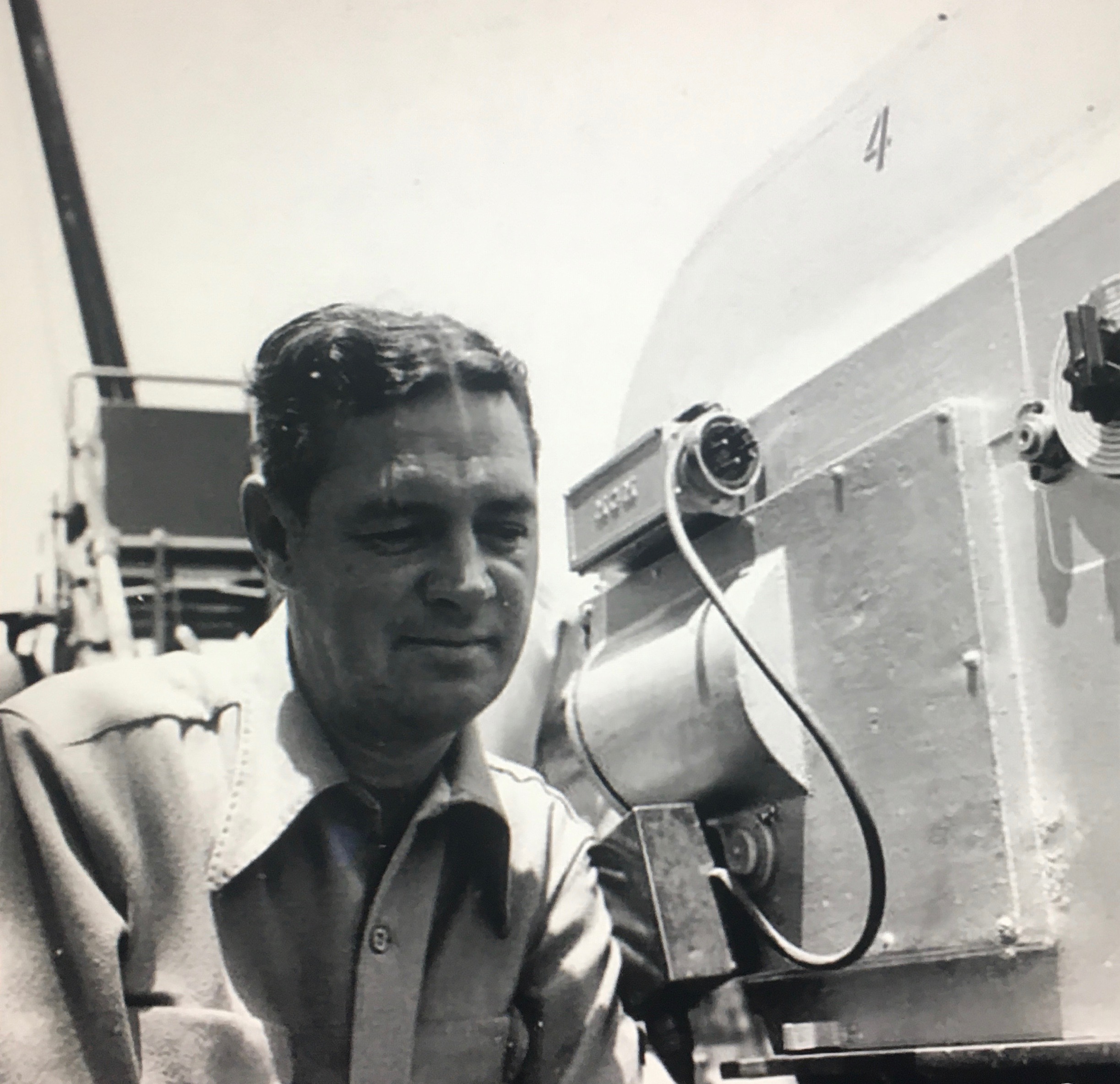
Henry Stradling Sr. This and other images from IMDb.
Dubbing. “Most of Audrey Hepburn‘s singing was dubbed by Marni Nixon, despite Hepburn’s lengthy vocal preparation for the role. A dubber was required because Eliza Doolittle’s songs were not transposed down to accommodate Hepburn’s “low-mezzo voice” (as Nixon referred to it), the way Guenevere’s songs were transposed down to accommodate Vanessa Redgrave‘s limited vocal range in Camelot (1967).”

“Hepburn sang most of ‘Just You Wait,’ as well as the reprise to the song, showcasing her ability to sing perfectly at ease when the songs were set in a reasonable tessitura. Hepburn also sang one or two lines, elsewhere in the score, such as “Sleep, sleep, I couldn’t sleep tonight!” in ‘I Could Have Danced All Night.’ Thus, the claim that Nixon dubbed all of Hepburn’s singing (as asserted by such people as syndicated columnist Hedda Hopper) is false.”
Tricks of the Trade. When Eliza Doolittle demands to see what Professor Henry Higgins has been writing about her, in the beginning of the movie, he shows her his notebook, which she cannot read. The notation in the notebook is ‘Visible Speech,’ a phonetic notation invented by Alexander Melville Bell (father of Alexander Graham Bell) and extended and used heavily by Henry Sweet, a real-life phonetician and apparently the basis of the Professor Henry Higgins character.”
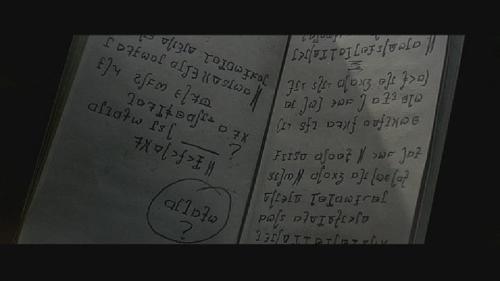
Image from Superlinguo.
“In the scene where Professor Henry Higgins knocks a record player that is playing a recording of vowel sounds, the voice on the record is that of Dr. Peter Ladefoged, a linguist who worked as a consultant on this movie.”
“The ‘marbles’ Professor Henry Higgins (Sir Rex Harrison) puts in Eliza Doolittle’s (Audrey Hepburn‘s) mouth are actually grapes.”
Cary Grant as Higgins? When asked why he turned down the role of Professor Henry Higgins, Cary Grant remarked that his original manner of speaking was much closer to Eliza Doolittle.”

“Grant told producer Jack L. Warner that not only would he not play Professor Henry Higgins, but if Sir Rex Harrison was not cast in the role, he wouldn’t even go see the movie.”
Audrey’s Natural Grace. “Sir Rex Harrison (Professor Henry Higgins) was very disappointed when Audrey Hepburn was cast as Eliza Doolittle, as he felt she was badly miscast, and he had hoped to work with Dame Julie Andrews. He told an interviewer, ‘Eliza Doolittle is supposed to be ill at ease in European ballrooms. Bloody Audrey has never spent a day in her life out of European ballrooms.’ “
“For the early part of Eliza’s transformation, Cecil Beaton insisted that Audrey Hepburn wear weights around her lower legs so that she would keep some of the flower girl’s early gawkiness.”

“Most costumers and make-up artists had to camouflage Audrey Hepburn‘s square jaw, but for her early scenes, production designer Cecil Beaton actually emphasized it by putting her in a straw hat. That allowed for a more dramatic transformation, accentuated by the upswept hairdos he designed for her later in the movie to show off her bone structure.”
“When Audrey Hepburn entered the set for the first time in Eliza’s gown for the ball, she was so beautiful the crew and the rest of the cast stood silently gaping at her, then broke out with applause and cheers.”

Image from It’s All Frosting…
I cheered too. Thanks, IMDb. ds
© Dennis Simanaitis, SimanaitisSays.com, 2023
 Simanaitis Says