
Simanaitis Says
On cars, old, new and future; science & technology; vintage airplanes, computer flight simulation of them; Sherlockiana; our English language; travel; and other stuff
MY MY FAIR LADY PART 1
I’M ENJOYING MY FAIR LADY on Turner Classic Movies in multiple viewings: Conveniently enough, the first one coincided with the closing notes of “Wouldn’t It Be Loverly,” the second one with “I Could Have Danced All Night,” and the third with “Get Me To The Church On Time.”
Its story and I go way back: the 1938 British flick Pygmalion, the long-running Broadway musical opening in 1956, and my high school years in the early 1960s. Here in Parts 1 and 2 today and tomorrow are tidbits gleaned from a variety of sources.
Pygmalion. George Bernard Shaw’s 1913 play Pygmalion is based on the Greek legend of a sculptor who falls in love with his creation.
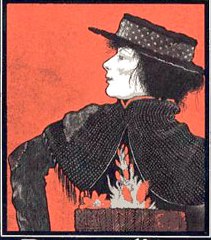
Mrs. Patrick Campbell portrayed Eliza Doolittle in Shaw’s play. Image from the 1913 production from Wikipedia.
The 1938 movie Pygmalion, seen occasionally on TCM, starred Leslie Howard as Henry Higgins and Wendy Hiller as Eliza Doolittle. To my eyes, it has aged particularly well.

Broadway’s My Fair Lady. The My Fair Lady musical, Wikipedia recounts, has “a book and lyrics by Alan Jay Lerner and music by Frederick Loewe…. The musical’s 1956 Broadway production was a notable critical and popular success, winning six Tony Awards, including Best Musical. It set a record for the longest run of any musical on Broadway up to that time and was followed by a hit London production.”

Playbill from the Mark Hellinger Theatre, June 1956, from Wikipedia.
Successes in Other Media. Album and film rights to this Broadway hit were complex. As noted here at SimanaitisSays, CBS’s Goddard Lieberson “provided the $375,000 needed to produce the stage production of My Fair Lady, considered to be among the greatest shows ever, in exchange for the rights to release on Columbia the original cast recording.” The Warner Bros. film wasn’t released until 1964, some two years after My Fair Lady‘s record-setting Broadway run. Wikipedia notes of the film, “A critical and commercial success, it became the highest-grossing film of 1964 and won eight Academy Awards, including Best Picture, Best Director and Best Actor.

Radio Room Highjinks. The musical had its Original Cast album (indeed two: one for Broadway, the other for the 1958 London West End production) which plays a role of my tale. As noted here at SimanaitisSays.com, Miss Doughtery was “our high school drama teacher around whom we formed a clique hanging out in the school’s Radio Room. Among other perks, this gave an alternative to Study Hall, one in which we could listen to records while ‘studying.’ ” One of the most played was the Original Broadway Cast My Fair Lady, which I came to learn song-by-song, verse-by-verse.

Lip-synching. One day during one of her English lessons, Miss Doughtery was discussing accents and asked me (in the “Study Hall” radio room) to cue up Henry Higgins’ “Why Can’t The English Learn to Speak?” and wire it into her adjacent classroom.
Of course, I did so. And, without thinking (typical of me in high school), I sang along with Rex sotto-voce.
I didn’t realize until the class erupted in laughter that I was doing a well-nigh perfect lip-synch. Miss Doughtery, bless her heart, was amused.
Poetic License. Miss Dougherty also taught us the poetic license of Broadway show rhyming: Higgins sings, “By rights she should be taken out and hung/ For the cold-blooded murder of the English tongue!” Agg. “Pictures are hung,” she’d say most properly, “people are hanged,” but whatever rhymes with that?
Tomorrow in Part 2, IMBd provides a wealth of other My Fair Lady trivia. ds
© Dennis Simanaitis, SimanaitisSays.com, 2023
 Simanaitis Says
To wander down a related path, I always wonder how Leslie Howard would have fared among the invasion of Brit leading men in post war Hollywood if he had not been a victim of the conflict.
He seemed to typify the gentry better than the Shakesperians or the comedians.
Wonderful. Yes, the Wendy Hiller and Leslie Howard version holds up wondrously. Howard was good in everything he ever did, secured the role in the Petrified Forest that made his friend Humphrey Bogart a star, died enroute to a mission for the Allies; this when John Wayne spent the war shooting cap guns on a Burbank sound stage, later with Hedda Hopper destroying careers, emulating what we thought vanquished in 1945.
We just watched the Rex Harrison/Audrey Hepburn 1964 version and were enchanted, as we were with another gem of charm and complexity, 1948’s The Red Shoes. My mother wore out the Rex Harrison, Stanley Holloway, Julie Andrews album, my preschool little sis wandering around the house, loudly intoning “O w w o u l d n ‘ t it be loverly.”