
Simanaitis Says
On cars, old, new and future; science & technology; vintage airplanes, computer flight simulation of them; Sherlockiana; our English language; travel; and other stuff
MASTERING THE ART OF MYTH COOKING
ANYA VON BREMZEN HAS WRITTEN another interesting new cookbook. Or so Irina Dumitrescu writes in “How Do Certain Foods Become National Dishes?,” The New York Times Book Review, June 15, 2023.
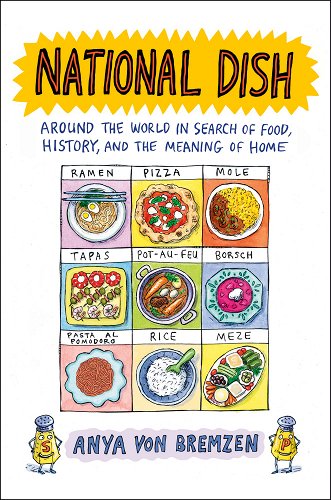
I say “another” because, as noted by IndieBound.org, “Anya von Bremzen is one of the most accomplished food writers of her generation: the winner of three James Beard awards; … the author of six acclaimed cookbooks,…. Mastering the Art of Soviet Cooking, has been translated into nineteen languages.”
I love the title of this one, what Irina Dumitrescu calls “a memoir of living, eating, and rationing in the U.S.S.R.”
Here are tidbits of three “national” foods, pizza, ramen, and rice, gleaned from Dumitrescu’s review of Von Bremzen’s book together with my usual Internet sleuthing.
Pizza Margherita. It’s a familiar legend: Dumitrescu recounts, “In 1889, Naples receives a visit from King Umberto and his beautiful, charismatic queen, Margherita. The situation is tense. Italian unification has not been good for the southern economy, and is seen as a Piedmontese scheme. The royal couple from the north need to sell Naples on the idea of the nation. Margherita invites a local chef, Raffaele Esposito, to bring her pizza, a cheap street food that keeps this poor city going. He invents a version with tomatoes, mozzarella and basil, the colors of the new Italian flag. The queen loves this patriotic pie, and gives it her name.”
What a warm tale. And, according to Von Bremzen’s book, a lovely myth: “Neapolitans had been eating that combination of toppings for ages, and there is no evidence in state papers of a royal pizza tasting.”
Indeed, Dumitrescu writes, “Pizza margherita was a clever marketing idea cooked up by an enterprising pizzaiolo in the 1930s, complete with a fake letter from the queen to hang in his restaurant. The idea of the one authentic pizza margherita, which only Neapolitan chefs knew how to make properly, became even more useful as a symbol of Italy in the late 20th century, when globalization was threatening local cuisines. ‘Authenticity,’ muses von Bremzen, is ‘such a monster marketing tool.’ ”

Ramen Noodles. “The myth busting doesn’t stop there,” Dumitrescu says. “However gourmet it is now, ramen, like pizza, has roots in necessity. Originally a Chinese import to Japan, the dish owes its popularity to the United States’ occupation of Japan after World War II. Gen. Douglas MacArthur, worried that famine could push Japan toward communism, had excess American wheat sent in.”
What’s more, Dumitrescu recounts, “The Japanese Health Ministry encouraged the populace to replace rice with wheat, warning parents that rice could doom their children to ‘a life of idiocy.’ Momofuku Ando, the inventor of instant ramen, received funding as part of this effort.”
Even Rice…. On this continuing theme, Dumitrescu writes, “Von Bremzen decides to explore the art of preparing white rice, which ‘has zero millennial-hipster glamour’ and is a powerful symbol of Japanese culture. Even that, it turns out, wasn’t always as central to the Japanese table, which used to include more barley and beans. In the late-19th-century Meiji era, government authorities promoted rice as part of their policy of nostalgic nation building.”
Gee, I can’t wait until my copy arrives and I look up Puttenesca. I wonder if we’ve been giving these ladies a bad name. ds
© Dennis Simanaitis, SimanaitisSays.com, 2023
 Simanaitis Says
Yes, Dennis, keep us posted about the Puttanesca. I’m no cook, but I like to make it once in a while.
I recall hearing about some kind of poll asking ‘what was the best invention of the twentieth century?’, e.g. the airplane, televisions, or the cell phone. The Japanese reportedly said it was instant ramen.
This is interesting to us gourmands as well as history buffs. Reality always stranger, more rewarding than myth. BTW, we first bring rice to a boil and rinse it before cooking to remove arsenic.
Thank you!
Myths in cooking. A cool subject! I’d always doubted the Margherita pizza story. Irina Dumitrescu might know something about Soviet cooking herself (Romania), but she looks too young from her photo.
“Top Raman” was a staple of this poor engineering student, along with many others. I had no idea of its provenance!
TIL here!