
Simanaitis Says
On cars, old, new and future; science & technology; vintage airplanes, computer flight simulation of them; Sherlockiana; our English language; travel; and other stuff
CRESCENT CITY OPERATIC TIDBITS
NEW ORLEANS MAY BE BEST KNOWN FOR JAZZ, but Henry Stewart’s “Operapedia,” Opera News, August 2023, offers “an easy stroll through the Crescent City’s opera landscape.” Here are tidbits gleaned from his article and from my usual Internet sleuthing.

Early Opera Houses. Stewart observes, “Though under Spanish rule, the culturally French citizens of the city likely heard their first opera in 1796—Grétry’s one-act Silvain.”
To offer a perspective, jamestownohiooperahouse.com says that “Opera houses in the United States have a long history dating back to the pre-Revolutionary War era. The Playhouse in Williamsburg, Virginia, is commonly believed to be the first ‘opera house’ in America. Although date of construction is unknown, most scholars of opera and theater history assign a date of 1722.”
Burning the House(s) Down. Like so many civic structures of wood in the 19th century, New Orleans opera houses suffered from fire. The Theatre d’Orleans, its first house with a resident company, burned down for the second and final time in 1866.

The French Opera House which followed, Stewart noted, having given “its first performance in December 1859, soon became a ‘lyric temple… the crowning glory of New Orleans’ operatic history.…’ The house hosted the U.S. premieres of Samson et Dalila [1893] and Cendrillon [1902].” Alas, the place burned down in 1919.
Renowned Personages. Stewart cites hometown celebrities ranging from jazz stars Sidney Bechet and Louis Armstrong to cross-cultural Wynton Marsalis and Terence Blanchard (now an opera composer: Champion and Fire Shut Up in My Bones, both performed by the Metropolitan Opera).
What’s more, celebrated Met mezzo Shirley Verrett, ” Stewart observes, “was born and raised in New Orleans until she was about ten.”

Stewart recounts, “Her family were strict Seventh-Day Adventists, and her mother forbade the children to eat anywhere but home. ‘Fearing New Orleans’ old occult tradition, she never let anyone other than a close relative cook in her house, because they might put something in her cooking pots,’ Verrett writes.”
Puccini’s Geographic Find. Stewart writes, “The last act of Puccini’s Manon Lescaut is set in ‘a desert land on the edge of Nuova Orléans,’ wherever that may be.”

A Google Maps search for such a geographic feature results in an A.I. hallucination of desserts in the Crescent City.
Marlene’s Opera Attendance. Stewart describes, “Réne Clair’s 1941 Universal film The Flame of New Orleans stars Marlene Dietrich as an adventuress freshly arrived in the city and hunting for a rich husband—at the opera.”
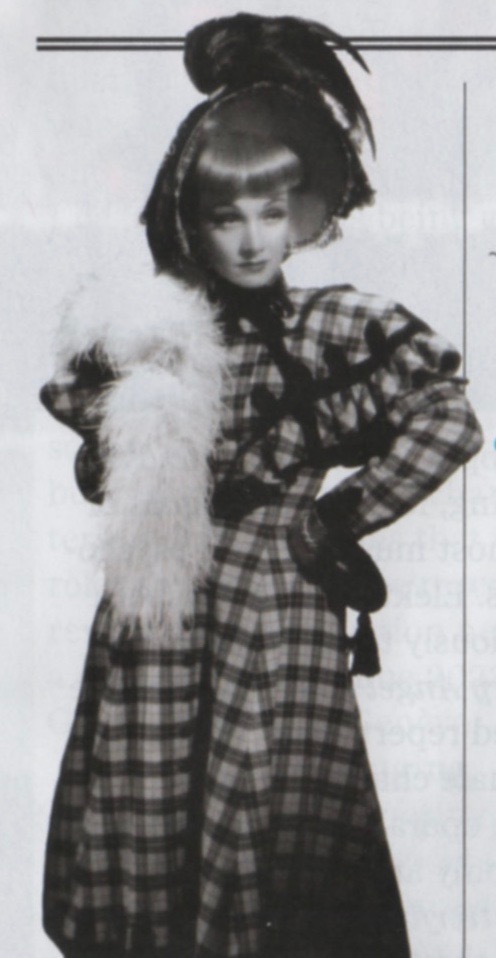
Wikipedia‘s description of this comedy offers oddities every bit as odd as Puccini’s desert: a carriage accident with a monkey, selected fake faintings including one at the opera, and Marlene doubling as a illegitimate cousin from St. Petersburg.

All ends happily, with yet another fake fainting. ds
© Dennis Simanaitis, SimanaitisSays.com, 2023
 Simanaitis Says
I’d like to watch this one to see Andy Devine if nothing else. There’s a thought for you, Dr. Simanaitis; Andy Devine performing in an opera. That voice — I can hear it now.
Ha. I noted his name in the cast. I suspect he may not be in the opera portion….