
Simanaitis Says
On cars, old, new and future; science & technology; vintage airplanes, computer flight simulation of them; Sherlockiana; our English language; travel; and other stuff
LISTEN UP! BUT TO WHAT? AND HOW?
THERE’S CONTROVERSY GALORE about old fashioned AM radio these days. At first thought, I would have said this is akin to arguing the merits of floppy discs or BetaMax or The Troggs.
But, no. Automotive News, June 11, 2023, editorializes “Congress is mulling the AM for Every Vehicle Act, which, if enacted as written, would force automakers to keep AM broadcast radio in new vehicles. This bill should be defeated or vetoed.” The industry journal writes that AM radio “is a ploy to protect outdated tech.”
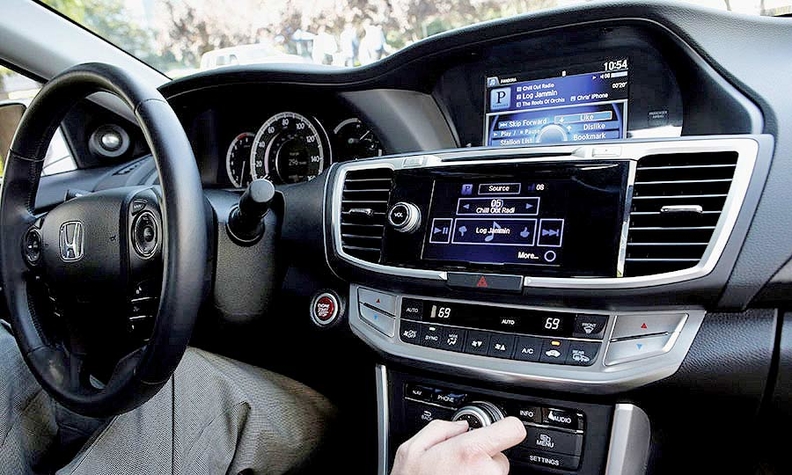
Well, this got me thinking about whether I care either way. (Recall my relative Luddite status.) The Crosstour has traditional AM/FM, plus SiriusXM satellite, plus a CD player (“What’s a CD, Grandpa?”). My home-dwelling entertainment is similar, with added DirecTV for the telly. (This last device spends most of its time with Turner Classic Movies from the 30s, British TV mysteries, and Formula 1 races.)
In anticipation of a query, no, I do not stream per se. The edgiest I get is using my iPhone for extended SiriusXM listening (my home SiriusXM receiver is ancient; the Honda’s receiver dates from 2012).
“640 and 1240 on Your AM Dial.” And the last time I even thought of Conelrad (Control of Electromagnetic Radiation) was “Ah, Those ‘Good Old Days’….” here at SimanaitisSays.
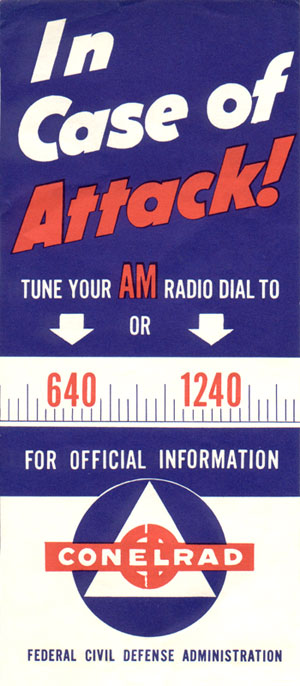
This security aspect, though, is part of the AM controversy at the moment. As noted by the Portland Press Herald, May 27, 2023, “Don’t Touch That Dial! Or Why New Cars Need AM Radio.” The newspaper says, “Federal legislation to make sure that new vehicles continue to include AM radio, free of charge, is critical for public safety, particularly in rural states such as Maine.”

The newspaper continues, “Unlike internet-based cellular technologies, which are all highly vulnerable to failure, given the increasing number of adverse weather events, AM always works. The increasing number and severity of storms easily destroy cellular and other wireless internet services owing to their complexity and need for many antennas, which reach only short distances. And many parts of Maine—and the entire United States—do not have broadband wireless internet available to drivers.”
Editorializing. “Why,” the Portland Press Herald asks, “would automotive manufacturers even get the idea to cancel AM radio? It turns out that manufacturers have financial relationships with other content providers that provide carmakers a revenue stream, such as Sirius XM, streaming internet and other mobile-based technologies. Why provide AM radio—or, for that matter, FM radio—for free when there is money to be made? The bill to mandate that AM radios stay in cars is co-sponsored by Sen. Ed Markey, D-Mass., and it is critical it passes.”
But What About EVs? Automotive News, June 5, 2023, writes, “Automakers say the EV motor system interferes with the AM radio signal, but legislators say AM radio remains crucial for emergency alerts.”

Automotive News amplifies (no pun intended…) on the AM/EV squabble: It’s “because the technology behind the battery-powered motor requires an electromagnetic field, said Jan Becker, founder and CEO of Apex.AI, which designs mobility software. The inverter in the system switches the current from one set of coils to another, changing the electromagnetic field constantly, which turns the motor.”
However, “AM radio uses the same process to modulate the amplitude of radio waves…. ‘You now have two completely separate systems—one is the battery EV motor system; the other one is the radio and the receiver system—that use the exact same physical principle,’ Becker said.”
Automotive News observes, “Combustion engines also create interference but on a significantly smaller scale. Automakers have added parts to both powertrains to suppress the interference, forcing them to compromise on the efficiency of the motor system.”
I recall years ago that my ’58 English Ford Consul’s radio (AM only, in those days) would buzz like an audible tach when fitted with ill-suited sparkplugs.
“For battery-electric motors,” Automotive News says, “the interference is stronger and requires more suppression. That suppression reduces the motor system’s efficiency by a fraction of a percent, said Becker, but ‘still, it’s a design compromise.’ ”
The squabble ain’t over yet. In the meantime, what’s your view on AM? Streaming? CDs? Pre-Code 30s flicks? Just askin’. ds
© Dennis Simanaitis, SimanaitisSays.com, 2023
 Simanaitis Says
I’d be in favour of keeping the AM band, because in more remote regions FM signals don’t have much range, and Sirius doesn’t do local service, so AM could be critical.
Also I am getting sick and tired of all the subscription services that have become so popular as a money grab.
The item above in the Portland Press Herald gives us the reason something benign as AM radio under attack. Another case of enormous inflated coin crushing a remaining tendril of charm.
When radio started to be seen in more cars in the early ’30s, there was concern it would be unsafe, distracting drivers. But we’re seeing vastly worse today, including giant dashboard touch screens demanding viewing while a radio and all else on instrument panels of most cars until recent years controlled without a glance.
Of course, some of us vintage gearheads like to drive to escape media, commune with our cars, listen to the engine, think, relax. But it’s nice to have the original radio in my nearly 77-year-old car if only because the local CBS affiliate broadcasts traffic updates every 10 minutes, vital when navigating an overpopulated realm. The 1952-on Bentley Continental discouraged radio in the interest of further weight paring.
Saw an ad for some late model used cars in the pages of a 1937 Chicago newspaper, mentioning that one of them came with “furnace and organ (heater and radio).”
Meanwhile, since you asked. Oh, for a time machine or wormhole to go back and quash the demented Hays Office.
I agree with sabresoftware; the avalanche of subscription schemes for everything pushed me away from satellite radio.
I listen to FM in town, and listen to the music collection stored on my smartphone* when I’m away. Streaming services on the road won’t work because the cell service away from interstates in western rural areas is nonexistent.
In case of a disaster, electrical power, and thus cell signals and internet, would be at risk. Landline phones are becoming rare. Again, like sabresoftware indicated, AM still makes sense, even if (like a fire extinguisher) we almost never use it.
Why doesn’t the electric motor/generator interfere with AM reception in my hybrid — was the efficiency compromised?
* I have almost sixteen days worth of music stored. If they ever make a smartphone with half a terabyte of storage, I could stuff all my TV show and movie purchases in there, too.
The hard drive in my car that is used for the Nav system has lots of spare space that I can use to download music (including album cover artwork) for playback on my car stereo system. While I can also playback via the iPhone, it works better when used from the hard drive. Getting it there requires loading it onto a micro SD card on my Mac and then transferring to the hard drive.
The Nav system is useless. It is way outdated, and an update would cost $500 bucks, which I have no intention paying for. Instead I can set up a set of travel directions in the Apple Maps app on my iPhone, and then I get directions on my Apple Watch, which are basically turn indications by clicking sounds as I approach a turn point. A quick glance at the watch lets me know if it’s left or right. As the Watch is up by the steering wheel it is no different than glancing at the navigation display in the instrument cluster.
Radios of any sort were options when fear of nuclear war was greatest and people knew what Conelrad meant. Building codes don’t require radios in homes where people spend most of their time, so mandatory AM based on a public safety argument seems a bit of a stretch.
Another use of AM is the ubiquitous short-range highway information stations, often used to warn of construction sites, emergency closures, and the like. Yes, much of that can also be found through subscription and phone-based sources. The radio, however, can be set up and moved quickly, and (with AM) can be accessed with a couple of button-presses. I don’t normally listen to AM, but I do have the typical information frequencies in the quick-access menu (or, in my older cars, on a button).
And AM is not precluded in EVs. It’s present and functional in my 2017 Bolt, and has been around for ages in hybrids like our Prius. What the carmakers are really trying to do is 1) save 10c on the part (AM is a single chip, usually), and 2) as the article notes, drive more traffic to subscription services.