
Simanaitis Says
On cars, old, new and future; science & technology; vintage airplanes, computer flight simulation of them; Sherlockiana; our English language; travel; and other stuff
LIVABLE, LIVABLE COPENHAGEN PART 1
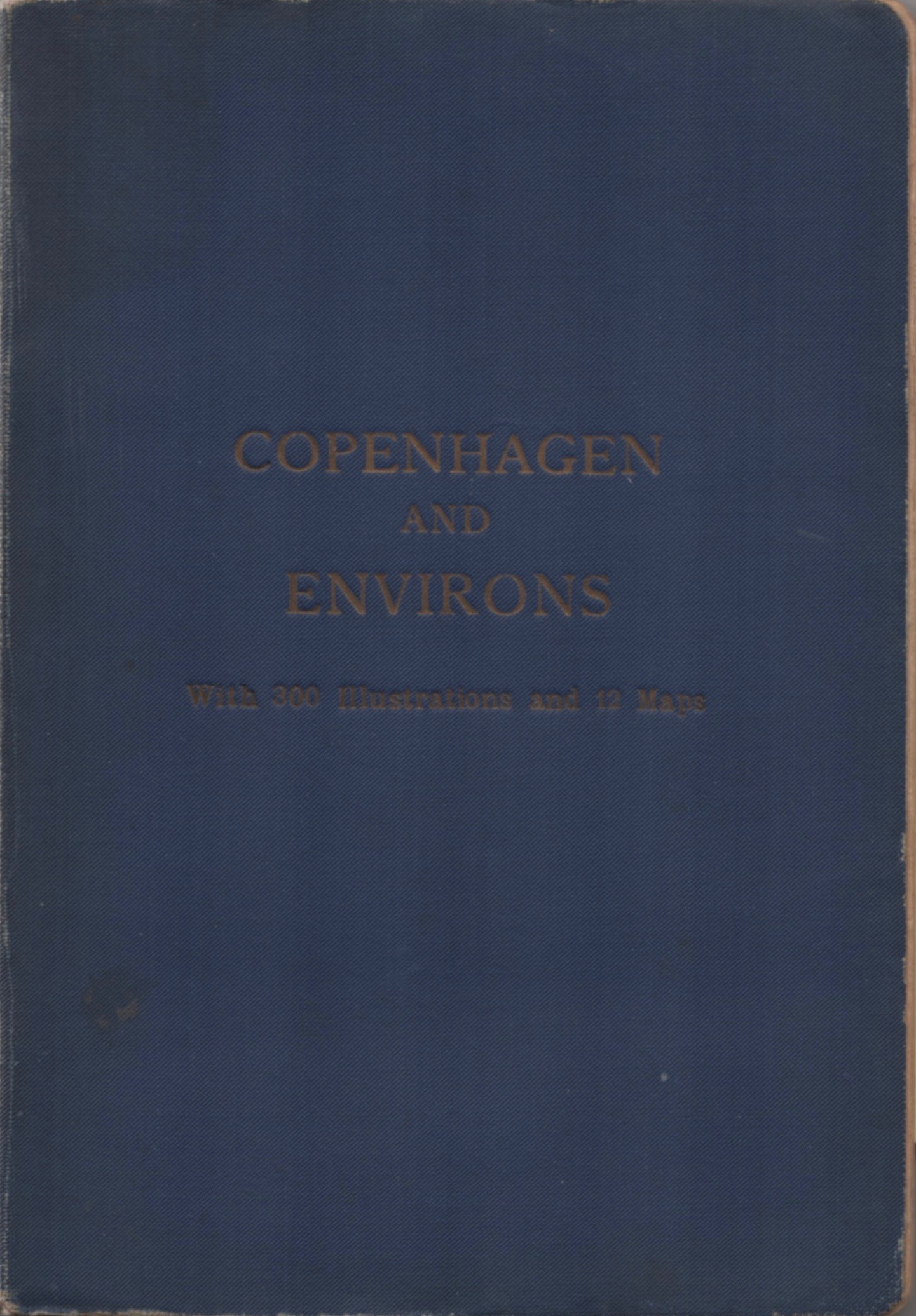
IN FOLLOWING UP WITH the Economic Intelligence Unit’s analysis of the world’s most livable cities, here in Parts 1 and 2 today and tomorrow are tidbits about No. 2 on its 2023 list: Copenhagen, Denmark. As my primary source, I offer Copehagen and Environs, 1925, together with my usual Internet sleuthing.
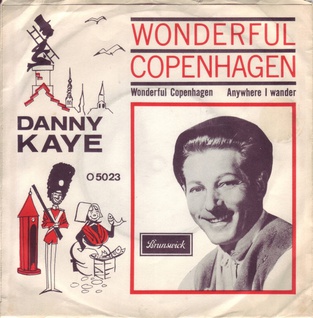
Pronunciation. “Wonderful, wonderful Copenhagen” Danny Kaye sang composer Frank Leosser’s hit song in 1953. Ivar Hiort might well have agreed with its sentiments (“Friendly old girl of a town”), but not Kaye’s pronunciation. The Danes call their city kopm-HAVN and prefer KOH-pen-HAY-gen to Kaye’s seemingly Germanic KOH-pen-HAH-gen.
Pass the Word. Hiort wrote in 1925, “It is hoped that, after return home, the book will be able to recall all good reminiscences of a visit to Copenhagen and thereby cause, that our foreign guests, each in his circle, will draw attention to our city.”
I’ve visited this Danish city several times and, sure enough, Copenhagen and its Environs, 1925, confirms my opinion: Things cited in old guidebooks—and still extant—continue to be significant. They also suggest how Copenhagen earned its high ranking among today’s most livable cities in the world.
Transportation. “The net of air-routes,” Hiort observed in 1925, “touching Copenhagen during the last years has been highly developed, so that the city at present has air-lines towards all four corners of the world.”
“Where are you going?,” Hiort said. “To Amsterdam, Brüssels, Paris or London? To these places are direct air-lines, reducing the travelling time 1/6 or 1/4 of the ordinary time by rail or water.”

“The aeroplanes,” Hiort continued, “have large, comfortable cabins with cosy wicker-chairs, luggage rooms and lavatory. The prices are between a I and II class railway ticket for the same distance.”
As an example, Hiort cited “Copenhagen-Amsterdam & R’dam [a distance of 386 air miles] 165.00 d Kr.” Some research with the appropriate Federal Reserve Bulletin shows 165 Danish Kroner had the value of $34.86 1925 dollars, the equivalent of $612.82 today.

Hiort recounted, “If one has tried this quick and comfortable way, with no transfer, no ferries and many troublesome formalities, has seen the changing perspective of the countries, the waters and the clouds, one hesitates at using again the slow means of travelling on the land or sea.”
Radiophony in Denmark. Hiort observed, “In in the summer of 1923 the Radiophony has its real start. The dailies began to be interested and a radio-paper every Sunday evening brings the first permanent radiophony. The next steps were quickly taken, and when Danish Radioclub took over the leadership, besides the journal, concerts were sent out, artists, authors, actors and singers work in front of the microphone to the delight of a steadily increasing public.”
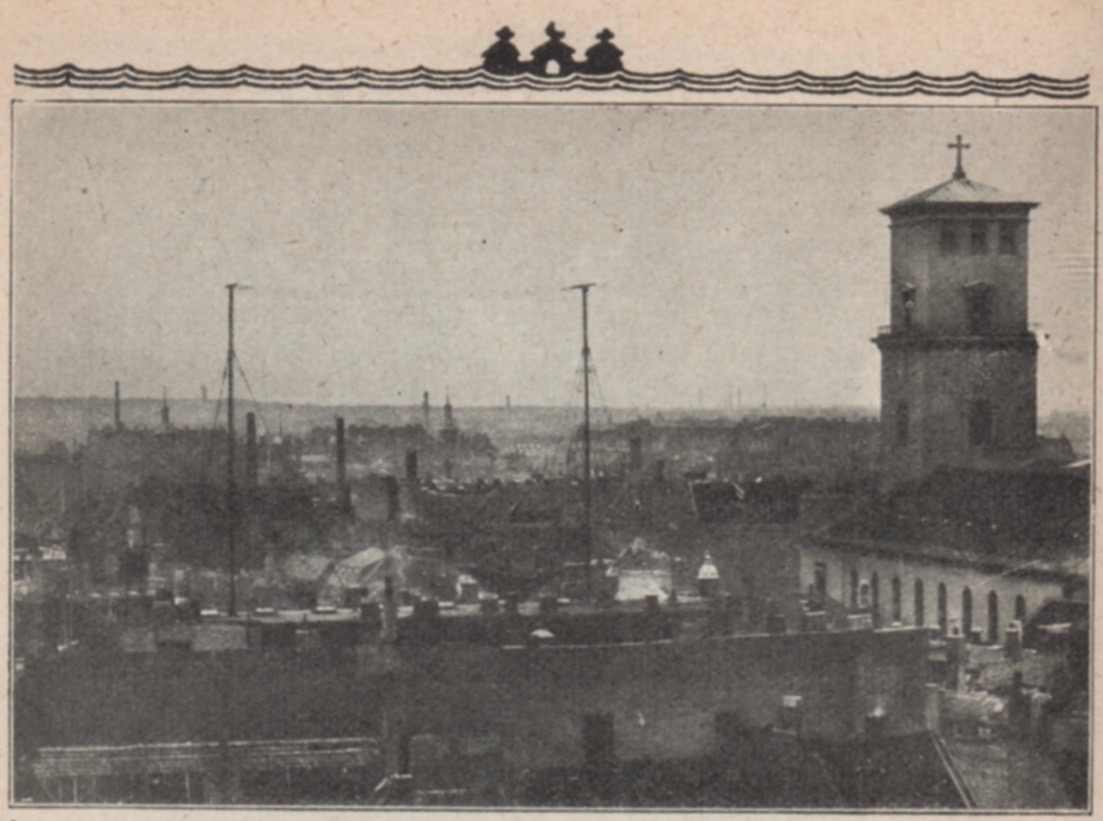
“Excepting the continuous competition and fight among the amateur-organisations, it must be said, that the radiophony has been happy in its development in Denmark.”
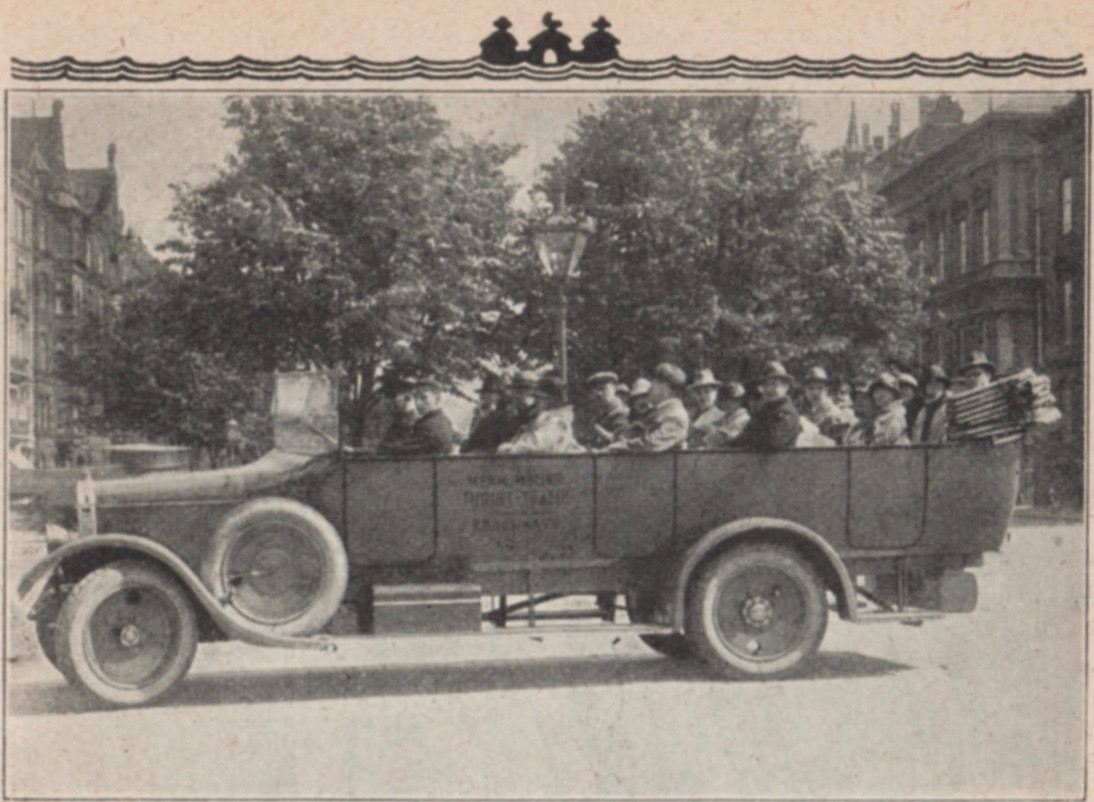
Tourists-Automobiles. Hiort noted, “With the big yellow modern Tourists-Automobiles of the firm of Herman Møller are arranged daily trips in Copenhagen and environs. The automobiles leave the Town-Hall Square at 10 and 12 o’cl.”
Tomorrow we turn from infrastructure to several of the 1925 pleasantries of Copenhagen in addition to a couple of personal recollections from rather later. ds
© Dennis Simanaitis, SimanaitisSays.com, 2023
 Simanaitis Says