
Simanaitis Says
On cars, old, new and future; science & technology; vintage airplanes, computer flight simulation of them; Sherlockiana; our English language; travel; and other stuff
OL’ BLUE-EYES, JACK BENNY, ME, AND THOSE SIMILARLY ENDOWED
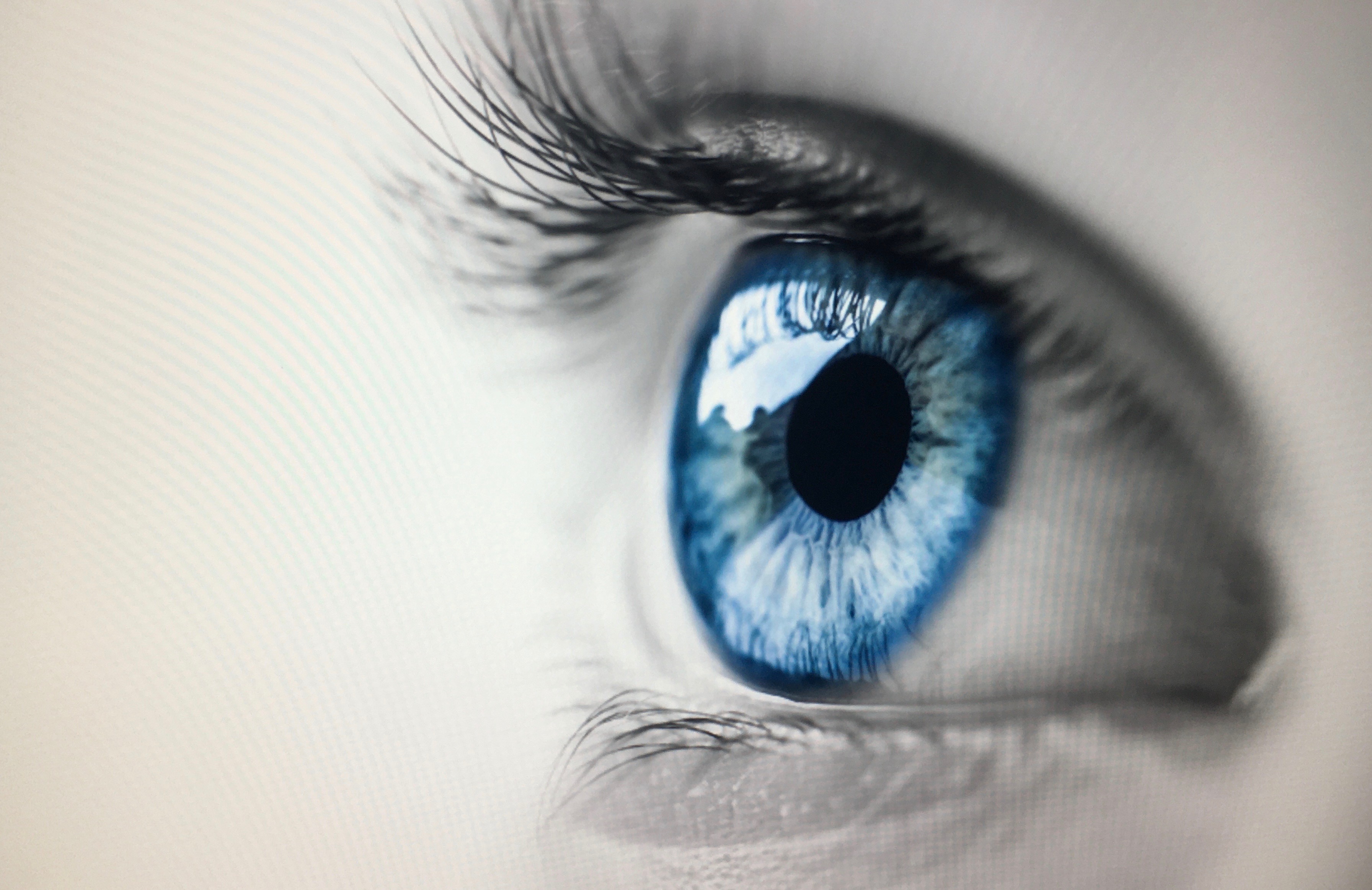
GEE, I NEVER REALIZED how rare blue eyes are. We make up only eight percent of the world’s population, according to AucklandEye. Here are other tidbits gleaned from this source, my usual Internet sleuthing, and an intense look in a mirror (especially if I wear a blue shirt).
Thank My Lithuanian Ancestors. AucklandEye notes, “While blue eyes are significantly less common than brown eyes worldwide, they are frequently found from nationalities located near the Baltic Sea in northern Europe.”
Thank One Mutated Person, a Long Time Ago. “All blue-eyed people,” AucklandEye says, “may have a common ancestor. Originally we all had brown eyes, however, according to researchers at the University of Copenhagen, it appears that a genetic mutation in a single individual in Europe 6,000 to 10,000 years ago led to the development of blue eyes.”
AucklandEye continues, “A genetic mutation affecting the OCA2 gene in our chromosomes resulted in the creation of a ‘switch,’ which ‘turned off’ the ability to produce brown eyes. The OCA2 gene codes for the ‘P protein,’ which is involved in the production of melanin (the pigment that determines the colour of our eyes, skin and hair). The ‘switch’ does not, however, turn off the gene entirely, but rather limits its action to reducing the production of melanin in the iris – effectively ‘diluting’ brown eyes to blue.”
Physiology of the Eye. Eye color depends on how much melanin is present in the iris, which is made of two layers, the stoma in front, the epithelium in back. We all have brown pigment in our epithelium layer. But us blue-eyed folks have pigment-free stoma.
With no pigment in this front layer, AucklandEye says, “the fibers scatter and absorb some of the longer wavelengths of light that come in. More blue light gets back out and the eyes appear to be blue.”

Why Some Skies and Eyes are Blue. This reflection of white light affecting eye color is called the Tyndall Effect, named for John Tyndall, 1820–1893, an Irish experimental physicist. Britannica notes that “He discovered that water vapour and carbon dioxide absorb much more radiant heat than the gases of the atmosphere and argued the consequent importance of those gases in moderating Earth’s climate—that is, in the natural greenhouse effect. Tyndall also studied the diffusion of light by large molecules and dust, known as the Tyndall effect, and he performed experiments demonstrating that the sky’s blue colour results from the scattering of the Sun’s rays by molecules in the atmosphere.”
This latter is the Rayleigh Effect, named for Lord Rayleigh (1842–1919), English physical scientist. It differs from the Tyndall Effect, Briticannia notes, in that “Rayleigh scattering occurs from particles much smaller than the wavelength of light, while the Tyndall effect occurs from particles roughly the same size as the wavelength of light.”
Blue at Birth? AucklandEye observes, “While blue eyes may be rare, they’re among the most common eye colours at birth. Since the human eye does not have its full adult amount of pigment at birth, most Caucasian babies are born with blue eyes. However, since human melanin tends to develop over time—this causes the child’s eye colour to change as more melanin is produced in the iris during early childhood.”

Blue Genetically? AucklandEye also notes that you can’t predict the color of your child’s eyes: “Since it was once believed that eye colour—including blue eyes—was a simple genetic trait, many people used to believe that blue-eyed people could only have blue-eyed children.”
“Before geneticists fully understood how human eye colour inheritance works,” AucklandEye notes, “a child’s eye colour used to be used as a paternity test—based on the assumption that you could predict a child’s eye colour if you knew the colour of the parents’ eyes and perhaps the colour of the grandparents’ eyes.”
“But,” AucklandEye says, “geneticists now know that this concept is far more complicated, as eye colour is influenced by an interaction of as many as 16 different genes—not just one or two genes as once thought. Additionally, the anatomic structure of the iris can also influence eye colour to some degree.”
AucklandEye summarizes: “Even if you and your partner both have blue eyes, that’s no guarantee your child’s eyes will also be blue.”

But sometimes your eyes may be as blue as the Baltic. ds
© Dennis Simanaitis, SimanaitisSays.com, 2023
 Simanaitis Says
Very interesting. Something I’ve always wondered about.
I was a blue-eyed baby for about 2 years, according to my blue-eyed mom. Are we hazel-eyed people between blue and brown?
Some days my eyes seem greener, sometimes browner. Is this due to the amount of melanin in me on certain days? Some other factor(s)?
Good questions, all. Apparently a lot of current knowledge is relatively recent.