
Simanaitis Says
On cars, old, new and future; science & technology; vintage airplanes, computer flight simulation of them; Sherlockiana; our English language; travel; and other stuff
CHAOS, IN THEORY AND PRACTICE, PART 1
ETYMOLOGY CAN offer good fun as well as therapeutic distraction in times of unease. Consider the word “chaos.” Come to think of it, in a Russell’s Paradox sort of way, having this word come to mind is part of the unease I now sense.
By the time these chaotic tidbits had been gleaned, I learned a little Greek, studied a bit of Shakespeare, recalled a TV spy satire, found out about a real Nixon spy program, and remembered that I had already discussed mathematical aspects of chaos here at SimanaitisSays. My gleaning was sufficiently fruitful to warrant Part 1 today and Part 2 tomorrow.

The Compact Edition of The Oxford English Dictionary, Complete Text Reproduced Micrographically (in slipcase with reading glass) (v. 1-20), 
The Dictionary’s Chaos. Merriam-Webster Online hedges with three somewhat divergent meanings: 1. In the obsolete sense, a chasm or abyss. 2. Often capitalized, a state of things in which chance is supreme; especially the confused unorganized state of primordial matter before the creation of distinct forms—compare “cosmos.”
And, 3. A state of utter confusion.
Yep; that’s the one I’ve been thinking about.
According to my trusty Compact Edition of the Oxford English Dictionary, 1971, chaos comes from the Greek, χάος, originally meaning a vast chasm, a nether abyss. The OED cites a first use in 1440: “There is a great chaos that is to say a thycke darkness between vs.”
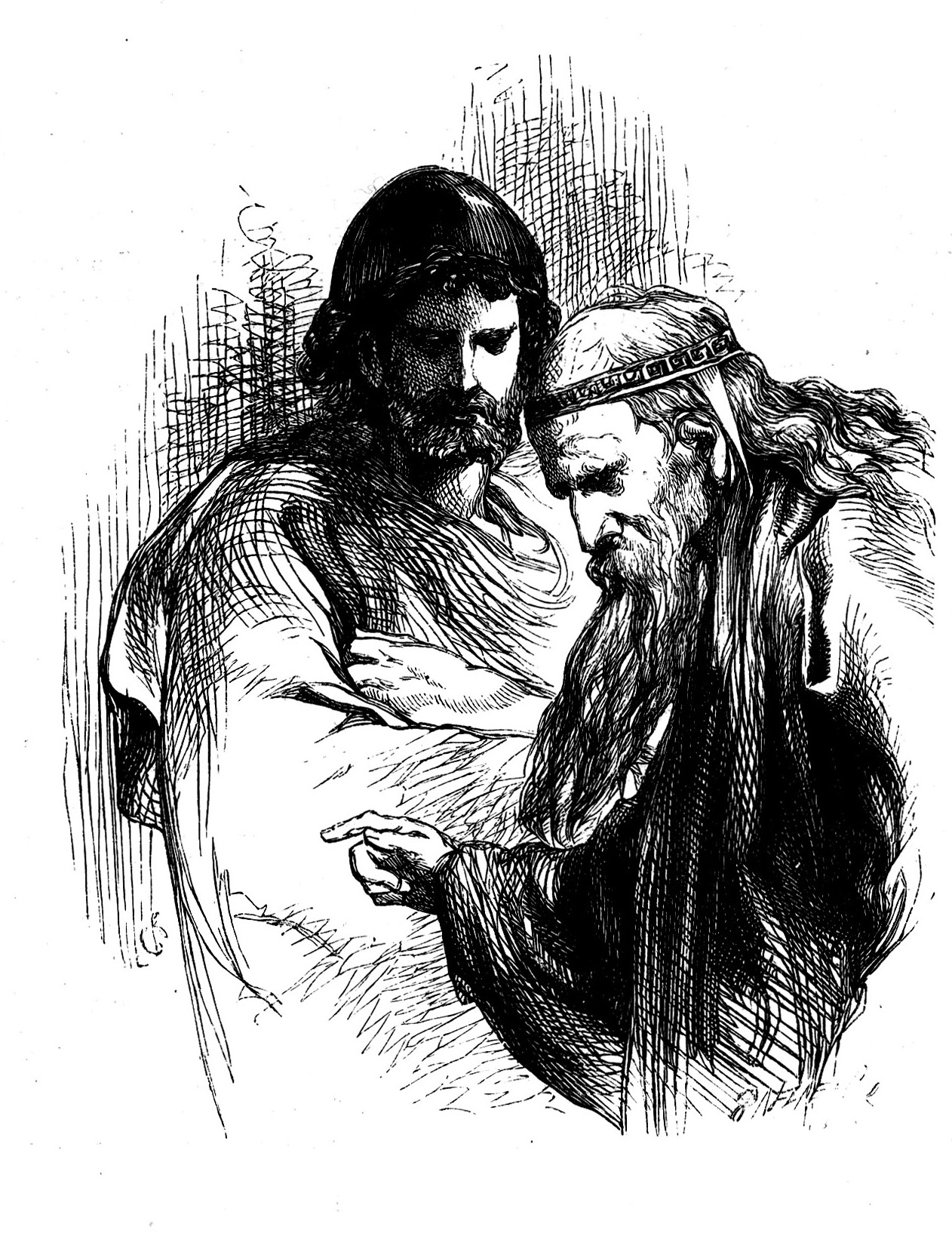
Ulysses, at left, and Nestor, in Shakespeare’s Troilus and Cressida, Act I Scene iii. Image from Victorian Illustrated Shakespeare Archive by Michael Goodman.
Shakespeare’s Chaos. In Troilus and Cressida,1605, Act I, Scene iii, Shakespeare has Ulysses say to Nestor and King Agamemnon (Trojan War commander, father of Elektra):
“Then every thing includes itself in power,
Power into will, will into appetite;
And appetite, an universal wolf,
So doubly seconded with will and power,
Must make perforce an universal prey,
And, last, eat up himself.—
This chaos, when degree is suffocate,
Follows the choking.”
To which Nestor responds:
“Most wisely hath Ulysses here discover’d
The fever whereof all our power is sick.”
Wouldn’t Shakespeare have interesting commentary today?
Tomorrow, chaos will resume with Maxwell Smart, Richard Nixon, an Amazon butterfly, and a Duluth blizzard. ds
© Dennis Simanaitis, SimanaitisSays.com, 2017
 Simanaitis Says
“Chaos is a ladder.” – Lord Petr Baelish (“Littlefinger”)