
Simanaitis Says
On cars, old, new and future; science & technology; vintage airplanes, computer flight simulation of them; Sherlockiana; our English language; travel; and other stuff
BRITISH NARROWBOATS
ONE OF my life’s regrets (there are only a few) is that Wife Dottie and I never took a narrowboat holiday on British canals. The nearest we came to this was an all-too-brief ride across the Pontcysyllte Aqueduct on the Llangollen Canal in Wales. (See that October 2012 posting to learn, among other things, the pronunciation of these Welsh names.)

The Pontcysyllte Aqueduct, built in 1805, soars above the valley of the River Dee in northeast Wales. Image by Dorothy Clendenin.
Though we never rented a narrowboat for a holiday tour, we can enjoy Canals in Colour, an armchair travel book published in 1974. Based on current Internet research, the charm of narrowboating today lies in the fact that it hasn’t changed measurably in the 43 years since this book was written.
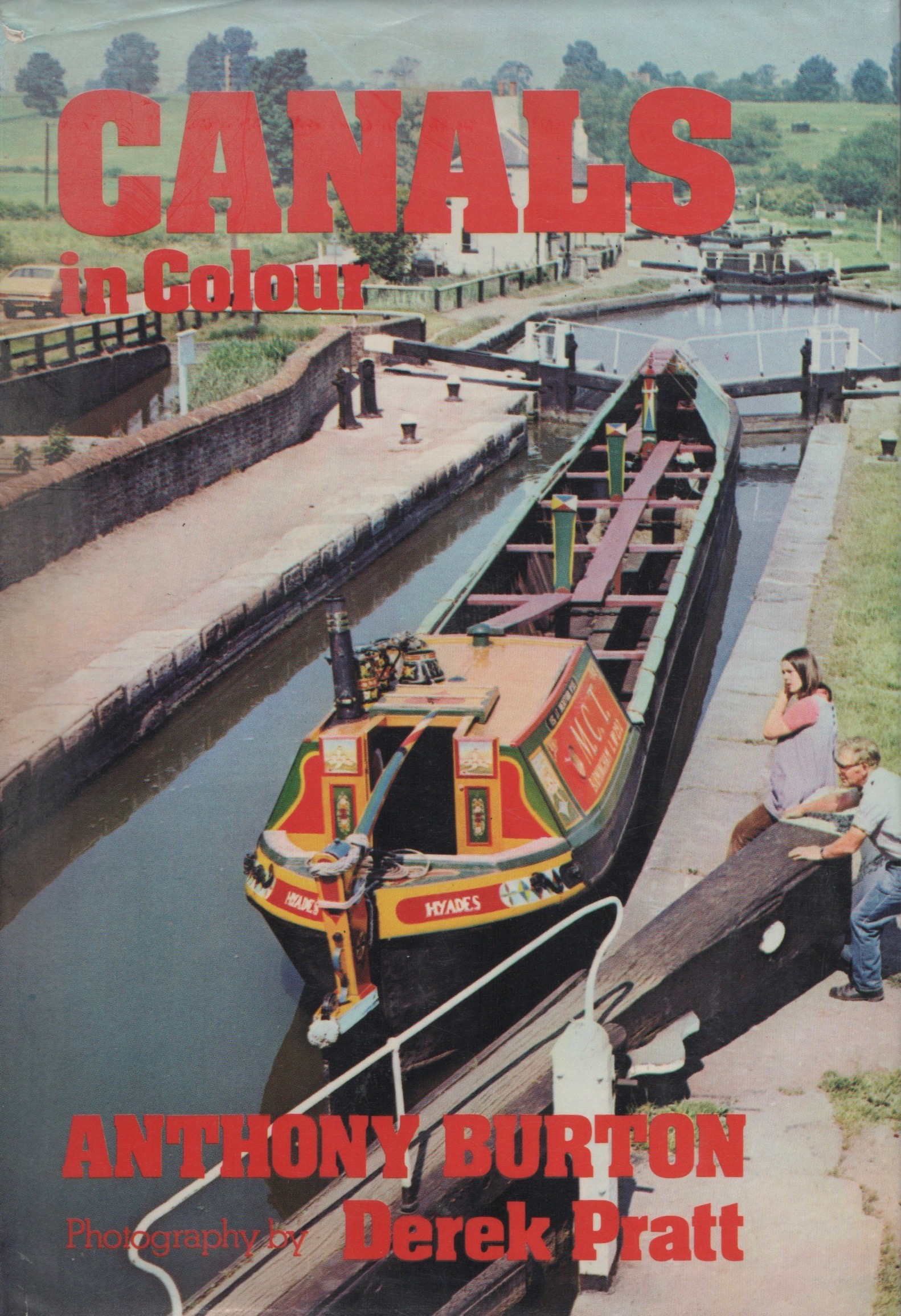
Canals in Colour, by Anthony Burton, photos by Derek Pratt, Blandford, 1974. Pictured is the multi-lock staircase at Soulbury, the Grand Union Canal.
What follows gives a flavor (flavour?) of narrowboats.
Now canals are quaint, but to people of the 18th-century they were marvels of technology. Canals linked town to town in an efficient network of transport evolving with the Industrial Revolution. Today, the canals are predominately recreational, though some folks call their narrowboats home too.
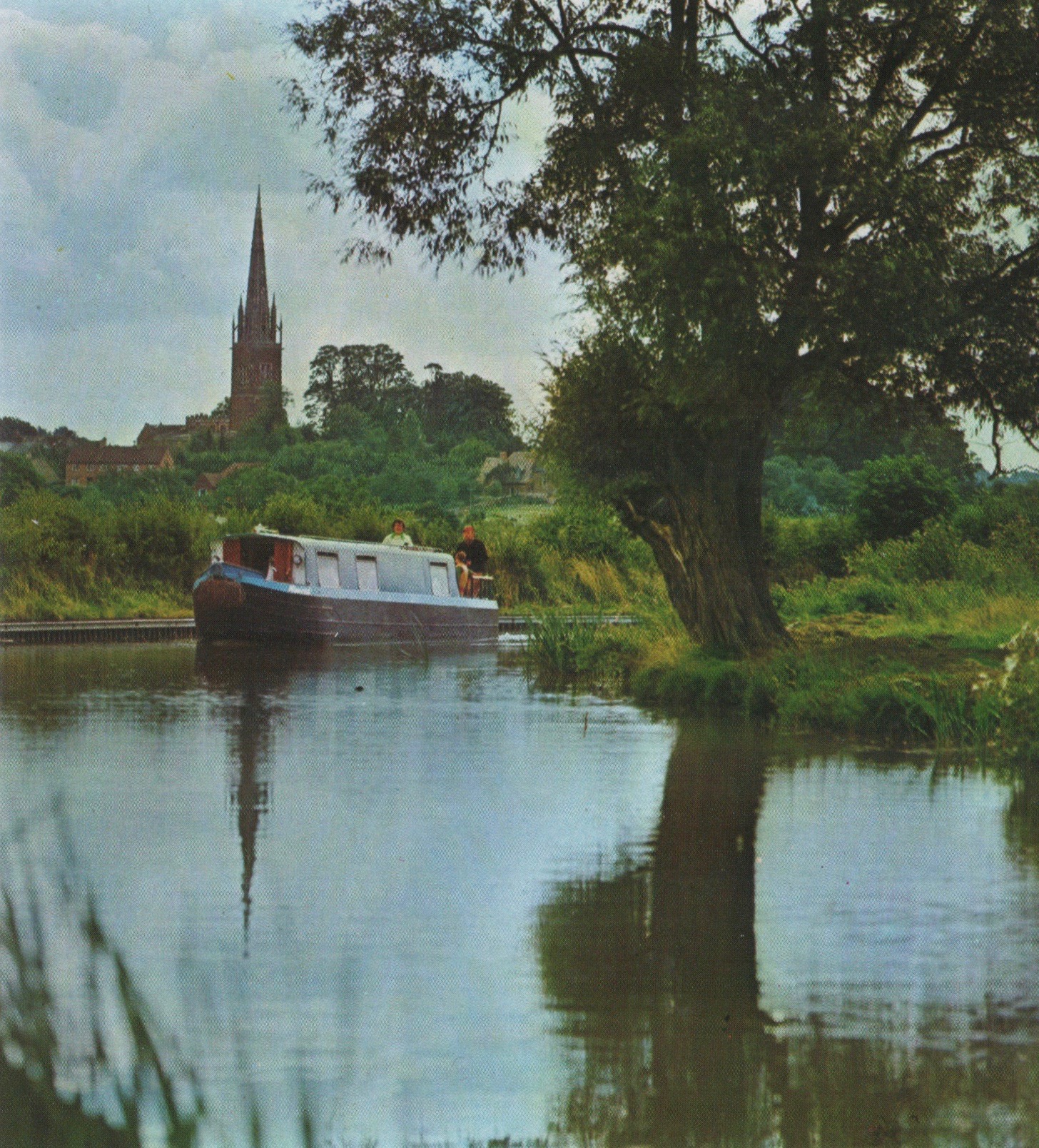
The Oxford Canal at Kings Sutton. This and the following images from Canals in Colour.
Francis Egerton, third Duke of Bridgewater, urged the British Parliament to pass an act in 1759 that authorized a canal in the northwest of England. The Bridgewater Canal, opened in 1761, meandered from Egerton’s Worsley coal mines to Manchester at a single elevation, thus requiring no locks for raising or lowering the watercraft.
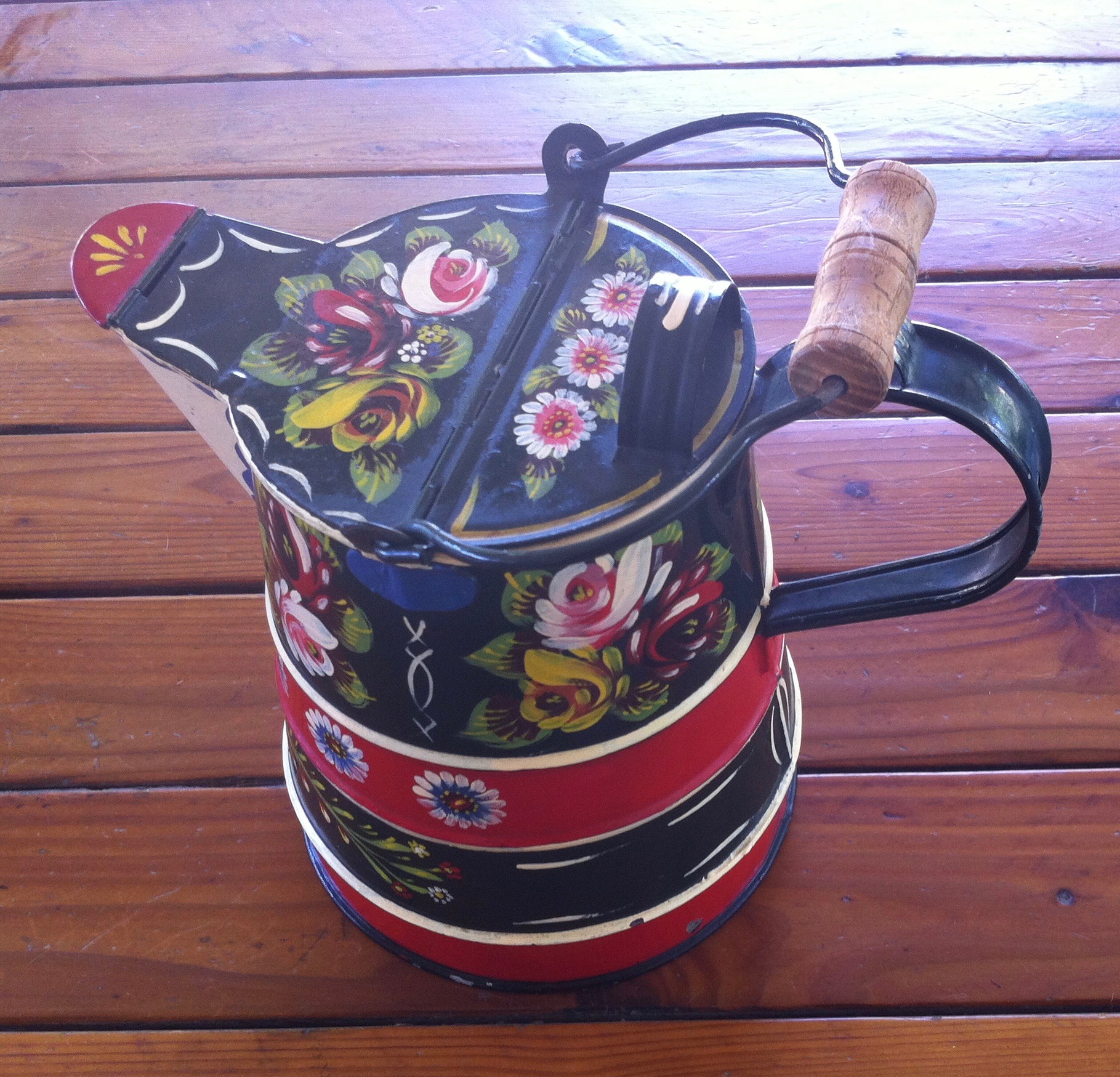
This handpainted kettle is a souvenir from the Canal Museum, Stoke Bruerne, Northhamptonshire. Narrowboat culture is known for its folk art.
The Bridgewater Canal, existing today in extended form, crosses the River Irwell on the Barton Aqueduct, a stone structure similar to but much shorter than the 1805 PontCysyllte Aqueduct.
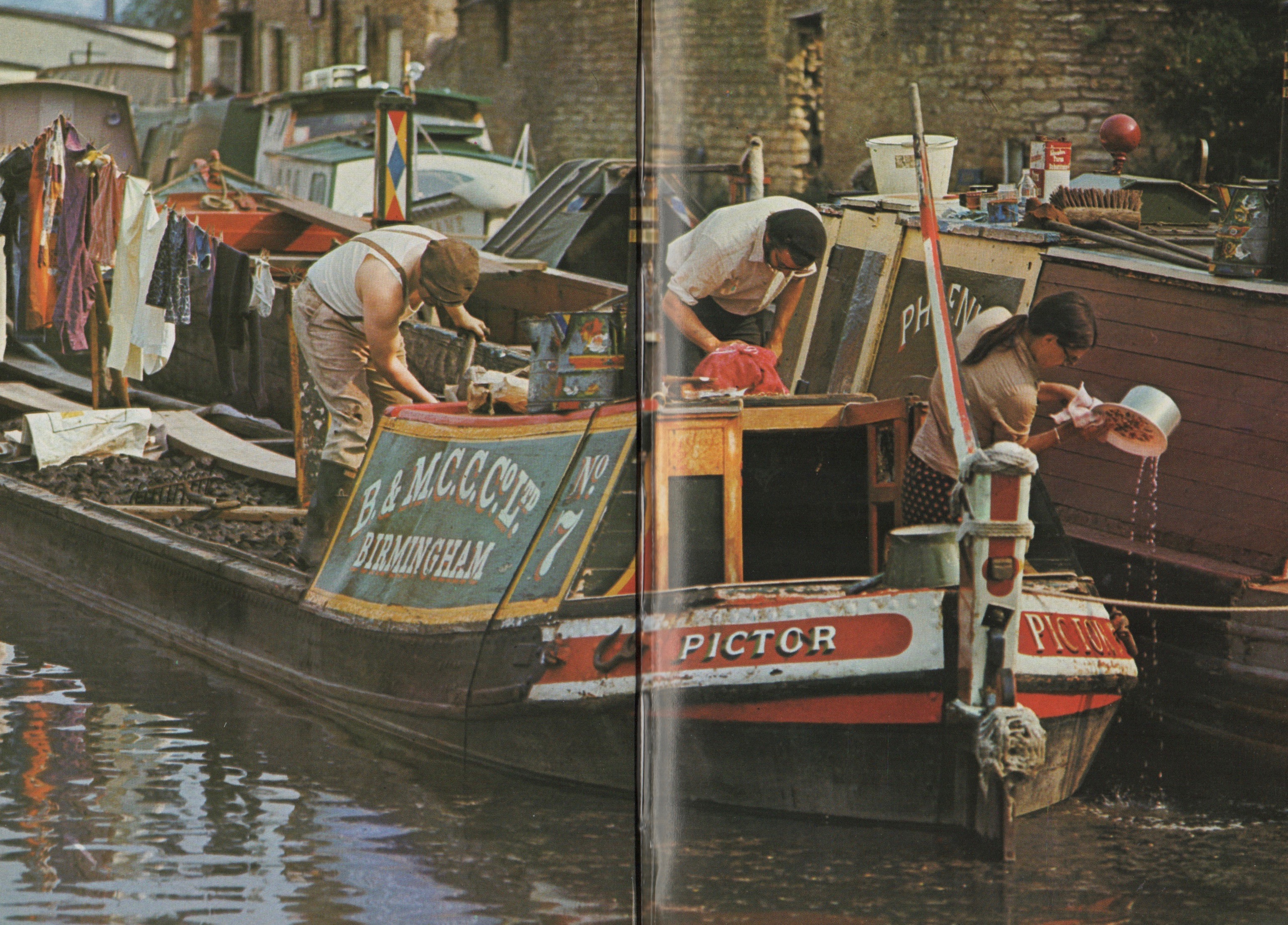
There are chores to be done about a working narrowboat, this one at Stoke Bruerne.
Canal transport was clearly more efficient than hauling goods by packhorse or horse-drawn cart. It’s reported that a canal boat pulled by a single horse could carry ten times the cargo of its cartage equivalent. Accordingly, with the Bridgewater Canal in operation, the cost of coal in Manchester fell by about half.
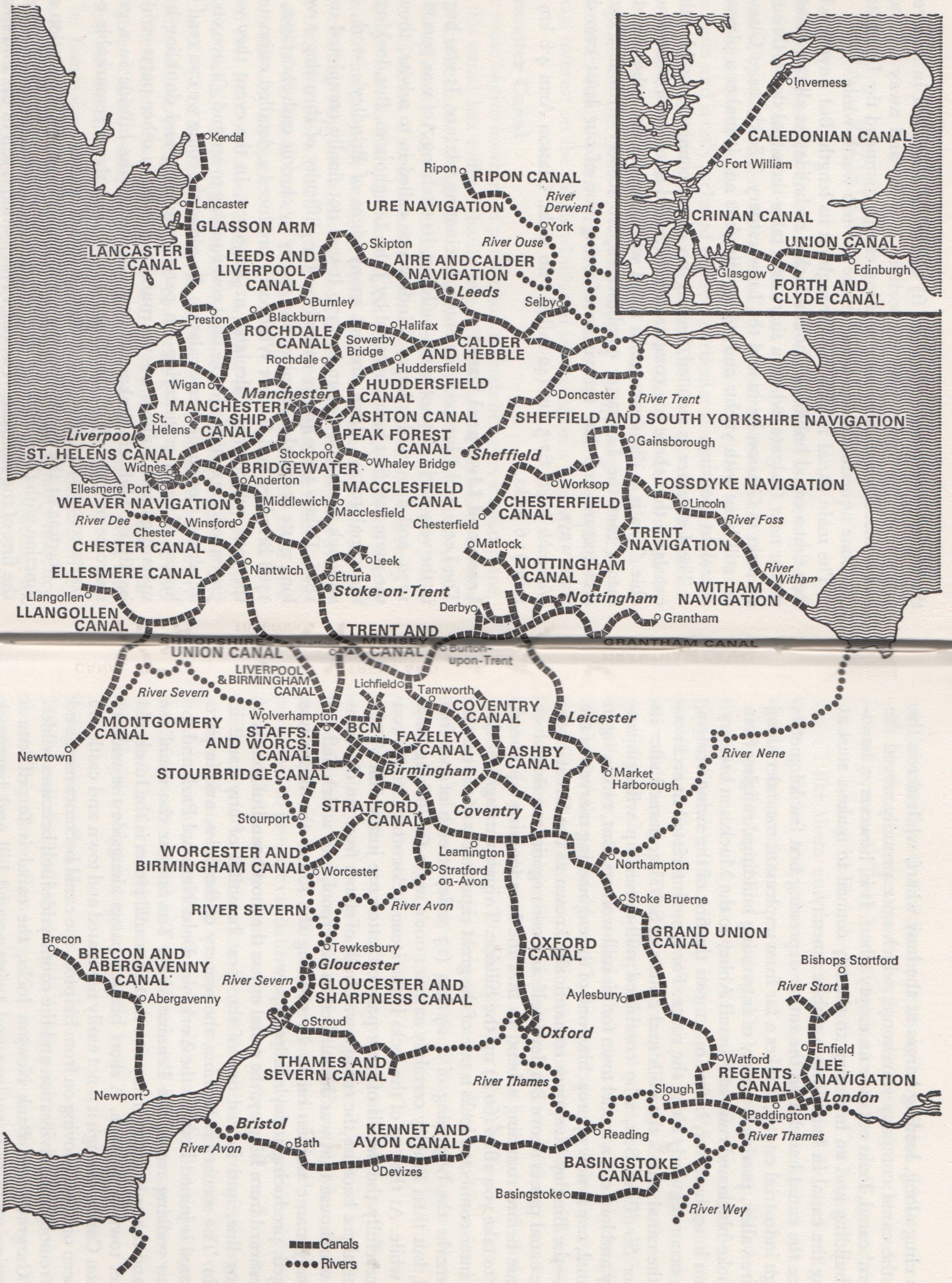
Just as the canal routes haven’t changed very much over the years, nor have the narrowboats. British canals have a minimum width of 7 ft., and thus the beam, or width, of a narrowboat is no larger. (The narrowest canals had lay-bys.) Maximum length of a narrowboat is dictated by the shortest lock on the canal network for which it is intended. This is typically around 58 ft., though a narrowboat just a tad longer, 60 ft., say, can be artfully angled into a 58-ft. lock.
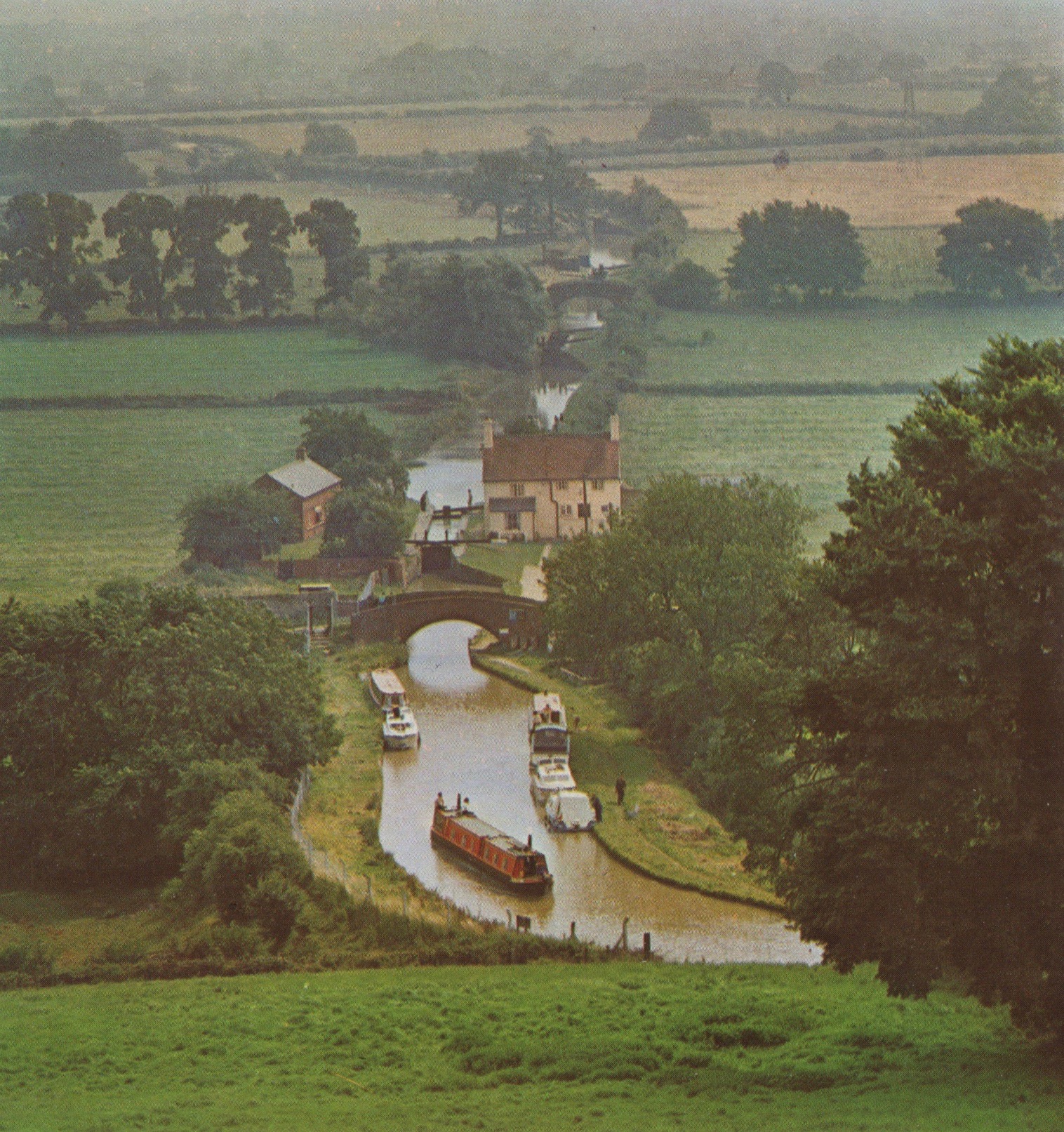
Narrowboats and other watercraft meander through the landscape at Napton.
Traveling at the same elevation isn’t always possible. Thus, a lock is necessary to raise or lower a craft from one level to another along a canal.

The workings of a canal lock.
Balance beams at either end of the lock operate gates determining the level of the water within it, high or low. Culverts actuated by paddles divert water from the high level to the lock.
If yours is the only boat approaching the lock, you’ll hope it has been left in your desired orientation by its last user: high water if you’re descending the lock; low water, if you’re climbing it. Otherwise, you must work the lock to achieve this desired orientation.
If several boats queue at a lock, there’s proper etiquette in sharing its use and conserving water. It’s also a wonderful opportunity to make new friends on holiday.

London has narrowboats too: Little Venice.
Even if yours is the only boat, there’s still an opportunity for real adventure, not to say extreme exercise: If the topographic change is extreme, a staircase of locks, as many as eight, may be necessary.
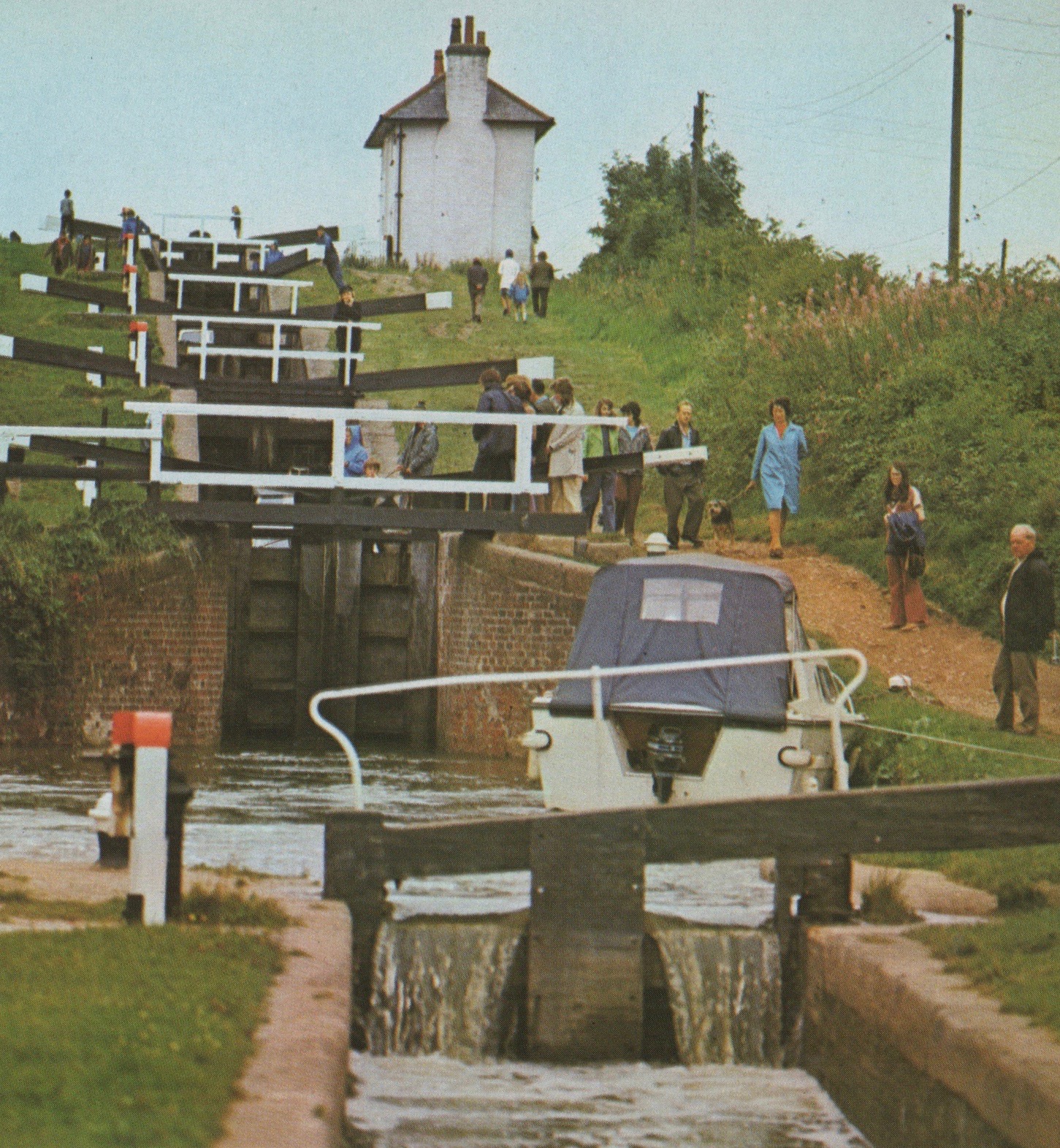
The Foxton staircase on the Grand Union. Climbing staircases can be a spectator sport as well.
The Neptune Staircase at Banavie, near Fort William, Scotland, is the most elaborate in Britain. Its eight locks raise a boat a total of 64 ft. These days it’s hydraulically actuated, though passage through the staircase can still take 90 minutes. Pre-mechanization, transit times were more than half a day.

Pub grub and a pint are never far away.
Fortunately, after the exercise of traversing a lock, there’s likely to be a pub nearby for camaraderie, a refreshing pint, and perhaps some pub grub. ds
© Dennis Simanaitis, SimanaitisSays, 2017
 Simanaitis Says
Still time to take a vacation…
Fine study created in oil on board of the Pictor at Stoke Bruerne https://www.ebay.co.uk/itm/154018147423