
Simanaitis Says
On cars, old, new and future; science & technology; vintage airplanes, computer flight simulation of them; Sherlockiana; our English language; travel; and other stuff
HELLO, JUPITER! SUE FINLEY IS ARRIVING
IN A FEW DAYS, Sue Finley may retire. This test engineer has worked at NASA’s Jet Propulsion Laboratory for 57 years, the woman with the longest career at NASA. Sue began at JPL as one of its “computers,” women who were selected for their abilities to perform programming long before this concept meant writing directions for electronic gizmos. Sue has said she’ll retire once JPL’s Juno spacecraft performs its orbit of Jupiter.

Susan née Greene Finley, California-born 1936, test engineer, NASA Jet Propulsion Laboratory, Pasadena. She describes aspects of her career in a NASA video.
Back in 1957, when Sue joined JPL, the lab’s primary computational tools were Fridan desk calculators. Problems of trajectory analysis and the like were expressed in complex sets of equations.
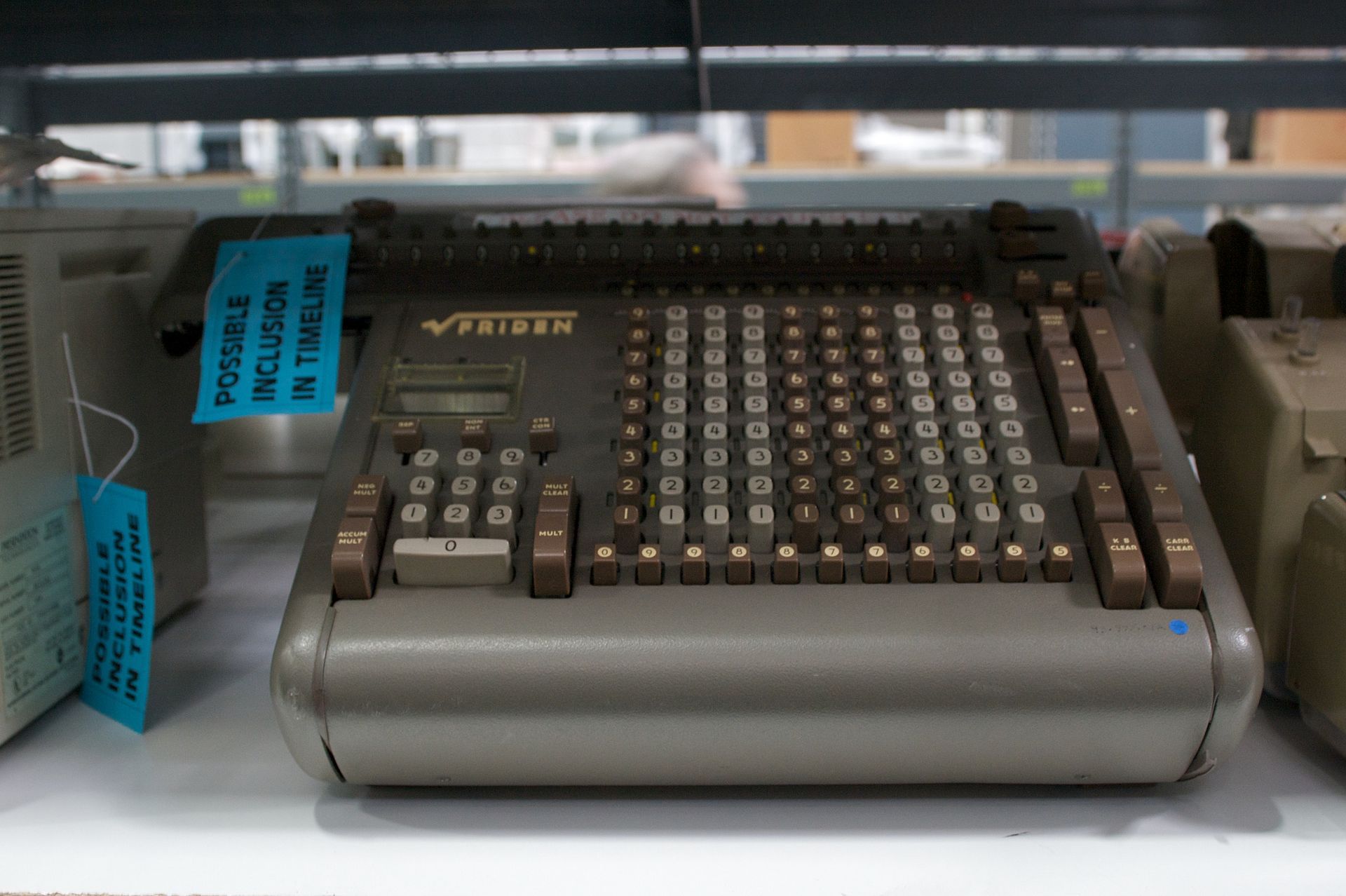
A Fridan desk calculator at the Computer History Museum, Mountain View, California. Image by Marcin Wichary.
It was the human computer’s task to devise steps for evaluating these equations. Teams of women calculated values by hand, and by Fridan, and then fed the numbers into the next step.
Electronic computers introduced in the 1960s changed the women’s roles into directing the machines. Some say male engineers felt such programming was “women’s work.” However, I suspect these women’s combination of math skills and attention to detail gave them superiority over their male counterparts.
The Rise of the Rocket Girls by Nathalia Holt describes the varied and significant roles played by these women from World War II to today. I’ve just begun this fascinating book and recommend it highly.

Rise of the Rocket Girls: The Women Who Propelled Us, from Missiles to the Moon to Mars, by Nathalia Holt; Little, Brown and Company, 2016.
Sue Finley’s career at JPL evolved from classic computing to software testing and subsystem engineering. As an example, when Rover missions set down on the Martian surface, the spacecrafts sent back confirmation of each phase via musical tones. Stationed at either the Goldstone Deep Space Communications Complex, in the Mojave Desert of California, or Canberra DSCC, in Tidbinbilla, Australia, Sue was the first person to hear these tones.

Project Juno. This and the following images from NASA JPL. Full details are given in NASA videos at spaceflight101.com.
This time around, confirmation is coming in a three-second beep. Sue is also involved in the Juno Mission, scheduled to begin orbiting Jupiter three days from now, on July 4, 2016. Launched in August 2011, Juno’s mission is an amazing technical achievement. Think of tossing a newspaper from a moving bicycle into a car driving by in the dark—only more complex.

Juno’s trajectory to Jupiter.
Between November 4, 2013, and January 5, 2016, Juno has been on Quiet Cruise as it arcs its way to Jupiter. Today, July 1, Juno is beginning its insertion phase that will bring it into orbits around Jupiter. This gaseous giant is about 11 times larger than Earth, the largest planet in our Solar System and 2.5 times more massive than all the others combined.
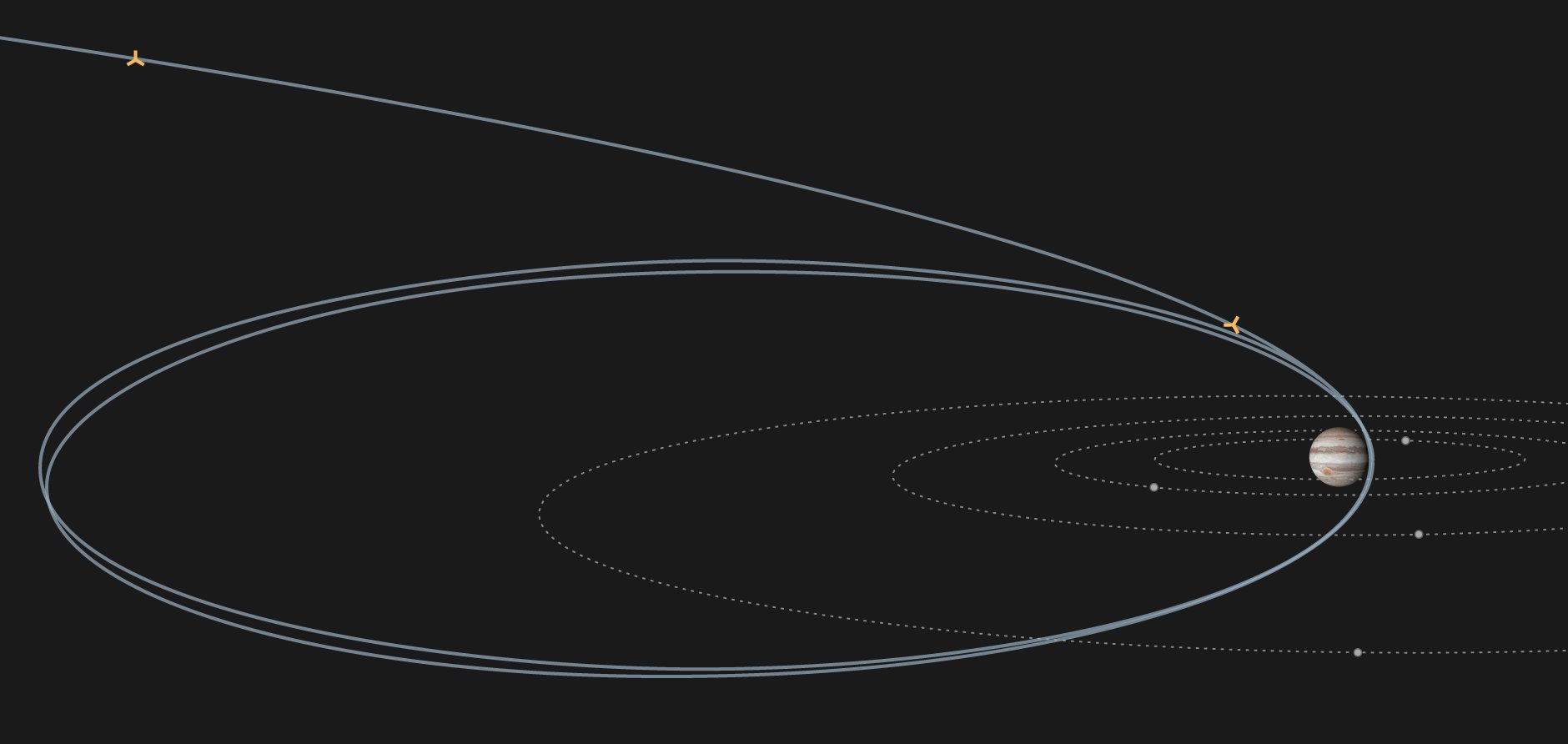
Arrival into orbit.
Juno will conduct Science Orbits for 461 days, the first beginning on November 16. Then, on February 20, 2018, the spacecraft will enter its Deorbit Phase, a deceleration leading to ultimate disintegration in the Jovian atmosphere.

Juno’s encounters with Jupiter will vary over its 461 days of Science Orbits.
The Deorbit Phase is complex. One reason is to avoid Jupiter’s four moons and any contaminating of their surfaces, believed to have liquid oceans suggesting a theoretical support of life.
I suspect that Sue Finley, a mother of two sons, would share these feelings of planetary maternalism. I also wouldn’t bet heavy money on her actually retiring. ds
© Dennis Simanaitis, SimanaitisSays.com, 2016
 Simanaitis Says
It is so great to hear of someone who has an interest, an aptitude, an employer and a life that all synchronize. Everyone should be so fortunate! I hope Sue is still interested and able to deal with our first interstellar probe!