
Simanaitis Says
On cars, old, new and future; science & technology; vintage airplanes, computer flight simulation of them; Sherlockiana; our English language; travel; and other stuff
“SERVICE” STATION TIPS—1938
YOUNGER AMERICANS may never have heard the term “service” associated with gasoline stations. Today, in many places we pump our own. Even in states where others do the refueling, attendants generally do little else.
But just cast your imagination back to 1938 when marketing giant Sears, Roebuck and Co. had its own gasoline stations. Super Service was their motto, and the company had a training manual for it.
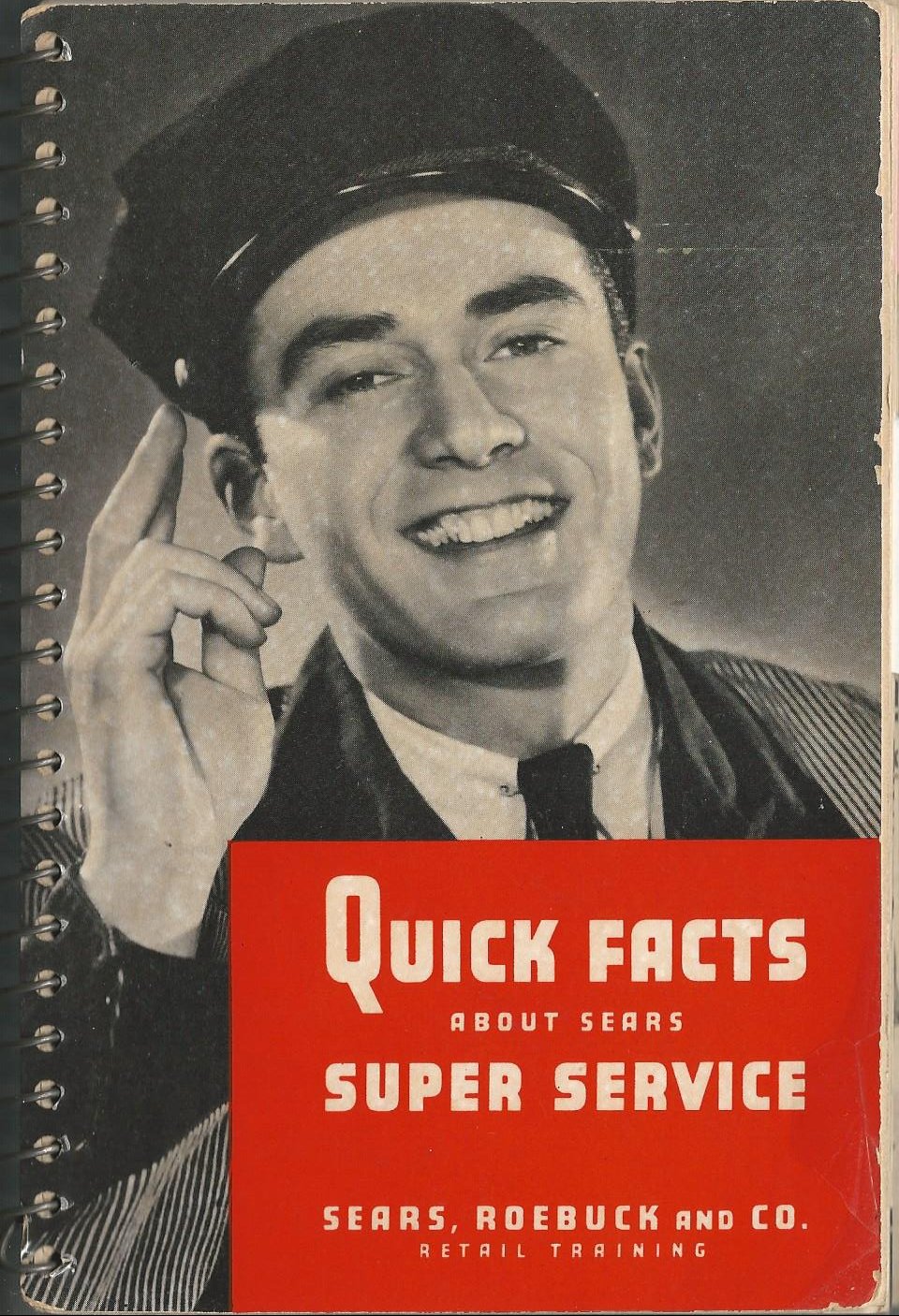
Quick Facts About Sears Super Service, Retail Training, Sears, Roebuck and Co., 1938
This training manual is more than a collection of tips about working in a Sears Super-Service Station. It’s a time capsule of worker/management relationships and the culture of human resources—with more than a tad of class consciousness mixed in.
The book’s first page sets its tenor: “We could have had college professors, engineers, big shots at the home office, etc., do the job. But Sears way has been to turn it right over to you guys behind the grease guns. After all, if you don’t know what a service man is up against, who in heck does?”
Yet the manual is candid indeed about the Sears business model: “First, we have service stations to boost sales of our auto equipment—batteries, oil, grease, tires and the thousand-and-one accessories the modern motor car has to have. Second, we have them to bring car owners to the store to buy other merchandise. Sears wouldn’t be in the service-station business at all if it weren’t for these two reasons.”
The book continues with a brief history of service stations. At first, gasoline and oil were sidelines of grocery and hardware stores. (I add pharmacies too; see Bertha Benz’s adventure.) Sears cites 1907 as the year shopkeepers began moving their tanks out front. “Right then service became a part of the oil-and-gas selling!”
By the late teens, oil companies were setting up their own outlets. “You remember these early service stations,” Sears writes, “old shacks, mostly—plastered with circus and tobacco posters.”
Matters improved. By the late 1920s, good-looking stations became the order of the day. “From that day on there was a race to see what station could give the best service.”
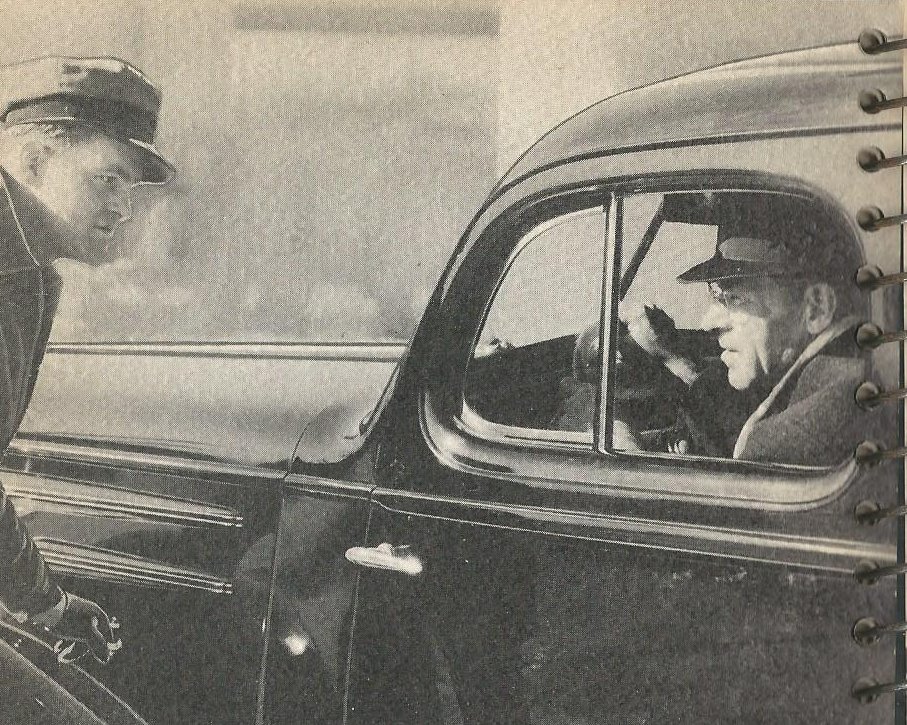
Ask Permission to Check the Oil. This and other images from Quick Facts About Sears Super Service.
The manual offers the inside dope: “Lean over the hood as you say ‘May I check your oil, sir?’ so that you can go ahead if the customer hesitates. Unless he says ‘No,’ [apparently very quickly…] lift the hood.”
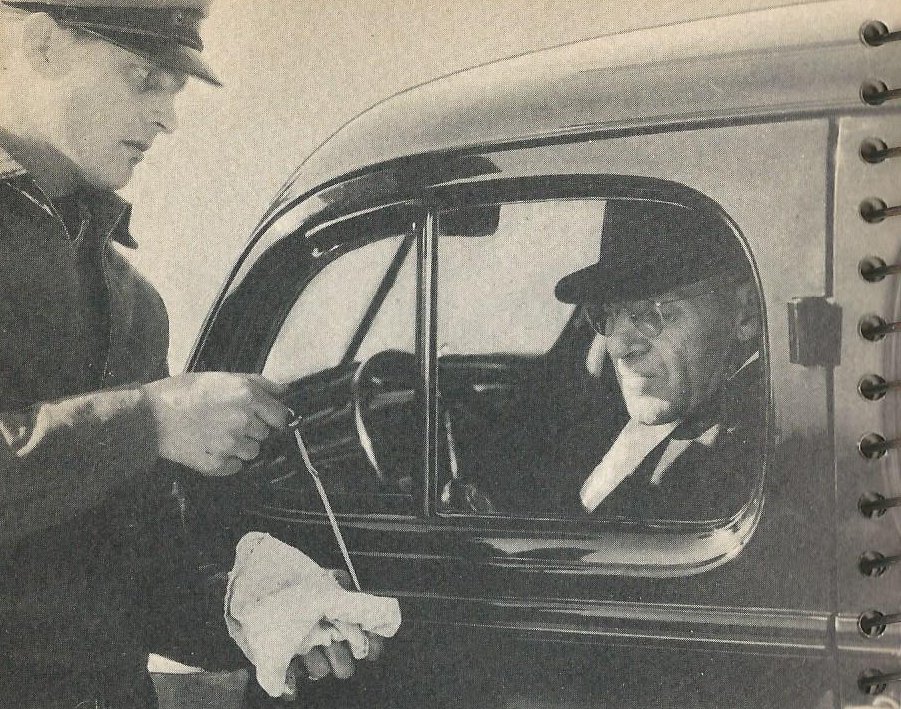
Hold a cloth underneath the dipstick to protect the car from any dripping oil.
“Don’t say, ‘It’s two-thirds full.’ It makes more sales to say, ‘It’s one-third empty.’ ” Good advice even today, in more than peddling oil.
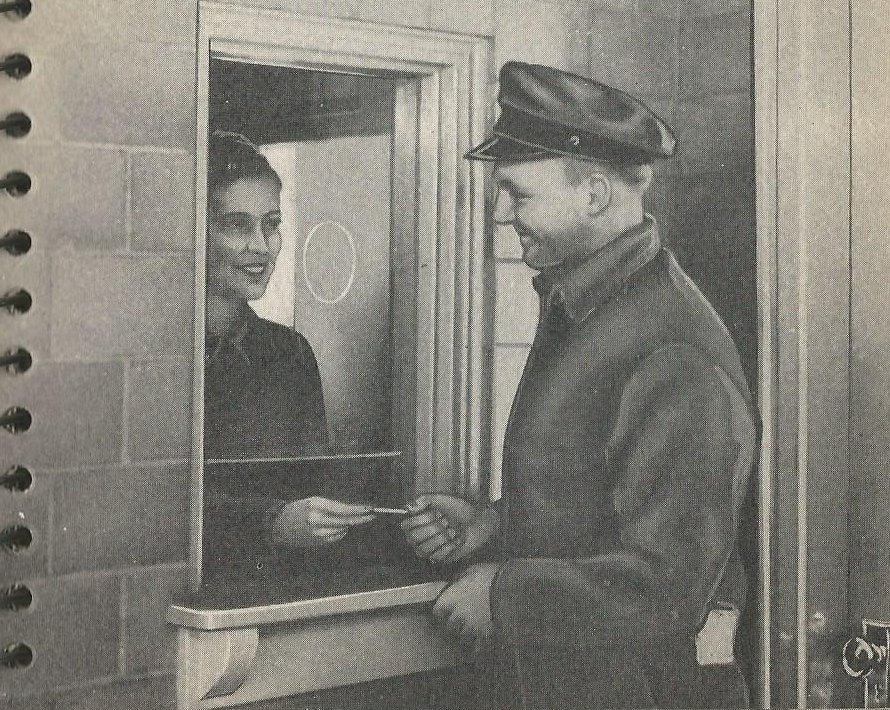
“Follow the Rules Regarding Money.”
“If the setup calls for taking the customer’s money to the cashier for change do it that way. If the customers have to wait in line while you’re doing it, let them wait. It’s the manager’s funeral. Don’t you stick your neck out!”
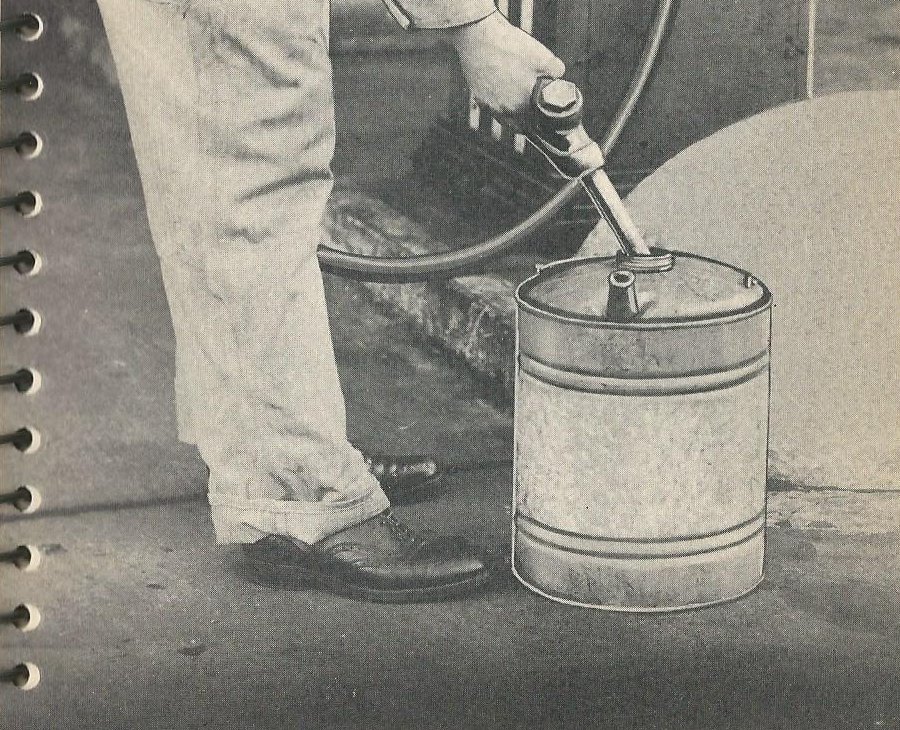
“Servicing Motorcycles.”
Some of the advice, though not practiced today, seems to make good sense: “Never service a motorcycle in the driveway. The motor is usually hot and gasoline spilled on it is liable to cause fire. Draw gasoline into a service can and take it to the motorcycle, which should be fifteen or twenty feet from the pumps.”
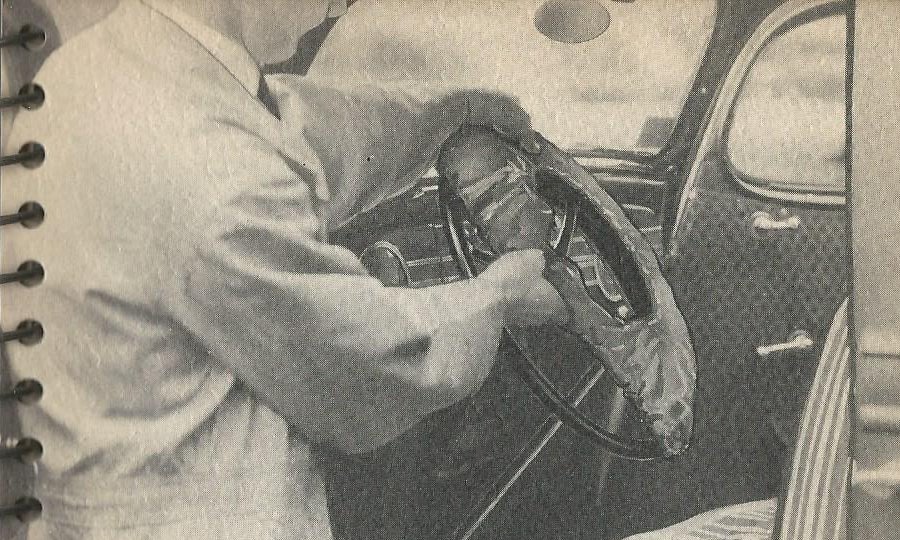
Above, “Do This—Use seat and wheel covers.” Below, “And Prevent This. Boy! Is she sore! And you can’t blame her.”
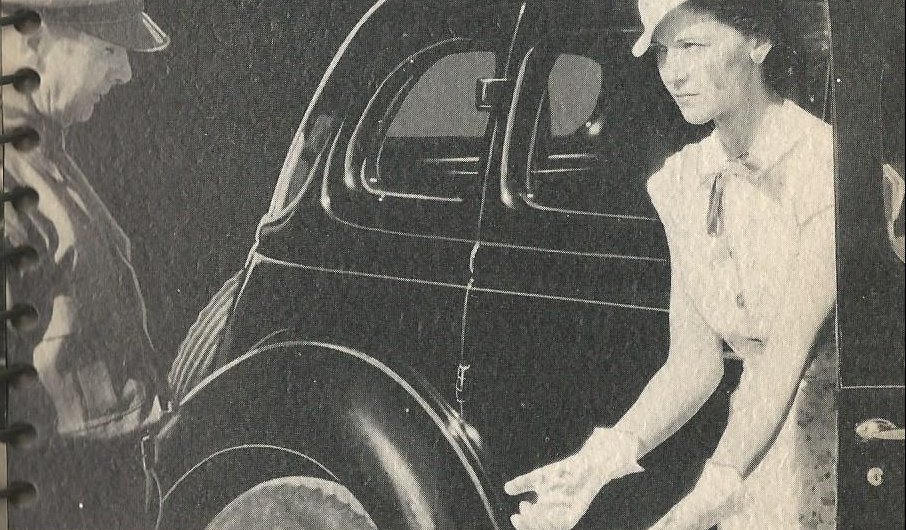
The better auto shops follow this practice today, though their lady customers may rarely wear gloves and stylish chapeaux.
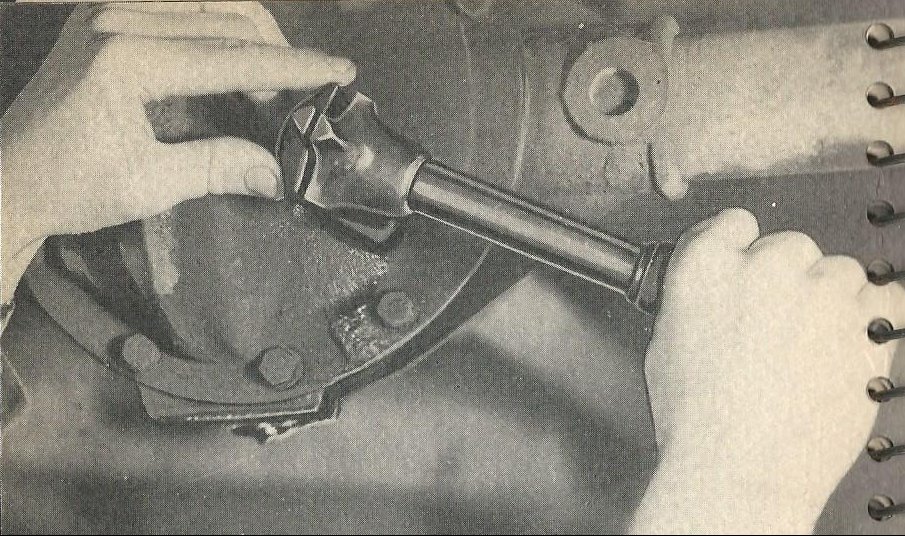
Above, “Use This Wrench—.” Below, “Never This One.”
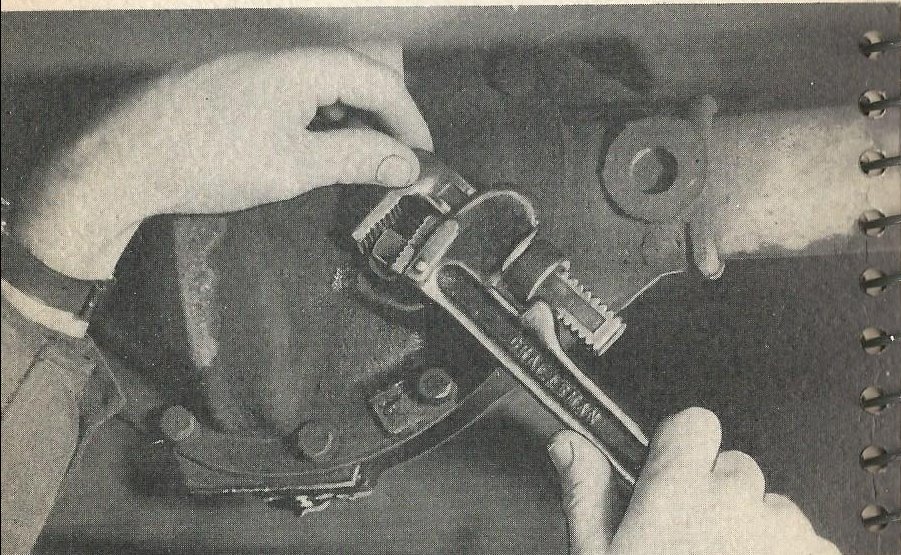
Advice with tools is timeless; it reminds me of a friend’s story from his military training: The mantra “Socket wrench better than open-end, open-end much better than adjustable” was repeated, military education style, over and over. Yet, the first tools given after they completed the course were sets of adjustable wrenches.
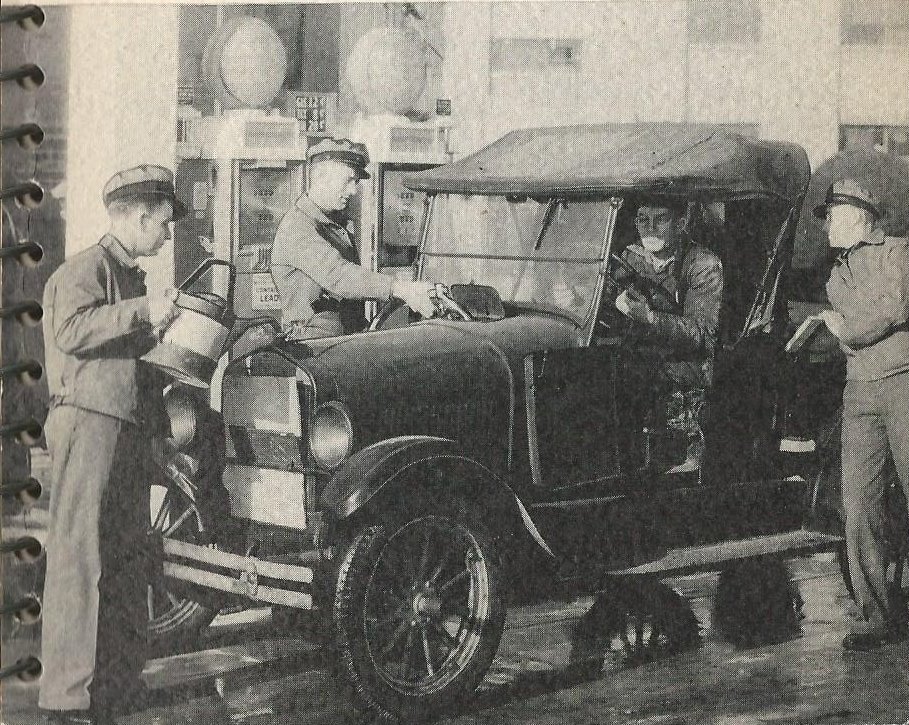
“ ‘Equal service for all’ is no pipe dream at Sears. We mean it!”
In summary, the “How I Do It” section asks “What is your definition of a super-service station?”
“A super-service station is a station completely equipped, that offers high-grade merchandise, and that services the hell out of the customers!”
Requiescat in pace, service. Or maybe not. ds
© Dennis Simanaitis, SimanatisSays.com, 2015
 Simanaitis Says
On the other hand you could “trust your car to the man who wears the star.”
And watch Milton Berle!
It would be interesting to have the oil hard sell today. Neither my BMW nor my Porsche actually have dipsticks, you read the oil level off the computer. And hey, the Porsche (Cayman) doesn’t even have a visible engine anywhere!
Much head scratching by Sears personnel would result.
The comment about needing a computer to tell if you need to add oil makes those of us with Morgans chortle. All we have to do is check under the car.
Of course, Michael. The entire garage floor is an oil gauge.