
Simanaitis Says
On cars, old, new and future; science & technology; vintage airplanes, computer flight simulation of them; Sherlockiana; our English language; travel; and other stuff
STUTZ AT LE MANS
LE MANS 24-hour races in the late 1920s were dominated by British Bentleys: They won 1927 – 1930. However, at the same time, the American carmaker Stutz set a Le Mans record unbeaten until Ford’s victory at La Sarthe in 1966. The Stutz Vertical Eight and DV-32 are perhaps not as well remembered, but they’re every bit as noteworthy as the iconic Bearcat was a decade before.
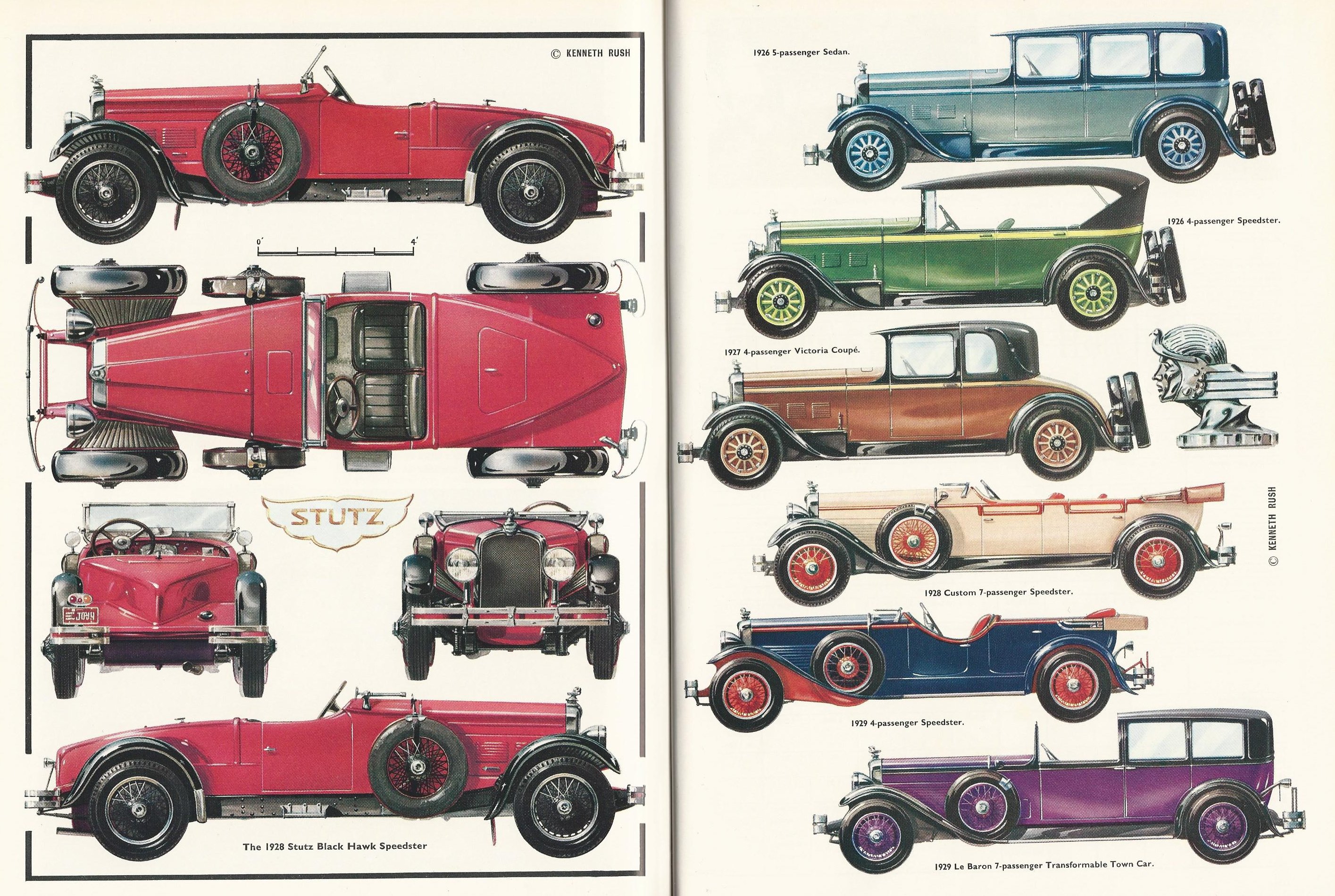
In the 1920s, Stutz cars were renowned for their safety and luxury. This and other images from “The Stutz Vertical Eight,” by Mark Howell, Classic Cars in Profile Volume 2, Profile Publications Ltd., 1967.
Stutz’s Frederick E. Moscowitz had a racing background, and he understood that a car’s low center of gravity, effective brakes and proper weight distribution enhanced its safety. He assembled a team of engineers to combine these race-car features with the durability of the era’s luxury automobiles. (American car owners in the 1920s expected 10-year longevity.)
One Stutz feature was its underslung chassis, allowed by a worm-gear rear axle. With a ground clearance and overall height typical of the era, the Stutz’s center of gravity was 5 in. lower than the competitions’.
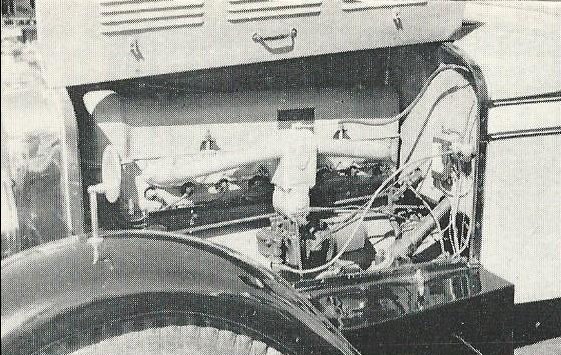
1927 Stutz Vertical Eight.
Contributing to its performance was Stutz’s single-overhead-cam straight-8 engine, originally displacing 4755 cc and producing 92 hp at 3200 rpm and 193 lb.-ft. of torque at 1400. Lincoln was its nearest competitor at 90 hp, albeit with a displacement of 5868 cc.
Cars of the era were valued for their high-gear performance, not acceleration through the gears. A Stutz Vertical Eight could accelerate in top (third) gear from 10 to 40 mph in a highly competitive 10.6 seconds. It cruised easily at 60 mph, with a top speed of perhaps 78 mph. Fuel consumption at 60 was cited at 11.7 mpg U.S., whereas its competitors were averaging nearer 9.
Racing certainly improved the breed, and also offered variety in the order book: For 1928, Stutz offered engines with a choice of four different compression ratios, 5.0:1, 5.5:1, 6.0:1 and 6.25:1, giving commensurate power ranging from 115 to 125 hp.
That year, coachbuilder/sportsman Charles Weymann entered a Stutz Vertical Eight in the Le Mans 24-hour endurance race. The Brit magazine Motor Sport wrote, “On his second lap Barnato in Bentley number 4 averaged 74 mph, and Stutz put up 76.2! Truly a battle of Titans.”
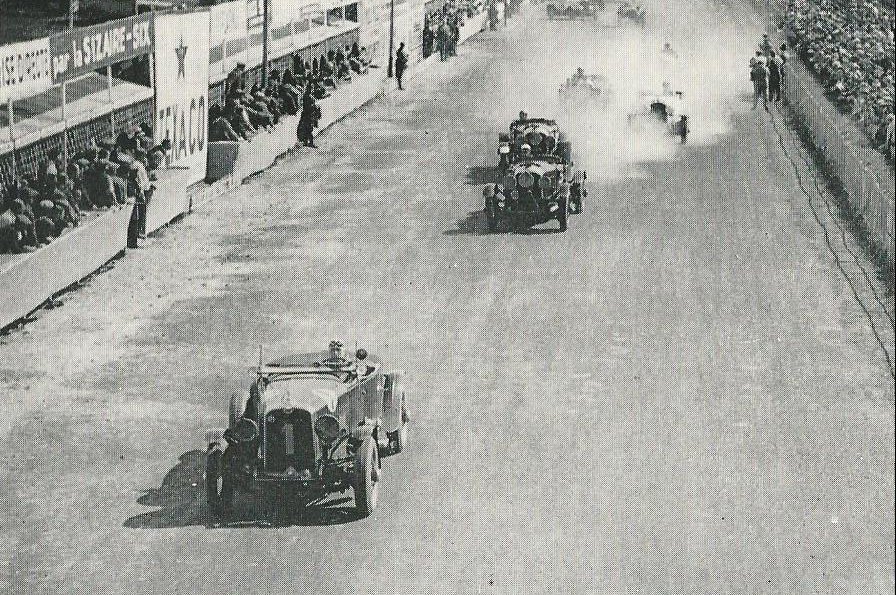
Le Mans, 1928. Stutz Vertical Eight finished 2nd to Bentley.
The Stutz’s 2nd-place finish was heroic: Gearbox difficulties in the last four hours called for one-handed driving to keep top gear engaged.
The next year, 1929, was Bentley’s greatest Le Mans triumph, a sweep of 1st through 4th. This time, a Stutz DV-32 entered by its Paris dealer came 5th. The DV-32’s straight-8 powerplant now featured double overhead cams and four-valve heads.
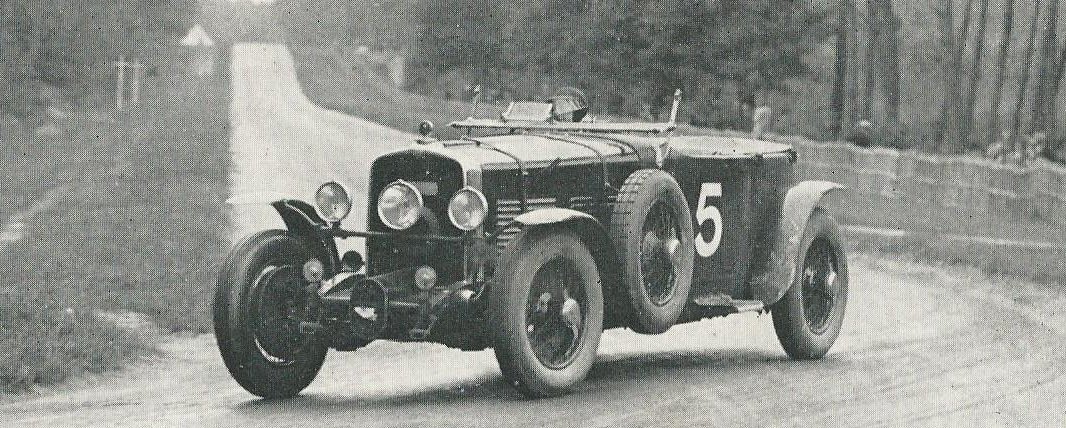
Le Mans, 1929. Stutz finished 5th overall; Bentleys came 1st – 4th.
In 1930, another privateer stripped his Stutz Vertical Eight of its fenders, fitted it with beefed-up suspension and a bigger fuel tank, and entered the Indianapolis 500. Owner Milton Jones and his co-driver Lora L. Corum finished 10th overall. (I’m unable to find a link between this Corum and the brothers, Ralph and Clifford, who established Muroc, California.)
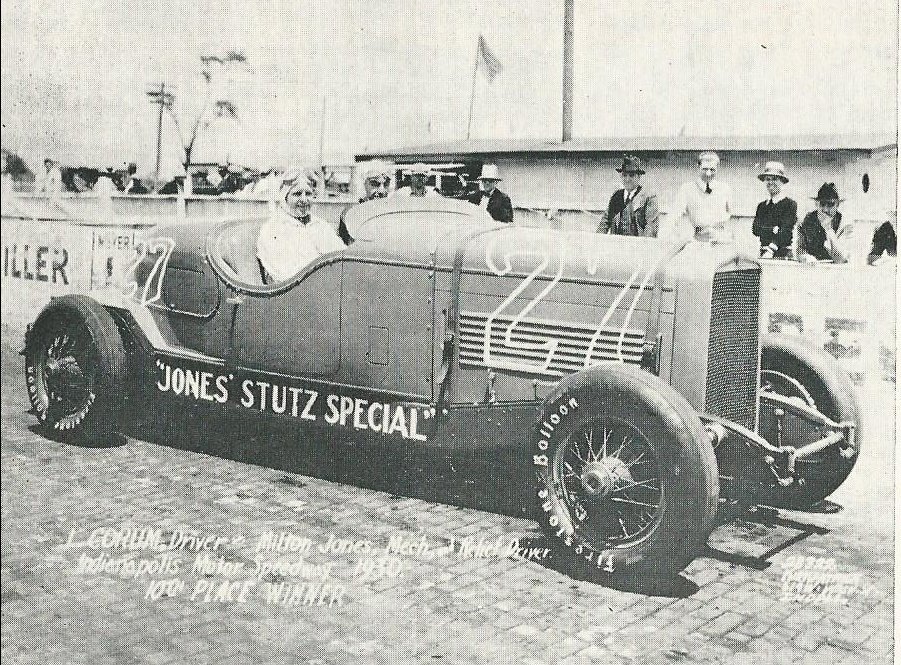
Indianapolis 500, 1930. Lora L. Corum and relief driver/riding mechanic/owner Milton Jones placed 10th overall in an essentially standard Stutz Vertical Eight Torpedo speedster.
At the 1930 Le Mans, a Stutz pair fell by the wayside, as did a pair of Bentleys (the remaining two Bentleys finishing 1 – 2). In 1931 and 1932, other privately entered Stutz race cars failed to finish the 24-hour French classic. By 1935, Stutz Motor Company itself failed.
Today, its Indianapolis headquarters, the Stutz Business and Arts Center, is home to more than 80 talented artists, craftsmen and designers. A fitting legacy indeed. ds
© Dennis Simanaitis, SimanaitisSays.com, 2015
 Simanaitis Says