
Simanaitis Says
On cars, old, new and future; science & technology; vintage airplanes, computer flight simulation of them; Sherlockiana; our English language; travel; and other stuff
VIRTUAL REALITY—30 YEARS ON
CYBERSPACE HAS attracted me since I first heard of it in William Gibson’s 1984 novel Neuromancer
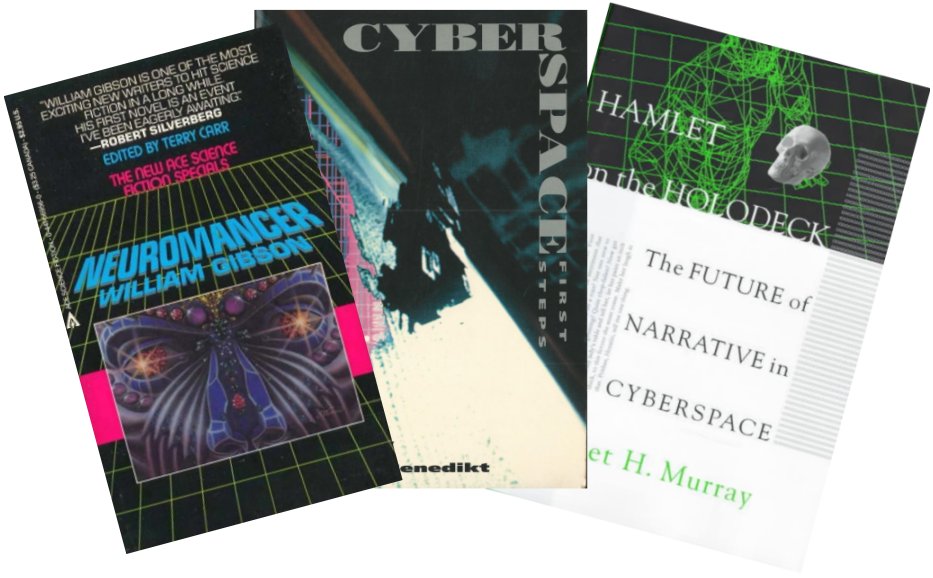
These three books came to mind with the November 8, 2015, issue of The New York Times Magazine, which arrived on my doorstep with a little box. The box contained a Google Cardboard V.R. viewer for emerging oneself in a virtual reality of news and advertising cyberspace.
It’ll be good fun to test out what the Times insert terms “Virtual Reality: The Storyteller’s Newest Tool,” especially in light of what Gibson, Benedikt and Murray wrote about 31, 24 and 17 years ago. Let’s consider Gibson, Benedikt and Murray today. I’ll fool with the Google gizmo at a later date, once I upgrade my iPhone to at least iOS 8.0 (Luddite that I am!) and download the necessary free NYTVR app.
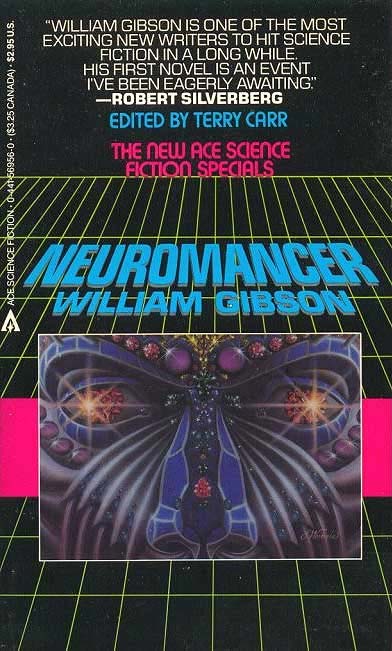

The novel Neuromancer posited what’s come to be a familiar Gibson theme: a dystopian near future. As Library Journal noted, “The plot contains sex, drugs, black market body parts, virtual reality, electronic relationships, pleasure palaces, murder, mayhem, cloned assassins, and intrigue in cyberspace, with nary a virtual nice guy in the mix.”
What was cast in the near future in 1984 sounds depressingly like the 2015 evening news, even to its advertising pitches. Only maybe the anchors seem nice, at least the ones doing weather and entertainment.
Gibson’s main character, Case, jacked into cyberspace, just as people today shuffle along with their thumbs controlling their worldly interactions. Case is a professional hacker, but he ticks off a powerful crowd.
Gee, will he have to hide out in Russia? I won’t ruin your fun if you haven’t read Neuromancer recently.
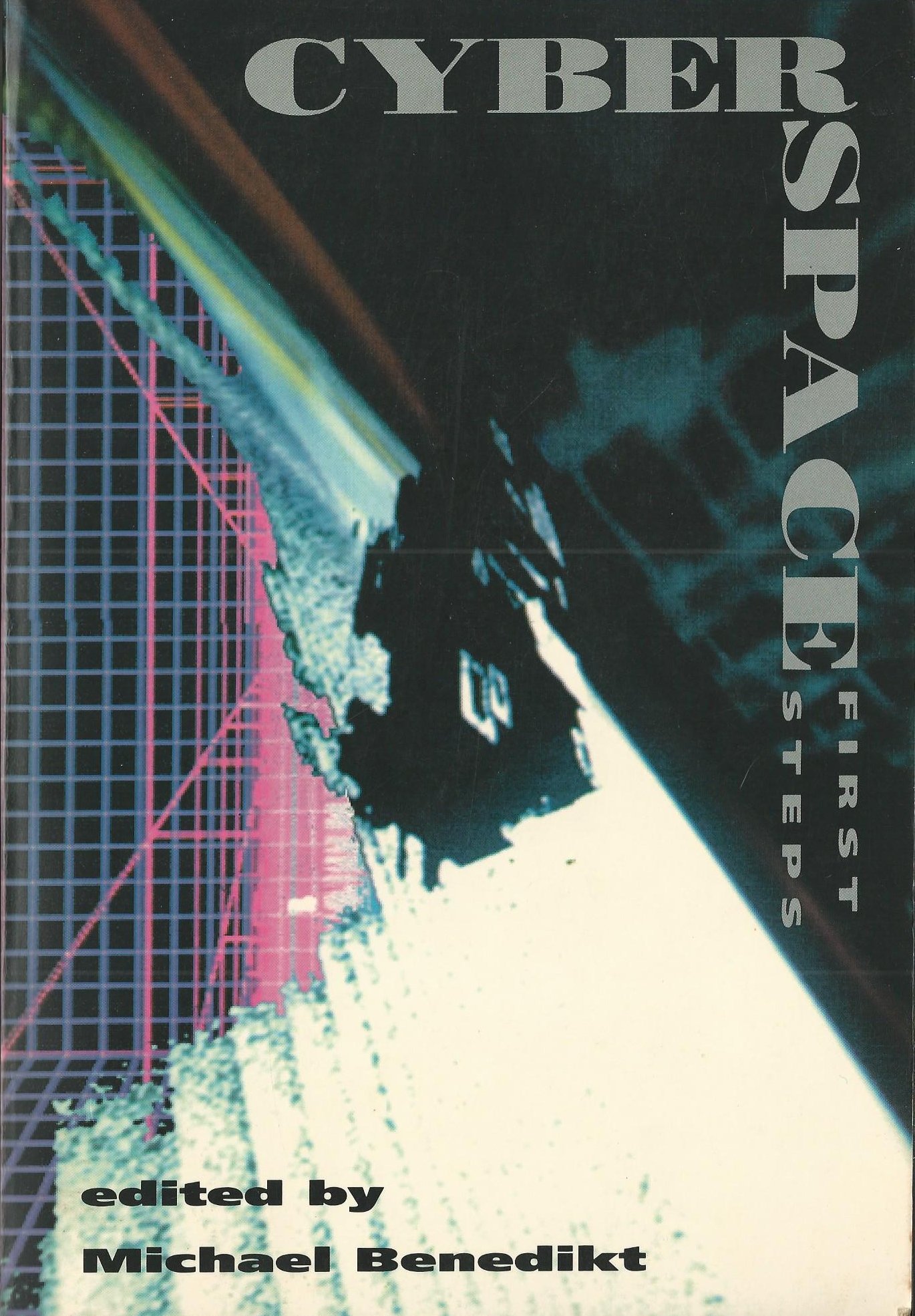
Cyberspace: First Steps, edited by Michael Benedikt, MIT Press, 1991.
Michael Benedikt’s collection of essays begins with one by Gibson, the “Academy Leader.” Lots of observations stand out, one of them, “Once perfected, communication technologies rarely die out entirely; rather, they shrink to fit particular niches in the global info-structure.”
Pause here to compare a mobile phone and computer, circa 1991, with my iPhone for a dual meaning of the word “shrink.”
Another of the essays is “The Erotic Ontology of Cyberspace,” by Michael Heim. (I began by looking up ontology: the branch of philosophy dealing with the nature of being.)
Heim cites Plato’s Symposium (the word tracing to Greeks drinking together). Writes Heim, Diotima, the priestess of love, “tracks the intensity of Eros continuously from bodily attraction all the way to the mental attention of mathematics and beyond…. On the primal level, Eros is a drive to extend our finite being, to prolong something of our physical selves beyond our mortal existence.”
Heim observes, “Only a short philosophical step separates this Platonic notion of knowledge from the matrix of cyberspace entities…. Perhaps worlds should be layered like onion skins, realities within realities, or loosely linked like neighborhoods, permitting free aesthetic pleasure to coexist with the task-oriented business world.”
Heady stuff, this. It’s corroborated in another essay, Carl Tollander’s “Collaborative Engines for Multiparticipant Cyberspaces.” Tollander writes, “Rather than having ‘users,’ cyberspaces have participants….” Furthermore, “A collaborative cyberspace is one in which the sum of the actions of one or more participants and elements of the space select among possible categorizations of object behavior.”
I wonder if Mark Zuckerberg might have read this philosophical discussion? He was 7 at the time.
Tollander also writes, “Ownership and privacy present special problems and opportunities in a collaborative space.” Note, this was back in the days before “problems” became (somehow less problematic) “issues.”
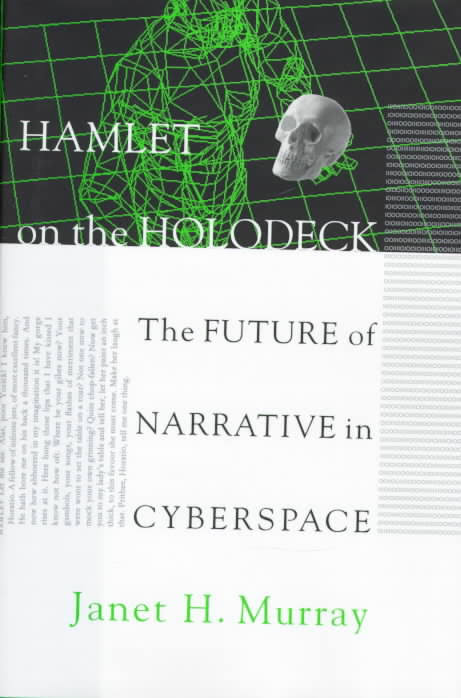
Hamlet on the Holodeck: The Future of Narrative in Cyberspace, 0th Edition, by Janet H. Murray, MIT Press, 1998.
In 1998, Murray was director of the Laboratory for Advanced Technology in the Humanities at MIT. Since 1999, she has been the Ivan Allen College Dean’s Professor in Literature, Communication and Culture at Georgia Tech. Murray is an internationally recognized authority on storytelling in advanced digital environments.
What would you think of being Tom Sawyer’s pal in a virtual world?
Of such interactive storytelling, Murray observes, “We like to know that there is a ruling power in control of an imaginary universe, and it makes us uncomfortable if the author seems to abdicate the role.”
On the other hand, Murray notes that cyberdramatists will be what she terms “procedural authors.” These authors will devise the procedures under which their words and images appear, not just the words and images.
Murray says, “Future audiences will take it for granted that they will experience a procedural author’s vision by acting within the immersive world and by manipulating the materials the author has provided rather than by only reading or viewing them.”
This, remember, was predicted in 1998, 17 years ago.
Which brings me to the Google Cardboard V.R. viewer, the NYTVR app and at least Apple iOS 8.0. I’ll have to give them a try. ds
© Dennis Simanaitis, SimanaitisSays.com, 2015
 Simanaitis Says