
Simanaitis Says
On cars, old, new and future; science & technology; vintage airplanes, computer flight simulation of them; Sherlockiana; our English language; travel; and other stuff
A RESURGENCE OF WARMTH AND TACTILITY?
VINYL IS making a comeback. It’s a fascinating cultural phenomenon, perhaps in part expressing a preference for warmth and tactility over digital accuracy and efficiency. Or is it simply a fringe activity based on nostalgia, not logic?
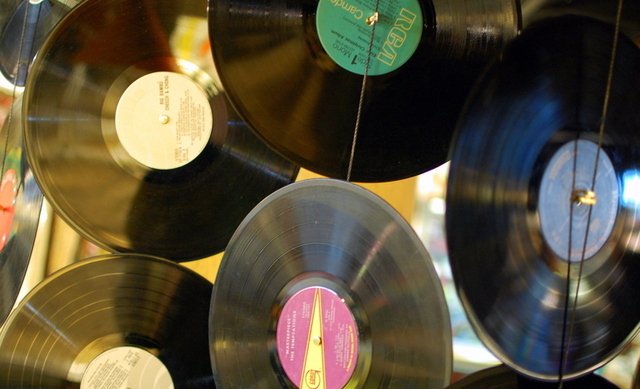
A vinyl montage. Image at arstechnica.com by Steve Snodgrass.
Vinyl recordings, “records,” we used to call them, are countering a trend of CDs that, in turn, are losing a battle with music downloads and streaming. There’s even an official Record Store Day, April 18, based on an event ginned up in 2007 in the U.S. and now spread to British record shops.
In Britain, Music Week says vinyl has had seven years of resurging growth. In 2014, British sales of vinyl set a 20-year record of 1.29 million 12-in. LPs. The trend is continuing in 2015, with vinyl album purchases up 69 percent over corresponding 2014 data. Official Charts is a British firm tracking music sales by genre and medium. It now has weekly charts for vinyl albums and singles.
The same thing is happening in the U.S. On July 2, 2015, Ars Technica shared Nielsen data showing music sales are up 14 percent over the first half of 2015. The big winner is on-demand streaming, up an amazing 92.4 percent. However, vinyl LP sales are also up 38 percent. Notes Nielsen, “Vinyl sales now comprise nearly 9 percent of physical album sales.” The top selling vinyl? Taylor Swift’s 1989.
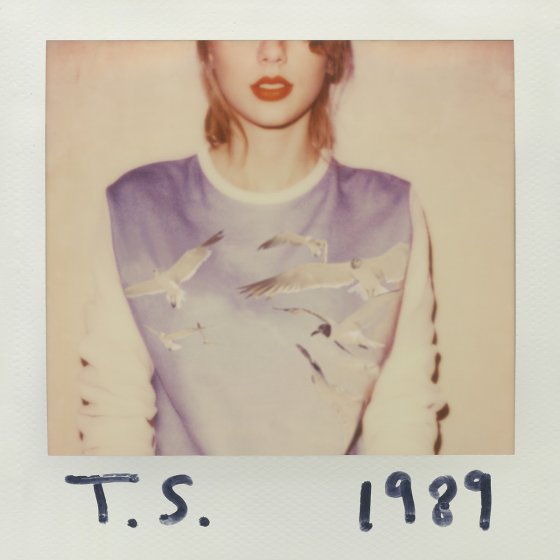
Top selling U.S. vinyl during the first half of 2015. “Grandpa, who’s Taylor Swift?”
Nostalgia, real or imagined, is part of vinyl resurgence. But so is the auditory argument that a vinyl record conveys more accuracy and warmth than any digital collection of 0s and 1s.
Here’s the pitch: With live music, an instrument or voice vibrates the air. These atmospheric vibrations reach our ears, where tiny hammers, anvils and stirrups vibrate in accordance, sending this information to the brain as music. Or, in some cases, merely caterwauling.
A vinyl record translates vibrations of the air into wiggles in the disc’s groove, which, in turn, cause vibrations of the tone arm’s stylus. This needle sends an analog signal to speakers, where other vibrating membranes generate yet more corresponding vibrations in the air that reach our ears.
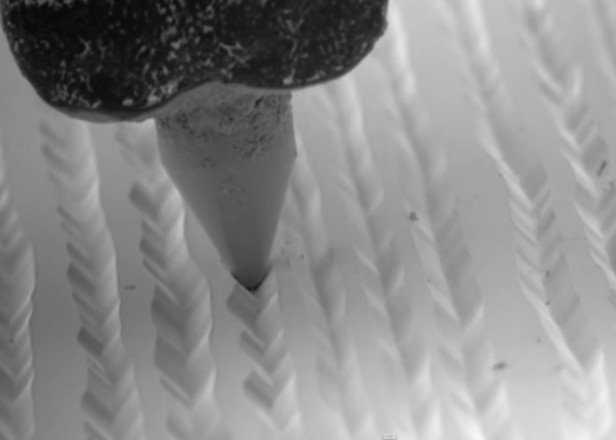
Animation of an LP stylus at work. Image from factmag.com.
Purists note pointedly there are neither 0s nor 1s involved.
Anti-purists might counter with questions about surface noise as a needle follows the groove, especially when it encounters a vinyl’s inevitable hairline scratches and nicks. (By contrast, there are no inherent cracks in the air).
This reminds me of the folklore originating in hi-fi (as it used to be called in pre-stereo, pre-sound-system days) concerning oversize cables. Some of these linking components were/are of exotic materials, gold-tipped and the like. Though not without controversy, many think that the primary benefit of oversize cables is to the manufacturers of oversize cables. And, maybe, in bragging rights to the audiophile showing off a sound system to friends.
Back in 2007, Gizmodo offered “The Truth About Monster Cable” and “The Truth About Monster Cable, Part 2 (Verdict: Cheap Cables Keep Up… Usually.” Briefly, as the second title hints, for lengths of up to 6 ft., there are no demonstrable benefits in high-buck cables, some costing 20 times as much as their cheapest counterparts.
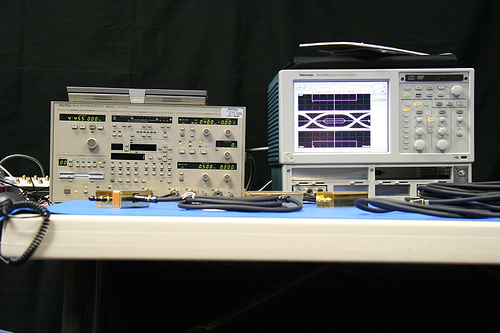
Gizmodo test setup. Image from gizmodo.com.
However, these evaluations didn’t involve ears. Instead, a Digital Serial Analyzer was used to measure how well digital 0s and 1s were conveyed on various cables of different lengths.
By contrast, there’s a long-standing debate of actual ears and what they perceive. See the Head-Fi Forum as an interesting example. To me, the important thing in any evaluation is whether the testing was performed blind; that is, without the listener (or viewer if it’s video) knowing what’s being evaluated. Otherwise, the BS Factor of gold plating is simply too strong.

On a personal note, I have scads of vinyl, much of it jazz from the 1950s and 1960s. For ease of listening, I’ve converted a lot of it to iPod and CDs using my easiest means available, GarageBand for Mac. Sure, I hear the crackles and scratches. But, to these ears, the Chico Hamilton Quintet, Gerry Mulligan in Paris and the Jimmy Giuffre 3 still sound great. ds
© Dennis Simanaitis, SimanaitisSays.com, 2015
 Simanaitis Says
Dennis –
I recently read that most of the vinyl records being produced today are being pressed in Eastern Europe, as virtually all of the western factories junked their vinyl equipment years ago.
There are several software packages that can clean up ticks pops n scratches. The audiophile would point out that they way they do that invariably “subtracts” from the original sound, since it filters or interpolates in some way to eliminate the defect. To my ear, as long as the correction is done carefully and to very small pieces of subject material, it works great. Interestingly, researchers are now finding ways to examine magnetic tape (the almost universal mastering material for anything more than 15-20 years old) to tell whether or not it will disintegrate when played … some masters, including some Beatles material, are now unrecoverable and depend on digital transfers done in the 1990s for re-release and mashups … but vinyl records if stored properly don’t deteriorate as much.