
Simanaitis Says
On cars, old, new and future; science & technology; vintage airplanes, computer flight simulation of them; Sherlockiana; our English language; travel; and other stuff
SUPER LIGHT AND SUPER SENSUOUS
TO ME, the words “carrozzeria” and “super leggera” can enter the English language without their italics. But Italian they are, carrozzeria being bodywork, particularly automotive, and Superleggera being a trademark of Carrozzeria Touring that describes its super lightweight technique of body fabrication.
Quite coincidentally, when researching my recent item on Stanguellini, I came upon a wonderful vintage video titled Il Sarto dei 300 all’ora (The Tailor of 300 an hour). It begins with photography of the 1957 Mille Miglia (an MGA and D-Type Jaguar helping to date this). Most of the film’s 9:26 gives marvelous insight into super leggera construction.
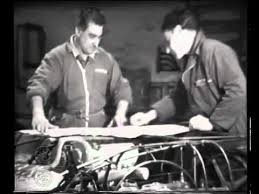
Jaunty music accompanies the commentary, solely in Italian, that describes the fitting of coachwork to a macchina del corsa, a race car. (An Osca? The fabricator is identified only as Autocarrozzeria.)
Work begins with a fitting of the basic chassis to its particular driver, position of the steering wheel and measurements for pedal placement and bodywork. I love that the driver looks properly aristocratic in suit, sweater and tie. Dimensions are translated into engineering drawings that lead to fabrication of a small-tube skeleton of welded steel.
Paper patterns are made for bodywork elements. These are transferred onto sheets of aluminum, cut to fit. The flat sheets are pounded to approximate shape using a pneumatic hammer, then the panels are fitted temporarily to the tubular skeleton. Next, the pieces are fine-shaped by hand and welded to form completed coachwork panels.
Apparently a contemporary equivalent of U.S. OSHA was nowhere to be found: The welder wears goggles; the guy holding the panels, who appears to be the boss, doesn’t bother.
Each portion of the completed bodywork is attached to the car, typically by wrapping it around the super leggera tubes or with welded flanges, pillars or other fixtures of sheet steel. Then there’s a final finishing of surfaces prior to painting and a fitting of upholstery.
Carrozzeria Touring patented this technique in 1936, many automakers depending on the company for body fabrication.
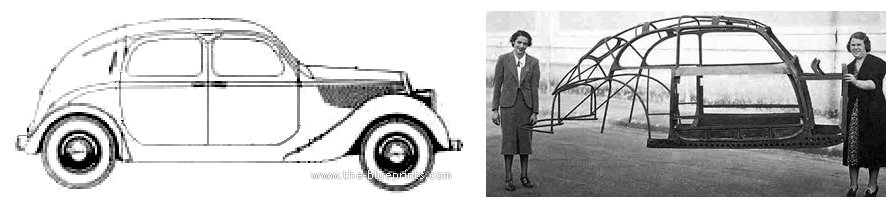
At left, Lancia Aprilia four-door sedan design; at right, its Superleggera chassis. Images from The-Blueprint.com and from Carrozzeria Touring, respectively.
The Lancia Aprilia, for instance, introduced in 1936 and continuing after World War II to 1949, carried Superleggera coachwork. The Aprilia, by the way, was one of the first cars designed using wind-tunnel optimization of its shape.
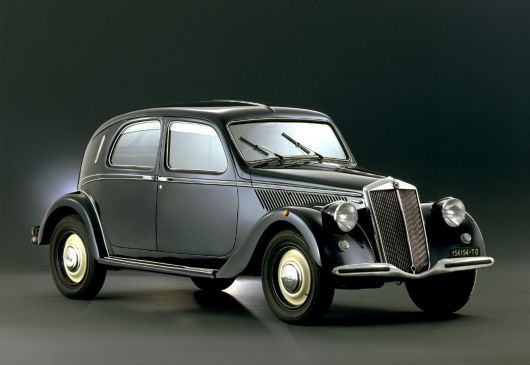
Lancia Aprilia, built from 1936 to 1949. Image from car-type.com.
By the 1950s, the technology was replaced in series production because of efficiencies in conventional steel-body-on-frame and, eventually, unibody construction. Its advantages of light weight and specialized shapes continued in high-performance cars and with those of limited production.
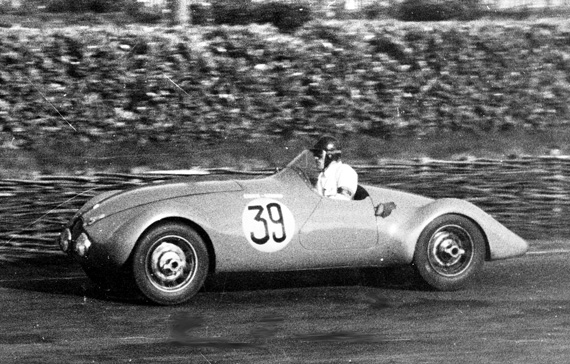
Amédée Gordini, for example, used super leggera technology in construction of his racing specials and sports cars from the 1930s into the 1950s. His modified Simca (a French-manufactured Fiat at the time) won the Index of Performance category at the Le Mans 24-hour race in 1939.

The Gordini Simca Huit, 1939. Images from velocetoday.com
The technology still has use today, primarily in the fabrication of special one-offs, cars built specifically for auto show exhibitions, for example. The website motoringfile.com offers details of the Mini Superleggera Vision, a concept car introduced at the 2014 Concorso d’Eleganza at Villa d’Este, in northern Italy.
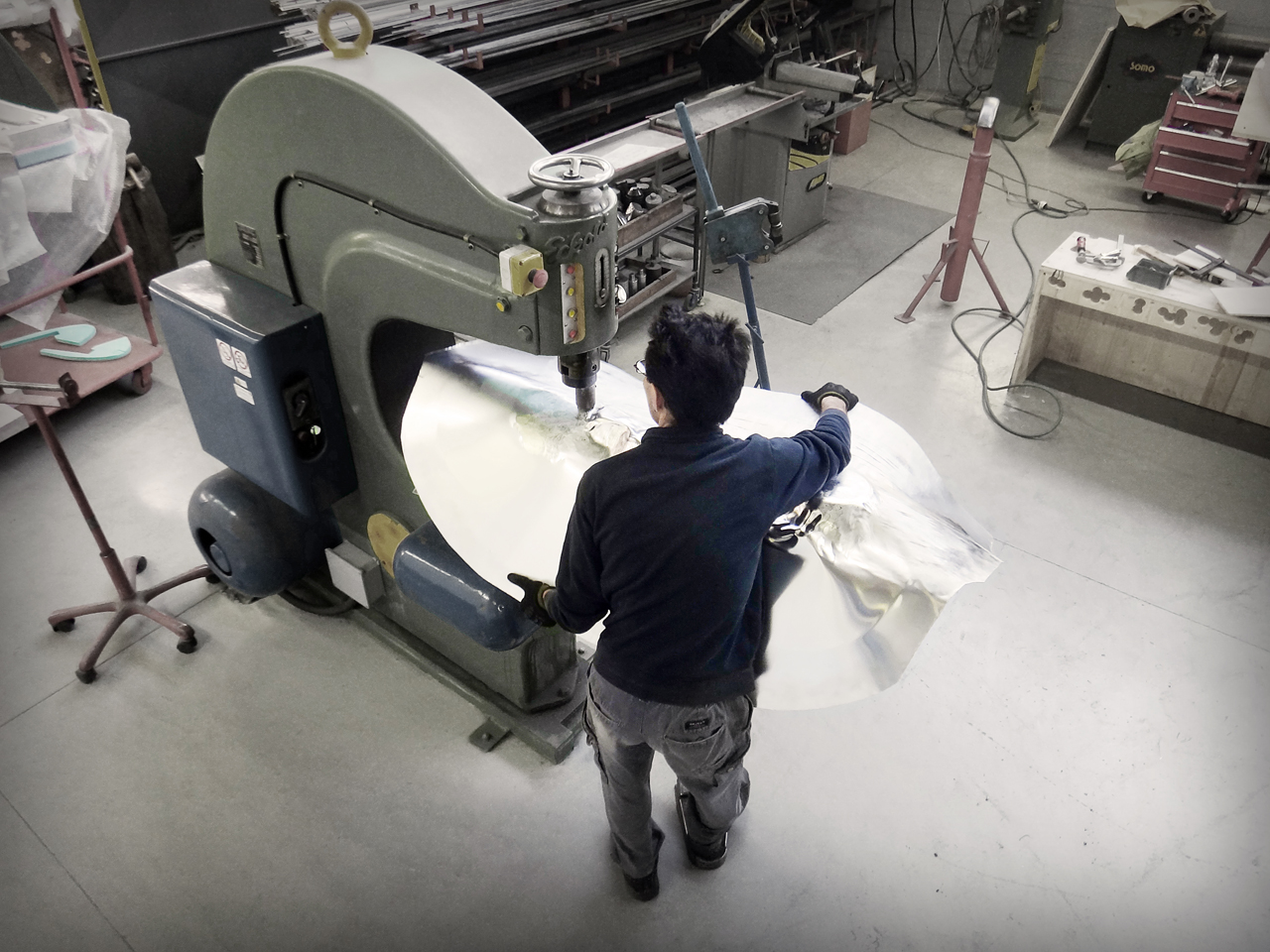
The latest hammering and hand finishing: still art forms. These and the following image from motoringfile.com.
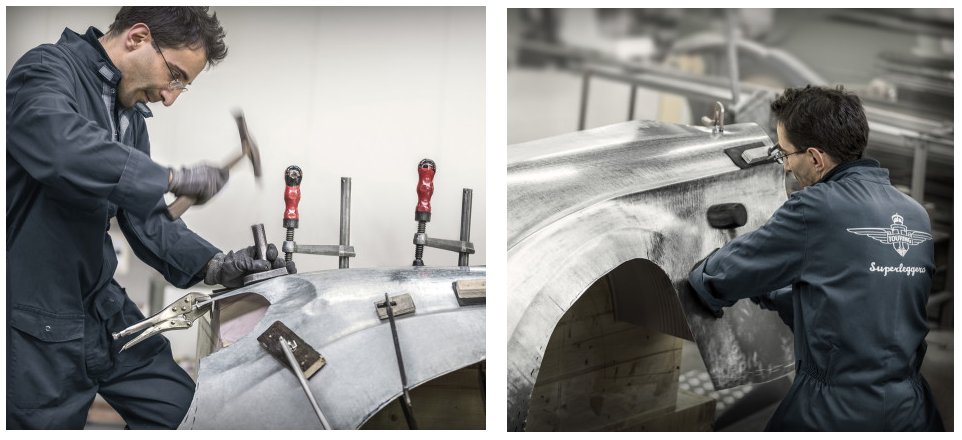
Mini writes of its Superleggera Vision, “Mini and legendary coachbuilder Touring Superleggera go back to the basics of quality driving with an electric-powered speedster that’s light, sharp and agile. British Born. Italian Tailored.”
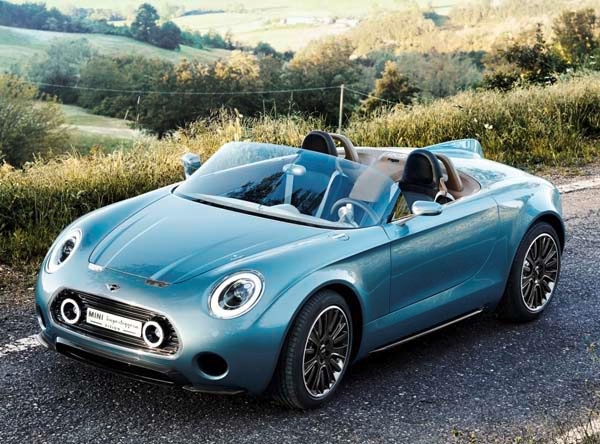
The Mini Superleggera Vision concept car, 2014.
Which brings us full circle back to Il Sarto dei 300 all’ora. ds
© Dennis Simanaitis, SimanaitisSays.com, 2015
 Simanaitis Says
Denis…great post. Keep the good stuff coming!! Grey McGown Fort Worth
Grey,
Many thanks.
Hmmmm a 1914Mini concept. Obviously well ahead of its time!
Oops! The Villa d’Este locale is so classical…. Thanks for the correction, Sabre. Fixed now.